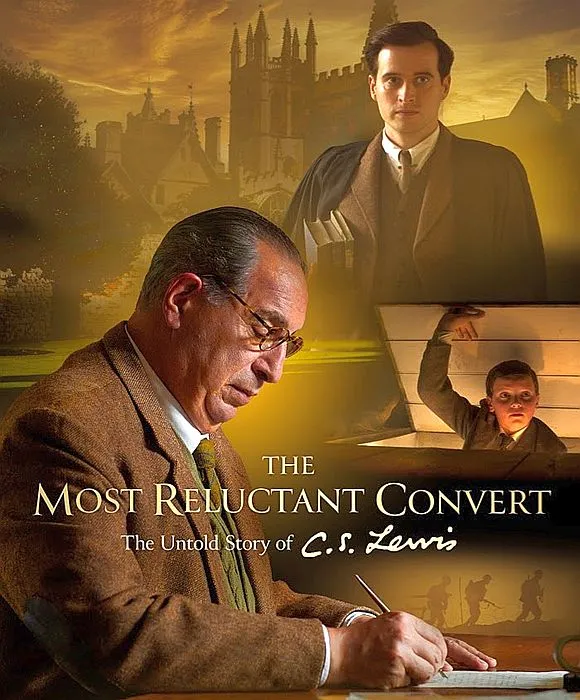
Last evening, Sky and I watched Max Mclean’s 2021 film adaptation of his one-man stage production on the conversion of C. S. Lewis to Christianity.
Co-written by McLean (also the lead actor) and Director Norman Stone – the film does the near impossible – it is a Christian film that is neither cheesy, maudlin nor Pollyanna. It is a real treat and enjoyable as a first rate film even apart from its subject matter.
Done in a narrative style, the cinematography and locations (I hear there were about 20) are superb. The writing – drawn from Lewis’ own – sticks to the facts. The acting is spot on. All around the production values are as high as any could hope for in a good movie. Thank you Fellowship of Performing Arts and 1A Productions for being committed to producing something of quality and excellence in the telling of Lewis’ conversion.
If you are not familiar with Lewis’ personal life, the brief primer in this movie is worth the watching alone, since it adds depth and context to his other writings.
Clive Staples Lewis was no ivory-tower elitist. At least not in the usual sense. Yes, he held on to his early rejection of Christianity, foray into occultism and philosophical materialism. But he was a also a man of real life. Losing his mother when he was a very young man. The strained relationship with his father (throughout his life) – especially in his father’s personality shift after the death of his wife. The pained distance between his father and both of the boys. Then on the front lines in WWI – wounded, sent back and wounded yet again. He grappled with the horrors and hardships of living in this fallen world. So for instance, when we pens his Mere Christianity lectures, they come from a place of having lived real life – not from behind the alabaster walls of isolated academia.
The film is available now on Amazon – free if you are a Prime member. And well worth the viewing. As you see him cave first to mere deism and then to embracing Christ full on – it will remind you of the power of God to scale the seemingly unassailable intellectual fortresses of those unsaved loved ones of yours. Our God knows how to conquer souls, and make them trophies of his grace – no matter where they are.
Jeremiah 17:19–22 (BSB) — This is what the LORD said to me: “Go and stand at the gate of the people, through which the kings of Judah go in and out; and stand at all the other gates of Jerusalem. Say to them, ‘Hear the word of the LORD, O kings of Judah, all people of Judah and Jerusalem who enter through these gates. This is what the LORD says: Take heed for yourselves; do not carry a load or bring it through the gates of Jerusalem on the Sabbath day. You must not carry a load out of your houses or do any work on the Sabbath day, but you must keep the Sabbath day holy, just as I commanded your forefathers.
In Jeremiah’s day, the Mosaic Law was still in full effect. One of the Law’s key components was the way in which a strict rest from all labor was required on the Sabbath. And yet, as the nation slid into idolatry and the neglect of God’s Law, the Jews fell into a pattern of violating that Law to the extent that not only would they keep transacting business on the Sabbath, they would actually carry their goods through the Temple grounds as a short-cut to other parts of the City. Even after the Babylonian captivity, we see the same issue addressed by Jesus (Mark 11:16). While there, it may not have been a Sabbath issue, the use of the Temple courts as a cut-through for merchandising still was.
As we read, the Sabbath was noted by God in Exodus 31:12–13 (BSB) — “Surely you must keep My Sabbaths, for this will be a sign between Me and you for the generations to come, so that you may know that I am the LORD who sanctifies you. ” To not do so was a capital offense.
Under the New Covenant, Believers are no longer bound in the same way to the Sabath as the Jews were. And while sound scholars will debate the extent of the Sabbath’s abrogation, or what form the actually takes, we can still derive a most potent principle from what Scripture lays before us in this regard. And that, in one parallel in particular.
I would argue (as do others) that in this transition into the New Covenant, carrying the burden of our own works or righteousness when we come to worship the Lord, is a direct repudiation of our trust in – and total reliance upon – Christ as our righteousness and the fulfillment of the Law.
In other words, we do not come to Church, into gathered worship, relying on our own obediences, perfections, works or righteousness in any way for our acceptance before God. We come, burden free, resting fully in the finished work of Christ.
We do not come to gathered worship to gain God’s approval – as a rite of acceptance.
We do not come to gathered worship hoping that in the act, our burdens of sin will get lifted.
We come to gathered worship as those who are trusting already in Christ’s having taken the whole of our sin burden upon Himself – on the Cross.
We come to gathered worship to rejoice in His finished work – not as a work unto itself.
We come to gathered worship in faith.
And this, is how we fulfill the Sabbath now. We rest, in Him.
Do not carry anything on the Sabbath beloved. He has borne it all.
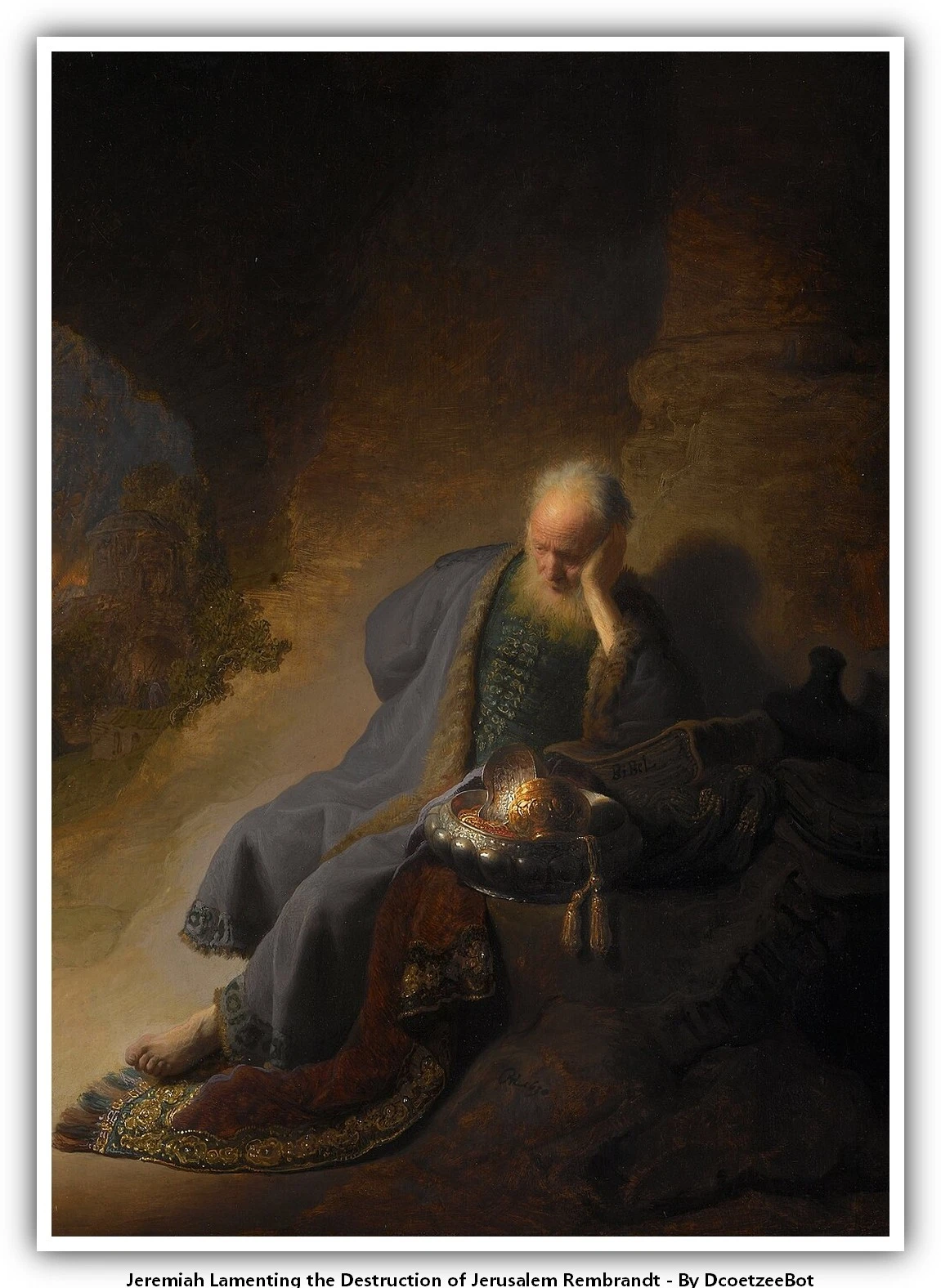
This is perhaps my favorite painting of all time. It is Rembrandt’s take on Jeremiah – “the weeping prophet” lamenting while Jerusalem burns in the background. It is most poignant.
In the opening chapter of the book of Jeremiah, we’re given sufficient biographical info on Jeremiah and his historical context to make good sense of the rest of the book. And I always wonder if I were Jeremiah, whether or not I would have ventured on any ministry endeavors given the warning he’s given at the outset. Basically, he was told he would speak for the Lord, but no one would listen. And they didn’t. To their destruction and Jermiah’s misery.
Alos included is the following commission: Jeremiah 1:9–10 (BSB) — “Then the LORD reached out His hand, touched my mouth, and said to me: “Behold, I have put My words in your mouth. See, I have appointed you today over nations and kingdoms to uproot and tear down, to destroy and overthrow, to build and plant.”
Wow! There is so much here. Let me tease out just one observation. The Lord’s words to Jeremiah here, carry deep import for ministry in all generations.
Many are the ministers and ministries that want only one half of our commission in declaring God’s Word.
Some, imagine the declaration of divine truth is primarily or solely in plucking up, breaking down, destroying and overthrowing. That it is judgment and judgment only. Their own sinfulness is drawn to this necessary aspect, and then they go on to imagine it is wrapped up in the condemnation of all sorts of people and things.
Others, imagine the dissemination of God’s Word to be located in building and planting alone. They so love consoling and bring men joy, they run from any of the hard and negative work which must often be done. They only want to heal, but never to righteously wound.
Balanced Biblical ministry requires both. Challenging sin and wrong belief systems with a deliberate eye toward their destruction, and the preaching of peace in Christ to the saving of souls.
We, like Jeremiah here, are not given the privilege to choose which of these two we will do – we are commissioned to do both. Those laboring in God’s fields need to know how to break up hard ground, violently plow it, and attack and pluck up weeds and other dangerous enemies absent remorse, as well as to plant, water, nurture, prune and bring to fruitfulness.
As the Apostle Paul would say it later – 2 Cor. 2:15–16 (ESV) — “we are the aroma of Christ to God among those who are being saved and among those who are perishing, to one a fragrance from death to death, to the other a fragrance from life to life.”
No wonder he must add: “Who is sufficient for these things?”
Only in Christ, by the power of His Spirit. May we look to and rest in Him alone.
Some things get better with age. I’m told wine does – but I’m no judge. To be honest, wine tastes like lighter fluid and I simply cannot bring myself to drink it. Some cheese does. Though I do watch out for mold. I’d like to say I do. But my wife can tell you better. Or should I say – she can tell you the truth.
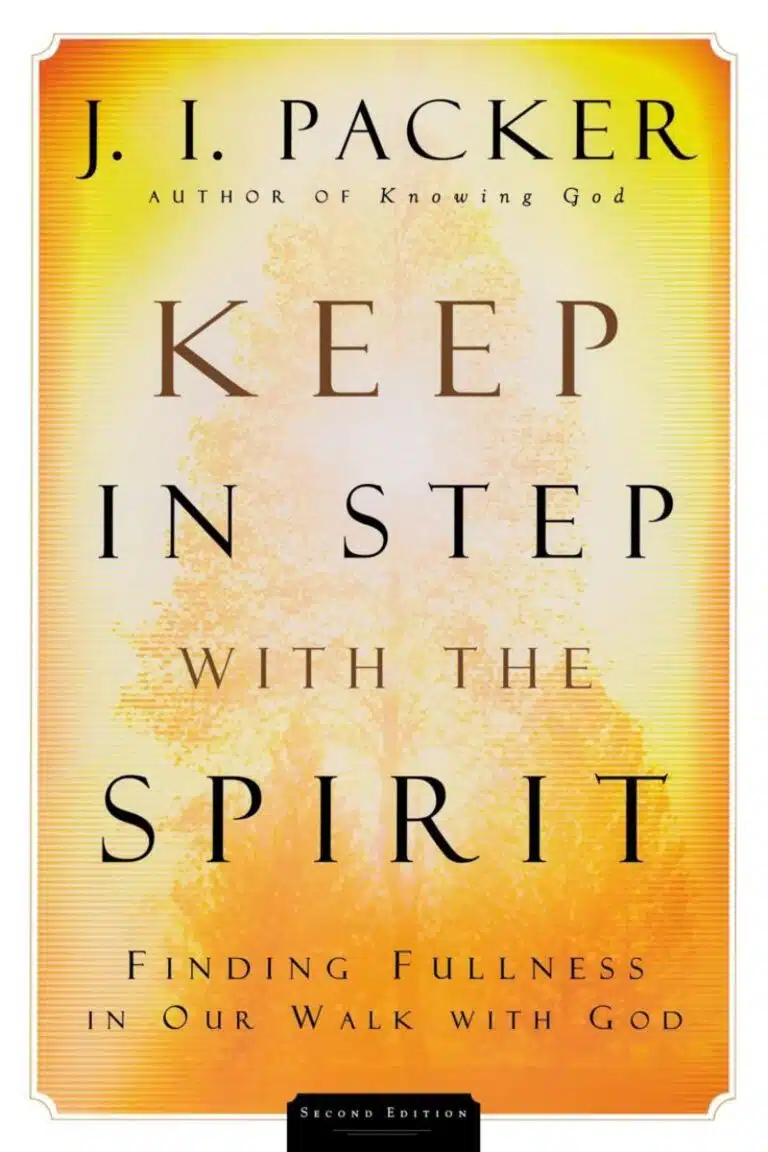
All that said, J.I. Packer’s “Keep in Step with The Spirit certainly has gotten better since its initial release in 1985, and that even without owing to its expansion and update in 2005. For any Believer wanting to understand what life in the Spirit of Christ looks like, or wrestling with how to grapple with the complexities of Pentecostal/Charismatic teaching and practice- I do not think you can do better than Packer’s treatment here.
I remember first reading this book back when it was originally published. It was good. But now, after decades of my own reflection and experience, and, as mentioned above, the expansion of the original – this book is an exceedingly timely, Biblical and wise resource. It ought to be read by every thoughtful Christian.
Take note, this is not an especially easy book to read. Packer takes the time to reason very closely on controversial topics (i.e. spiritual gifts and the Pentecostal/Charismatic movements). And, he walks you through some very sophisticated Biblical exegesis.
This is not a book of fluff, nor of mere, unconsidered opinions. It is that rare combination of being both irenic and unapologetically truthful. Packer is generous, but honest. Thoughtful and careful. And he refuses to pronounce absolutes where Scripture itself fails to speak as definitively as we might like. No babies get thrown out with the bath water. No bath water is spared while the baby is still in need of more cleaning. No nonsense is tolerated in the name of unexamined love.
As is typical with Packer, the book refuses to budge at any point from its Christ-centeredness. The author’s conviction regarding the Spirit’s own Christ-centeredness leads him to write with the same cast. He will de-mystify what it means to be “spirit filled”. And he will point us over and over to the focus of the Spirit’s ministry, so that we are not distracted by what else the Spirit may grant in his ministrations. Like little children, how easily we can be more dazzled by the wrapping paper on a beautiful gift than the gift itself. Even worse – more enamored by the gift, than the giver. And just as bad if not worse yet, distracted from the focus, the purpose of the gift itself as intended by the giver.
Read Keep in Step with the Spirit slowly. Better yet, read it with friends. Consider the arguments with some deep reflection. Open your Bible and follow the exegesis with care. Deep and troubling questions will be answered. Not all of them. But at least they will be addressed in a solid and useful manner. Whether you agree with all of Packer’s conclusions or not – you will experience what good, analytical thinking looks like for a Christian.
As the title of this brief review states – this is the best book I’ve read so far in 2026. But the problem is, this sets the bar so high, I am doubtful I’ll read another one this year as engaging, helpful and Christ-centered. But, the year is young! And God has many, many treasures poured out through his children I’ve yet to encounter.
Proverbs 13:19 “Desire fulfilled is sweet to the soul, but turning from evil is detestable to fools.”
Biological human life has certain non-negotiables to consider one alive. The Johns-Hopkins website states: “The four main vital signs routinely monitored by medical professionals and health care providers include the following:
Body temperature
Pulse rate
Respiration rate (rate of breathing)
Blood pressure”
No body temperature other than the ambient one? You’re not alive. No pulse rate? Same thing. Not breathing? Not living. No blood pressure, no life.
There are vital signs of spiritual life as well. And one of them is explicated perfectly in this verse. It is couched in the contrast between one spiritually alive and one not. And it is quite the contrast: A desire fulfilled versus turning from evil.
And herein is the great divide between those regenerate, and those not: Nothing is more desirous for the regenerate than being freed from their sin, while for the unregenerate – nothing is more detestable than having to turn away from their evil.
Many a sincere Believer is plagued by a lack of assurance over their salvation due to their ongoing struggle against the remaining pull of indwelling sin. It makes them both miserable and doubtful. Can I be a true Christian and still find such repulsive inclinations within? It is a heartfelt cry. Little do they know that the struggle is in and of itself, a vital sign of true spiritual life in Christ.
The unregenerate do not grieve over and long for freedom from – the very presence of sin – as sin. They may want deliverance from the consequences of it if it has produced certain miseries. But they do not care to turn from sin simply because it IS sin, and is contrary to the new desires implanted by the Holy Spirit in every true Believer.
In contrast, every true Christian hates their sin. They grieve over the fact that some sinful impulses remain, and break out from time to time. They long to be rid of it all. They look forward to the day when in the resurrection – sin will be no more. Nothing is sweeter to the soul. Nothing is more desired.
A number of years ago I presided over the funeral service for a man in our congregation. He was a character and a half. A true individual. Not Joe-Average Christian. Sometimes I had no idea where he was coming from on things. But one day, in the midst of a most casual conversation, with tear filled eyes, he looked at me and said – “I can’t wait until the day when I no longer have any desire for sin.” He went on to lament just how much sin grieved him. His spiritual heartbeat was a strong as it could be.
Maybe this is you today. The pain of sin’s inward impulses grieve you to no end. And sometimes, they are so relentless, you begin to wonder if such could be the case in a genuine Christian. Dear brother, dear sister – nothing could be a greater testament to the reality of your regeneration than to hate sin for sin’s sake – and how it impairs your joy in walking after Christ as you would.
Take heart beloved. The day will come when this desire will be so completely and sweetly fulfilled in Christ. He who began that good work in you, will be working to complete it until that day.
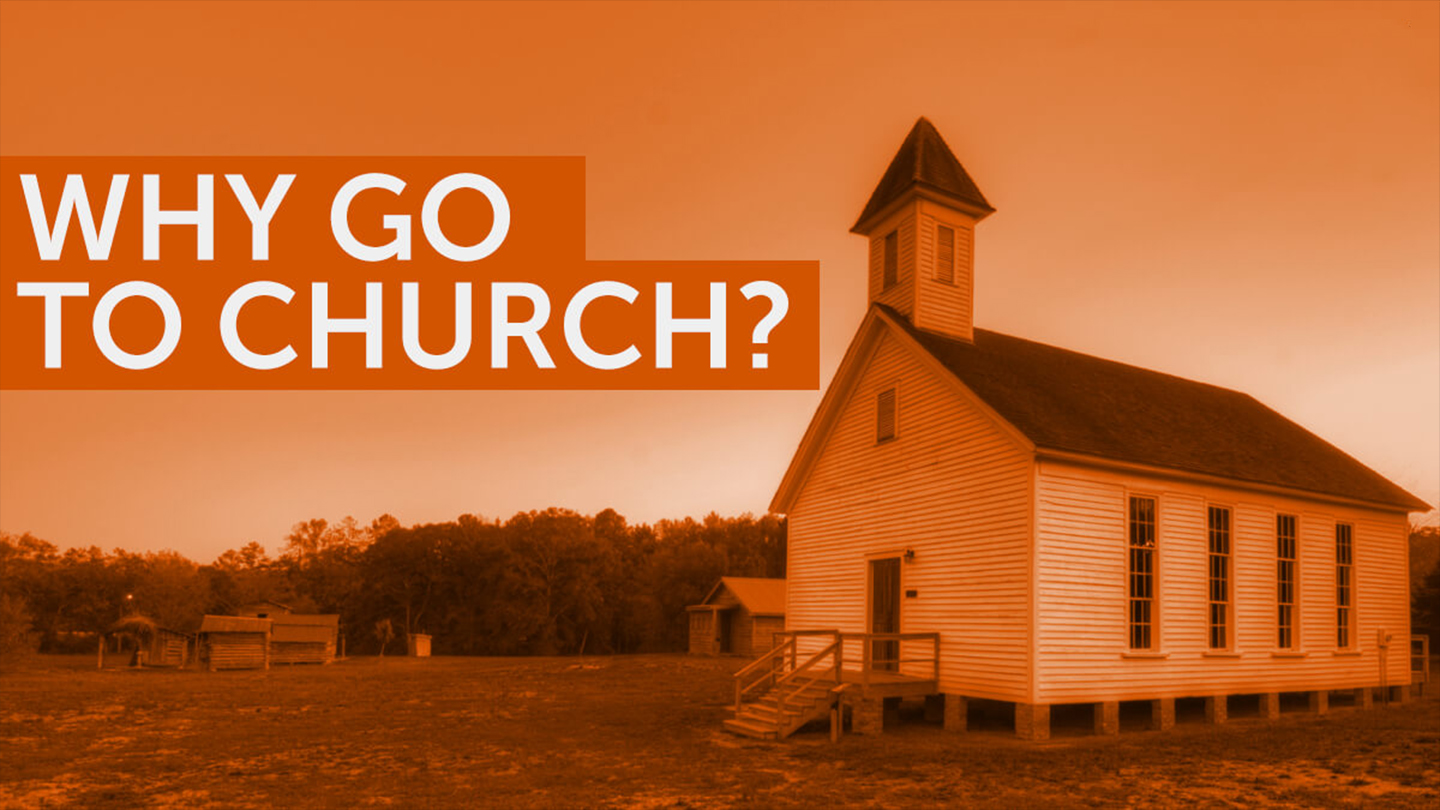
1 – It is vitally important to the World that God be honored and worshiped publicly for who and what he is, and what he has done.
2 – It is vitally important that God’s people publicly reaffirm the testimony of the Gospel of Jesus Christ, to our own souls, one another and the World.
3 – As made by God for God, it is vitally important to the Believer’s soul to rehearse who and what God is and what he has done, and to reorient the soul toward him after a week of being drawn off after other (however necessary) things.
4 – It is vitally important to the Believer’s own soul to hear God’s Word expounded so as to hear God’s voice and know: his thoughts; his plans and purposes; his preferences, provisions, being and heart.
5 – It is vitally important to the Believer’s soul to both contribute to and receive the ministrations of Christ’s Body as being connected to them in time and space. To be in a context where we must forgive, bless, join together for Christ’s cause, and grow in the graces that are only cultivated in loving and enduring one another’s common brokenness in the Spirit of Christ.
6 – It is vitally important to the soul to hear the Gospel over and over so as to live in it at all times and under all circumstances.
7 – It is vitally important to the soul to constantly turn to God from idols to serve the living and true God and to await His Son from heaven, whom He raised from the dead—Jesus our deliverer from the coming wrath.
Scripture is replete with concepts that truly transcend normal (since The Fall) thoughts. Ever since Adam and Eve made that fateful decision to be god for themselves – in determining right and wrong for themselves in opposition to God’s sole rightful place – we have remained tragically self-centered. Even our earliest scientific endeavors betrayed this tendency. We were originally not at all helio-centric in our view of the cosmos. We were in fact, anthropo-centric. We were certain all revolved around us. And we remain stubbornly self-centered in almost everything. We interpret the world, indeed all of reality from ourselves out. In The Fall, our immediate sense of and connection to God as the defining center-point of reality was severed. And it is only restored in Christ Jesus and his reconciling of us back to the Father. This Jesus, “whom God put forward as a propitiation by his blood, to be received by faith.” (Rom. 3:25 ESV)
Now this reorientation back to true God-centeredness, Christ-centeredness, is nowhere near complete in us even after regeneration. It is a process which will last all throughout our lives, and will not be complete until the resurrection. This is when what God the Father “purposed in Christ as a plan for the fullness of time, to bring all things in heaven and on earth together in Christ” (Eph. 1:10) will at last be fulfilled. When the reality of Rom. 11:36 – “from him and through him and to him are all things” truly dawns in all’ of its unveiled glory.
It is in this context that I revisit a concept which in my own prayer life over the decades has taken on more and more importance. And at the risk of sounding irreverent or extreme – maybe even heterodox to some – I propose that we seldom if ever approach prayer in terms of first asking The Father – “how can I pray for you today?”
Does that sound outrageously radical?
Bear with me.
Going back once more to the Sermon on The Mount and Jesus’ instructions in prayer – consider afresh his opening petitions: Our Father, before I make known to you my own prayers, let me pray for you – that your name would be hallowed and restored to its sacred glory in the heart and mind of every sentient being in the universe. That your perfect Lordship rule in the heart, soul and mind of every creature in Heaven and on the Earth. Let me plead that YOUR will be accomplished in all places at all times with all speed and perfection and absolute loyalty and joy by all men everywhere, and all the angelic host.
In effect, Jesus is calling us to pray for the Father and his concerns, before we consider ours. This is unbelievably amazing! It is truly astounding. But there it is. Pray first – “Our Father.”
Let me, in praying for your causes – those of the highest cosmic and eternal importance – bring me to fulfill seeking first your kingdom and your righteousness – and in so doing, find that I can trust you utterly for all the things which concern me. (Matt. 6:39)
Maybe, just maybe, we need to start our prayer lives, by asking the Father – “how can I pray for you today?” Which answer Christ has already provided for us. And which, when we occupy ourselves with, will turn our eyes ever more toward him as the center of all things. Which will make us active participants in the highest and greatest matters in the universe. Which invites us into a realm of wonder – an honor of such high privilege as cannot be uttered properly by human tongues, not fully captured in our imaginations.
Can we even begin to conceive of what Jesus is inviting us into here? We must ponder these imponderable depths. These opening petitions are indescribably profound. They bring into something that is more than astounding, but to taste something truly and unutterably transcendent.
This makes prayer something far beyond the mundane labor we so often make it. It is spiritual warfare of the highest order. And a complete reorienting of our entire concept of reality.
I simply do not have the power to adequately expatiate on it any more than to simply lay it as bare here as I can. And that, so woefully and pitifully rough and unrefined because it simply is so high. It is beyond me.
Review it.
How can I pray for you today Father?
That you be rightly seen, cherished and reverenced as is only proper.
That your perfections in administrating all the cosmos under Christ’s rule become the evident reality.
That the working out of your will in perfect love, mercy, grace, wisdom and holiness be the reality of life.
That I may seek these first. And in doing so, find my own needs already met.
If you don’t know how to pray for anyone else – we know how to pray for God. And that my friend, is an absolute mind-blower.
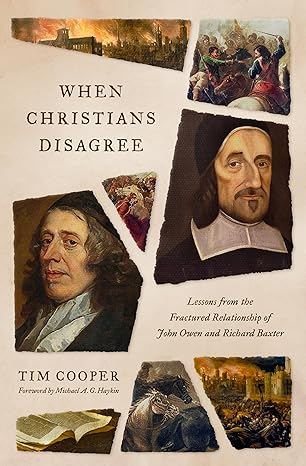
If the title to this entry is worthy of the title to a Puritan’s sermon, that is not an accident. I do it on purpose. It only makes sense when the subjects of a book are two titans of Puritan England: John Owen and Richard Baxter.
If the notion of a theological page-turner seems to be an oxymoron, you have to, you MUST read Tim Cooper’s “When Christians Disagree”. You must. It is subtitled: “Lessons from the Fractured Relationship of John Owen and Richard Baxter.” When you simply cannot put the book down until you have read it cover to cover, you’ve struck gold. I started this about 10 last evening, quit a little after midnight, and sat to polish it off this morning. True, it is not a huge tome – just around 160 pages. But it is so crisply and engagingly written, you simply don’t want it to end. All of that without even addressing the actual topic and how it is handled yet.
Amazon’s “About the author” carries this: “Tim Cooper (PhD, University of Canterbury) serves as professor of church history at the University of Otago in New Zealand. He is the author of John Owen, Richard Baxter and the Formation of Nonconformity and an editor of the Oxford University Press scholarly edition of Baxter’s autobiography.” And I will mention quickly that the forward is written by Michael Haykin.
What Cooper so deftly does in this book, is expound Luther’s Simul Justus et Peccator as displayed in the lives and relationship of its two subjects. Two giants of the Faith; two towering geniuses; two godly and theological powerhouses; two men committed to Christ and his glory – whose personal foibles, personalities and disagreements make us blush to consider how they disliked and ill-treated each other. A study in contrasts if there ever was one.
But the author is not interested in painting these warts-and-all portraits for the sake of morbid or emotionally prurient curiosity. His is not to expose their flaws to the rubber-necking gawker. Rather, he is wanting to use their tragic mutual story, to goad us all on to Christian lives that ponder our own sins and shortcomings, how those impact others – especially in discourse – and spur us on to be more fully clothed with Christ.
These men are both heroes in my theological pantheon. And I, like they, am just as sinful, often blind to myself, and have been the unwitting instrument of unnecessary division among the saints at times. Father, forgive us. Forgive me!
Cooper wisely takes the time to examine the political, religious and social landscape of the England in which they both dwelt, and yet experienced vastly differently. Each with their unique upbringing and familial contexts. Each with strong personalities and rigid convictions. Each used by God. Each sinning against the other – especially (and this is SO VERY timely given our online communications) in how they discoursed in print. What a warning and road map this blessed book is.
There are but 7 short chapters followed by a “Conclusion”, a helpful Chronology, a Glossary and a very helpful section on further reading.
Where this crosses over into an oh-so practical book, is that at the end of each chapter (from chapter 2 on) Cooper includes a section for reflecting on what we’ve just read, and then provides insightful questions to ask ourselves in light of what we’ve witnessed. They are sound and deep questions without being contrived or crossing over into the oft-noted Puritan tendency toward morbid introspection. These are truly helpful and worth the time to consider. Not just alone, but with others.
I would really encourage this book to be used by Pastors with their Elders or leadership groups, as well as other small groups as a 7-8 week study. Reading and thinking about the chapter during the week, and then gathering to talk over the questions with others would be absolutely invaluable.
Of all the books I’ve read this year, this was at once the most engaging and enjoyable, as well as instructive and convicting. I cannot recommend it highly enough. If a book can be tasty – that’s what this book is.
Do your soul a favor – buy it and read it soon. Make it a Christmas gift to yourself, and a New Year’s treat. You won’t be sorry.
Just as in the larger culture, certain terms come and go even in the Church. Ever since the advent of the American Jesus Movement in the late 60’s – leading worship in music took on a life of its own. There emerged in that time and atmosphere, and new focused role called the “Worship Leader.” This worship leader was considered part of the ministry team. The role grew and grew to what might be perceived as occupying a very outsized place of influence. And typically (though certainly not in all cases) this new ministry office seemed to come with its own set of rules.
Worship leaders by and large (and forgive me if I paint with too broad of a brush here) were not held to the same rigorous standards as those who preached and taught. Talent was a main ingredient. Whether or not the music chosen was Biblically sound was not as much a primary concern, as long as it used Bible language or concepts. More importantly it seems – if it produced a certain atmosphere, evoking a visceral response in the congregation.
So the worship leader could be a man or a woman. No distinctions needed there. And perhaps their lifestyles were not as scrutinized as others in ministry. Afterall, they were usually “artsy” and free-spirited and not overly theological. With some very noted and notable exceptions.
Now I don’t want to make that sound entirely out of line. Music should help people fix on Biblical truth in memorable ways that also stir the emotions – with the truth – above just the music itself.
I watched a video recently where someone was reacting to a live recording in Denmark by Gary Brooker of Procol Harum fame, performing the amazing piece – A Whiter Shade of Pale. It is a masterpiece. The man watching the performance broke into tears. The piece is highly emotive. The music is truly beautiful and carried by a melody and chord progression which easily lead one to high emotions. These coupled with a set of very enigmatic lyrics can have a profound effect. But make no mistake, it is not worship.
Truly, this phenomenon can be repeated even in so-called Christian music. The right chords, and a haunting melody can actually eclipse the message – especially if the message is not clearly communicating Biblical truth, but is sufficiently vague to let the “worshipper” sort of pour their own meaning and emotion into it.
Now as far back as Exodus 15, we have Moses’ sister Miriam, leading the people in singing to the Lord in regard to his deliverance of Israel from Egyptian bondage and the miracle of parting the Red Sea. It was an appropriate response. And it fixed on exalting God for his great works. But the very next record of something similar – and serving as both a warning and a counterpoint is in Exodus 32. As Moses descends Sinai with the tables of the Law, he hears something coming from the camp. Once again there is singing and dancing by God’s people – but this time as they celebrated the consecration of the Golden Calf. God’s people, engaging in the identical behavior – but this time, it is idolatrous. It did not have as its anchor – God, and who and what he was and had done. But it was no less joyous, emotional and done by God’s People. It is worth considering.
All of that aside, I want to argue briefly, that all of God’s people ought to be worship leaders, and that we take back that role from a few select talented folk. How so? We catch the concept in 1 Peter 2:0-10 “But you are a chosen people, a royal priesthood, a holy nation, a people for God’s own possession, to proclaim the virtues of Him who called you out of darkness into His marvelous light. Once you were not a people, but now you are the people of God; once you had not received mercy, but now you have received mercy.”
As a people, God has set aside the Redeemed, that we might proclaim, make known, HIS virtues. HIS perfections. HIS glory. And that, more than our joy or feelings about it, as legitimate as they are.
It is a call for an entire congregation of people to delight ourselves in who and what God is and what he has done, and to communicate that to one another over and over and over. And that, with this focus – his deliverance in the cross from the darkness and bondage of sin, having received mercy, and now being made his own people. In other words – to magnify the work of Christ on our behalf.
You may not be able to carry a tune in a bucket. You may not be able to play a single instrument. But you and I can lead others into worship, as we rehearse for ourselves and to one another – the glory of God in our salvation. As we lift up the cross of Christ. And remind each other, especially in our struggles, that he is holy, and good and merciful and full of grace and forgiveness and has purchased us for himself with the blood of Jesus – and has granted us his Spirit, his people, his Word, access to his throne in prayer – and the promise of eternal life in the resurrection.
Let us lead one another in this kind of worship today. And every day.





 ResponsiveReiding