Skip to content
  • Home
  • About
  • Blog
  • Atonement
    • The Atonement: Read this first!
    • Confession of an ex-u0022Highperu0022 Calvinist
    • Revisiting the Substitutionary Atonement
    • Discussing the Atonement – a lot!
    • Lecture Notes on The Atonement
  • Sermons
  • ReviewsAll book and movie reviews
    • Books
    • Movies

ResponsiveReiding

  • The REAL Spiritual Warfare

    April 6th, 2026

    2 Cor. 10:3-5 / “For though we live in the flesh, we do not wage war according to the flesh. The weapons of our warfare are not the weapons of the world. Instead, they have divine power to demolish strongholds. We tear down arguments and every presumption set up against the knowledge of God; and we take captive every thought to make it obedient to Christ.”

    It was 1986 when Frank Peretti’s “This Present Darkness” hit the stands – and the impact of the book is truly staggering. The great thing about the book is that it threw a new spotlight on the reality that Christians truly are engaged in a very real struggle against the powers of darkness. That there are indeed demonic forces afoot which seek the demise of humanity as made in God’s image, and – especially seek to defeat and defile those redeemed by the blood of Christ.

    The negative aspects of Peretti’s book are several.

    1 – It got people imagining that we actually battle demons the way Dr. Strange in the Marvel Universe battles evil entities. A sort of one-on-one, hand-to-hand combat. I do not believe you can find that paradigm in the Bible. Neither Peter nor Paul nor any other Biblical writer encourages us to engage that way. It certainly is not the thrust of Paul’s words cited above. But sadly, many people ran with the idea and started seeing demons behind every bush and seeking to engage them on some sort of a personal level.

    2 – It got people thinking more in terms of the evil entities, than on what they actually do. So some people I’ve interacted with began to imagine the imagery Peretti used was actual; that demons were (for lack of a better term) physically weakened by prayer or angelic hosts strengthened. Again, we have nothing in Scripture that quite directs us to enter into spiritual warfare with those kinds of pictures in mind.

    Those objections stated – it is still good for Believers to understand we are indeed in a spiritual battle, and good too to have some sense of how to wage that battle. Hence, a brief look at the text heading this post.

    Note first that the “strongholds” Paul cites, have to do with arguments and presumptions set up against the knowledge of God. It is vital that we grasp this concept – since it is the underlying principle in all true spiritual warfare.

    Let me try to summarize that idea as best I can: Satan and his minions use as their primary tactic against Believers this weapon – the obscuring, distorting or obliterating the right knowledge of God – especially His character.

    The strongholds Paul references here are nothing more and nothing less than wrong concepts of the one true and living God. And this – is played out in the following: That there is some form of darkness in God.

    This was the first attack in the Garden, and it remains primary. That God has ulterior and nefarious motives behind His dealings with us – that betray something other than His dealing with us in perfect love, power and wisdom.

    That His love is not perfect.

    That His wisdom is wanting.

    That in His providences He either is uncaring at times, unwise in what He allows, unloving in what He ordains, and either has little or refuses to use His power perfectly on our behalf.

    In other words – the battle is to fight for abiding in His love.

    Alexander Maclaren adds this: “Note, too, how this same principle of the fruitfulness of the light gives instruction as to the true place of effort in the Christian life. The main effort ought to be to get more of the light into ourselves. ‘Abide in Me, and I in you.’ And so, and only so, will fruit come.
    And such an effort has to take in hand all the circumference of our being, and to fix thoughts that wander, and to still wishes that clamour, and to empty hearts that are full of earthly loves, and to clear a space in minds that are crammed with thoughts about the transient and the near, in order that the mind may keep in steadfast contemplation of Jesus, and the heart may be bound to Him by cords of love that are not capable of being snapped, and scarcely of being stretched, and the will may in patience stand saying, ‘Speak, Lord! for Thy servant heareth’; and the whole tremulous nature may be rooted and built up in and on Him. Ah, brother! if we understand all that goes to the fulfilment of that one sweet and merciful injunction, ‘Abide in Me,’ we shall recognize that there is the field on which Christian effort is mainly to be occupied. Alexander MacLaren, Expositions of Holy Scripture: Ephesians (Bellingham, WA: Logos Bible Software, 2009), 290–291.

    This Beloved, is how Jesus was able to defeat Satan at every turn – He never doubted His Father’s love and wisdom in all His providential appointments. He could trust His ordaining hand in every minute aspect of it. The people He encountered, the challenges He met, the struggles He faced, the circumstances He was in, the end which was designed and the path to get there.

    So it is as He addresses the Disciples the night of His betrayal He can say: ““Look, an hour is coming and has already come when you will be scattered, each to his own home, and you will leave Me all alone. Yet I am not alone, because the Father is with Me.” (John 16:32). And, in a stunning display of this absolute trust in the Father’s love gasps out while on the cross and enduring the Father’s wrath on our behalf – “Father, into your hands I commit my spirit.” (Luke 22:46)

    We make much of saying the Father turned His back on Him – but Jesus’ is undaunted even then. He commits Himself to the Father in the very eye of the storm of His holy judgment upon human sin.

    Here is the spiritual battle for you and me Christian – to war against every thought that makes us doubt His love toward us, the indefectibility of His holy character, of His power on our behalf, His wisdom in all of life’s providences and His absolute care for us and the impossibility of any of His promises to us failing.

    We must fight every day to bring our thoughts captive to the revelation of Himself in Jesus Christ.

    This, is spiritual warfare. And this is how we defeat the powers of darkness – even in the heavenlies. this is victory. This is what Christ has purchased for us.

  • Walking as Children of The Light

    April 3rd, 2026

    I am currently reading (along with some other things) the sermons of Alexander Maclaren on Ephesians. Maclaren was a powerful 19th Century expositor and close friend of Spurgeon. The two stood together in the “Downgrade Controversy.”

    He tends to be more exegetically focused than Spurgeon and his expositions are exceedingly rich. There are 32 volumes of his expositions to be had – covering 64 of the 66 books of our Bibles. Oh for more time!

    I would gladly post his entire sermon on this passage, but so that you get a taste for his balance and clarity – offer just this sweet excerpt. Listen to how he handles the interplay of goodness, righteousness and truth as the fruit of The Light (Jesus) in the life of the Believer.

    Enjoy!

    “Now, all these three types of excellence—kindliness, righteousness, truthfulness—are apt to be separated. For the first of them—amiability, kindliness, gentle-ness-is apt to become too soft, to lose its grip of righteousness, and it needs the tonic of the addition of those other graces, just as you need lime in water if it is to make bone. Righteousness, on the other hand, is apt to become stern, and needs the softening of goodness to make it human and attractive. The rock is grim when it is bare; it wants verdure to drape it if it is to be lovely. Truth needs kindliness and righteousness, and they need truth. For there are men who pride themselves on ‘speaking out,’ and take rudeness and want of regard for other people’s sensitive feelings to be sincerity. And, on the other hand, it is possible that amiability may be sweeter than truth is, and that righteousness may be hypocritical and insincere. So Paul says, ‘Let this white light be resolved in the prism of your characters into the threefold rays of kindliness, righteousness, truthfulness.’”

    Alexander MacLaren, Expositions of Holy Scripture: Ephesians (Bellingham, WA: Logos Bible Software, 2009), 292–293.

  • A Sketch of the True Christian

    March 31st, 2026

    Vol. 3 of The Works of John Newton (Newton, John, and Richard Cecil. The Works of John Newton. London: Hamilton, Adams & Co., 1824.) contains a work titled: “A REVIEW OF ECCLESIASTICAL HISTORY, SO FAR AS IT CONCERNS THE PROGRESS, DECLENSIONS, AND REVIVALS OF EVANGELICAL DOCTRINE AND PRACTICE: WITH A BRIEF ACCOUNT OF THE SPIRIT AND METHODS BY WHICH VITAL AND EXPERIMENTAL RELIGION HAVE BEEN OPPOSED, IN ALL AGES OF THE CHURCH.”

    It sounds imposing but it really isn’t. It is comprised of 2 short “books.”

    Book one consists of a very readable recounting of the Gospel narratives as though someone sat down to just tell you the whole story in their own words with some reflections here and there. Newton titles it: “Of the First Period of Christianity.”

    Book two – “Of the Second Period of Christianity” recounts all of Acts in the same style. It contains 4 chapters.

    Ch. 1 – Covers Acts to the close of the 1st Century.

    Ch. 2 – “An Essay on the Character of St. Paul, considered as an Exemplar or Pattern of a Minister of Jesus Christ.” A must read for all who entertain being in ministry.

    Ch. 3 – Examines how quickly aberrant doctrines and practices emerged in the early Church. So early, Peter, Paul, James and Jude need to address them in their letters. There is nothing new under the sun.

    Ch. 4 – Deals with the heresies which arose even in Apostolic times. Heresies which emerge, sink and re-emerge in every generation.

    It is in the 4th chapter that we find the following which I am calling a sketch of the true Christian. I found it so succinct and refreshing as to warrant this post. I pray it will be a blessing to you as well.

    If you are Christ’s today, may this serve as a great reminder of just what that means. And if you are not – may this whet your appetite to possess what belongs to all of the heirs of salvation.

    “A believer in Jesus, however obscure, unnoticed, or oppressed in the present life, is happy; he is a child of God, the charge of angels, an heir of glory;* he has meat to eat that the world knows not of; and from the knowledge of his union and relation to his Redeemer, he derives a peace which passes understanding,† and a power suited to every service and circumstance of life.‡ Though weak in himself, he is strong in the grace that is in Christ Jesus the Lord,§ upon whom he relies, as his wisdom, righteousness, sanctification; and expects from him, in due time, a complete redemption from every evil.|| His faith is not merely speculative, like the cold assent we give to a mathematical truth, nor is it the blind impulse of a warm imagination; but it is the effect of an apprehension of the wisdom, power, and love displayed in the redemption of sinners by Jesus Christ; it is a constraining principle, that works by love, purifies the heart, and overcomes the world; it gives the foretaste and evidence of things invisible to mortal eyes, and, transforming the soul into the resemblance of what it beholds, fills the heart with benevolence, gentleness, and patience, and directs every action to the sublimest ends, the glory of God, and the good of mankind.*

    • Rom. 8:14, 17.

    † Phil. 4:7.

    ‡ 2 Cor. 12:9.

    § 2 Tim. 2:1.

    || 1 Cor. 1:30.

    • Gal. 5:6; Acts, 15:9; 1 John, 5:4; Heb. 11:1; 2 Cor. 3:18.

    John Newton and Richard Cecil, The Works of John Newton (London: Hamilton, Adams & Co., 1824), 295–296.

  • A Little Something for my Fellow Preachers

    March 29th, 2026

    In volume 3 of the works of John Newton, there is a gem of a somewhat unknown work. He titled it “A Review of Ecclesiastical History.

    Chapter 1 recounts the Gospel narratives and Acts like a simple recounting of the facts. It is brilliant.

    Chapter 2 is “An Essay on the Character of St. Paul, considered as an Exemplar or Pattern of a Minister of Jesus Christ.” I am going to simply give you his key observations here as encouragement and motivation. On each of the points he expatiates – all of which is so very worth the reading. But here are the capstones to consider briefly as you head into the sacred desk today. May they inspire you to seek the love of God supremely.

    I. The characteristic excellence of St. Paul, which was as the spring or source of every other grace, was the ardency of the supreme love he bore to his Lord and Saviour.

    II. The inseparable effect, and one of the surest evidences of love to Christ, is a love to his people.

    III. St. Paul’s inflexible attachment to the great doctrines of the Gospel is another part of his character which deserves our attention.

    IV. But though St. Paul was so tenacious of the great foundation-truths of the Gospel, and would not admit or connive at any doctrine that interfered with them, he exercised, upon all occasions, a great tenderness to weak consciences, in matters that were not essential to the faith, and when the scruples were owing rather to a want of clear light than to obstinacy.

    V. Every part of St. Paul’s history and writings demonstrates a disinterested spirit, and that his uncommon labours were directed to no other ends than the glory of God and the good of men.

    (RAF – i.e. His focus was never about him or his ministry.)

    VI. From the foregoing particulars we may collect the idea of true Christian zeal, as exemplified in our apostle.

    VII. Having considered the subject-matter and the leading views of the apostle’s ministry, it may not be improper to take some notice of his manner as a preacher.

    Newton expands here: “Instead of vain conjectures,* he spoke from certain experience; he could say, “I received of the Lord, that which I also delivered to you:” instead of accommodating his doctrine to the taste and judgement of his hearers, he spoke with authority, in the name of God whom he served: instead of losing time in measuring words and syllables, that he might obtain the character of a fine speaker, he spoke, from the feeling and fulness of his heart, the words of simplicity and truth.”

    VIII. Another observable part of St. Paul’s character, is his unaffected humility.

    Having said all this and so much more – he summarizes all these points this way as follows. May it be a sweet reminder for you today.

    “Such was our apostle, and the same spirit (though in an inferior degree) will be found in all the faithful ministers of the Lord Jesus. They love his name; it is the pleasing theme of their ministry, and to render it glorious in the eyes of sinners is the great study of their lives. For his sake they love all who love him, and are their willing servants to promote the comfort and edification of their souls. They love his Gospel, faithfully proclaim it, without disguise or alteration, and shun not to declare the whole counsel of God, so far as they are themselves acquainted with it. They contend earnestly for the faith once delivered to the saints; and are desirous to preserve and maintain the truth, in its power and purity. The knowledge of their own weakness and fallibility makes them tender to the weaknesses of others; and though they dare not lay, or allow, any other foundation than that which God has laid in Zion, yet, knowing that the kingdom of God does not consist in meats and drinks, but in righteousness, peace, and joy in the Holy Ghost, they guard against the influence of a party spirit: and, if their labours are confined to Christians of one denomination, their love and prayers are not limited within such narrow bounds, but extend to all who love and serve their Master. They have entered upon the ministry, not for low and sordid ends, for popular applause, or filthy lucre, but from a constraining sense of the love of Jesus, and a just regard to the worth and danger of immortal souls. Their zeal is conducted and modelled by the example and precepts of their Lord; their desire is not to destroy, but to save; and they wish their greatest enemies a participation in their choicest blessings. In the subject-matter and the manner of their preaching, they show that they seek not to be men-pleasers, but to commend the truth to every man’s conscience in the sight of God; and when they have done their utmost, and when God has blessed their labours, and given them acceptance and success beyond their hopes, they are conscious of the defects and evils attending their best endeavours, of the weak influence the truths they preach to others have upon their own hearts; that their sufficiency of every kind is of God, and not of themselves; and therefore they sit down, ashamed, as unprofitable servants, and can rejoice or glory in nothing but in him who came into the world to save the chief of sinners.”

    John Newton and Richard Cecil, The Works of John Newton (London: Hamilton, Adams & Co., 1824), 247–248.

  • No mere patchwork – Luke 5:36-39

    March 25th, 2026

    Luke 5:36-39 (BSB) “He also told them a parable: “No one tears a piece of cloth from a new garment and sews it on an old one. If he does, he will tear the new garment as well, and the patch from the new will not match the old. And no one pours new wine into old wineskins. If he does, the new wine will burst the skins, the wine will spill, and the wineskins will be ruined. Instead, new wine is poured into new wineskins. And no one after drinking old wine wants new, for he says, ‘The old is better.’ ”

    Jesus did not come to repair or prop up up the old Mosaic system. Its time was over. It had run its course and served it purpose. A new day had come. This was not time to sew a patch on an old rend, nor even to breathe all new life into it. It could not contain what was to be poured out. Only new creatures would do. New wineskins to receive the new wine. New men as well as new life. A new covenant, as well as a new Mediator.

    So it is today. All attempts to merge, marry or unite the Old and the New Covenants is out of order. Yes, there is connection. The Old portends the New in astounding and countless ways. But just as a baby is conceived in the womb of its mother, yet the two are just that – two, so for a season they may share one systemic life – and yet they are not somehow merged into one entity. From the moment of conception – they are two.

    We might say that the Church was always in utero (in Israel – there was always a believing remnant) until Pentecost. Israel bore her, and they share so much. And yet each is its own when all is said and done. Going back to Old Covenant rites and rituals, days, observances and customs fails to recognize the transition which has occurred. It is the failure to recognize this which causes so much confusion about the Believer’s relationship to the Law. The Law hasn’t changed, we have. And in the change, the entire relationship is also changed.

    Christians are not “newized” Old Testament Believers. Out of the two (Believing Jews and Gentiles) He has made one new man (Eph. 2:15). We do not go back to pick this here and that there from the Old Covenant system. We have a new garment of the righteousness of Christ to wear, not the old garment of its picture. We are new wineskins, born again as new creatures, not Old Covenant believers jazzed up. Our covenant has been explicated (Jer. 31; Heb. 8), inaugurated (Luke 22:20), ratified (Heb. 9:16) and is being probated by The Spirit (Eph. 1:14). We no longer live under the old arrangement of signs, pictures, tokens and allegories. Ours is the fulfillment in Christ.

    We drink the new wine poured into new wineskins. Some will always go back and say the “old is better.” They want no change. But Christ has come. The new day has dawned. The Kingdom has drawn near. The Spirit has been poured out. Look up – for your redemption draws nigh. Soon, ALL things will be made new. And He will live and reign in His manifest glory before the cosmos.

    Hallelujah!

  • The Nazi and the Psychiatrist: The Failure of Psychologizing Sin and Evil.

    March 24th, 2026

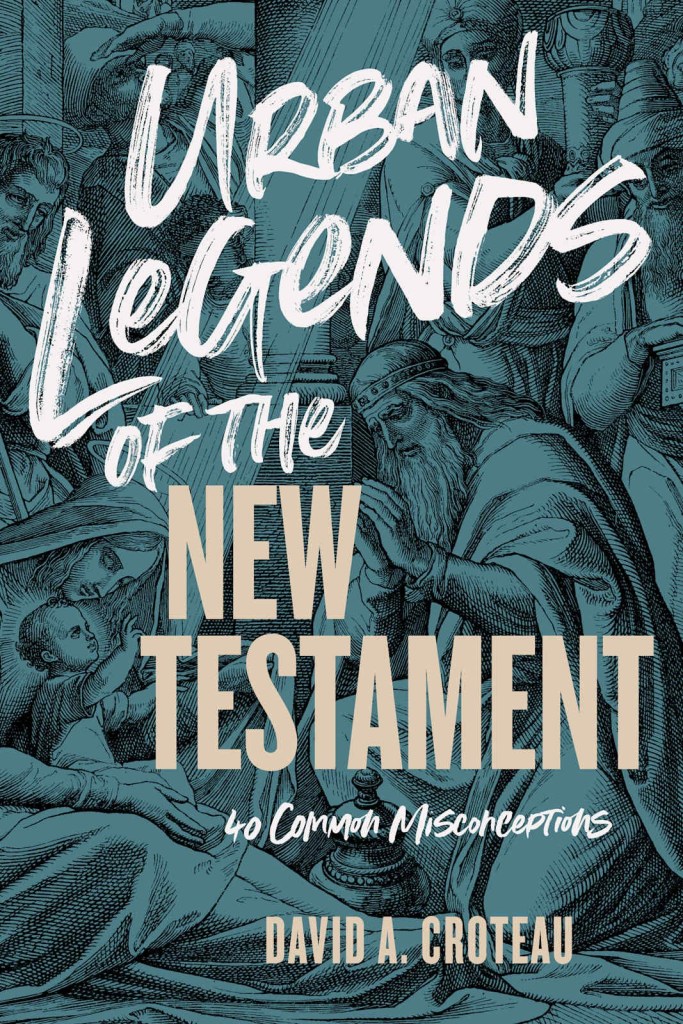
    Recently I watched the movie Nuremberg starring Russell Crowe and Rami Malek. The movie is based on the book whose cover appears above. It is a fascinating and well-made movie in my opinion, worth the viewing. I followed up watching the film with the book. And it is a fascinating and penetrating study all its own. I can highly recommend both – but would really recommend the book.

    The basic story is an historical one. At the close of World War II and the total defeat of Nazi Germany – for the first time in history, an international tribunal was convened charging many of the leading Nazis and their collaborators with war crimes. The Allies, led primarily by France, England, Russia and the USA undertook an unprecedented and colossal task. First to be prosecuted were 22 high ranking Nazis – the chief among them being Hermann Goering, Hitler’s handpicked successor. Goering was also the 16th President of the Reichstag (presiding officer of the German legislature); Supreme Commander of the Air Force (Luftwaffe); an aviator and architect of many of the oppressive laws governing how the Jews (along with others) found themselves not just disenfranchised but set on the path to extermination. He is played by Russell Crowe in the film.

    The Psychiatrist (played by Malek) was Dr. Douglas Kelley. A native Californian, Kelley was a well credentialed practitioner with extensive experience in treating soldiers returning from war with various psychological maladies issuing from their battlefield experiences. And for around 5 months, he was the chief Psychiatrist tasked with analyzing, assessing and maintaining the mental fitness of the 22 Nazis to be first on trial at Nuremberg.

    Kelley and Goering especially spent considerable time together. This relationship forms the core of both the book and the movie.

    All of the very, very interesting facts and events aside, the account boils down to Kelley’s attempt to find some clue, some common trait among the 22 that could account both for their utter devotion to Hitler and the Nazi agenda – and (of course) their willing participation in the monstrous atrocities perpetrated by the Reich. His goal was to understand them, not judge them. He did indeed abhor and judge their actions. But he really wanted to understand why they did what they did. How they could justify their crimes – or even if they perceived them as crimes.

    Kelley thought if he could pin-point “the” common cause, that such information could provide governments with the tools to prevent anything of the like ever happening again. If we could spot such men before they did such things, if we could head off their courses before they were set – what a boon that would be. And maybe such information could even be used domestically to identify and predict criminality of all sorts in advance. We could make ours and all societies safer in the future. Not to mention Kelley himself would gain global recognition. If he could just find the defect, the trigger, the trait. If only.

    And here is where the theological implications get thick.

    Kelley’s conclusion? There was nothing of the sort to be found. With only 2 real exceptions among the 22 (Ley and Hess), these men were mainly well adjusted psychologically. Not insane in the least. Highly intelligent, rational, educated, highly motivated, successful and even loving and devoted family men. To Kelley’s great dismay, they were just like you and me. They displayed no dominating or defining psychoses. They didn’t come from abnormal backgrounds or families. They were just good old normal folk found in every society. The types found in American politics, running corporations and living in suburbia. Businessmen. Doctors, lawyers, accountants, bankers, community organizers, and military men. Smart but average Joes.

    Herein lay Kelley’s great dismay. If there was nothing to set these apart – the worst of the worst – then what prevents something like this happening all over again, anywhere? The answer, so utterly terrifying to him was – nothing. And so when his war-time labors were over and he returned to the States, he went far and near lecturing wherever he could – warning everyone he could that men just like these 22, walk among us here too. He just had no idea how really right he was. He was missing the facts that only the Bible can reveal regarding it all.

    In the first place, Kelley had no category for the Fall, and the doctrine of the depravity of man. He believed in the innate goodness of most. And so he could never find an explanation for why anyone would do what these, and countless others have done. He was at a total loss. It terrified him. In time, he exhibited severe paranoid traits. He lived in fear even as he poured himself into more and more research that added nothing to provide him an answer.

    In the second place, he began to wrestle with fact that he knew he had some of the very same traits as his subjects. And there was nothing he could do about it. He had recurrent bouts of rage, anger and depression. He drank too much. He tried to domineer others. He was a workaholic as he tried to disregard and bury his own eruptions of evil. He longed for the spotlight like Goering, and it drove him to extremes too. But still he found no answers. He had no concept of himself as a sinner needing grace. He was just someone who needed some sort of social or psychological adjustments.

    Third, he tried to make his own son into a sort of super-man, the way the Nazis wanted to create their super-race. Forcing him to excel intellectually and academically, he drove his son to be an over-achiever at every turn. In this, he ultimately alienated his son and found him wanting to do just the opposite of achieve. He ruined their relationship in his incessant domination. He Nazi-ed his boy as he sought to revel in his own imagined superiority over others. And it failed too. We are made to bear the image of God, not of someone else. But fallen man seeks power. In the Garden, our first parents wanted to usurp God’s exclusive right to declare good and evil, to be our own de facto Creators (or at least seize the privileges thereof). We have never ceased from that impulse. Only the Christian informed by the Scripture can understand this iniquitous bent. Psychiatry and Psychology have no category for such a state.

    Fourth, Kelley had no doctrine of Common Grace. He thought there was nothing to restrain men in their pursuits. So he lived in constant fear and outrage. He had no idea that God is constantly restraining evil. That the reason why everyone isn’t acting out their inner Nazi at all times, in all places and in every way is because our God is sovereignly preventing it. Holding it back. There are times when He withdraws and allows us some sense of how dire the human condition truly is. He does allow certain breaches in fulfilling His works among us. But the Believer can live knowing the one who loves them supremely can rebuke even the winds and the waves. That all of His are safe in Him, even in what He permits.

    Lastly, Kelley didn’t know that ultimate justice will be done at the hands of Jesus Christ. That the Father has committed all judgment into His hands. That no one will escape either their just due or just reward. That there is a sure day of reckoning ahead. A day no human courts can ever even approximate. True justice.

    Absent any of the answers that were at both his and our fingertips in the Word of God – Kelley continued to spiral inwardly. It agitated him that Goering ultimately committed suicide before he was to be hanged. He understood Hermann’s attempt to keep his own fate in his own hands and not be humiliated as a common criminal when he was – after all – the true German Head of State and was due high honor for all he had done. And in a fit of rage in 1958, Kelley took his own life, in front of his family, and in exactly the same way as Goering – cyanide.

    We cannot psychologize, socialize or medicalize evil. Yes, there are times when all of those areas factor in to the heinous crimes of some. But ultimately, wickedness is a moral and spiritual issue. The Scripture is clear on it. And the remedy is to be found only in Jesus Christ. Only in reconciliation back to right relationship to our Creator and by that fact to one another. In the recognition of our sin and defilement before a holy God, and the provision He had made for us in the substitutionary death of His Son on the Cross – by faith in Jesus as Lord and Savior.

    Only the genuine Christian can fully face the depths of their own sin (and that of others) without despair. For we know the truth of it all – and the remedy, the rescue – in Christ Jesus of Nazareth.

  • Praying the Roof Off

    March 21st, 2026

    Mattew 9, Luke 5 and Mark 2 all give us the account of 4 men bringing a paralytic to Jesus.

    The BSB relays Mark’s account this way: “A few days later Jesus went back to Capernaum. And when the people heard that He was home, they gathered in such large numbers that there was no more room, not even outside the door, as Jesus spoke the word to them. Then a paralytic was brought to Him, carried by four men. Since they were unable to get to Jesus through the crowd, they uncovered the roof above Him, made an opening, and lowered the paralytic on his mat. When Jesus saw their faith, He said to the paralytic, “Son, your sins are forgiven.” But some of the scribes were sitting there and thinking in their hearts, “Why does this man speak like this? He is blaspheming! Who can forgive sins but God alone?” At once Jesus knew in His spirit that they were thinking this way within themselves. “Why are you thinking these things in your hearts?” He asked. “Which is easier: to say to a paralytic, ‘Your sins are forgiven,’ or to say, ‘Get up, pick up your mat, and walk’? But so that you may know that the Son of Man has authority on earth to forgive sins…” He said to the paralytic, “I tell you, get up, pick up your mat, and go home.” And immediately the man got up, picked up his mat, and walked out in front of them all. As a result, they were all astounded and glorified God, saying, “We have never seen anything like this!” (Mark 2:1-12)

    I have but one simple thought here – but what I hope will be a word of encouragment.

    Our faith greatly effects others, when by virtue of it, we bring men to Him – either in the sense of giving them the Gospel, or bringing them to sit under the preaching of the Word, or even in prayer – that they might be touched by Him. Pray beloved. It is not a fruitless exercise. When we believe enough to bring men before Him, He is willing enough to respond.

    Especially, I want to emphasize what an encouragement this is to pray for others.

    We have no indication in this account that the paralytic had any faith or hope of restoration of his own. But these men, they were faithful to bring the man before the King of Kings. And this is what we do when we pray for those yet bound in their trespasses and sins.

    In prayer, we take the roof off. We bring them into His presence. We make their need known to Him. And as the good God He is – He responds to our faith in bringing them to Him.

    Bring them all. Do not hesitate.

    Many cannot nor will not bring themselves. But that makes no difference. In prayer, we bring them directly into the presence of the God of Glory. And He responds.

    He has providentially placed them in your circle, that you might intervene on their behalf. He invites you to participate in His wondrous work.

    Pray for your lost loved ones beloved. Pray in faith. Pray expectantly. You have every reason to believe He will hear you.

    Pray the roof off.

  • Doxology Redux

    March 16th, 2026
    Praise God from whom all blessings flow
    Praise Him all creatures here below
    Praise Him above ye Heavenly hosts
    Praise Father, Son and Holy Ghost

    Praise God the Father for His love
    Who sent His Son from Heav’n above
    To live and die in sinner’s place
    That we might rise to see His face

    Praise God the Son who lived and died
    For sins of man was crucified
    To justify, then rose again
    All those who put their faith in Him
    Praise God the Holy Spirit who
    Indwells all those whom grace did choose
    To bear the image of The Son
    Perfecting all His work begun

    Let all creation stand in awe
    How Christ in life fulfilled the Law
    Then died to pay its penalty
    That all in faith might be set free

    Praise God from whom all blessings flow
    Praise Him all creatures here below
    Praise Him above ye Heavenly hosts
    Praise Father, Son and Holy Ghost
  • To be Satisfied in Christ Jesus

    February 27th, 2026
    Oh fill me Father, fill me
    With Heaven’s honied store,
    The riches and the richness
    Of Christ my treasured Lord

    Oh fill me Father, fill me
    Make Christ my all in all
    Make sin to lose its sweetness
    Its dainties turn to gall

    Oh fill me Father, fill me
    That satisfied in him
    I’m left no other hunger
    No ling’ring taste for sin

    Oh fill me Father, fill me
    I pray your Spirit’s light
    The glories of my Jesus
    To flood my sin dimmed sight
  • Psalm 43:5

    February 26th, 2026

    Awake my soul, rise up and sing
    My great Redeemer’s praise
    Whose loving kindness e’re abides
    Throughout my earthly days

    Shake off the chains of doubt and fear
    Let nothing you dismay
    For Christ your King rules over all
    And he must win the day
    No trials here, no troubled seas
    But he does rise above
    Who walks on every stormy crest
    To hold you fast in love
    Give all your care and worried mind
    Into his nailed scarred hands
    Who stands behind each providence
    Who winds and seas commands
    Rest all your weight on he who rules
    In sov’reign majesty
    Will not the one who died for you
    Forever faithful be?
    
    Cling fast to all his promises
    Trust fully in his grace
    Set all your heart on things above
    Behold his smiling face
    The one who bought you with his blood
    Cannot forsake his own
    The ones by faith in Spirit joined
    As very flesh and bone
    In seasons of the thickest clouds
    In nights of darkest black
    Sustained by his own life within
    We suffer no true lack
    Awake my soul, rise up and sing
    Your great Redeemer’s praise
    Lift up your voice in joyful song
    Be still, and stand amazed

1 2 3 … 198
Next Page→

Blog at WordPress.com.


Loading Comments...
 

    • Subscribe Subscribed
      • ResponsiveReiding
      • Join 421 other subscribers
      • Already have a WordPress.com account? Log in now.
      • ResponsiveReiding
      • Subscribe Subscribed
      • Sign up
      • Log in
      • Report this content
      • View site in Reader
      • Manage subscriptions
      • Collapse this bar