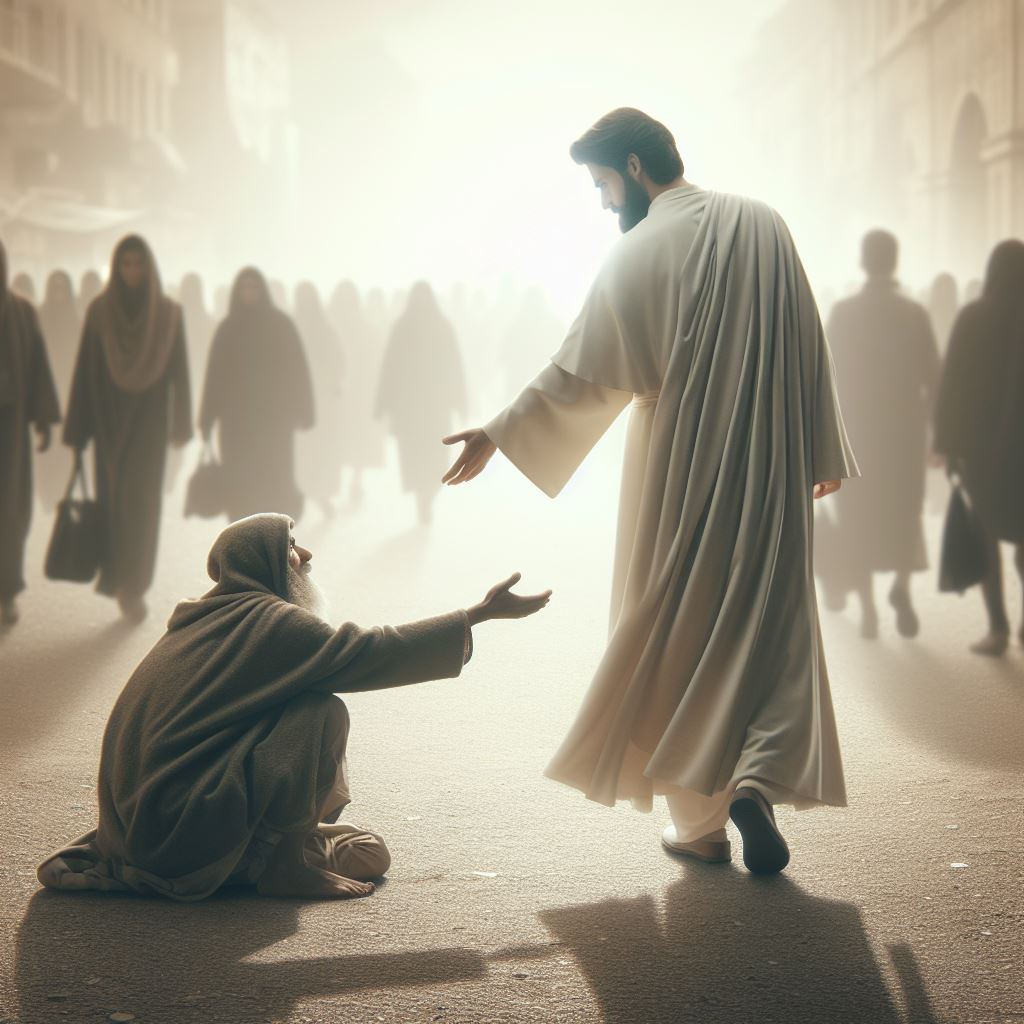
From Matthew 18:10-14 / Leaving the Ninety-nine
This is now the 4th part of Jesus’ reply to the questions: “Who will be the greatest in the Kingdom of Heaven?” And in it, Jesus makes a glorious appeal to understanding The Father’s tender care for the humble. Let men vie for position and status. It will be their downfall. But if you would know unbounded care and the most tender ministrations from the hand of God – it is found in His regard for the humble.
Note first: The command to not disregard the humblest of those who believe in Him.
As Paul would later instruct us by the Spirit: “consider your calling, brothers: not many of you were wise according to worldly standards, not many were powerful, not many were of noble birth. But God chose what is foolish in the world to shame the wise; God chose what is weak in the world to shame the strong; God chose what is low and despised in the world, even things that are not, to bring to nothing things that are, so that no human being might boast in the presence of God. And because of him you are in Christ Jesus, who became to us 1wisdom from God, 2righteousness and 3sanctification and 4redemption, so that, as it is written, “Let the one who boasts, boast in the Lord.” (1 Cor. 1:26-31)
These are our brethren. This is the host of the redeemed. Not the intelligentsia. Not the elite. The common man. The poor in this world’s eyes. He came to those who are weak and foolish and low and despised. For we who are nothing in ourselves.
Why then would we try to create some sort of new spiritual elite by comparing ourselves to one another?
It is a wickedness wholly antithetical to the Gospel.
This skewed reasoning is why the Church clamors after every celebrity who makes any claim to something like Christianity. Because we want to be thought of as something other than weak, low and foolish in the eyes of the world – which attitude inherently bleeds over into status seeking in the Kingdom as well.
Note secondly: Jesus’ use of the word “despise” here.
In modern parlance, we tend to read the word despise with the connotation of true and virulent hatred. But more often, it refers to hatred in the sense of total disregard. Treating someone as though they simply do not matter. Worthless in the eyes of God and man. Not worth paying attention to.
So it is, the command here is to guard our hearts from treating any of the weakest, lowest, most broken, as though they are not worth our time or ministrations. For He came for these. Indeed, when everything of self-illusion is stripped away, this is the YOU and ME He came for. And if we will not see ourselves as just a low, just as weak, just as worthless in the eyes of the world, then we inject some measure of pride into our salvation. That somehow we were worth more than others and that is why we were saved.
Note third: That in the parable which follows, Jesus emphasizes in no uncertain terms how precious each and every one of His sheep are to Him. Without distinction.
Now there have been no end of conjectures as how to precisely understand the metaphor here. But among them all, I have grown fond of that slant which Epiphanius (Bishop of Salamis – c. 315-403) suggests. He conjectures a most charming way of getting away from the questions which take us away from the meat and refreshing fruit of this passage. It would seem he makes his conjecture due to the way this parable reads in Luke 15.
He suggests that the picture is that of the Son of God leaving Heaven and the righteous angels in the presence of God, to come and die. To seek out the “lost sheep.” It is a picture of the incarnation. In other words, the very oddity of the scenario is meant to suggest to us something we wouldn’t ordinarily consider.
The 99 represents the majority of all of God’s Creation which has NOT strayed from Him, especially the righteous, unfallen angels. And the one sheep, is that one small part of Creation which has strayed – fallen mankind. Jesus leaves the 99 in Heaven, safe, secure and righteous, and comes seeking we lost, foolish and rebellious ones. And finding us, what does He do? He places us upon His own shoulders, with the full weight of all of our guilt and sin. He takes us up upon Himself, since we have no means to return to the fold ourselves. And carrying us to the Heavenlies on His scourge-scarred shoulders, He presents us blameless before His glory with great joy. (Jude 24) So it is Jesus notes it is joy “in Heaven” over the repentant sinner, above the righteous angelic host who need no repentance. And how they rejoice with Him in the fulfilling of His redemptive work.
And so we come to that closing thought: there will be more joy in heaven over one sinner who repents, than over the 99 – the angelic host – who have no need of repentance. And we are humbled to think how such a salvation, such a Savior can be ours.
Glorify Him Christian – He values your soul more than all the holy angels in heaven. No wonder the Psalmist must gasp: “What IS man, that you take notice of him?”
 ResponsiveReiding