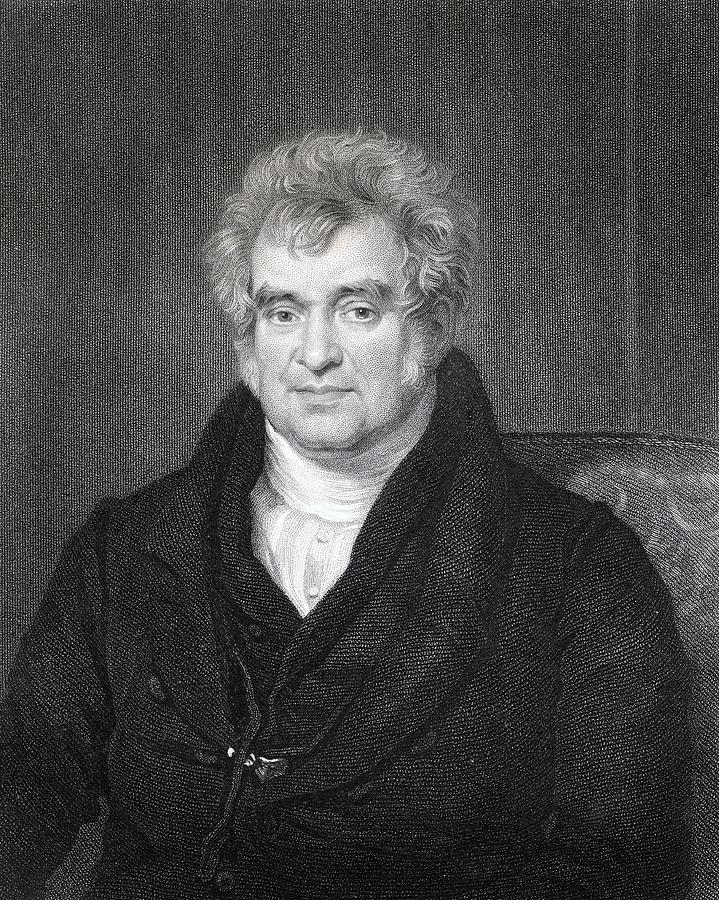
Thanks to the largess of a friend, I am currently reading through the autobiography of William Jay. Jay (1769-1853) was a non-Conformist (Independent) preacher and pastor in Bath, England – where he pastored Argyle Chapel for over 50 years. He was a friend of John Newton.
The autobiography is unusual in that it consists in 4 parts.
Part one is comprised of 18 letters to his children, recounting his life, ministry and reflections on a whole host of associated issues.
Part 2 is a supplement to part 1 regarding events of interest, celebrations, various personages with whom he interacted and other miscellanies.
Part 3 contains 23 “Reminiscenses of Distinguished Contemporaries.” These range from the well-known John Newton, John Ryland, William Wilberforce and others of the like, to many whose names are wholly unfamiliar to me excepting in this volume.
Part 4 is a wide-ranging selection of his voluminous correspondence.
Of particular delight to me (so far) was letter 17 to his children. It contains some of his most useful reflections in my opinion. And of particular note are the few excepts I am about to give you. I hope they will whet your appetite to seek out and read this refreshing, informative and soul-useful volume. It really is quite a delight. Of particular interest will be his reflections on leaving churches for other churches, and why different denominations is not a negative. There is food for thought there both for pastors and congregants.
Let me give you a few excerpts from the closing section in particular.
Pg. 166 – “Divinity cannot be taught at the college without system, but, in preaching, it is better that many things should be assumed than technically discussed. It is better for the preacher to give way to his holy and fervent feelings, than to be chilled and checked by the apprehension of some supposed inconsistency. It is better to let the text speak its own language, naturally and glowingly, than to use coercive measures, and torture out the meaning, or bombard it into submission.”
Pg. 166 – “In my considerable acquaintance with the religious world, some of the most exemplary individuals I have met with have been Calvinists. Of this persuasion were the two most extraordinary Christian characters I ever knew — John Newton, and Cornelius Winter. They held its leading sentiments with firmness; but their Calvinism, like that of Bunyan, was rendered, by their temper, milder than that of some of their brethren ; and they were candid towards those who differed from them; and esteemed and loved them as fellow-heirs together of the grace of life.”
Pg. 167 – “Two grand truths have always seemed to me to pervade the whole Bible, and not to be confined to a few particular phrases, viz., that if we are saved, it is entirely of God’s grace ; and if we are lost, it will be entirely from ourselves. I know full well, a man may easily force me into a corner with things seemingly or really related to the truth of either of these affirmations ; but he will not shake my confidence in either, while I can read, ” O Israel, thou hast destroyed thyself : but in me is thy help.” The connexion is like a chain across the river; I can see the two ends, but not the middle ; not because there is no real union, but because it is under water. Lower the water, or raise the links, and I shall see the centre as well as the extremes.”
Pg. 167 – “Paley observes that we should never suffer what we know to be disturbed by what we know not.”
This last quotation spans the bottom of Pg. 167 and the top of 168. With it, he ends this letter. He notes that he had written this in the fly-leaf of the Bible he most studied from. I find it a gold-mine in miniature.
“In reading this Book let me guard against four things —
1 – The mysticism of the Allegorizer :
2 – The contractedness of the Systematic:
3 – The Dogmatism of the Bigot :
4 – The presumption of the Rationalist.
Let me tremble at God’s word, and let me in reading it keep three purposes in view :
1 – To aid devotion rather than dispute.
2 – To collect facts rather than form opinions :
3 – To regulate practice rather than encourage speculation :”
To which I will add my own AMEN!
 ResponsiveReiding