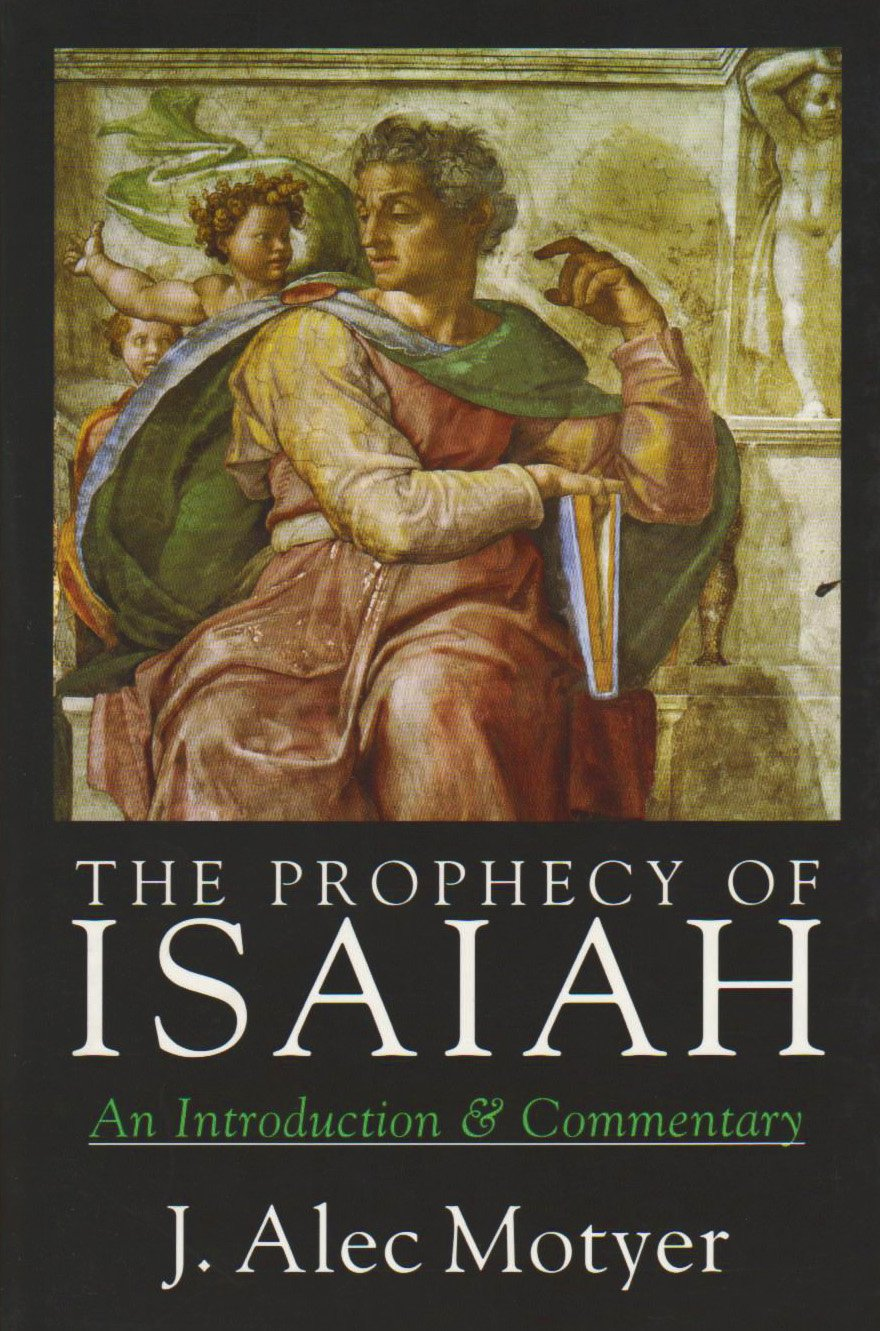
I am currently reading through the book of Isaiah at a slow pace. Purposely so. Because as I read, I am taking each section and reading Alec Motyer’s wonderful commentary along with it. And I want to argue that such a practice is an incredible tool which I think would yield much to all of us who seek to know God’s Word – and thus God Himself – better.
Now what led me to this particular practice at this time, was the challenge of a conversation with my good friend and pastor – Tony Bartolucci.
Sometime ago, he told me in his daily devotions, he was reading all of the ESV Bible Study notes along with the passages for the day.
The light came on.
Daily time with God is must for all of us if we would grow in Christ. Time in the Word. Time in prayer. Apart from these our spiritual tanks run on empty. As Al Mohler notes regarding the noetic effects of the Fall, one of those is how spiritual truths can slip from our static consciousness if they are not continually renewed. A form of spiritual forgetfulness. Something Motyer in his Isaiah commentary brings up as problematic for God’s people when they were being assaulted by Assyria.
Motyer writes: “Failure in memory is the cause of spiritual disaster.” How so? When we fail to remember and then stand upon God’s promises in His Word, and/or fail to recall how He has met us in the past – we look for new (and typically human) solutions rather than running back to, and trusting in – God. For Ephraim at this time, they turned to idolatry and military alliances, instead of calling out the Lord and looking for His deliverance.
It ended in disaster.
Back to my key topic.
When Christians fail to take advantage of good commentaries – typically under the guise of “all I need is the Holy Spirit”, we actually reject the Holy Spirit in the process.
How so?
Because we forget that some of the Spirit’s gifting, is in giving us teachers! “God has appointed in the church first apostles, second prophets, third teachers, then miracles, then gifts of healing, helping, administrating, and various kinds of tongues. Are all apostles? Are all prophets? Are all teachers? Do all work miracles? Do all possess gifts of healing? Do all speak with tongues? Do all interpret?” (1 Cor. 12:28-30)
So if I (in my arrogance and self-reliance) reject God given teachers to the Church, I say that I have no need of the Spirit’s gifts to me. For as the text plainly asks rhetorically – “are all teachers?” With the implied answer – No. Obviously not.
So I want to argue that when we reject these teaching gifts to the Church, we cut off our noses to spite our faces. It sounds spiritual, but it isn’t. We need every gift the Spirit has to give to the Church – through these He has supplied in His wisdom.
As I am reading Motyer, I am seeing how in his gifts of language, and analysis and decades of study in areas I have no exposure to, he brings light to bear on passage after passage I would never glean on my own.
I am fully aware all commentaries (and other helps) are not equally valuable. I get that. Some are as dry as desiccated dust. And yet…and yet, there are often buried treasures even in the least attractive if we will take the time to dig around a bit.
Then again, there are commentaries like this one by Motyer, that are as devotional as they are precise, rooted in the original languages, and analytical of broad structures. And such, are pure gold.
Let me encourage you to try out reading a commentary, bit by bit, along with some of your daily Bible reading, and see if it does not make your time all the richer – and enjoyable. Particularly as difficult or obscure passages are unpacked.
How do we find good commentaries to trust? Web sites like Ligonier Ministries, Tim Challies, The Gospel Coalition and Best Commentaries (which subtitles itself – Rotten Tomatoes for Biblical Studes) are good places to start. On the last, especially check out the section of recommendations by Don Carson. These are invariably solid and useful.
Look for those with some devotional aspect to them. Ask your pastor or someone else you know who gives some extra effort to study.
And if you’ve ever been intimidated by an OT book like Isiah – I cannot recommend Motyer enough. I found out about it through Carson’s recommendation. And in every section have found insight and application for my personal life, and even for understanding global, geo-political movements as under the sovereign hand of our glorious God.
Enjoy!
 ResponsiveReiding