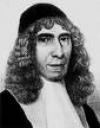
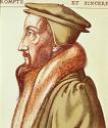
John Owen John Calvin
Before you read the following, I should make it clear that I was never HYPER-Calvinist. That is a very specific designation. For one to be a hyper-Calvinist, there are some very specific criteria which must be met. Phil Johnson in his excellent “A Primer of Hyper-Calvinism” discusses them in the following paragraphs:
“Notice three very crucial points in that definition: First, it correctly points out that hyper-Calvinists tend to stress the secret (or decretive) will of God over His revealed (or preceptive) will. Indeed, in all their discussion of “the will of God,” hyper-Calvinists routinely obscure any distinction between God’s will as reflected in His commands and His will as reflected in his eternal decrees. Yet that distinction is an essential part of historic Reformed theology. (See John Piper, “Are There Two Wills in God? Divine Election and God’s Desire for All To Be Saved” in Thomas R. Schreiner, ed., The Grace of God and the Bondage of the Will, 2 vols. Grand Rapids: Baker, 1995, 1:107-131.)
 Second, take note of the stress the above definition places on hyper-Calvinists’ “denial of the use of the word ‘offer’ in relation to the preaching of the gospel.” This is virtually the epitome of the hyper-Calvinist spirit: it is a denial that the gospel message includes any sincere proposal of divine mercy to sinners in general.
Third, mark the fact that hyper-Calvinism “encourages introspection in the search to know whether or not one is elect.” Assurance tends to be elusive for people under the influence of hyper-Calvinist teaching. Therefore, hyper-Calvinism soon degenerates into a cold, lifeless dogma. Hyper-Calvinist churches and denominations tend to become either barren and inert, or militant and elitist (or all of the above).”
(more…)





 ResponsiveReiding