Category: Jesus
-
We are reading the Bible through together this year, using the Discipleship Journal Reading Plan published by the Navigators. You can download it free of charge from: https://www.navigators.org/resource/bible-reading-plans/Today’s 4 readings are: Matthew 10:1-20; Acts 15:1-21; Psalm 23, Genesis 50.If you are looking at the plan carefully, you will note that this is our last reading for January – giving us a number of “catch up” days if we have fallen behind. So our next installment will pick up Feb. 1.But for today, I would like us to briefly consider Gen. 50:15-21.I am struck by two things. 1. The way my heart can mirror that of Joseph’s brothers when circumstances in my life make me uncertain of the future.Now that their Father was dead, they feared Joseph’s goodwill toward them had been motivated only by Joseph holding back because of his Father, and not genuinely Joseph’s heart. And when I sin or fail, or for whatever reason I grow uncertain or unsteady, it is easy for me to think that the Heavenly Father’s love for me is only based upon my performance. That if I mess it up, He will turn and His goodwill toward me will end. That it is not His nature, heart and promises that I actually depend upon but my own ability to obey perfectly. And it is a false accusation against His love. It suspects Him. It makes Him out to be less than He is in His mercy, grace, lovingkindness, forgiveness and love.2. I am struck at how their distrust of Joseph’s love toward them wounded him. When they spoke to him with their sham message from their Father – he wept. And I wonder how often we wound the heart of our Savior, and the Father who loved us so that He sent His only Son to die on the Cross for OUR sins, when we doubt His steadfast love, faithfulness, care, concern, tenderness, patience and forgiveness. We treat Him as though He had no idea how we would sin later after He saved us, and that His love toward us is so fragile, that the sins Jesus died for, can in any way nullify His finished work.God loves nothing more from His children that to be believed, trusted. That we take Him at His word. Look at His track record and trust Him with our sin. All of it. And that when He testifies of Himself that He IS love – that it is a love which our finite failings have no ability to negate.Trust Him, beloved. Trust His love.
-
We are reading the Bible through together this year, using the Discipleship Journal Reading Plan published by the Navigators. You can download it free of charge from: https://www.navigators.org/resource/bible-reading-plans/
Today’s 4 readings are: Matthew 9:27-38; Acts 14; Psalm 22:12-31, Genesis 49.
The healing of the 2 blind men in Matt. 9 provides crucial insight into how faith operates.
Note first something in the blind men’s approach to Jesus. Faith is not a sense of confidence – at least not in oneself in any way. They cried for mercy. A cry for mercy is a cry that denotes no sense of deserving or right. They did not say to themselves “I’m believing for healing!” Their faith wasn’t a worked up sort of thing, it was exercised in helplessness, not confidence. It looks to the benefactor to act only according to the benefactor’s own largess. And it is this recognition for mercy which is so essential to our right understanding of saving faith. Jesus owes us nothing. We deserve only wrath. But recognizing He has both the power and the prerogative to show mercy, we appeal to Him only on that basis. And He is ever faithful to respond in kind. What a great Savior He is!
Secondly, we see that some believed because they saw Jesus’ works. These, as blind, could only hear of His works. And yet, for them, that was enough. They believed having only heard. And so according to even that faith, a very slight, but still relying faith – they were healed. Note that v. 27 says they were following Him. They could only hear, and yet they followed. Oh that just hearing would always be enough for me. John 20:29
3rd, notice that it is not great faith that is needed. It is faith in a great Christ that is needed.
And lastly, note here how it is faith works. Jesus says “according to your faith be it done to you.” Now if they already had faith (the way we tend to think of it) then why weren’t they healed before Jesus touched them? It is because faith is not a power we can wield. What faith does is bring us to Christ – to trust Him. It doesn’t operate on its own as some sort of cosmic force we can use at will. Their faith brought them to seek out Christ to meet their need. This is what faith always does – it insists on finding Christ. And in finding Him, we will find the fullness of what we need.
Faith, as faith, didn’t heal them. Jesus did. Faith, as faith, won’t save us. Jesus must. Faith leads us to put our trust in Him. Faith believes Him – who and what He is and what He can do. And He responds.
—
Reid Ferguson / Kuyperian Abnormalist.Dulcius ex Asperis
http://www.ecfnet.org | Making disciples of all nations
http://www.responsivereiding.com—
Reid Ferguson / Kuyperian Abnormalist.Dulcius ex Asperis
-
We are reading the Bible through together this year, using the Discipleship Journal Reading Plan published by the Navigators. You can download it free of charge from: https://www.navigators.org/resource/bible-reading-plans/Today’s 4 readings are: Matthew 9:14-26; Acts 13:26-52; Psalm 22:1-11, Genesis 48.The Disciples of John came to Jesus with a curious question about fasting. Fasting in Jesus day had taken on some aspects we see even today. Throughout the Old Testament fasting was always tied to some aspect of mourning. It expressed grief over war, famine, loss and especially in repentance after a spiritual decline. But it wasn’t long before fasting became somewhat superstitious – a means to somehow bend the arm of God to do something for us that He was reluctant to do. And it became a symbol of one’s personal piety.Jesus in his answer to them, bids them to remember that fasting, like so many other things is tied instead to certain seasons. Seasons like I mentioned above. And thus, it would not be proper for Jesus’ disciples to be fasting right at this moment, for He, the Bridegroom was with them. It wasn’t the season for fasting but for rejoicing. Their days of mourning would come in time. But not now.And this bids us all to remember that even in nature, God has built in the idea of seasons. As the Writer in Ecclesiates reminds us: Ecclesiastes 3:1–8 (ESV) — For everything there is a season, and a time for every matter under heaven: a time to be born, and a time to die; a time to plant, and a time to pluck up what is planted; a time to kill, and a time to heal; a time to break down, and a time to build up; a time to weep, and a time to laugh; a time to mourn, and a time to dance; a time to cast away stones, and a time to gather stones together; a time to embrace, and a time to refrain from embracing; a time to seek, and a time to lose; a time to keep, and a time to cast away; a time to tear, and a time to sew; a time to keep silence, and a time to speak; a time to love, and a time to hate; a time for war, and a time for peace.”Seasons come and go. None are permanent. We are not meant for unalloyed joy yet. There will be days of sorrow and grief. And, we are not made for nothing but misery now. We keep our eyes open for a change of season, even the great change when we shall see Him in His return. Don’t faint at your present season if it is troublesome. It will not last. And don’t cling too tightly to a present season of ease and joy as though it is meant to always be that way and something is horribly wrong if for a time such joy departs. Trust in the God of the Seasons. Find the treasure in each. Commit yourself to Him in each. The Great Day of Christ’s appearing – is just before us.
-
We are reading the Bible through together this year, using the Discipleship Journal Reading Plan published by the Navigators. You can download it free of charge from: https://www.navigators.org/resource/bible-reading-plans/Today’s 4 readings are: Matthew 8:23-34; Acts 12; Psalm 20, Genesis 44-45.The Genesis account of Joseph being reunited with his brothers is powerful and moving. I cannot read it without thinking how we as the human race sold out Jesus, and how He is so full of forgiveness and grace that He falls upon our necks and weeps when we are brought back together. What a picture of salvation.
But I would call your attention to this morning is that easily passed-over verse quoting part of Pharaoh’s charge to Joseph regarding his family: “Have no concern for your goods, for the best of all the land of Egypt is yours.” (45:20)
This simple word from Pharaoh as king, ought to echo in our ears as spoken by our King. Indeed, it is, in the Sermon on the Mount. If we know we are on our way to inherit the Kingdom of God, how much ought our minds to be at ease regarding the goods we have here.
That is not a jab against good stewardship over what God has provided for us in the meantime, but it is a reshaping of the “big picture”. It is a reminder that any and all of what we have in this present life cannot hold a candle to awaits us. To truly set our own hearts free by hearing Jesus to not lay up “treasures on earth, where moth and rust destroy and where thieves break in and steal, but lay up for yourselves treasures in heaven, where neither moth nor rust destroys and where thieves do not break in and steal. For where your treasure is, there your heart will be also.” (Matt. 6:20-21)
Heavenly Father, grant me such a heart and mind. Make “the best of all the land” so real to me, that I am free to hold these earthly things ever so lightly. To have a heart of faith that anticipates that your promises to “an inheritance that is imperishable, undefiled, and unfading, kept in heaven for” me (1 Pe 1:4), eclipses any and all concern for loss or lack here. Make the coming sight of the unveiled glory of Christ so precious to me that I can suffer the loss and privation of anything in this life gladly, knowing what is just before me – because I am His, and He is mine.
—
Reid Ferguson / Kuyperian Abnormalist.Dulcius ex Asperis
www.ecfnet.org | Making disciples of all nations
www.responsivereiding.com -
We are reading the Bible through together this year, using the Discipleship Journal Reading Plan published by the Navigators. You can download it free of charge from: https://www.navigators.org/resource/bible-reading-plans/Today’s 4 readings are: Matthew 8:1-13; Acts 11:1-18; Psalm 18:25-50, Genesis 41.This, from Matthew 8:1-3
When Jesus says “I will”
No pow’r can intervene
Even hopeless lepers
Are instantly made clean
The blind, the deaf, the lame
In body, soul and mind
In Christ the Son of God
The fullest cure do find
No remnants of The Fall
Abide outside His pow’r
Though poisoned by our sin
He’ll cure us in His hour
When Jesus says “I will”
The heart may hope and rest
That when we’ve sought Him out
He’ll grant us Heaven’s best
So seek in Him dear soul
The cure for sin’s disease
He loves to say “I will”
To humble sinner’s pleas
When Jesus says “I will”
Because His blood was shed
The Father joys to raise
Foul sinners from the dead
Don’t wait a moment more
With all your guilty stain
Cry out to Christ the Lord
He’ll say “I will”, again.
—
Reid Ferguson / Kuyperian Abnormalist.
Dulcius ex Asperis
-
We are reading the Bible through together this year, using the Discipleship Journal Reading Plan published by the Navigators. You can download it free of charge from: https://www.navigators.org/resource/bible-reading-plans/Today’s 4 readings are: Matthew 7:15-29; Acts 10:24-48; Psalm 18:1-24, Genesis 39-40.Choosing which passage to dwell on today is a challenge. Every portion is so very rich. But we must choose, and I would call your attention to some familiar observations out of Acts 10. I find Peter’s discourse at Cornelius’ house so wonderfully organized, complete, clear and accessible, I pray it might be a great reminder to us of both the simplicity of the Gospel, and how wonderfully great swaths of Biblical truth can be condensed into such a brief space. Not my git for sure. Be assuredly Peter’s.Note then these 10 things out of our text:
1. vss. 34 & 35 / The Gospel is of equal applicability to all. There are no special groups from whom the Gospel is to be withheld. Peter assures them they have an interest in it. Some may think themselves too good to need the Gospel, too wicked to be beneficiaries of it, too religious to be drawn to the simplicity of trust Christ alone etc. But no matter who you are, where you are from or what your circumstances, if you are seeking God (and even if you are not!) the Gospel is for you.
2. vs. 35 / God receives all who set themselves to seek Him. In this, we are brought to be reminded that the Spirit of God is at work in the world. It is true that no one seeks God AS God on their own. Yet all sorts are aware that something is terribly wrong and are seeking for an answer on the level they understand it, and, the Spirit of God is creating in some a true hunger for God and salvation. It is not a product of their own making, but it is real nonetheless. If you know something of your own brokenness or lostness, it is because the Spirit has revealed it to you, and is seeking you out. DOn’t ignore His work in drawing you to Christ.
3. vs. 36 / Jesus is Lord of all (God) – and the Gospel of peace is about Him, and tied to His Lordship. If Christ is not God, there is no peace, there is no salvation. And if Jesus does not rule and reign over all, He is not God and not worthy to be believed and served. This is the first great revelation to our souls which we need so desperately: To who Jesus really is. Apart from that, there is no salvation. And that salvation rests in having peace with God through Jesus Christ.
4. vs. 37 / Jesus came within the context of repentance from sin, and faith toward God. There is no salvation apart from these two things. As John came preaching repentance from sin and faith toward God, so Jesus is the sacrifice for those sins and the One in whom we must trust to be saved from the condemnation our sins deserve. There is no salvation apart from dealing with sin. For sin is our great crime against the Loving God.
5. vs. 38 / Jesus came in the full manifestation of the Spirit of God, and in His ministry demonstrated God’s goodwill to all. Thus the Gospel offer is built upon a demonstration of His willingness to receive and heal. Don’t ignore His revelation of God’s willingness to receive you. He has given you all the evidence you need to assure your heart that He will.
6. vs. 39 / Jesus was crucified. (See: 1 Cor. 15:3-4) Apart from His crucifixion for our sins, our debt has not been paid nor our penalty taken. There is no Gospel apart from the Cross. Jesus’ dying in our place – taking the weight of our guilt and shame upon Himself. And praise God – He has done that very thing! This is the good news indeed!
7. vs. 41 / But He was also verifiably raised from the dead by God on the third day. (See: 1 Cor. 15:3-4) If Jesus was not, IS not raised from the dead, we are still dead in our trespasses and sins. Just as there is no Gospel without the Cross, so there is no Gospel apart from the resurrection. Jesus has risen. We must believe it in order to be saved.
8. vs. 42 / He commanded it be preached that He is the Judge of all mankind. Here is one more aspect of the Gospel so very often neglected in our day, but absolutely essential as Peter unfolds the basics of Gospel truth to these hearers. God will judge all sin one day. And it is Jesus Himself who will be that judge. Have you been reconciled to your Judge? If not, come now.
9. vs. 43 / He is in fact the great subject matter of the Scriptures – of all of God’s revelation to mankind. If you would know what the Bible is all about, you need look no further than to understand that it is given to explain the need for, and the fullness of – the person and work of Jesus Christ. He crystalizes it all.
10. vs. 43 / Forgiveness of sins is found in His name. Ah! The great and final piece: This is our crying, eternal need – forgiveness of sins. And how is that to be had? Through His name alone. He alone is god’s means. No church, no religion, no system – Jesus Christ and Him crucified, risen, and coming again as the Judge of all.You’ve just had a crash course in Gospel theology. -

We are reading the Bible through together this year, using the Discipleship Journal Reading Plan published by the Navigators. You can download it free of charge from: https://www.navigators.org/resource/bible-reading-plans/
Today’s 4 readings are: Matthew 6:25-34; Acts 9:20-43; Psalm 16, Genesis 36.
Matthew 6:33 “But seek first the kingdom of God and his righteousness, and all these things will be added to you” is one of the most recognizable and oft-quoted passages in the Gospels. And many have focused on the last phrase, while virtually ignoring the first part. But as is true with all texts, we need to take the whole to avoid making the part into something it is not. If we seek first the Kingdom of God and His righteousness – what things will be added to us? His Kingdom and His righteousness. Don’t think those small or inconsequential – they are the fullness of the riches He delights to bestow on us.
Note: We do not seek righteousness generically, but rather HIS righteousness. remembering, that His kingdom is a kingdom of righteousness, one that bears none of the ravages of sin whatever. So in the first place, we seek His righteousness to justify us. Each must put their trust in the Gospel to begin with. The religion of the Bible is not one of trying to establish our own righteousness, but of always seeking to be sure we are trusting in HIS righteousness.
But in the second case – and here is an extraordinary insight into the Christian’s primary occupation – we seek His righteousness lived out in us. Victory over sin. Living in love toward the saints that they too might find victory over sin. To live as the righteous people we have been pronounced by Him to be in justification. As strange as it sounds, Jesus is calling us to a preoccupation with our sin. Not morbidly. Not anxiously. Not with any hint of condemnation – but with the courage that is engendered by knowing our status with Him as His beloved children cannot be altered by anything. We are totally and irrevocably secure in that. Because we are so secure, we have the freedom to face the depths of remaining indwelling sin and challenge it on its own ground in a continual warfare; and that, with a sort of Christian bravado. A Biblically justified “bring it on!” in challenging our sins. A warfare to live fully in concert with who and what we’ve become in Christ Jesus.
In the overall picture, it is as though Jesus is saying give yourself to me like a bride to her insanely wealthy and attentive husband – and watch what I will do for you. Know that you will never lack provision. And never lack my constant, faithful love. And be free then to explore the fullness of the riches of my kingdom.
And how do we do this in practical terms? One means is prayer. When we pray, we pray as He taught us, not ignoring our other needs, but doing so in quiet confidence that when we give ourselves to seek His Kingdom, He will give us all we need. We pray His agenda, trusting him to know and provide for ours better than we do. We pray like our hearts know full well (as they ought) that His unshakable, unbreakable love for us designs only our good in the sovereign exercise of His care for us.
We do it in study of His Word. Mining out the provisions He has stored up for us there. Searching out and gaining His wisdom, His understanding and grasping more fully the wonder of the person, plan and work of Jesus.
By consciously looking to the indwelling Spirit of Christ to work in us courage for the battle, willingness to die to our sins, new tactics for new days, comfort in failure and power to rise up again.
We do it in fellowship with God’s people, where we commiserate over our wounds, bandage each other up, learn tactics from one another, encourage one another, exhort one another, pray for one another and rejoice with one another.
We do it by sitting under the preaching and exhortation of God’s Word; by attending to the Lord’s Supper so as to feed the grace which lives in our souls; by confirming our faith in baptism, and by trusting the finished work of Jesus on the Cross.
Seek first His kingdom and His righteousness, and the fullness of all that is contained in those will be fully yours. And it is more than we can collectively imagine.
-
We are reading the Bible through together this year, using the Discipleship Journal Reading Plan published by the Navigators. You can download it free of charge from: https://www.navigators.org/resource/bible-reading-plans/
Today’s 4 readings are: Matthew 6:16-24; Acts 9:1-19; Psalm 15, Genesis 34-35.
Psalm 15 is both delightful, and terrifying. Delightful in the picture it paints of one who would walk with God. Terrifying in how far short I fall in every respect.
Who indeed can dwell on God’s holy hill, when what it takes to qualify to do so, I’ve long since failed at?
O that I would walk blamelessly. But even if I did from this moment forward, what about my past?
That I would always do what is right – but I fail in that every hour.
And falsehood still finds its way into my heart. I lie to myself about my own goodness; lie about others to feel better about myself; and worst of all, lie about God – failing to know the real truth of Him as fully revealed in Jesus. Still harboring the lies of Eden that God is not ALL good and has only my best interest at heart – without flaw.
How I have slandered others – especially those with whom I disagree.
And I’ve not always done only good to my neighbor – even my closest neighbor, my spouse, my child, my brothers and sisters in Christ.
And there have surely been times when I’ve reproached my friend needlessly.
I have often – and still have the tendency to be impressed and intimidated by the wicked as adding some perceived value to me if they are brilliant, talented, astute, accomplished, powerful, recognized, forceful, and attractive.
And I have failed to honor those who fear the Lord regardless of their station.
At times, when my promises appeared as though they would cost me more than I planned, I’ve reneged on them to spare myself.
I’ve lent not out of love, but to receive a return, and had a heart which can be bribed from being fully impartial.
What hope then is there for me that I might one day live with my God in His holy mountain?
But one.
That Christ my substitute has fulfilled all of this. He hasn’t erred in even the slightest. And that His perfect righteousness is imputed to all who put their trust in Him and Him alone.
Hallelujah! What a Savior!
-
Through the Word in 2020 / Jan. 14
We are reading the Bible through together this year, using the Discipleship Journal Reading Plan published by the Navigators. You can download it free of charge from: https://www.navigators.org/resource/bible-reading-plans/
Today’s 4 readings are: Matthew 6:1-15; Acts 8:26-40; Psalm 14, Genesis 32-33.
I could not help but be struck by the emphasis Jesus places upon forgiveness in His giving us His pattern for prayer in Matt. 6. You would think the prayer pattern itself would be light and instruction enough – but then He takes out His magnifying glass and enlarges on forgiveness. Why? Because nothing is nearer and dearer to the heart of the Father than forgiveness. Nothing so reveals Him to us as does what He was willing to do, what cost He was willing to incur, what absolutely cosmic measures He would go to – to forgive our sins, and reconcile us to Himself. This is so important for us to grasp that Jesus caps it by saying that no one who fails to manifest the grace of forgiveness, will be saved by grace. Make no mistake, unchanged in this regard means unsaved.
Some squirm at this thought because they falsely believe forgiveness means ignoring past offenses. It means nothing of the kind. Jesus in His resurrected body still bears the scars of His crucifixion. An eternal reminder that forgiveness is immensely costly. You will lose something in forgiving. You will be saying to that person or those persons “you don’t owe me anything anymore.” You willingly take the hit and cancel the debt. Jesus does not go on here to elaborate, but when we do such a thing, we also gain something else of more eternal value; deeper entrance into the very heart of God Himself. It’s worth it.
Others recoil because they imagine this means – for instance – criminal acts against us must be swept under the rug. Not so. I can and MUST forgive sins against myself, but I have no power or authority to forgive crimes against the law. Nor sins against others. That is a separate jurisdiction. And in fact, in order to love my neighbor as myself, I may need to see to it someone I forgive for myself must still be brought to justice under the law in order to protect others. Love for my neighbor and not just the offender requires it.
Nor does forgiveness mean the hurt of the offense just goes away. We are called to forgive in the very midst of pain, it does not mitigate the pain any more than Jesus suffered less on the Cross when saying “Father, forgive them.”
And to have my heart ready to forgive, is not always the same as being truly reconciled. Christ has made an atonement for the sins of the World. There is no sin and no sinner for which there is not provision for full and free forgiveness. But the tragic reality is, an offender never gets the benefit of that forgiveness until they repent. I may get the benefit in my heart, being at the ready – out of the bottomless ocean of God’s forgiveness for me – to be reconciled to them should they repent. But sadly and tragically, they cannot partake of the benefit of it if they remain unrepentant. They cannot have the joy of complete reconciliation even as I at the same time receive the joy of freedom from needing to prosecute the case anymore. Oh how we need to pray that they might turn by the power of the Holy Spirit, even as He has worked in our own hearts to turn and seek reconciliation with the Father through the Son.
Forgiveness is expensive. Forgiveness between God and us cost the blood of His eternal Son. And God so loved the world, that He gave His only Son, that whoever believes in Him should not perish in unforgiveness, but have the everlasting life His forgiveness brings. Heavenly Father, manifest your forgiving heart in me by your Spirit. In Jesus’ name. For Jesus’ sake.
-
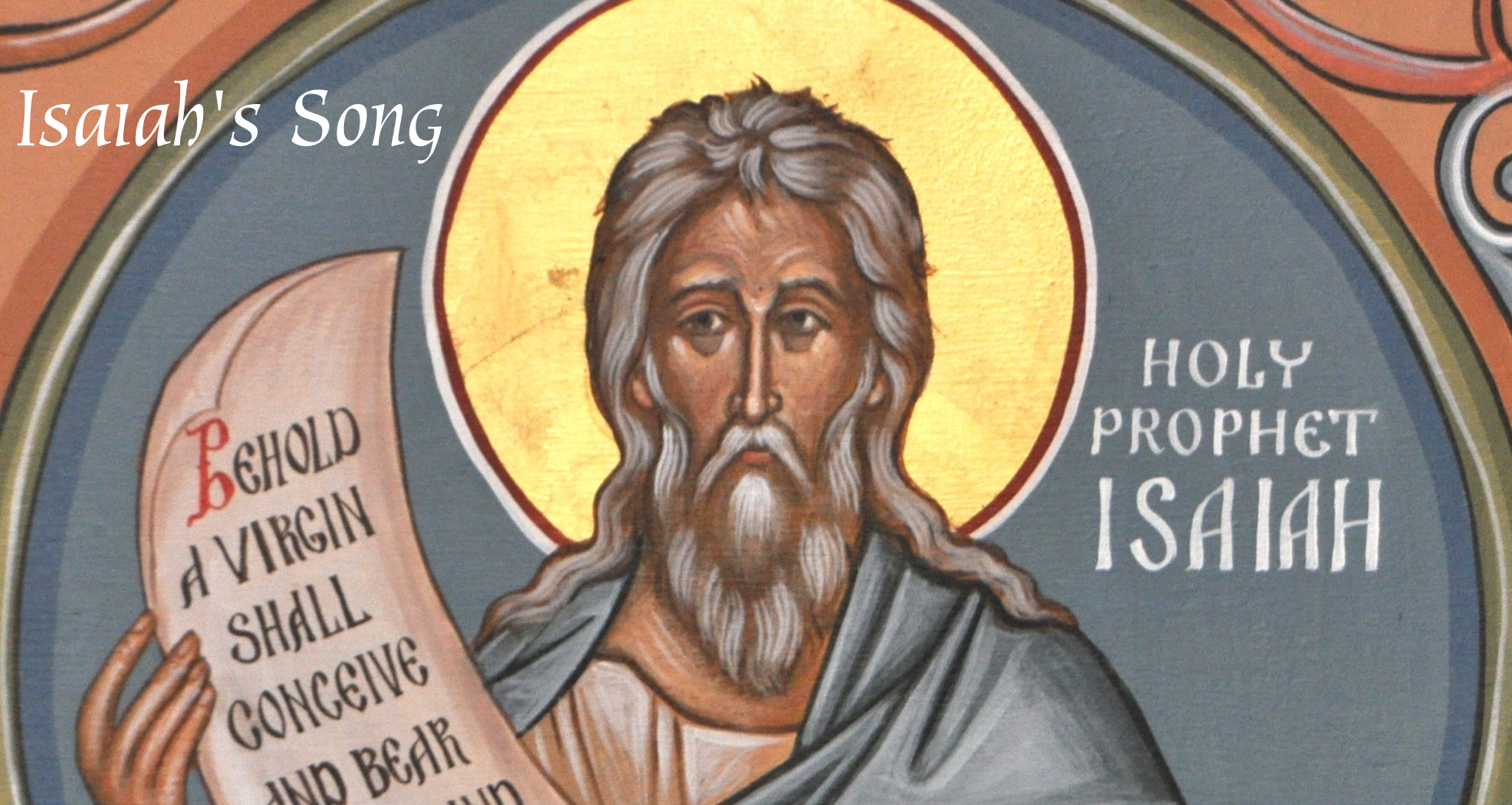
At the behest of my dear wife – a poem for Christmas, 2019 – based upon Isa. 9:6-7.
Isaiah 9:6–7 (ESV) — 6 For to us a child is born, to us a son is given; and the government shall be upon his shoulder, and his name shall be called Wonderful Counselor, Mighty God, Everlasting Father, Prince of Peace. 7 Of the increase of his government and of peace there will be no end, on the throne of David and over his kingdom, to establish it and to uphold it with justice and with righteousness from this time forth and forevermore. The zeal of the LORD of hosts will do this.