 In continuing through this series – it is my hope that not simply the material, but presenting it different ways and giving emphasis here and there and especially opening up an area more by others will be of additional help. Today is one of those “opening up” places with guest blogger – Scott Ferguson. How sin loses its grip progressively over time is one of the most encouraging things we can hear. Here’s how he describes it.
Category: soteriology
-
-
 In prosecuting the “Every Believer’s Battle” against the influence of indwelling sin – we need to know, and rehearse regularly some foundational principles.
1. We must never forget – This is war.
2. We must never forget – Sin doesn’t die.
3. We must never forget – God has designed and decreed your victory.
Never is that third principle more important than in the immediate aftermath of some particular failure.
-
 So far, we have looked at two foundational principles for aiding the Believer in waging the war against indwelling sin.
Foundational Principle #1 : This is war.
Foundational Principle #2: Sin doesn’t die.
Before we jump into #3…
-
 We’ve begun a short series on the topic of the Believer waging war against the remnants of indwelling sin. We’ve seen already that the very first Foundational Principle is: This is war. Ephesians 6:10-20.
If the Christian does not enter into and maintain a battle mentality – sin will have its way with us. As that eagle-eyed pastor of an earlier age wrote: “True Christianity is a fight. True Christianity! Let us mind that word ‘true.’ There is a vast quantity of religion current in the world which is not, true Christianity…The true Christian is called to be a soldier, and must behave as such from the day of his conversion to the day of his death.” (J. C. Ryle’s “A Call to Holiness” – pg. 52)
-
 As of late, I have received quite a number of emails asking questions about the problem of overcoming indwelling sin. I thought it might be good to take a few installments just to put forth some strategies from Scripture regarding it. In truth, it is a most important topic. Since The Father’s goal for all Christians is to see us perfectly conformed to the image of His Son, dealing with these remaining vestiges of our “old man” is a topic at the heart of our Christianity.
As a starting place, we need to get some sense of the problem as the Bible describes it. Getting a grasp on the problem in the big picture first so that we can see how to proceed is important. We must deal with truth, not myth or supposition. With that in mind there are some foundational principles which need to be kept in mind.
Our first foundational principle is: This is war.
-
 1 – Acts 10:34-43 4o Peter opened his mouth and said: “Truly I understand that God shows no partiality, 35but in every nation anyone who fears him and does what is right is acceptable to him. 36As for the word that he sent to Israel, preaching good news of peace through Jesus Christ (he is Lord of all), 37you yourselves know what happened throughout all Judea, beginning from Galilee after the baptism that John proclaimed: 38how God anointed Jesus of Nazareth with the Holy Spirit and with power. He went about doing good and healing all who were oppressed by the devil, for God was with him. 39And we are witnesses of all that he did both in the country of the Jews and in Jerusalem. They put him to death by hanging him on a tree, 40but God raised him on the third day and made him to appear, 41not to all the people but to us who had been chosen by God as witnesses, who ate and drank with him after he rose from the dead. 42And he commanded us to preach to the people and to testify that he is the one appointed by God to be judge of the living and the dead. 43To him all the prophets bear witness that everyone who believes in him receives forgiveness of sins through his name.”
RAF: How timely this portion is for our day. What constitutes the Gospel is a matter always needing resolved – for as many as there are people it seems, so many opinions there are about what one must believe to be a Christian. Thanks to passages like this, we have a clear and full account of it. So that there be no mistakes, the Holy Spirit preserves such an account as this. Here, you have the Gospel being brought to those with no previous exposure to it at all. Peter presupposes nothing on their part. He does not try to make any apologetic regarding whether or not God exists – this he takes for granted. And with that foundation – he then goes on to give us the essentials. I might add that when we neglect such elements as we see brought out here, we are probably giving too brief an account. We need to be willing to take the time with people to spell out the full case. Note these particulars of the Gospel then:
1. vss. 34 & 35 / The Gospel is of equal applicability to all. There are no special groups (or individuals) from whom the Gospel is to be withheld, nor any to whom it belongs exclusively. Peter begins by assuring them they have an interest in it. And I want to assure you that YOU have an interest in it. God has sent His Church into the world to announce the good news of His willingness to receive any and all who come to Him by faith in Jesus Christ. If you come with your sin, He will have mercy on you. Not only is He willing to forgive, He makes you a new creature – and adopts you into His family. He gives eternal life to those who put their trust in Him.
2. vs. 35 / God receives all who set themselves to seek Him. In this, we are brought to be reminded that the Spirit of God is at work in the world (John 16:8). It is true that no one seeks God AS God on their own (Rom. 3:11). But we must be careful not to absolutize texts like Rom. 3:11 so as to deny texts like John 16:8. The Spirit is at work. All sorts of people are aware that something is terribly wrong and are seeking for an answer on the level they understand it, and, the Spirit of God is creating in some a true hunger for God and salvation. It is not a product of their own making, but it is real nonetheless. We find men in differing places in this way. Some are aware of their guilt, but not of Christ’s righteousness or the reality of coming judgment. Some sense doom ahead, but do not know it is due to sin and related to Jesus Christ. Some are self-righteous and have no sense that they need His righteousness imputed to them. Some are bind to all three, and others awake to all three (like Cornelius) and yet without the Gospel. We must cooperate with what the Spirit is already doing and not reduce the Gospel to a “one size fits all” presentation which does not take into account where they really are and which aspects need most to be dealt with.
3. vs. 36 / Jesus is Lord of all (God) – and the Gospel of peace is about Him, and tied to His Lordship. If Christ is not God, there is no peace, there is no salvation. No one who denies that Jesus is God is a Christian – irrespective of the outward trappings. One must receive Him as their God so as to set their lives to worship and serve Him as God – if they would be His. Christians may be – and indeed are, more than. but certainly not less than – those who serve Jesus Christ as God.Is He YOUR Lord? Or are you still trying to be the lord of your own life. He made you for Himself. And He is looking to reclaim you for Himself.
4. vs. 37 / Jesus came within the context of repentance from sin, and faith toward God. There is no salvation apart from these two things. Let no one imagine they can come to Christ while at the same time remain their own Lord or without being engaged in throwing off the sin He died for. Turning from serving sin, self and false belief systems is at the heart of repentance. And one must not simply believe the facts of Jesus death on the Cross for sin – one must actually trust Christ personally as THEIR substitute, their own sin-bearer. They must rely on His substitutionary atonement as the only means whereby they are reconciled to God, forgiven of their sin, adopted into God’s family and promised eternal life.Is there anything you are unwilling to forsake in order to have Him? Then think about it – whatever or whoever that is – that is the value YOU have placed upon your own soul. That is how much you think you are worth. That’s all.
5. vs. 38 / Jesus came in the full manifestation of the Spirit of God, and in His ministry demonstrated God’s good will to all. Thus the Gospel offer is built upon a demonstration of His willingness to receive and heal. Salvation does not rest in a mere fleeing from the wrath to come. Certainly, that is contained in it, but one must be convinced that God has good will toward them and desires their salvation if faith is to be authentic: For “without faith it is impossible to please him, for whoever would draw near to God must believe that he exists and that he rewards those who seek him.” (Hebrews 11:6) Unassured of these two things – one is not exercising true saving faith.
6. vs. 39 / Jesus was crucified. (See: 1 Cor. 15:3-4) Apart from His substitutionary atoning death, there is no means whereby men’s sins can be forgiven, and God remain just in His pardoning and saving us. He must judge sin. And if we do not accept the propitiation held out before us to be received by faith (Rom. 3:25) we must take upon ourselves the full responsibility for our sins and the eternal damnation that is the just penalty for them. Can you look at the Cross and know that you deserved that punishment? Then look at it and see Him there instead of yourself. And you will have some grasp of how much He loves you – and how He has made a complete satisfaction for sin.
7. vs. 41 / But He was also verifiably raised from the dead by God on the third day. (See: 1 Cor. 15:3-4)
Christ’s death on Calvary, apart from His resurrection would save none. Scripture ties our “justification” – our being declared righteous with His righteousness – to His resurrection (Romans 4:25 who was delivered up for our trespasses and raised for our justification.) 1 Cor. 15 makes it abundantly clear that to deny the resurrection is to deny the Gospel. If He is not raised, we are still in our trespasses and sins – and there is no hope. One must believe in Christ’s resurrection or they cannot be saved. And, I might add, that His resurrection is the firstfruits of our own. Do you believe, do you KNOW, God has raised Him from the dead?
8. vs. 42 / He commanded it be preached that He is the Judge of all mankind. That judgment is still coming on all who refuse the Gospel and die in their sins unreconciled to God is part and parcel of the whole picture the Gospel presents. This is our salvation – deliverance from the wrath to come – so that we might be eternally joined to God. And how is this wrath to be carried out? Acts 17:31 (ESV)
“he has fixed a day on which he will judge the world in righteousness by a man whom he has appointed; and of this he has given assurance to all by raising him from the dead.”9. vs. 43 / He is in fact the great subject matter of the Scriptures – of all of God’s revelation to mankind.
The Gospel makes it clear that Jesus Christ – His divine person and work in His incarnation, death, burial, resurrection, ascension and return – IS the centerpiece of God’s redemptive plan. He is the centerpiece of all truth. Reality cannot be truly grasped apart from Him taking His rightful place as the key to it all.
10. vs. 43 / Forgiveness of sins is found in His name. And, we might add – no where else. Acts 4:12 (ESV) “And there is salvation in no one else, for there is no other name under heaven given among men by which we must be saved.”
Here then is a wonderful means whereby we can see whether or not we are preaching or believing “The Gospel” – or merely annunciating some true but disconnected facts that do not truly communicate the Gospel at all. These, are essentials.
-
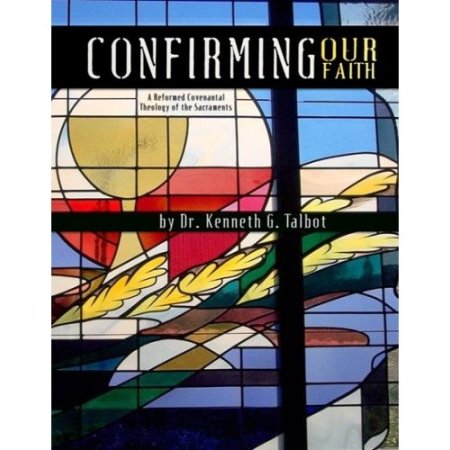 Life is funny. A few years ago I began the journey of going to seminary to fill in the holes in my autodidactic theological education. It is SLOW going.
I decided on Whitefield Theological Seminary for a number of reasons – among which was that I could do this as a distance learning program, self-paced to allow me to continue being a busy pastor without interruption. Like I said, its slow going. For a while now, not going at all.
When I made this decision, Dr. Ken Talbot, founder of the seminary and its President had me go to Florida for a 3 day round of exams to assess my placement. BRUTAL is the first word that comes to mind. And SUBLIME is the second word – due to the three days I got to spend with Dr. Talbot. They will always remain treasures to me. We formed a personal and spiritual bond that is a true delight to me upon every reflection upon it.
A number of months ago, Dr. Talbot and I were discussing my academic progress (or better, lack thereof) when he asked if I might – as one committed to a Believer’s Baptism model – be willing to read his upcoming book on the sacraments (pictured above). If possible, he wondered if I might be willing to say why it might be worth reading, even for us baptistic folk. I jumped at the chance.
After reading it, I was more than excited to send a positive response. I sent back my “endorsement” for what it is worth. (I don’t know if my name might lend more negative associations than positive.) And then I was most honored to find out Dr. Talbot had decided to use my appraisal as the forward to “Confirming Our Faith: A Reformed Covenantal Theology of the Sacraments.”
I’ll let you see my reasons below for endorsing Dr. Talbot’s book. Here, is what I sent Dr. Talbot, which unedited appears now as the forward to this excellent work. Do I agree in every place? No. I remain a Credo-baptist. But the value here will become apparent in what I wrote.
Here is the Forward:
Why would a confessed credo-baptist want to recommend reading Dr. Talbot’s “Confirming Our Faith”? The answers are not hard to provide.
First, because so much confusion reigns between paedo & credo-baptist brethren on the issue of the sacraments. Misinformation and disinformation often lock us into unfruitful (and sometimes, most grievously) uncharitable conflict. There is no call here to erase genuine distinctives. There is instead a lucid, reverent, edifying and myth-destroying presentation of what is taught in the Westminster standards on these two vital means of grace. (Read the book before you throw stones at me for using that last phrase – means of grace.)
Second, because even in the paedo-baptistic branches of the Lord’s Body, the role and meaning of covenant baptism is often poorly understood, articulated, entered into and defended.
Third, because it is often the case (in my experience) that the majesty, mystery and wonder of the Lord’s Table is lost in a tradition of virtually tacking it on at the end of a worship service, rather than giving it a more prominent and important role, vital to the life of the Church and its true spiritual members.
Fourth, because a simple but all so important distinction between the concepts of “benefits” versus “privileges” (just read it and you’ll find out) could not only kick the stuffing out of an army of straw men, it could free us up to love one another more tangibly, really, and visibly, across some historically electrified lines.
Fifth, because Dr. Talbot loves the Church, both visible and invisible. Because his heart yearns for its members to share its common life truthfully, faithfully, passionately and joyfully.
We have three Biblically identified enemies: The World, the Flesh, and the Devil. Books like this will let us join arms in waging the battle on their soil, rather than taking potshots at one another across the aisle. May its influence range far and wide.
I did find one curious omission however. There is not a single word of anti-credo baptist rhetoric anywhere to be found. Not one. That may speak even more loudly than the text itself.
Please read it.
-
 Some of Calvin’s own words on the extent of the atonement:
 Isa. 53:12 – “ He bore the sin of many. I approve of the ordinary reading, that He alone bore the punishment of man, because on Him was laid the guilt of the whole world. It is evident from other passages, and especially from the fifth chapter of the Epistle to the Romans, that ‘many’ sometimes denotes ‘all’.”
Mark 14:24 – “The word many does not mean a part of the world only, but the whole human race.”
John 1:28 – “And when he says the sin of the world he extends this kindness indiscriminately to the whole human race.”
John 3:16 – “He nevertheless shows He is favorable to the whole world when He calls all without exception to the faith of Christ, which is indeed an entry into life.”
John 3:17 – “The word world comes again so that no one at all may think he is excluded.”
John 4:17 – “He declared that the salvation He had brought was common to the whole world, so that they should understand more easily that it belonged to them also.”
John 12:47 – “For He delayed pronouncing judgment on them, because He had come rather for the salvation of all.”
John 14:30 – “For the word world here embraced the whole human race.”
John 16:8 – “I think that under the word world are included both those who were to be truly converted to Christ and hypocrites and reprobates.”
John 17:9 – “He openly declares that he does not pray for the world, for He is solicitous only for His own flock which He received from the Father’s hand.”
Rom. 5:18 – “Although Christ suffered for the sins of the world and is offered by the goodness of God without distinction to all men, yet not all receive him.”
Gal. 5:12 – “For God commends to us the salvation of all men without exception, even as Christ suffered for the sins of the whole world.”
Col. 1:14 – “He says that this redemption was procured by the blood of Christ, for by the sacrifice of His death all the sins of the world have been expiated.”
Heb. 2:9 – “He suffered death, so that by the grace of God he might taste death for every man.”
Heb. 8:4 – “He made atonement for the sins of the world as a Priest.”
Heb. 9:28 – “He says many meaning all, as in Rom. 5:15.”
“God was reconciling the world to himself in Christ, not counting men’s sins against them” (2 Cor. 5:18, 19) “reaches to all, but that it is not sealed indiscriminately on the hearts of all to whom it comes so as to be effectual.”
Rom. 5:10 For if while we were enemies, we were reconciled to God through the death of His Son, much more, having been reconciled, we shall be saved by His life.By saying that we were reconciled to God by the death of Christ, he means, that it was the sacrifice of expiation, by which God was pacified towards the world, as I have showed in the fourth chapter.
- Rom. 5:18 So then as through one transgression there resulted condemnation to all men, even so through one act of righteousness there resulted justification of life to all men.
He makes this favor common to all, because it is propounded to all, and not because it is in reality extended to all; for though Christ suffered for the sins of the whole world, and is offered through God’s benignity indiscriminately to all, yet all do not receive him. {2}
- 1 Tim. 2:5 For there is one God, and one mediator also between God and men, the man Christ Jesus, 6 who gave Himself as a ransom for all, the testimony given at the proper time.
The phrase, for all, which the Apostle had used, might have given rise to the question, “Why then had God chosen a peculiar people, if he revealed himself as a reconciled Father to all without distinction, and if the one redemption through Christ was common to all?” He cuts off all ground for that question, by referring to the purpose of God the season {3} for revealing his grace. …Shall we accuse God of instability, because he brings forward, at the proper time, what he had always determined, and settled in his own mind?
- 2 Pet. 2:1 “But false prophets also arose among the people, just as there will also be false teachers among you, who will secretly introduce destructive heresies, even denying the Master who bought them, bringing swift destruction upon themselves.”
- …Christ redeemed us, that he might have a people separated from all the pollutions of the world, and devoted to holiness ,and innocency. They, then, who throw off the bridle, and give themselves up to all kinds of licentiousness, are not unjustly said to deny Christ by whom they have been redeemed.
That, then, is how our Lord Jesus bore the sins and iniquities of many. But in fact, this word “many” is often as good as equivalent to “all“. And indeed, our Lord Jesus was offered to all the world. For it is not speaking of three or four when it says: ‘For God so loved the world, that he spared not His only Son.” ….Our Lord Jesus suffered for all, and there is neither great nor small who is not inexcusable today…. For how will they excuse their ingratitude in not receiving the blessing in which they could share by faith? John Calvin, Sermons on Isaiah’s Prophecy of the Death and Passion of Christ, 52:12, p., 140-1.
We must make every effort to draw everybody to the knowledge of the gospel. For when we see people going to hell who have been created in the image of God and redeemed by the blood of our Lord Jesus Christ, that must indeed stir us to do our duty and instruct them and treat them with all gentleness and kindness as we try to bear fruit this way. “John Calvin, Sermons on Acts 1-7, Sermon 41, Acts 7:51, pp., 587-588.
(Numerous other quotes of Calvin on the extent of the atonement available at calvinandcalvinism.com and other sources as well.)
-

1 – John 1:1 (ESV) In the beginning was the Word, and the Word was with God, and the Word was God.
RAF: In the beginning, the Word, already “was.” This Word, THE Word, was with God – without need for attachment to the created order about to come. This Word, THE Word – was in fact – both with, and was Himself – God. He is the ultimate and complete revelation and communication of – God. He became a man in the person of Jesus – taking to Himself a human nature that He might be among us, without destroying us. His body, was the “veil” the curtain separating the Holy Place from the Holy of Holies in the Temple. First, He but tabernacled himself. For some 33 years. Then, He came to dwell in His Temple at Pentecost. Now, He tabernacles in us in a sense – as indwelling us even though we are in a temporary state and not glorified yet. But when He returns, He will dwell in the New Temple. He will raise us from the dead in our glorified state. We will become the New Jerusalem. His people in glory. No eye has seen, no ear has heard, even with this much information we have not even begun to be able to imagine what He has prepared for those who love Him. Oh what a Christ we serve!
2 – John 1:4 (ESV) In him was life, and the life was the light of men.
RAF: Man’s original existence was a “lighted” one, wherein the life of man was was directly connected to Him as the giver and sustainer of life. In the Fall, we were plunged into the darkness of being severed from Him. Everything outside of Christ Jesus remains in darkness. Only when we comprehend the whole of existence in terms of His Creator-ship, His redemptive purpose and plan, can we live in the light of what is real. See: Colossians 1:15-17
3 – John 1:10 (ESV) He was in the world, and the world was made through him, yet the world did not know him.
RAF: This is true darkness – a life void of all meaning and purpose, because it does not recognize the One who gave it life, nor does it enter into His heart and mind to know meaning and purpose. Apart from Christ, all is darkness, mystery and meaninglessness.
4 – John 1:11-13 (ESV) He came to his own, and his own people did not receive him. 12But to all who did receive him, who believed in his name, he gave the right to become children of God, 13who were born, not of blood nor of the will of the flesh nor of the will of man, but of God.
RAF: He came to His own THINGS – the Kingdom, the people, the world that belonged to Him. But especially He came to His people, His own people – who as a “people” rejected Him, as their God, Messiah and King. Yet some believed. Those, who did believe, became “sons of God”. Those still who believe, become sons of God. This is the glory of the salvation that comes through Jesus Christ the Lord.
5 – John 1:14 (ESV) And the Word became flesh and dwelt among us, and we have seen his glory, glory as of the only Son from the Father, full of grace and truth.
RAF: If He had only come full of truth, we’d all be dead. Judgment would be, could ONLY be the outcome. But He came also full of GRACE. In grace, that in the light of the truth, God still sovereignly bestows unmerited favor.
6 – John 1:19-22 (ESV) And this is the testimony of John, when the Jews sent priests and Levites from Jerusalem to ask him, “Who are you?” 20He confessed, and did not deny, but confessed, “I am not the Christ.” 21And they asked him, “What then? Are you Elijah?” He said, “I am not.” “Are you the Prophet?” And he answered, “No.” 22So they said to him, “Who are you? We need to give an answer to those who sent us. What do you say about yourself?”
RAF: Let every man ask, and answer this question of himself – “What do you say about yourself?” And note well John’s response – for it informs our own. He identifies himself in terms of his relationship to Christ. This is the only way you can know who you truly are – by understanding who you are in relation to Jesus Christ.
-
 If you don’t recognize him, the fellow pictured to the left here is Moise Amyrault. You can also view his visage next to the definition of “lightening rod” in most theological dictionaries.
With the present resurgence of interest in Reformed theology, there has also come a resurgence of interest in Calvinistic and Reformed controversies. And one of the most controversial of the Reformed theologians of the 16th & 17th centuries is M. Amyrault.
I will not post it now, but a brief history of Amyraut and his tenure at the Academy of Saumur is really must reading for those of us who hold to Reformed theology. When all is said and done, he proves to be a most honorable, godly and able man – whether one agrees with his formulations or not. His 3 trials (charged with heresy) each ended in his acquittal – though his detractors often tend to speak his name with disdain still. He is often seen as a “de-former” of Calvinistic thought, and the father (or at least popularizer) of “4-Point Calvinism”. (Actually, I think it is a misnomer to call the view 4 point Calvinism – but we’ll do that another day) Scholars the likes of Alan Clifford (see Dr. Clifford’s powerful work – ATONEMENT AND JUSTIFICATION: ENGLISH EVANGELICAL THEOLOGY 1640-1790: AN EVALUATION an absolute MUST read) contend that Amyraut was in fact all along only contending for and protecting Calvin’s more balanced view on the atonement.
Dr. Clifford (a most amiable 2nd “lightening rod”) has gone on to form the AMYRALDIAN ASSOCIATION as a means of educating the Church on Amyraut, what he taught, and its importance. And, educating us as to the place Amyraut’s theology ought to have in our present day Reformed halls.
One thing that has become increasing clear to me over the past few years in studying these matters and wrestling with them personally is – that the present, popular notion that a strict view of “limited atonement” is THE Reformed view, is simply historically inaccurate. There truly has been quite a spectrum of views on this topic from orthodox Reformed and Calvinistic divines all along. A spectrum I am convinced would be healthy for us to recover in our day.
In my own reading of Amyraut (what little I have done to date) I am not by any means convinced I can receive his entire schema so as to call myself “Amyraldian”. I say that with this proviso: If in fact “Amyraldianism” can (and SHOULD be) fully defined by virtue of what Dr. Clifford states below – I do not how I can avoid it! I must say I no longer look askance at those who would choose to take the moniker as I once would. Which then (finally!) leads me to what I really wanted to post below.
At this year’s Amyraldian Association conference in England – hosted by Dr. Clifford (a man I have come to deeply appreciate, admire and love through his writings and generous correspondence with me) – Dr. Clifford’s paper contained the following paragraph:
“What then is Amyraldianism? Let us have a brief refresher course. Rooted in a dualistic conception of the divine will (see Deuteronomy 29: 29), Calvin taught that Christ was offered as the Redeemer of the whole world according to God’s ‘revealed’ conditional will albeit only received by elected believers according to God’s ‘hidden’ absolute will. Notwithstanding the rationally-challenging paradox involved, Calvin maintained the doctrines of universal atonement and divine election side by side. Faced by clear biblical evidence for both, he refused to tamper with the scriptural texts. Logic was not allowed to dictate one emphasis at the expense of the other. Typical of his numerous statements on the extent of the atonement, Calvin commented thus on Romans 5: 18: ‘Paul makes grace common to all, not because it in fact extends to all, but because it is offered to all. Although Christ suffered for the sins of the world, and is offered by the goodness of God without distinction to all men, yet not all receive him’.”
Whether or not this serves as an accurate and comprehensive summary of Amyraldianism – I will have to leave to Dr. Clifford and both his scholarly friends and foes to sort out for officialdom. The whole of Dr. Clifford’s paper deals directly and handily with the formidable critics of his thesis.
What I can say is – that this is a concise and accurate statement of how I personally have come to understand the atonement tension in Scripture (barring the term “universal atonement” which I still do not think is the most accurate – though I have no other). If Amyraut and Calvin held the same view (with each other as well as with me) – grand. If not, so be it. This is how I understand it. Hopefully, this can serve to clarify what I was laboring so to express in all of my preceding papers on the topic.
Now, if you choose to hang a name on me in this regard – I will leave that choice up to you. Personally, I wouldn’t call it Calvinistic, Amyraldian, Cliffordian, Baxterian, Cameronian, Bunyanism, Ryle-ism, Twisse-ism, Davenantian, Dortian or any other (though there are literally scores more which could be listed here) “ian” or “ism”.
For myself, I just think its Biblical.






 ResponsiveReiding