 So far, we have looked at two foundational principles for aiding the Believer in waging the war against indwelling sin.
Foundational Principle #1 : This is war.
Foundational Principle #2: Sin doesn’t die.
Before we jump into #3…
So far, we have looked at two foundational principles for aiding the Believer in waging the war against indwelling sin.
Foundational Principle #1 : This is war.
Foundational Principle #2: Sin doesn’t die.
Before we jump into #3…
 We’ve begun a short series on the topic of the Believer waging war against the remnants of indwelling sin. We’ve seen already that the very first Foundational Principle is: This is war. Ephesians 6:10-20.
If the Christian does not enter into and maintain a battle mentality – sin will have its way with us. As that eagle-eyed pastor of an earlier age wrote: “True Christianity is a fight. True Christianity! Let us mind that word ‘true.’ There is a vast quantity of religion current in the world which is not, true Christianity…The true Christian is called to be a soldier, and must behave as such from the day of his conversion to the day of his death.” (J. C. Ryle’s “A Call to Holiness” – pg. 52)
 As of late, I have received quite a number of emails asking questions about the problem of overcoming indwelling sin. I thought it might be good to take a few installments just to put forth some strategies from Scripture regarding it. In truth, it is a most important topic. Since The Father’s goal for all Christians is to see us perfectly conformed to the image of His Son, dealing with these remaining vestiges of our “old man” is a topic at the heart of our Christianity.
As a starting place, we need to get some sense of the problem as the Bible describes it. Getting a grasp on the problem in the big picture first so that we can see how to proceed is important. We must deal with truth, not myth or supposition. With that in mind there are some foundational principles which need to be kept in mind.
Our first foundational principle is: This is war.
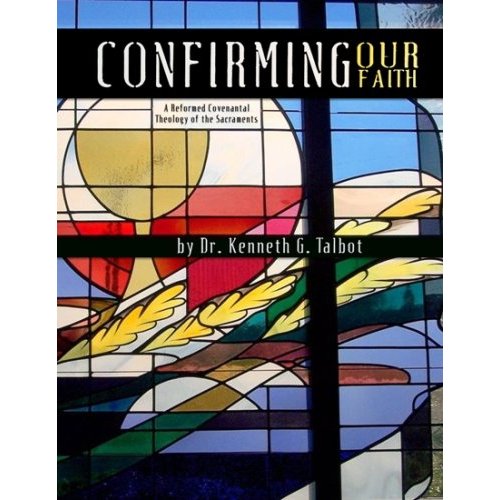 Life is funny. A few years ago I began the journey of going to seminary to fill in the holes in my autodidactic theological education. It is SLOW going.
I decided on Whitefield Theological Seminary for a number of reasons – among which was that I could do this as a distance learning program, self-paced to allow me to continue being a busy pastor without interruption. Like I said, its slow going. For a while now, not going at all.
When I made this decision, Dr. Ken Talbot, founder of the seminary and its President had me go to Florida for a 3 day round of exams to assess my placement. BRUTAL is the first word that comes to mind. And SUBLIME is the second word – due to the three days I got to spend with Dr. Talbot. They will always remain treasures to me. We formed a personal and spiritual bond that is a true delight to me upon every reflection upon it.
A number of months ago, Dr. Talbot and I were discussing my academic progress (or better, lack thereof) when he asked if I might – as one committed to a Believer’s Baptism model – be willing to read his upcoming book on the sacraments (pictured above). If possible, he wondered if I might be willing to say why it might be worth reading, even for us baptistic folk. I jumped at the chance.
After reading it, I was more than excited to send a positive response. I sent back my “endorsement” for what it is worth. (I don’t know if my name might lend more negative associations than positive.) And then I was most honored to find out Dr. Talbot had decided to use my appraisal as the forward to “Confirming Our Faith: A Reformed Covenantal Theology of the Sacraments.”
I’ll let you see my reasons below for endorsing Dr. Talbot’s book. Here, is what I sent Dr. Talbot, which unedited appears now as the forward to this excellent work. Do I agree in every place? No. I remain a Credo-baptist. But the value here will become apparent in what I wrote.
Here is the Forward:
Why would a confessed credo-baptist want to recommend reading Dr. Talbot’s “Confirming Our Faith”? The answers are not hard to provide.
First, because so much confusion reigns between paedo & credo-baptist brethren on the issue of the sacraments. Misinformation and disinformation often lock us into unfruitful (and sometimes, most grievously) uncharitable conflict. There is no call here to erase genuine distinctives. There is instead a lucid, reverent, edifying and myth-destroying presentation of what is taught in the Westminster standards on these two vital means of grace. (Read the book before you throw stones at me for using that last phrase – means of grace.)
Second, because even in the paedo-baptistic branches of the Lord’s Body, the role and meaning of covenant baptism is often poorly understood, articulated, entered into and defended.
Third, because it is often the case (in my experience) that the majesty, mystery and wonder of the Lord’s Table is lost in a tradition of virtually tacking it on at the end of a worship service, rather than giving it a more prominent and important role, vital to the life of the Church and its true spiritual members.
Fourth, because a simple but all so important distinction between the concepts of “benefits” versus “privileges” (just read it and you’ll find out) could not only kick the stuffing out of an army of straw men, it could free us up to love one another more tangibly, really, and visibly, across some historically electrified lines.
Fifth, because Dr. Talbot loves the Church, both visible and invisible. Because his heart yearns for its members to share its common life truthfully, faithfully, passionately and joyfully.
We have three Biblically identified enemies: The World, the Flesh, and the Devil. Books like this will let us join arms in waging the battle on their soil, rather than taking potshots at one another across the aisle. May its influence range far and wide.
I did find one curious omission however. There is not a single word of anti-credo baptist rhetoric anywhere to be found. Not one. That may speak even more loudly than the text itself.
Please read it.
 Some of Calvin’s own words on the extent of the atonement:
Isa. 53:12 – “ He bore the sin of many. I approve of the ordinary reading, that He alone bore the punishment of man, because on Him was laid the guilt of the whole world. It is evident from other passages, and especially from the fifth chapter of the Epistle to the Romans, that ‘many’ sometimes denotes ‘all’.”
Mark 14:24 – “The word many does not mean a part of the world only, but the whole human race.”
John 1:28 – “And when he says the sin of the world he extends this kindness indiscriminately to the whole human race.”
John 3:16 – “He nevertheless shows He is favorable to the whole world when He calls all without exception to the faith of Christ, which is indeed an entry into life.”
John 3:17 – “The word world comes again so that no one at all may think he is excluded.”
John 4:17 – “He declared that the salvation He had brought was common to the whole world, so that they should understand more easily that it belonged to them also.”
John 16:8 – “I think that under the word world are included both those who were to be truly converted to Christ and hypocrites and reprobates.”
John 17:9 – “He openly declares that he does not pray for the world, for He is solicitous only for His own flock which He received from the Father’s hand.”
Rom. 5:18 – “Although Christ suffered for the sins of the world and is offered by the goodness of God without distinction to all men, yet not all receive him.”
Gal. 5:12 – “For God commends to us the salvation of all men without exception, even as Christ suffered for the sins of the whole world.”
Col. 1:14 – “He says that this redemption was procured by the blood of Christ, for by the sacrifice of His death all the sins of the world have been expiated.”
Heb. 2:9 – “He suffered death, so that by the grace of God he might taste death for every man.”
Heb. 8:4 – “He made atonement for the sins of the world as a Priest.”
Heb. 9:28 – “He says many meaning all, as in Rom. 5:15.”
“God was reconciling the world to himself in Christ, not counting men’s sins against them” (2 Cor. 5:18, 19) “reaches to all, but that it is not sealed indiscriminately on the hearts of all to whom it comes so as to be effectual.”
Rom. 5:10 For if while we were enemies, we were reconciled to God through the death of His Son, much more, having been reconciled, we shall be saved by His life.By saying that we were reconciled to God by the death of Christ, he means, that it was the sacrifice of expiation, by which God was pacified towards the world, as I have showed in the fourth chapter.
He makes this favor common to all, because it is propounded to all, and not because it is in reality extended to all; for though Christ suffered for the sins of the whole world, and is offered through God’s benignity indiscriminately to all, yet all do not receive him. {2}
The phrase, for all, which the Apostle had used, might have given rise to the question, “Why then had God chosen a peculiar people, if he revealed himself as a reconciled Father to all without distinction, and if the one redemption through Christ was common to all?” He cuts off all ground for that question, by referring to the purpose of God the season {3} for revealing his grace. …Shall we accuse God of instability, because he brings forward, at the proper time, what he had always determined, and settled in his own mind?
That, then, is how our Lord Jesus bore the sins and iniquities of many. But in fact, this word “many” is often as good as equivalent to “all“. And indeed, our Lord Jesus was offered to all the world. For it is not speaking of three or four when it says: ‘For God so loved the world, that he spared not His only Son.” ….Our Lord Jesus suffered for all, and there is neither great nor small who is not inexcusable today…. For how will they excuse their ingratitude in not receiving the blessing in which they could share by faith? John Calvin, Sermons on Isaiah’s Prophecy of the Death and Passion of Christ, 52:12, p., 140-1.
We must make every effort to draw everybody to the knowledge of the gospel. For when we see people going to hell who have been created in the image of God and redeemed by the blood of our Lord Jesus Christ, that must indeed stir us to do our duty and instruct them and treat them with all gentleness and kindness as we try to bear fruit this way. “John Calvin, Sermons on Acts 1-7, Sermon 41, Acts 7:51, pp., 587-588.
(Numerous other quotes of Calvin on the extent of the atonement available at calvinandcalvinism.com and other sources as well.)

1 – John 1:1 (ESV) In the beginning was the Word, and the Word was with God, and the Word was God.
RAF: In the beginning, the Word, already “was.” This Word, THE Word, was with God – without need for attachment to the created order about to come. This Word, THE Word – was in fact – both with, and was Himself – God. He is the ultimate and complete revelation and communication of – God. He became a man in the person of Jesus – taking to Himself a human nature that He might be among us, without destroying us. His body, was the “veil” the curtain separating the Holy Place from the Holy of Holies in the Temple. First, He but tabernacled himself. For some 33 years. Then, He came to dwell in His Temple at Pentecost. Now, He tabernacles in us in a sense – as indwelling us even though we are in a temporary state and not glorified yet. But when He returns, He will dwell in the New Temple. He will raise us from the dead in our glorified state. We will become the New Jerusalem. His people in glory. No eye has seen, no ear has heard, even with this much information we have not even begun to be able to imagine what He has prepared for those who love Him. Oh what a Christ we serve!
2 – John 1:4 (ESV) In him was life, and the life was the light of men.
RAF: Man’s original existence was a “lighted” one, wherein the life of man was was directly connected to Him as the giver and sustainer of life. In the Fall, we were plunged into the darkness of being severed from Him. Everything outside of Christ Jesus remains in darkness. Only when we comprehend the whole of existence in terms of His Creator-ship, His redemptive purpose and plan, can we live in the light of what is real. See: Colossians 1:15-17
3 – John 1:10 (ESV) He was in the world, and the world was made through him, yet the world did not know him.
RAF: This is true darkness – a life void of all meaning and purpose, because it does not recognize the One who gave it life, nor does it enter into His heart and mind to know meaning and purpose. Apart from Christ, all is darkness, mystery and meaninglessness.
4 – John 1:11-13 (ESV) He came to his own, and his own people did not receive him. 12But to all who did receive him, who believed in his name, he gave the right to become children of God, 13who were born, not of blood nor of the will of the flesh nor of the will of man, but of God.
RAF: He came to His own THINGS – the Kingdom, the people, the world that belonged to Him. But especially He came to His people, His own people – who as a “people” rejected Him, as their God, Messiah and King. Yet some believed. Those, who did believe, became “sons of God”. Those still who believe, become sons of God. This is the glory of the salvation that comes through Jesus Christ the Lord.
5 – John 1:14 (ESV) And the Word became flesh and dwelt among us, and we have seen his glory, glory as of the only Son from the Father, full of grace and truth.
RAF: If He had only come full of truth, we’d all be dead. Judgment would be, could ONLY be the outcome. But He came also full of GRACE. In grace, that in the light of the truth, God still sovereignly bestows unmerited favor.
6 – John 1:19-22 (ESV) And this is the testimony of John, when the Jews sent priests and Levites from Jerusalem to ask him, “Who are you?” 20He confessed, and did not deny, but confessed, “I am not the Christ.” 21And they asked him, “What then? Are you Elijah?” He said, “I am not.” “Are you the Prophet?” And he answered, “No.” 22So they said to him, “Who are you? We need to give an answer to those who sent us. What do you say about yourself?”
RAF: Let every man ask, and answer this question of himself – “What do you say about yourself?” And note well John’s response – for it informs our own. He identifies himself in terms of his relationship to Christ. This is the only way you can know who you truly are – by understanding who you are in relation to Jesus Christ.
 If you don’t recognize him, the fellow pictured to the left here is Moise Amyrault. You can also view his visage next to the definition of “lightening rod” in most theological dictionaries.
With the present resurgence of interest in Reformed theology, there has also come a resurgence of interest in Calvinistic and Reformed controversies. And one of the most controversial of the Reformed theologians of the 16th & 17th centuries is M. Amyrault.
I will not post it now, but a brief history of Amyraut and his tenure at the Academy of Saumur is really must reading for those of us who hold to Reformed theology. When all is said and done, he proves to be a most honorable, godly and able man – whether one agrees with his formulations or not. His 3 trials (charged with heresy) each ended in his acquittal – though his detractors often tend to speak his name with disdain still. He is often seen as a “de-former” of Calvinistic thought, and the father (or at least popularizer) of “4-Point Calvinism”. (Actually, I think it is a misnomer to call the view 4 point Calvinism – but we’ll do that another day) Scholars the likes of Alan Clifford (see Dr. Clifford’s powerful work – ATONEMENT AND JUSTIFICATION: ENGLISH EVANGELICAL THEOLOGY 1640-1790: AN EVALUATION an absolute MUST read) contend that Amyraut was in fact all along only contending for and protecting Calvin’s more balanced view on the atonement.
Dr. Clifford (a most amiable 2nd “lightening rod”) has gone on to form the AMYRALDIAN ASSOCIATION as a means of educating the Church on Amyraut, what he taught, and its importance. And, educating us as to the place Amyraut’s theology ought to have in our present day Reformed halls.
One thing that has become increasing clear to me over the past few years in studying these matters and wrestling with them personally is – that the present, popular notion that a strict view of “limited atonement” is THE Reformed view, is simply historically inaccurate. There truly has been quite a spectrum of views on this topic from orthodox Reformed and Calvinistic divines all along. A spectrum I am convinced would be healthy for us to recover in our day.
In my own reading of Amyraut (what little I have done to date) I am not by any means convinced I can receive his entire schema so as to call myself “Amyraldian”. I say that with this proviso: If in fact “Amyraldianism” can (and SHOULD be) fully defined by virtue of what Dr. Clifford states below – I do not how I can avoid it! I must say I no longer look askance at those who would choose to take the moniker as I once would. Which then (finally!) leads me to what I really wanted to post below.
At this year’s Amyraldian Association conference in England – hosted by Dr. Clifford (a man I have come to deeply appreciate, admire and love through his writings and generous correspondence with me) – Dr. Clifford’s paper contained the following paragraph:
“What then is Amyraldianism? Let us have a brief refresher course. Rooted in a dualistic conception of the divine will (see Deuteronomy 29: 29), Calvin taught that Christ was offered as the Redeemer of the whole world according to God’s ‘revealed’ conditional will albeit only received by elected believers according to God’s ‘hidden’ absolute will. Notwithstanding the rationally-challenging paradox involved, Calvin maintained the doctrines of universal atonement and divine election side by side. Faced by clear biblical evidence for both, he refused to tamper with the scriptural texts. Logic was not allowed to dictate one emphasis at the expense of the other. Typical of his numerous statements on the extent of the atonement, Calvin commented thus on Romans 5: 18: ‘Paul makes grace common to all, not because it in fact extends to all, but because it is offered to all. Although Christ suffered for the sins of the world, and is offered by the goodness of God without distinction to all men, yet not all receive him’.”
Whether or not this serves as an accurate and comprehensive summary of Amyraldianism – I will have to leave to Dr. Clifford and both his scholarly friends and foes to sort out for officialdom. The whole of Dr. Clifford’s paper deals directly and handily with the formidable critics of his thesis.
What I can say is – that this is a concise and accurate statement of how I personally have come to understand the atonement tension in Scripture (barring the term “universal atonement” which I still do not think is the most accurate – though I have no other). If Amyraut and Calvin held the same view (with each other as well as with me) – grand. If not, so be it. This is how I understand it. Hopefully, this can serve to clarify what I was laboring so to express in all of my preceding papers on the topic.
Now, if you choose to hang a name on me in this regard – I will leave that choice up to you. Personally, I wouldn’t call it Calvinistic, Amyraldian, Cliffordian, Baxterian, Cameronian, Bunyanism, Ryle-ism, Twisse-ism, Davenantian, Dortian or any other (though there are literally scores more which could be listed here) “ian” or “ism”.
For myself, I just think its Biblical.
 1 – 5 In the days of Herod, king of Judea, there was a priest named Zechariah, of the division of Abijah. And he had a wife from the daughters of Aaron, and her name was Elizabeth. 6 And they were both righteous before God, walking blamelessly in all the commandments and statutes of the Lord. 7 But they had no child, because Elizabeth was barren, and both were advanced in years.
The Holy Bible : English standard version. 2001 (Lk 1:5-7). Wheaton: Standard Bible Society.
RAF: We should be careful not think in terms of God dealing with us in a tit-for-tat paradigm. Simply because Zechariah and Elizabeth had remained devoid of the blessing of children prior to this time – we are not to conclude they were somehow living in disobedience or sin. The text tells us just the opposite. Sometimes, we can be serving in the most perfect of ways, and yet God in His love and wisdom may withhold some proper, normal or perceived good. Ours, is to rest in Him. This is a word most especially meant to comfort those who may have long desired a spouse, children of their own, perhaps even a particular field of service. Many under such circumstances can be led to think that there must be some sort of sin or defect which prevents their having such blessings. And while the question is good in that examining our hearts for unrepentant sin is always a useful exercise – nevertheless, one can torture their own soul needlessly if they have concluded this “must” be the case. Let us learn to trust our Lord’s providential appointments. Given a life ordinarily lived uprightly before Him, He does not withhold His good things from us – excepting to grant us some other blessing in His infinite wisdom and loving heart – which eternity will reveal to have been greater than that we sought in our fallen wisdom. Trust Him believed – trust Him. Those in Christ must remember we are dealt with as beloved children, not mere citizens of our Lord’s Kingdom. Citizens we are – but more, we are His own!
2 – And Mary said, “Behold, I am the servant of the Lord; let it be to me according to your word.” And the angel departed from her.
The Holy Bible : English standard version. 2001 (Lk 1:38). Wheaton: Standard Bible Society.
RAF: Mary had to be at least partially aware that such a situation would leave her open to not being believed, and to scorn and prejudice the rest of her life. It was a shame of epic proportions for her to be pregnant and unmarried in that day and culture. How in the world would Joseph ever believe her apart from divine revelation? And the stigma of this scandalous birth would attach itself not only to her, her family, Joseph and his family, but to the child and the rest of their children in time.
It is one thing to own such things ourselves, and quite another to bring the inexplicable, and undesirable upon others – with no way to mitigate it for them. Our faith is tested far more severely in matters like this than in almost anything we endure ourselves or secretly. What we cannot explain so as to set other’s minds at ease or erase their wrong opinions, weighs heavily upon our hearts. Decades later, Jesus Himself would have the appearance of His illegitimate conception be grist for His detractors mills (John 8:41). At such times, Jesus took no pains to clear His name. No one would understand. He commits it to His Father. Hence His own dear heart is tender to our pain under such circumstances. Oh for the clarity of Heaven, and the final revealing of God’s hand in wisdom in the end. He knows our trials well.
3 – 11 For unto you is born this day in the city of David a Savior, who is Christ the Lord.
The Holy Bible : English standard version. 2001 (Lk 2:11). Wheaton: Standard Bible Society.
RAF: While the word “you” here is in the 2nd person singular, no one would dream the idea is that the Savior born that day belonged only to the Shepherds being spoken to at that moment. This good news is to be told to everyone. Yet, it is personal in that He was to be THEIR Savior personally, though not exclusively. Those who imagine an impersonal salvation – just some sort of amorphous, nondescript and universal salvation for all are most tragically and eternally in error. He is the Savior of the World – the World’s Savior as sufficient for all and truly offered to all. And yet, in the end, He is the Savior of none but those who believe. One must put their personal trust in this Savior themselves. Have you?
1 – Mark 9:2-8 (ESV) 2And after six days Jesus took with him Peter and James and John, and led them up a high mountain by themselves. And he was transfigured before them, 3and his clothes became radiant, intensely white, as no one on earth could bleach them. 4And there appeared to them Elijah with Moses, and they were talking with Jesus. 5And Peter said to Jesus, “Rabbi, it is good that we are here. Let us make three tents, one for you and one for Moses and one for Elijah.” 6For he did not know what to say, for they were terrified. 7And a cloud overshadowed them, and a voice came out of the cloud, “This is my beloved Son; listen to him.” 8And suddenly, looking around, they no longer saw anyone with them but Jesus only.
RAF: It is at this point religion and Christianity part ways. If we miss this, we miss the most important of all distinctions and truths. Jesus was not, IS not another Moses. Moses, was merely a “type” (picture of ahead of time) of Christ. Jesus was not, IS not another Elijah. Elijah was merely another “type” (picture of ahead of time) of Christ. While Moses represents the giving of the Law upon Sinai, Christ IS the holiness (the life of God) the Law is based upon. He is the substance of the shadow. While Elijah represents the prophets, Christ IS the Word. He does not come to give a new word from God, He comes to BE that which all of what God had said to date was pointing to and saying.
Note that it is confused thinking on this point that leads to syncretism with other religions. If we merely see Christ as a new lawgiver, we can syncretize with the Jewish religion. If we see Christ as merely a new prophet, we can syncretize with Islam and a host of cults as well. Jesus Christ must be seen as He truly is – GOD. If He is any less, if He is marginalized in any way – we lose the very essence of Christianity. Christians are those who worship Jesus Christ as God. They are not only that, so as to prevent us from over simplifying – but we are at LEAST that from our foundation.
“This”, is God’s “beloved Son.” Whatever else we’ve heard, whomever else we have heard – we must give precedence to and listen to – Him. In fact, we can only truly understand what any of the others have said when we have Christ in His rightful place. As “Truth” – He is what interprets all things. Unless Christ Jesus is at the center of everything, nothing truly makes complete sense. It can have order or coherency on some level, but not ultimately. “In him we have redemption through his blood, the forgiveness of our trespasses, according to the riches of his grace, which he lavished upon us, in all wisdom and insight making known to us the mystery of his will, according to his purpose, which he set forth in Christ as a plan for the fullness of time, to unite all things in him, things in heaven and things on earth.” Ephesians 1:7-10 (ESV) Here is one of those sweeping statements of cosmic and eternal focus in God – that God has “as a plan for the fullness of time, to unite all things in him.” The statement is not such that it admits of no other features – as though could not have multiple ends in view. It does not say “as THE plan” – but certainly this is at the very core.
As our culture grows increasingly multi-cultural and as the distinctions between religions are blurred in the interest of fusing mankind together in some sort of composite “spiritual” soup – Christians must continually champion the cause of Christ above all, and Christ ALONE above all (His Father excepted – 1 Cor. 15:27 preserving the trinity).
If one had never heard the “law” as given by Moses; if one had never heard a single one of the Old Testament prophets – yet Christ is to be preached as Paul did at the Areopagus. Christ, and Him crucified for the sins of men. The One who is appointed to come and judge the living and the dead – and who alone can reconcile us to the Father through the blood of His cross .
 1 – Mark 1:12-13 (ESV) 12The Spirit immediately drove him out into the wilderness. 13And he was in the wilderness forty days, being tempted by Satan. And he was with the wild animals, and the angels were ministering to him.
RAF: The 2nd Adam faced temptation as well as the 1st one did. But Christ prevailed where Adam failed. He faces it under far worse circumstances. He faces it as the new head of the race. In this sense, He becomes the new head of the whole human race. Those who will not receive Him as such will find their judgment in that they prefer their linkage with the type more than salvation in the Substance, and to be their own head, and not to serve under any other. Jesus’ parable in Luke 19 bears this concept out. The Nobleman who goes away into a far country to receive a Kingdom – but is followed by a delegation who say “we will not have this man to rule over us.” He acts as the substance of what Adam was only the type and shadow. More. Adam lost his headship over the race in His fall. He is allowed to make no other decisions which impact us all. While we are all joined to him organically, he no longer had power to act on our behalf after the fall. But Christ is raised to be THE head of the race once and for all. And while He is “Lord of all” – still, He also is to have a family. But His family is not be the product of natural generation as was Adam’s. His, is a family entirely composed of the adopted. That though we all fell in Adam, still we might have a new Head – and one who can save us. Jesus Christ the righteous. Oh praise His holy name for His victory in the desert for you and me!
2 – Mark 1:14-15 (ESV) 14Now after John was arrested, Jesus came into Galilee, proclaiming the gospel of God, 15and saying, “The time is fulfilled, and the kingdom of God is at hand; repent and believe in the gospel.”
RAF: The message is both simple and clear:
a. Enter my kingdom. I am Lord.
b. A day of amnesty is declared. All who hear are called to come.
c. I will forgive and receive all who come.
d. I will yet judge all who refuse.
Christ has issued the call. It is the duty of every man who hears the Gospel to believe it and be saved.
3 – Mark 1:16-20 (ESV) 16Passing alongside the Sea of Galilee, he saw Simon and Andrew the brother of Simon casting a net into the sea, for they were fishermen. 17And Jesus said to them, “Follow me, and I will make you become fishers of men.” 18And immediately they left their nets and followed him. 19And going on a little farther, he saw James the son of Zebedee and John his brother, who were in their boat mending the nets. 20And immediately he called them, and they left their father Zebedee in the boat with the hired servants and followed him.
RAF: As with all of us, Christ Jesus found these men:
a. Where they were. By the sea shore.
b. Doing what they were doing. Fishing.
c. Because they were who they were. They were Fishermen.
He find us:
a. In the world. He descends from Heaven, we do not ascend to it.
b. Sinning.
c. Because we are sinners.
Then He promises to make us the real, or the substance, of which we are but shadows at the present. We are but indistinct in our reflection of His image. He promises to recover that in us fully.
What a glorious Savior He is!
 ResponsiveReiding