Skip to content
  • Home
  • About
  • Blog
  • Atonement
    • The Atonement: Read this first!
    • Confession of an ex-u0022Highperu0022 Calvinist
    • Revisiting the Substitutionary Atonement
    • Discussing the Atonement – a lot!
    • Lecture Notes on The Atonement
  • Sermons
  • ReviewsAll book and movie reviews
    • Books
    • Movies

ResponsiveReiding

  • Revelation Ch. 5 – The Lion, The Lamb and the Scroll

    December 16th, 2017

    Revelation Part 14

    Chapter 5

    Reading chapters 4 & 5 Entirely.

    AUDIO FOR THIS SERMON CAN BE FOUND HERE

    Last time we looked at the 1st part of the amazing scene John witnessed in the throne-room of God.

    Jesus Himself, who alone is the door into the presence of God, called John up to look inside, and the vision was nothing less than mind blowing.

    Going back to ch. 4 – He saw:

    1. A throne, with someone seated on the throne who had the appearance of white and blood red light beaming out, surrounded by a rainbow like an emerald.
    2. Around the throne were twenty-four thrones, twenty-four elders in white garments and golden crowns on them.
    3. From the throne came flashes of lightning, and rumblings and peals of thunder
    4. Before the throne were burning seven torches of fire, which are the seven spirits of God,
    5. Before the throne was something like a sparkling sea of glass
    6. And around the throne, on each side of it – four living creatures, full of eyes in front and behind: one like a lion, another like an ox, a third with the face of a man, and a fourth like an eagle in flight.

    Each of them with six wings, are full of eyes all around and within, and day and night they never cease to say, “Holy, holy, holy, is the Lord God Almighty, who was and is and is to come!”

    Chapter 5 picks up in the very same place, but now some action other than worship begins.

    Once again the scene is filled with symbols that need some explaining.

    THE SCROLL – 5:1 Then I saw in the right hand of him who was seated on the throne a scroll written within and on the back, sealed with seven seals.

    After the initial impact of the scene begins to wear some, as John’s eyes adjust to the spectacle, he starts to scrutinize more details while new actions take place.

    The 1st thing which catches his attention is that the One seated on the throne has a scroll in his right hand with some unique features.

    We cannot pass over this too quickly because this sets the stage for the rest of the entire book.

    Now a sealed scroll would have indicated some basic ideas to John.

    In his day, books as we think of them were virtually nonexistent. Most information in libraries and legal documents were recorded on scrolls. Books bound on one edge with pages wouldn’t be as common as scrolls for another 200 years.

    The first odd thing John notices is that the scroll was written both within, and on the back.

    This was rare if only for practical reasons. The nature of a papyrus scroll was such that writing on the inside would flow along the horizontal lines created by gluing the strips of papyrus together to form a writing surface.

    But when you wrote on the backside, the strips would be going vertically and would make the writing very difficult.

    Only a document of extreme importance which for the sake of ensuring its integrity in full would have writing on both sides. Most really long documents would simply be split up among 2 or more scrolls (Like Luke-Acts). A scroll was typically 30-34 feet in length.  But John can see that whatever is written here, the author wanted to be sure was kept whole and intact, and it was a LOT of material. The Author wanted it all together.

    The 2nd thing he notices is that it is sealed on its edge (or in the middle if 2 spindles, we don’t know) with 7 seals.

    When a document like a will or something else vital was written, there were also copies made for public use. But when the time came to actually read and execute the will, then, the original was opened, which had been sealed when written – to guarantee the contents could not be tampered with.

    7 seals speaks of the importance of what is inside to remain unchallengeable. For instance, the will of the Emperor Vespasian was sealed with 7 seals. This signified that the document was of the absolute highest importance.

    But what is the document itself? We’ll see this in the weeks to come. But so we see where we’re going I’ll give you an advance hint. Don Carson puts it this way: “It turns out this scroll which is in the right hand of the Almighty, the right hand of him who sits on the throne, contains all of God’s purposes for blessing and judgment. This is the book that contains God’s purposes for redemption and condemnation, and the fact that there is writing on the inside and on the outside is a symbol-laden way of saying, “This is the whole shebang. This is God’s purpose. This is the fullness of all that God wants to do in blessing and judgment. This is the whole plan right here.”D. A. Carson, “Vision of a Transcendent God—Part 2,” in D. A. Carson Sermon Library (Bellingham, WA: Faithlife, 2016), Re 5.

    Again, we know this because in the unsealing of the scroll – which equates to the executing of what is written – we come to the very end of human history and all that God has promised both in judgment and blessing. This explains then why the next actions take on the character they do.

    THE PROCLAMATION – 5:2-4 And I saw a mighty angel proclaiming with a loud voice, “Who is worthy to open the scroll and break its seals?” And no one in heaven or on earth or under the earth was able to open the scroll or to look into it, and I began to weep loudly because no one was found worthy to open the scroll or to look into it.

    This mighty angel, whoever he is makes this loud, perhaps deafening proclamation – this cosmic challenge: Who in all the universe can possibly be worthy both to reveal and accomplish the whole of God’s eternal purposes in creation and all of history? Who can possibly rise to such an occasion? Who can be the executor of such a will?

    And the response is a deafening silence!

    NO ONE! No one in heaven – among the angelic hosts.

    No one on earth among mankind made in God’s image.

    No one under the earth – a euphemism for the dead – no one in all of past human history either.

    No one. No matter how brilliant, how rich, how wise, clever, powerful or upright – no one!

    And John weeps!

    The implication is plain – if no one can open the scroll which contains all of God’s plans and purposes in all things – then life itself can have no meaning. If we cannot know God’s mind, how can we know anything of who and what we are and what life is all about?

    Is all of life just meaningless nothing?

    It is the bailiwick of philosophers and philosophy to search out the answers to 5 all important questions. The questions every thinking human being wrestles with at one time or another.

    Who am I? Where did I come from? Why am I here? Where am I going? How can I make sense of pain and suffering?

    And the bankruptcy of the proposed answers are all around us – if people even think much about these crucial questions at all any more.

    Inwardly we ALL wrestle with them, even if unspoken. But when they remain unanswered – darkness and hopelessness enters in.

    It is reported that Bertrand Russell, the famed atheist philosopher – into his 80’s was being interviewed on British television. He was asked, now that death was growing near, what he had to hang on to at this stage in his life. His answer: “I have nothing to hang on to but grim, unyielding despair.”

    Grim, unyielding despair!

    And without answers to the key questions of life, he’s right!

    A few weeks ago, I had to speak at the funeral of a 26 year old man who had taken his own life. Arriving early I chatted for a few minutes with the funeral director whom I know. We both remarked how sad this was and he told me that in the last year he had had nearly 100 similar cases. Young men in utter despair taking their lives because they cannot bear it any longer. NO WONDER!

    If I am nothing more than a cosmic accident…

    If I really am only a random association of unthinking matter & energy…

    If I have no purpose for being outside of myself…

    If I will simply cease to be when life ends and this is all there was…

    If there is no rhyme or reason, nor redemption from pain and suffering…

    If there truly will be no ultimate justice then grim, unyielding despair is a right response.

    And so for John at this moment – in exile in his old age. The last of the living apostles, still waiting for the return of Christ – The Church till mall and suffering persecution – was it all, is it all for nothing?

    Can it really be this is all just random, unmeaning nonsense?

    Can it be there is no way to probe the mind and will and purposes of God so as to make all of life and what has happened make sense?

    He sobs! No one can give the answers. No one is worthy.

    But his weeping is interrupted.

    THE LION AND THE LAMB – III. 5:5-7 And one of the elders said to me, “Weep no more; behold, the Lion of the tribe of Judah, the Root of David, has conquered, so that he can open the scroll and its seven seals.” And between the throne and the four living creatures and among the elders I saw a Lamb standing, as though it had been slain, with seven horns and with seven eyes, which are the seven spirits of God sent out into all the earth. And he went and took the scroll from the right hand of him who was seated on the throne.

    No John! All is not lost. There is One, only One who is worthy, who is equal to the task of both breaking the seals to reveal what’s inside, and to bring to pass all that has been written. Yes, there is ONE!

    And then this One is shown in a series of descriptive ways.

    The Lion of the tribe of Judah. John would have recognized this from Gen. 49, and other Jewish literature as referring to God’s appointed Messiah.

    Genesis 49:9–10 “Judah is a lion’s cub; from the prey, my son, you have gone up. He stooped down; he crouched as a lion and as a lioness; who dares rouse him? The scepter shall not depart from Judah, nor the ruler’s staff from between his feet, until tribute comes to him; and to him shall be the obedience of the peoples.”

    The Root of David. Comes directly from that great Messianic passage Isa. 11 – where we read: Isaiah 11:1–2 “There shall come forth a shoot from the stump of Jesse, and a branch from his roots shall bear fruit. And the Spirit of the LORD shall rest upon him, the Spirit of wisdom and understanding, the Spirit of counsel and might, the Spirit of knowledge and the fear of the LORD.”

    This is God’s appointed ruler of His people, who is not only divine, but also was human and from the “stump of Jesse” – a descendant of David’s bloodline.

    A lamb. Slaughtered, but standing. Not just dead, but a Lamb that had been offered up with all of the ritual butchering the Old Testament would require – and yet alive!

    Virtually in the throne itself. Between the throne and the 4 living creatures is virtually IN the throne with the One seated on it. He rules and reigns WITH God AS God.

    7 Horns – all powerful. Horns in scripture most often being a symbol of power and authority.

    7 Eyes – all knowing. Again, as we saw last time, these 7 spirits sent out into all the earth demonstrating His omniscience.

    And He alone can walk right up to the hand of God and take the scroll.

    Jesus Christ alone is the One who can unfold for us the eternal plans and purposes of God, which answer all of the questions of the meaning of self, and life and history and pain and suffering.

    This announcement to weep no more because the Lion who is the Root of Jesse who is also the Lamb slain but who lives, and dwells in God’s throne and is both omnipotent and omniscient – He is worthy, He is able because: HE HAS CONQUERED!

    But what does that mean? Conquered who? Conquered what? What is this conquering that makes Him so “worthy”?

    And the answer rests in the 3 hymns that are sung as a result of this revelation of Him.

    3 hymns that start in one place and then ripple out like the waves of an atomic blast.

    THE 1st HYMN – IV. 5:8-10 And when he had taken the scroll, the four living creatures and the twenty-four elders fell down before the Lamb, each holding a harp, and golden bowls full of incense, which are the prayers of the saints. And they sang a new song, saying, “Worthy are you to take the scroll and to open its seals, for you were slain, and by your blood you ransomed people for God from every tribe and language and people and nation, and you have made them a kingdom and priests to our God, and they shall reign on the earth.”

    The 4 living creatures and the elders take up a new song – i.e. different than the one in ch. 4  – Holy, Holy, Holy.

    Now, their song is about what the Lamb and what He has done.

    He was slain, and by His blood He ransomed a people for God from every tribe and language and people and nation – and made these ransomed ones a kingdom of priests to God, and made them to reign on the earth!

    His conquering act was the act of conquering sin and death and the Devil. He overcame it all! For us!

    All that could separate humankind from the living God, the whole of their sin – of your sin and mine was overcome by Him in the shedding of His blood! In His substitutionary atonement on the Cross. He paid the ransom price for us.

    He conquered our sin. He conquered the Devil who opposed us. And He conquered death in His resurrection and in restoring the redeemed in order to become the priests God intended us to be to Himself and to rule the earth as He had intended – overcoming all of the destruction brought on by the Fall.

    All this – by His blood on the Cross. He is worthy, because He conquered all that has gone so horribly awry from the Fall.

    Because of Him life is not senseless and directionless and random. No human being need live that way. For there is absolute redemption in Christ for all who will put their faith in Him. This is where the Christian lives.

    We find the answers to the great questions all wrapped up in Christ.

    Who we are is settled in our relationship to Him: 1 John 3:2 “Beloved, we are God’s children now, and what we will be has not yet appeared; but we know that when he appears we shall be like him, because we shall see him as he is.”

    Where we came from?: Colossians 1:15–16 “He is the image of the invisible God, the firstborn of all creation. For by him all things were created, in heaven and on earth, visible and invisible, whether thrones or dominions or rulers or authorities—all things were created through him and for him.

    Why we are here is met in Him: 1 Peter 2:9 “But you are a chosen race, a royal priesthood, a holy nation, a people for his own possession, that you may proclaim the excellencies of him who called you out of darkness into his marvelous light

    Where are we going? John 14:1–3 “Let not your hearts be troubled. Believe in God; believe also in me. In my Father’s house are many rooms. If it were not so, would I have told you that I go to prepare a place for you? And if I go and prepare a place for you, I will come again and will take you to myself, that where I am you may be also.”

    And what of pain and suffering? We know that it all came to us due to the Fall, but that Jesus in His redemptive work grants us the privilege of co-opting every trial, difficulty, pain, heartbreak and seemingly senseless suffering for our good! Romans 5:1–5 “Therefore, since we have been justified by faith, we have peace with God through our Lord Jesus Christ. Through him we have also obtained access by faith into this grace in which we stand, and we rejoice in hope of the glory of God. Not only that, but we rejoice in our sufferings, knowing that suffering produces endurance, and endurance produces character, and character produces hope, and hope does not put us to shame, because God’s love has been poured into our hearts through the Holy Spirit who has been given to us.”

    THE 2nd HYMNS – 5:11-14 Then I looked, and I heard around the throne and the living creatures and the elders the voice of many angels, numbering myriads of myriads and thousands of thousands, saying with a loud voice, “Worthy is the Lamb who was slain, to receive power and wealth and wisdom and might and honor and glory and blessing!” And I heard every creature in heaven and on earth and under the earth and in the sea, and all that is in them, saying, “To him who sits on the throne and to the Lamb be blessing and honor and glory and might forever and ever!” And the four living creatures said, “Amen!” and the elders fell down and worshiped.

    So as the realization of Christ’s conquering of the World, sin and Satan is dropped into the middle of this scene – it ripples outward in massive waves.

    So first, the 4 living Creatures and the 24 elders sing the new song.

    Then – Then I looked, and I heard around the throne and the living creatures and the elders the voice of many angels, numbering myriads of myriads and thousands of thousands, saying with a loud voice, “Worthy is the Lamb who was slain, to receive power and wealth and wisdom and might and honor and glory and blessing!”

    And after that – I heard every creature in heaven and on earth and under the earth and in the sea, and all that is in them, saying, “To him who sits on the throne and to the Lamb be blessing and honor and glory and might forever and ever!” And the four living creatures said, “Amen!” and the elders fell down and worshiped.

    In Christ – all the plans and purposes of God will be revealed and not JUST revealed, completed.

    Life not only has meaning – every moment of it, every aspect of it, even the pain and the sorrow are infused with redemptive grace for those in Christ.

    But if you are not in Christ today – hear me, you too are defined in terms of relationship to Him.

    Outside of Christ you stand condemned – separate from God and without hope in the world.

    Without right relationship to Him life can have no real meaning other than some temporary thing you assign it.

    Without being joined to Him all that awaits you is the eternal just judgment of God for your sins.

    And what you suffer now has no rhyme, no reason, and can do nothing other than crush you in the end.

    But you are here today. You have been exposed to this revelation of the Lamb slain, but alive, who has all power and all knowledge and can rescue you from your sin and shame and meaninglessness and restore you to a right relationship to your God and maker. And He calls to you today with a human voice – not the voice of an angel – but He call you no less to Himself – that He might be your God, and you His child. Won’t you come?

  • Our first DVD series – Just in time for Christmas!

    December 9th, 2017

    Due to the terrific response over the series we did on the 1st 3 chapters of the Book of Revelation, we have released it in a 12 DVD boxed set.

    The set sells for only $39.00 which includes shipping anywhere in the continental US. It is only $24.00 for those who are part of ECF. Membership has its privileges!

    There is still time to get them for Christmas. An email to Theresa@ecfnet.org, or a call to 585-223-0229 will get the ball rolling.

    We pray they will be an immense blessing to all who secure them.

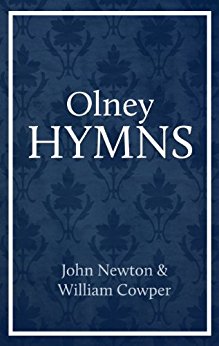
  • Newton on the Importunate Widow – An Olney Hymn

    December 6th, 2017

    Our Lord, who knows full well,

    The heart of ev’ry saint,

    Invites us by a parable,

    To pray and never faint.

    2 He bows his gracious ear,

    We never plead in vain;

    Yet we must wait till he appear,

    And pray, and pray again.

    3 Though unbelief suggest,

    Why should we longer wait?

    He bids us never give him rest,

    But be importunate.

    4 ’Twas thus a widow poor,

    Without support or friend,

    Beset the unjust judge’s door,

    And gain’d, at last, her end.

    5 For her he little car’d,

    As little for the laws;

    Nor God, nor man, did he regard,

    Yet he espous’d her cause.

    6 She urg’d him day and night,

    Would no denial take;

    At length he said, “I’ll do her right,

    “For my own quiet’s sake.”

    7 And shall not Jesus hear

    His chosen when they cry?

    Yes, though he may a while forbear,

    He’ll help them from on high.

    8 His nature, truth, and love,

    Engage him on their side;

    When they are griev’d, his bowels move,

    And can they be deny’d?

    Then let us earnest be,

    And never faint in pray’r;

    He loves our importunity,

    And makes our cause his care.

  • Revealtion Ch. 4 – Holy, Holy, Holy

    November 26th, 2017

    Revelation Part 13

    Isaiah 6:1-7

    Revelation 4:1–11

    AUDIO FOR THIS SERMON CAN BE FOUND HERE

    Having finished up Jesus’ messages to the 7 churches, we now move on in the book of Revelation to things that are far less easy to access.

    Apocalyptic literature is full of symbols and pictures and it can be a real minefield if we don’t keep our wits about us.

    It can be a bit like cloud gazing or staring at the stars – it is easy to impose own imaginations on what’s there, of what we THINK we see. Like those who see the face of Jesus in their toast or Winston Churchill’s profile in a sweet potato.

    Some of you will remember when we went through the Book of Daniel, we did something there I plan to keep with in this study.

    When it comes to this kind of Biblical literature, there are things we can know for CERTAIN in the text; things which are REASONABLE to extract from the text; and things which are merely SPECULATIVE.

    I will do my best to major on the CERTAIN, touch on the REASONABLE and avoid the speculative. If we keep that pattern, we’ll stay pretty safe, and avoid some of the wilder things folks have supposedly drawn out of the book over the centuries.

    With that, we must remember throughout this book to recall its opening line: Revelation 1:1a “The revelation of Jesus Christ.” This book is above all a revelation given BY God, ABOUT God.

    In every place our primary concern must be what does this tell me about the Triune God? Over and above what it may say about events to come. Who and what is God in it all? This is the focus.

    Now to get our footing this morning, chaps 4 & 5 form one vision in 2 parts. The parts divide neatly at the chapter break, and so I’ll keep with that.

    Chapter 4 is merely a vision – in the sense there is little drama or action to be perceived, at least as it affects us. We’ll see more of that in Ch. 5.

    But in the long view, 4-5 introduce a “scroll” which is sealed with 7 seals. The opening of these seals stretches from Ch. 6 through Ch. 19. So these 2 chapters really do set the stage for us.

    We’ll dive into this whole seal thing next time. Today, I want to focus just on Ch.4.

    The scene John labors to depict for us is one of magnificent glory, reminding us of 1 Timothy 6:15b–16 “he who is the blessed and only Sovereign, the King of kings and Lord of lords, who alone has immortality, who dwells in unapproachable light, whom no one has ever seen or can see. To him be honor and eternal dominion. Amen.”

    Additionally the scene has a series of key elements from which we can draw a number of practical and useful observations. Not the least of which begins here: Whatever else may be happening on the earth – both with the 7 Churches we’ve looked at, or in the many scenes to follow – This is Heaven. Undisturbed – in glory, and filled with endless, ongoing worship in the presence of the ineffable God of all.

    Jesus in His revelation to John wants John and his readers to know that no matter what else is going on, even in the midst of the terrible judgments we’re about to read about in the following chapters, God is still God, and He is still on His throne actually ruling – He is not a mere figurehead; His administration still stands; His angels and agents are still about their work; He is still worthy of all praise and glory and honor; and His plan is still unfolding.

    But I’m getting ahead of myself – let’s take the elements of the scene in order.

    1. A DOOR: Revelation 4:1 “After this I looked, and behold, a door standing open in heaven! And the first voice, which I had heard speaking to me like a trumpet, said, “Come up here, and I will show you what must take place after this.”

    The figure of the “door” is one John and his readers wouldn’t fail to grasp. Heaven is a closed place. No one just goes tripping lightly into the presence of God. Ever since the Fall, there has been separation between God and humankind made in His image – due to sin.

    But it is Jesus Himself who declared: John 10:7–9 “Truly, truly, I say to you, I am the door of the sheep. All who came before me are thieves and robbers, but the sheep did not listen to them. I am the door. If anyone enters by me, he will be saved and will go in and out and find pasture.”

    And: Matthew 11:27 “All things have been handed over to me by my Father, and no one knows the Son except the Father, and no one knows the Father except the Son and anyone to whom the Son chooses to reveal him.”

    And: John 14:6 “Jesus said to him, “I am the way, and the truth, and the life. No one comes to the Father except through me.”

    This “DOOR” into the presence of God on His throne can be nothing other than Jesus Himself who alone can give John and us entrance. Which notion is reinforced by John noting that it was “the first voice, which I had heard speaking to me like a trumpet, said, “Come up here” – which Revelation 1:12–13 shows us clearly was Jesus speaking.

    If not for Christ – all access to God would be unavailable.

    And what does Jesus say to John – I want to show you more things. All of life and history isn’t bound up in the here and now of the 7 Churches as you’ve already seen them. There is an eternal plan unfolding and there is much more to come.

    Some have made much of the phrase “I will show you what must take place after this” – as though it means after God is done with the 7 churches, the bulk of the balance of the book doesn’t pertain to the Church. But the language most often simply means, the next thing I want to show you is…

    1. A THRONE: 4:2–3a “At once I was in the Spirit, and behold, a throne stood in heaven, with one seated on the throne. And he who sat there had the appearance of jasper and carnelian”

    Just as in the vision of Ch. 1, John is moved upon by the Spirit in some way so as to give him this vision.

    Now the idea of a throne in John’s day meant much more than it might for us today. When we think of Kings and Queens and thrones in our day, we think in terms of figureheads like Queen Elizabeth. Royalty, but no real power – just position. But in John’s day, one who sat on a throne wielded real power and authority. And there is little doubt this is precisely what he is intended to understand: That God is not some mere, detached figurehead, but that He absolutely rules and reigns over everything. Neither the universe nor human events just rattle on by themselves. God actively rules in His universe.

    As so much of the book of Revelation contains parallel visions of the Book of Daniel – so here, this representation mirrors Nebuchanezzar’s declaration upon returning to sanity: Daniel 4:34–35 “At the end of the days I, Nebuchadnezzar, lifted my eyes to heaven, and my reason returned to me, and I blessed the Most High, and praised and honored him who lives forever, for his dominion is an everlasting dominion, and his kingdom endures from generation to generation; all the inhabitants of the earth are accounted as nothing, and he does according to his will among the host of heaven and among the inhabitants of the earth; and none can stay his hand or say to him, “What have you done?”

    John sees a throne – the throne of God actively ruling over His creation.

    But note how he avoids trying to describe what God Himself looks like. He can only note the dazzling sight of Jasper and carnelian beaming out in stunning brilliance. Jasper most likely being like crystal or diamond and carnelian being a blood red stone – these illuminated and shining out.

    Albert Barnes says, “John does not describe His form, but His splendor. As if looking at a diamond, he does not try to describe its cut and how many facets it has, but how it shines, sparkles and dazzles. Brilliant like jasper or diamond, and blood red like sardine or carnelian.”

    1. A RAINBOW: 4:3b “and around the throne was a rainbow that had the appearance of an emerald.”

    The rainbow would immediately be connected with how God had given the rainbow to Noah in Genesis 9 and how it is a symbol of God’s covenant faithfulness and His promise never to flood the earth again, even while He must still bring judgement upon sin in due time.

    1. 24 Thrones/ELDERS: 4:4 “Around the throne were twenty-four thrones, and seated on the thrones were twenty-four elders, clothed in white garments, with golden crowns on their heads.”

    Who exactly these 24 are is not explained. Theories abound – 13 major ones. Do they represent the12 tribes of Israel matched with the 12 apostles to signify the totality of God’s people? Do they correspond to the 24 courses of the Levitical priesthood? Are they angels? Are they men? We are not sure.

    What seems most evident is that by virtue of crowns on their heads, and in such close proximity to God’s throne, they have something to do with joining in God’s administration of His creation. They have some measure of authority from Him.

    It would no doubt remind John of Paul’s words in Colossians 1:16 “For by him all things were created, in heaven and on earth, visible and invisible, whether thrones or dominions or rulers or authorities—all things were created through him and for him.”

    Thrones, dominions, rulers and authorities most likely referring to angelic hosts there.

    What will be more important is what they do in the subsequent verses.

    1. Thunder and Lightnings: 4:5a “From the throne came flashes of lightning, and rumblings and peals of thunder”

    In the ancient world, the single greatest display of raw power one could experience would be the fury of a lightning storm. Nothing could match it. And so here, something of the innate power of God is being driven home as these proceed directly from the throne itself.

    God is not a paper lion. He cannot be tamed, contained or defended against. His power is limitless and terrifying.

    1. 7 Torches: 4:5b “and before the throne were burning seven torches of fire, which are the seven spirits of God”

    You will remember how Moses was told to make a 7-branched lampstand for the Tabernacle which was to burn always – and how then in Zechariah’s vision in his book, he is shown that lampstand again, but this time God tells him: Zechariah 4:10b “These seven are the eyes of the LORD, which range through the whole earth.”

    It is a picture of God’s omniscience. That He knows all and sees all and misses NOTHING! And He needs no outside illumination – He brings His own light.

    1. A SEA of glass: 4:6a “and before the throne there was as it were a sea of glass, like crystal.”

    Seas almost uniformly in Scripture refer to that which is mysterious, unfathomable, dangerous and unstable.

    Glass in the ancient world was not transparent but translucent. It probably indicates shininess or sparkling – dazzling.

    Here, God is depicted as the One who rules over all of these things too. He is the One at the center of all that is mysterious and unfathomable and that we cannot navigate with certainty.

    1. 4 LIVING CREATURES: 4:6b–8 “And around the throne, on each side of the throne, are four living creatures, full of eyes in front and behind: the first living creature like a lion, the second living creature like an ox, the third living creature with the face of a man, and the fourth living creature like an eagle in flight. And the four living creatures, each of them with six wings, are full of eyes all around and within, and day and night they never cease to say, “Holy, holy, holy, is the Lord God Almighty, who was and is and is to come!”

    One cannot miss the parallel to Isa. 6 here as well as parts of Ezekiel. In the presence of God are these 4 magnificent creatures, who appear around Him at all times, moved from within by the sight John is seeing and all they can pour out is this term in triplicate: HOLY, HOLY, HOLY.

    At its base, this word communicates more than anything else God’s “otherness.” He has no like, no peer, not even a counter. He has made all things and rules all things and yet He is separate from all things and wholly and absolutely singular, unique, self-contained and magnificent beyond description.

    God alone! God alone! God alone! Comparable to nothing and no one. Utterly and completely holy. And we’ll come back to more about this in a minute.

    1. WORSHIP: 4:9–11 “And whenever the living creatures give glory and honor and thanks to him who is seated on the throne, who lives forever and ever, the twenty-four elders fall down before him who is seated on the throne and worship him who lives forever and ever. They cast their crowns before the throne, saying, “Worthy are you, our Lord and God, to receive glory and honor and power, for you created all things, and by your will they existed and were created.”

    So here is the perpetual scene of God being opened up to us in all these different ways, and then the proper response to the revealing of His glory – WORSHIP! We, out of all the creatures God has made, as made in His image are given the gift of seeing, and comprehending and appreciating God even more than the living creatures around Him – for we who have been born again have tasted of His grace and mercy and forgiveness in ways no other creature in all of His endless works can. How high and holy are the redeemed, that we might know Him even better than these who dwell in His indescribable and unveiled presence!

    And the end of it all is this hymn of praise: “Worthy are you, our Lord and God, to receive glory and honor and power, for you created all things, and by your will they existed and were created.”

    Oh how far beneath our privilege we live, by failing to search out the knowledge of Him more and more and more. How little we think of His worthiness!

    It would keep us from worship as an act, and transform us into worshippers as our actual being. Oh for that day!

    SUMMING UP: John’s take away and ours – especially in light of what is to come –

    Christ is the one who alone can give us entrance to the Living God;

    A God who dwells in unapproachable light;

    A God who truly and actively rules and reigns in His universe and is not a mere figurehead;

    A God who has an administrative order by which He rules;

    A God who is all powerful and terrible in His majesty;

    A God who is all knowing – not by mere report but by firsthand observation of all things;

    A God who is at the center of all mystery – who alone can reveal the fullness of truth to us to make us know why everything the way it is and what its ultimate purpose is;

    A God who by the very highest of creatures created to be in His presence, and who cannot contain themselves but must spontaneously and perpetually burst out into high, holy, glorious praise and honor for who and what this God is.

    Why does anything exist that exists? Because God has willed it so.

    How did everything come to be? God willed it so.

    This includes you.

    Now in closing this vision – I want to tease out just one more thing. It is wrapped up in this 3-fold song of holy – holy – holy.

    Why might this be so important for John, his first readers and us in preparing us for the balance of what is to be revealed?

    Let me suggest 3 things. And it has to do with another aspect of God’s holiness – His absolute sinlessness. Or as John puts it in 1 John 1:5 “This is the message we have heard from him and proclaim to you, that God is light, and in him is no darkness at all.”

    1. God is holy in His creating the world and His plans for it. Life is not a cosmic joke. And though we cannot scrutinize why God would allow evil and all that has come from it, there is nothing dark, nefarious or sinful in it. He has acted holily.

    He has created all things the hymn notes – and in doing so He has acted in perfect righteousness. In all He has done, He has been holy.

    2.Our God is holy toward His people no matter what they must endure. He cannot do us wrong.

    As the following chapters unfold and God’s wrath is poured out on the earth. And as the Saints endure all kinds of persecutions and hardships – He is HOLY, and does not err or sin against any in any way.

    Just and upright and righteous in all He does and all He permits. And suffering saints especially need to call to mind the holiness of the One who rules our lives and the events which touch us.

    Yes John, some of what you are about to see – even your present imprisonment is ruled over by your holy God. You can trust Him.

    3.Holy in that sin must be judged. Sin will at last be punished, and that as it deserves. God has waited long, but not too long. And when at last He pours out His terrors in judgment, He will be utterly and completely holy. This God cannot under-punish nor over-punish. He will do all that is right in the finishing of His eternal plan – and every living creature in Heaven and on earth will vindicate Him in His holiness.

    If you are not a believer today, this scene stands to warn you as nothing else can – God is HOLY. He will not, He CANNOT overlook sin. It must and will be dealt with. And either you find yourself cleansed in the blood of the Lamb by turning to Him for salvation as your substitute on the Cross, or you will be subject to both the temporal and the eternal judgments to come as they will be displayed in the balance of this book.

    And so with the voice of Christ we plead with you today – come to Him. Even as the book itself will close: Revelation 22:17 “The Spirit and the Bride say, “Come.” And let the one who hears say, “Come.” And let the one who is thirsty come; let the one who desires take the water of life without price.”


  • Walking Through Twilight – A Recommendation

    November 23rd, 2017

    Qualifier: The following is not as much a review, as it is a plea for you to buy this book, read it, digest it and learn from it.

    Walking Through Twilight – a memoir by Douglas Groothuis is not an easy book to read.

    The dis-ease of reading it is not due to a Philosopher’s arcane or unique vocabulary, its length, nor the opacity which often attends attempts to describe or explain deep subjects. It is the uncomfortability of someone letting you touch their wounds. While they willingly (even if reluctantly) invite you to see just how raw and cruel the damage done to them has been, they nevertheless let you draw close enough to peer into their pain. And they do so to make suffering less ominous, less fear-inducing and less God-doubting. Nothing short of the glory of the resurrection will truly render it less mysterious.

    This is the gift of Walking Through Twilight.

    Groothuis is professor of philosophy at Denver Seminary. His and his wife Becky’s twilight, is their journey together with their God and friends as Becky’s particular brand of dementia (primary progressive aphasia) takes its mental, psychological, physical and spiritual toll. And it is brutal.

    Page after page captured me as I listened to my brother in Christ lament well. Lamenting the degradation of his brilliant wife’s ability to access her words, wit, wisdom and skill. Lamenting the loss of the life they knew and enjoyed so much together – as it gave way to a life neither of them would ever have wanted or suspected. Grieving out loud without absolute despair, even when no hope in the natural remains, but only the promises of God’s Word. And he taught me well not to use that word only as minimalistic, but as an indicator of the singular hope we have in Christ.

    Mind you, while this is a heavy book, it is far from depressing. It is filled with the author’s failures. And it is filled with countless road-signs pointing back to Calvary, as well as to the Blessed Hope to come.

    The book serves as a living introduction to real-time suffering – something our current society (and many Christians) believe it is our birth-right to be free of. It reminds us powerfully of the reality of living in a fallen world. A world in which all of nature, including ourselves, will groan together for the relief which will only come when Jesus does.

    Besides the running narrative of how Groothuis himself seeks the solace of Christ and His Word and promises, there is a short appendix of practical instruction for “comforters”. Those short suggestions are worth the price of the book alone.

    But do not miss my meaning. The primary focus of this book is not as a “how to.” It is a book on “being”. What it means to be in the midst of the confusion and unexpected minefield of scattered demands, difficulties and unending complications of irreversible suffering. Most especially, to be in all of this, as a Christian.

    No, Walking Through Twilight is not an easy book to read, but it is richly rewarding. It will encourage, strengthen, enlighten and inform everyone in their own suffering, or in ministering to others in theirs.

    I cannot recommend it more highly as my own go-to in thinking about suffering in my own life, and in ministering to others in theirs.

  • A Thanksgiving Hymn from John Newton

    November 23rd, 2017

    No, this hymn wasn’t written regarding our American Thanksgiving. It was written in giving thanks for salvation and the freedom in Christ we have received in our salvation. It is told through the voice of the demoniac freed from Legion. I found it most fitting on this Thanksgiving Day.

    MARK – The Legion dispossessed. Chap. 5:18, 19

    1 LEGION was my name by nature,
    Satan rag’d within my breast;
    Never misery was greater,
    Never sinner more possess’d:
    Mischievous to all around me,
    To myself the greatest foe;
    Thus I was when Jesus found me,
    Fill’d with madness, sin, and woe.

    2 Yet in this forlorn condition,
    When he came to set me free,
    I reply’d to my Physician,
    “What have I to do with thee?”
    But he would not be prevented,
    Rescu’d me against my will;
    Had he staid till I consented,
    I had been a captive still.

    3 “Satan, though thou fain wouldst have it,
    Know, this soul is none of thine;
    I have shed my blood to save it,
    Now I challenge it for mine:*
    Though it long has thee resembled,
    Henceforth it shall me obey:”
    Thus he spoke, while Satan trembled,
    Gnash’d his teeth, and fled away.

    4 Thus my frantic soul he healed,
    Bid my sins and sorrows cease;
    “Take,” said he, “my pardon sealed,”
    “I have sav’d thee, go in peace.”
    Rather take me, Lord, to heaven,
    Now thy love and grace I know;
    Since thou hast my sins forgiven,
    Why should I remain below?

    5 “Love,” he said “will sweeten labours,
    Thou hast something yet to do;
    Go and tell your friends and neighbours,
    What my love has done for you:
    Live to manifest my glory,
    Wait for heaven a little space;
    Sinners, when they hear thy story,
    Will repent, and seek my face.”

    John Newton and Richard Cecil, The Works of John Newton, vol. 3 (London: Hamilton, Adams & Co., 1824), 407–408.

  • Dr. David Allen’s ETS Paper on Calvin and the Atonement

    November 19th, 2017

    This year, my wife and I were privileged to attend the 2017 annual ETS (Evangelical Theological Society) meeting in Providence RI. One of the true highlights was to see my friend Dr. David Allen of SWBTS. If you haven’t read it, Dr. Allen’s seminal work on the extent of the Atonement is an absolute “must-read” for anyone wishing to interact with the issues surrounding debates on the extent of Christ’s atonement. Because his work is primarily historical theology (though in the process plenty of exegetical work gets done as well) it is an invaluable tool for dismantling prevailing myths about how Baptists and Calvinistic Baptists in particular (though Dr. Allen would not characterize himself as Calvinistic) have understood this vital topic.

    Dr. Allen’s paper at ETS is a short but potent digest dealing specifically with the research done on Clavin’s own view of the extent of the aotnement. It is drawn from material in the larger book. The content will surprise many, no doubt anger a few, but inform all who spend the time to read it. It is a mere 20 pages but it is jam-packed with research and solid information. Agree or disagree, it is powerful, thought provoking, worthwhile and important. The link below will take to the paper which he has kindly allowed me to post here. ENJOY!

    Allen ETS Paper – Calvin and the Extent of the Atonement


  • Faith’s Response to the Ultimate Test – Abraham: Dr. Mike Canham

    November 19th, 2017

    AUDIO FOR THIS SERMON CAN BE FOUND HERE

    We were so pleased today to have my dear friend Dr. Mike Canham from Cornerstone Seminary here to preach. He did an outstanding job on helping Christians face times of trial and temptation from the account of Abraham’s call to sacrifice Isaac.

    Don’t miss it!

  • Just back from ETS

    November 18th, 2017

    My wonderful wife and I just got back from this year’s annual meeting of the Evangelical Theological Society, and what a blessing the sessions we were able to attend this year were. Some highlights were:

    William Lane Craig responding to a new book attacking penal substitutionary atonement. He dismantled it handily – reasserting the orthodox Reformed position.

    Douglas Groothuis on What Philosophers wish Theologians knew. With his classic wry humor and a slight by-path on discussing the current trial of his brilliant wife’s struggle with dementia. His book on that is due out this Monday – “Walking Through Twilight.” An absolute must read.

    A wonderful festschrift for Vern Poythress that even brought Wayne Grudem to tears as he recounted Poythress’s influence on his own life.

    David Allen’s wonderful paper on Calvin’s view of the Atonement.

    Not to mention D. A. Carson, Thom Schreiner, Al Mohler, Andy Naselli, Sam Storms, Greg Beale, and a host of others. Too many to attend them all.

    And a spectacular 3 hour presentation (by multiple speakers) on the subject of Theistic Evolution. I’ll be reviewing this 1000 page tome soon, but to have a roster of top-tier scientists, philosophers, and theologians dealing with topic in such depth was worth the 6 hour drive each way and the cost of the conference and the hotel room. Their object in equipping the saints to be able to stand our ground against popular evolutionary myths and especially capitulations in the Church by groups like BioLogos was nothing short of stunning – and highly energizing.

    If you can only buy one major book this year ($65.00 IS steep) – save your pennies and do it. Spectacular.

    There were a few more but I wanted to tease you all with the Theistic Evolution book. GET IT!

  • Am I a Christian?

    November 13th, 2017

    Am I a Christian?

    1 Thess. 1 (Entire)

    Acts 17:1-12

    AUDIO FOR THIS SERMON CAN BE FOUND HERE

    I fully intended to pick up in chapter 4 of our study in the book of Revelation this week, but something keeps nagging at me. So I decided to take this week to address what has been on my mind of late.

    It occurs to me more and more, especially as I see the state of our nation, and the state of the broader church in our nation, that a Biblical sense of what being a Christian is – is seldom as informed by the Bible itself, as it is by opinions, feelings, culture, and religious systems.

    What do we even mean by it? – being a Christian that is. Ed went a long way in helping us this last Wednesday night in our study of the 20 basic Bible doctrines every Christian ought to know.

    So let’s build upon that even a bit more.

    And let’s begin first by differentiating between the Biblical DEFINITION of a Christian, and a Biblical DESCRIPTION of a Christian.

    Our Wednesday night study was dealing more with definition. As Ed showed us, a Christian is one who has been supernaturally regenerated – born again and indwelt by the Spirit of God. Raised from a state of spiritual deadness to life, and given sight. Sight in terms of the reality of God and the Bible as God’s Word, and Jesus Christ in His substitutionary atoning work. A vision of their own sinfulness, the justness of God’s coming wrath upon that sinfulness. That their sin has separated them from God and that Jesus Christ alone can satisfy God for their sin, in such a way as to see the sinner and God reconciled.

    In short, a Christian is: One who being regenerated by the Spirit of God – and having heard the Gospel of Jesus’ death, burial and resurrection for sinners; Believes that Gospel as true and trusts themselves and their salvation to Christ and His finished work on Calvary alone.

    So BEING a Christian is not a matter of being a part of a particular church or group, or even simply subscribing to a set of truths – even though that is involved – but in a true, fundamental inward change supernaturally wrought by the Holy Spirit.

    Unquestionably there are a host of other things that accompany these essentials, but it is absolutely certain this change is at the core.

    Moving beyond the mere definition, it is also good to look at a sound description. After all, this it seems is where even more confusion arises. For the culture, individuals, various religious and even secular groups -virtually all have some idea of what a Christian ought to look like.

    In our current society, that is often associated with political affiliation; stands on certain social causes; behaviors that may or may not be directed by Scripture etc. While there may be SOME truth in that, to be clear one can be pro-life without being a Christian. One can be conservative, or liberal, and not be a Christian. One can hold to the existence of God, special creation, gun control or not, abortion or not, big government or not, teetotalling or not, homeschooling or not, common core or not, tattoos or not, King James only or not, or a million others, and not be a Christian.

    Being a Christian will certainly impact how you stand on one or all of these things – but standing on a particular side of such things does not make one a Christian.

    Well then, what kind of objective evidence, Biblical evidence might be safely marshalled to help us answer this question? Fundamentally, all other things aside, what does a Biblical Christian (that is actually a redundancy) look like in the eyes of God? In the Bible?

    It is that which brings us to the text we have today in 1 Thess. 1, specifically vss. 9-10.

    Somme background is helpful here. Thessalonica was a large and cosmopolitan city of 100K- 200K people. Acts 17 records Paul’s visit there, the riot that ensued and how he and Silas had to scurry away just to stay alive. Later, Paul sent Timothy back to Thessalonica to check on the new believers. And is it Timothy’s report which notes the key things we want to look at this morning.

    How were the Christians doing? What marked them out AS true Christians in this large, cultural center with lots of competing religions and ideas? What set them apart from moral and faithful Jews, and other groups? What could Timothy tell Paul which would set Paul’s mind at ease that these had truly become Christians?

    Four things: They had –

    1 Turned TO God, FROM idols

    2 To SERVE the Living God

    3 And to wait for His Son from Heaven who He raised from the dead.

    4 Jesus, who delivers us from the wrath to come.

    4 Powerful descriptors that for the Apostle, assured him that these were now genuine Believers – true, Biblical, Christians.

    1. They turned TO God, FROM idols.

    Now this needs some unpacking. For in truth, as Acts 17 records, not all those who heard Paul preach on the 3 consecutive sabbaths he did there, were idolaters in the sense of serving literal pagan idols.

    Paul’s preaching was done in the Synagogue at least primarily. So as Acts 17:4 reads: “And some of them were persuaded and joined Paul and Silas, as did a great many of the devout Greeks and not a few of the leading women.” A rather mixed crowd.

    History tells us that wealthy women of the day had a tendency to seek out and attach themselves to various religious groups, even funding them. Many did this with Judaism as with other religions. Pagan, Gentile women with religious fascinations.

    But if this started in the synagogue, why then was this issue of idols front and center? The answer is, because in essence, anything that takes the place of God in any way in our lives – is itself a “false” god – and idol – even Judaism itself. Let me elaborate.

    Idolatry comes in several different forms.

    PURE or FORMAL Idolatry. Pagan worship with god substitutes represented by images of different kinds. This is what most of think of first when we hear the term idolatry. Worship of pagan gods. The Bible names many of these especially in the OT – Molech, Baal, Ashtoroth, Rephan, etc. And some in the NT like those we saw in the Revelation cities like Diana and others.

    This form of idolatry has a very interesting subset – Atheism. For in Atheism, man makes himself the measure of all things. He worships his desires, dreams, purposes, etc. The idol is self.

    MIXED Idolatry. This was especially attractive to some pagans because in it, you either simply add Christ to your existing god or gods, or you in some way come to Christ but also add another god or gods to Him as valid as well.

    This became very common during the conquest of the Mayans, Incas and other people groups when the Roman Catholic missionaries tried to convert them. They found if they let them keep their existing gods, they were pretty willing to add Jesus to them. And so the missionaries claimed success in converting them, when in fact they had just obscured Christianity and reinforced the false worship of the idolaters.

    DISGUISED Idolatry. This is the idolatry of the religious – like the Jews Paul was preaching to. This is serving the God of the Bible, but as though He is a pagan god. That shows itself in a number of ways.

    One way is serving God, SLAVISHLY like He is a harsh task-master and needs human appeasing through our sacrifices and rituals. We have an example of this in Micah 6:1-8.

    Truth be told, there are many who would call themselves Christians today who serve God this way. And He rejects it.

    A second kind of DISGUISED idolatry is serving God SUPERSTITIOUSLY  (Deut. 18:9-14) This shows itself in things like thinking God must be addressed in Elizabethan English or your not using the right magic phrases; putting superstitious emphases on certain Postures in prayer; adding requirements God never did like requiring certain amounts of time in prayer or Bible reading where if you don’t meet the quota, you’re sinning. Adopting a special “Prayer voice”. Making deals with God. Etc.

    A 3rd kind is like that of Nadab & Abihu in Lev. 10 – where they just decided to get real innovative with God’s proscribed form of worship and in offering strange fire before God He had not commanded, they were killed for. SELF-ORIGINATED worship.

    And 4th we might SELF-CENTERED WORSHIP (Matt. 15:9). Where we craft Church after the likes and dislikes of the people, without seeking to see what God says worship ought to be like from the Scriptures.

    In these 2, worship itself becomes an idol.

    At the bottom of all of these, is a man-centered approach to God, and it is as much idolatry as is outright paganism. And this was surely where most of Judaism was in Paul’s day – where it was superstition about God’s name, following rites and rituals rather than worrying about a heart which is right before God by God’s appointed means.

    And it is from all of these types of idolatry that Timothy told Paul – the Believing Thessalonians had turned FROM, and turned TO God instead.

    In a word, this is the idea wrapped up in the word repentance. Turning away from one thing and to another. Away from sin to righteousness. Away from rites and rituals to faith in the finished work of Christ. Away from self-centeredness to Christ-centeredness. Away from superstition to the true and living God.

    Let me tease this out just a tad more for our use today. For as I said already, an idol is anything that takes God’s rightful place in our hearts and minds. And there is a simple test we can use for hunting out possible idols in our own lives.

    I can detect and locate idols by asking myself a few questions. I give you 5 here. Which unfortunately we can’t expand upon right now.

    What do I FEAR most? Matt. 10:26-28 – “So have no fear of them, for nothing is covered that will not be revealed, or hidden that will not be known.  What I tell you in the dark, say in the light, and what you hear whispered, proclaim on the housetops…And do not fear those who kill the body but cannot kill the soul.  Rather fear him who can destroy both soul and body in hell.

    What do I VALUE or DESIRE most? Matt. 6:21for where your treasure is, there your heart will be also.  i.e. what elicits my greatest devotion

    What fills in the box when I say: “If only X______________ THEN, I would be happy”? Or better, without X_____ I cannot be happy.

    As long as you are looking for that thing to make you happy, then your attainment of it will be dissatisfying. It will leave you unhappy and discontented.

    If my ultimate and supreme happiness isn’t in him, then I am trading “creatures” for the Creator.

    What do I seek my ultimate JOY in? 1Pet. 1:8  and though you have not seen Him, you love Him, and though you do not see Him now, but believe in Him, you greatly rejoice with joy inexpressible and full of glory.

    Ps. 16:11 You will make known to me the path of life; In Your presence is fullness of joy; In Your right hand there are pleasures forever.

    God in His goodness has given us countless things we may freely enjoy – but all of them are only meant to be tokens of Him – in whom we are to seek our supreme joy. Especially when we see how fleeting earthly joys are.

    What DICTATES my BEHAVIOUR most? Jer. 7:23-24 “But this command I gave them: ‘Obey my voice, and I will be your God, and you shall be my people. And walk in all the way that I command you, that it may be well with you.’ But they did not obey or incline their ear, but walked in their own counsels and the stubbornness of their evil hearts, and went backward and not forward.” The juxtaposition of self-determination vs. love for God-determination.

    How do I make up my mind about what is right or wrong to do in any given situation? My own opinion? Feelings?

    What do I place my HOPE in? What is my hope for the future?

    What is my hope for right standing w/ God?

    What is the source of my peace of mind?

    What do I look to for a sense of well-being?

    What is my comfort in the hard times?

    1. What do I FEAR most?
    2. What do I VALUE or DESIRE most?
    3. What do I seek my JOY in most?
    4. What DICTATES my BEHAVIOUR most?
    5. What do I place my HOPE in?

    Answer these, and you will know what your god or gods are. And the 1st mark of the truly converted soul is that one seeks to turn away from those gods – to the true and Living God. Nor is this done just once – but it becomes a lifestyle of turning from those false gods to the God of the Bible over and over and over.

    With that established we can work through the balance of these very rapidly.

    2 The genuine Christian turns from idols to God – To SERVE the Living God.

    The genuine Christian now realizing all that has been done for them in Christ – seeks to serve this merciful, gracious, loving, pardoning, holy God. You’ve saved me for yourself – now use me! How can I serve your ends, your agenda, your plans and purposes, your kingdom?

    If your Christianity is all wrapped up in God just being a blessing dispenser, without any regard for what it means to be His servant, saved for His purposes, you need to ask yourself if you have truly come to faith.

    Coming to Christ is not a ticket to earthly and worldly pleasures, but the gift of eternal bliss in the service of the King!

    One of Christ’s harshest rebukes in the NT is couched in a parable in Luke 19. The Nobleman in the parable (an allusion to Jesus Himself) was to go into a far country to be given final title to a land and a people. When he left, the Nobleman gave 10 servants money to invest on his behalf while gone. Startlingly, the text says: Luke 19:14 “But his citizens hated him and sent a delegation after him, saying, ‘We do not want this man to reign over us.’”

    What was the problem? They liked the money but they hated Him in that they did not want Him to REIGN over them. Fine and well to take his gifts, but they reject his right of authority over them. So Jesus adds after settling with those who took the money – Luke 19:27 “But as for these enemies of mine, who did not want me to reign over them, bring them here and slaughter them before me.’ ”

    Many is the professed Christian who wants Jesus as a gift giver, a forgiver of sins, a healer and Savior – but if they do not want Him to reign over them – He counts them His enemies, and they will not escape His wrath. These are profoundly sobering words. Especially to all of us who take the name Christian to ourselves today. Do we want Him to reign over us?

    The genuine Christian turns from idols to God – To SERVE the Living God…AND

    3 To WAIT for His Son from Heaven who He raised from the dead.

    The genuine Christian lives a life of expectancy and hope located in the return of Jesus either to translate us or resurrect us to be with Him forever. And this hope is fueled by the conviction that Christ was raised from the dead already as the first-fruits of God’s people.

    Christians are those living now, with their eternity in view, and have stopped living for just today or the foreseeable future. They say with Paul: 2 Timothy 4:8 “Henceforth there is laid up for me the crown of righteousness, which the Lord, the righteous judge, will award to me on that day, and not only to me but also to all who have loved his appearing.”

    Beloved, if you are not one who loves His appearing, and is longing and looking for it, you need to ask if you ever been truly born again?

    The genuine Christian turns from idols to God – To SERVE the Living God and to WAIT for His Son from Heaven who He raised from the dead…

    1. Jesus, who delivers us from the wrath to come.

    Christians are living these ways, because they have a sense of the wrath of God which was due them, and the wonder of knowing they’ve been delivered from God’s coming wrath on all the world through the death, burial and resurrection of Jesus. All of this is wrapped up – not in religion or a system – but in Jesus Christ.

    Christians know – know in their very bones, God in His holiness and justice must one day set the universe to rights. And they have a true sense of the reality of that coming day, and have run to Christ for shelter. Have run to the cross to have His blood plead on their behalf as having washed away their guilt and the stain of their sins. And they keep running to Him in every failure, with every sin, with all of their brokenness, for they know that they know that they know on the authority of God’s Word, that no one can deliver them but the Lamb of God who takes away the sins of the world.

    So let me bring all this down to you once again:

    Have you turned and continue to turn TO God, FROM idols?

    Have you turned, so as to SERVE the Living God?

    Are you consciously waiting for His Son from Heaven who He raised from the dead,

    Trusting in this Jesus alone, who delivers us from the wrath to come?

    If so, you rightly call yourself a Christian today.

    If not, no matter what your religion, or profession or to use the modern parlance – your self-identification – you are still dead in your trespasses and sins, and need to be born again by the Spirit of God. The wrath of God still remains on you as Jesus said in John 3:36.

    But it is not too late! You can come to Him today! You can a call upon Him for forgiveness, and to have your guilt expunged by His blood and to be made His own and reconciled to the Father. Won’t you come to Him today?


←Previous Page
1 … 98 99 100 101 102 … 201
Next Page→

Blog at WordPress.com.

Loading Comments...
  • Subscribe Subscribed
    • ResponsiveReiding
    • Join 409 other subscribers
    • Already have a WordPress.com account? Log in now.
    • ResponsiveReiding
    • Subscribe Subscribed
    • Sign up
    • Log in
    • Report this content
    • View site in Reader
    • Manage subscriptions
    • Collapse this bar