Skip to content
  • Home
  • About
  • Blog
  • Atonement
    • The Atonement: Read this first!
    • Confession of an ex-u0022Highperu0022 Calvinist
    • Revisiting the Substitutionary Atonement
    • Discussing the Atonement – a lot!
    • Lecture Notes on The Atonement
  • Sermons
  • ReviewsAll book and movie reviews
    • Books
    • Movies

ResponsiveReiding

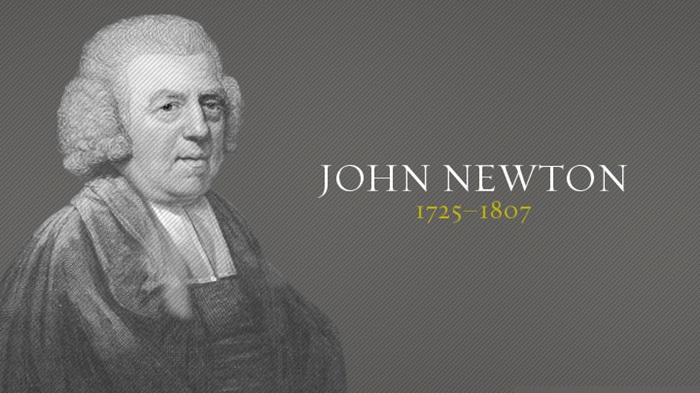
  • A wee sweet bit of Newton

    July 1st, 2017
    Image processed by CodeCarvings Piczard ### FREE Community Edition ### on 2016-02-10 10:47:04Z | http://piczard.com | http://codecarvings.com

    Last Lord’s Day, I closed the sermon with an impromptu reading of a poem by John Newton. In his “Olney Hymns” – Newton wrote a poem on every book of the Bible. Many books enjoyed more than one poem. This is the one he wrote in regard to the Song of Solomon. And it is sweet indeed. Enjoy!

    SOLOMON’S SONG / The name of Jesus. Chap. 1:3

    1 HOW sweet the name of Jesus sounds
    In a believer’s ear!
    It soothes his sorrows, heals his wounds,
    And drives away his fear.

    2 It makes the wounded spirit whole,
    And calms the troubled breast;
    ’Tis manna to the hungry soul,
    And to the weary rest.

    3 Dear name! the rock on which I build,
    My shield and hiding place;
    My never-failing treasury fill’d
    With boundless stores of grace.

    4 By thee my pray’rs acceptance gain,
    Although with sin defil’d;
    Satan accuses me in vain,
    And I am own’d a child.

    5 Jesus! my Shepherd, Husband, Friend,
    My Prophet, Priest, and King;
    My Lord, my Life, my Way, my End,
    Accept the praise I bring.

    6 Weak is the effort of my heart,
    And cold my warmest thought;
    But when I see thee as thou art,
    I’ll praise thee as I ought.

    7 ’Till then I would thy love proclaim
    With ev’ry fleeting breath;
    And may the music of thy name
    Refresh my soul in death.


    John Newton and Richard Cecil, The Works of John Newton, vol. 3 (London: Hamilton, Adams & Co., 1824), 370.

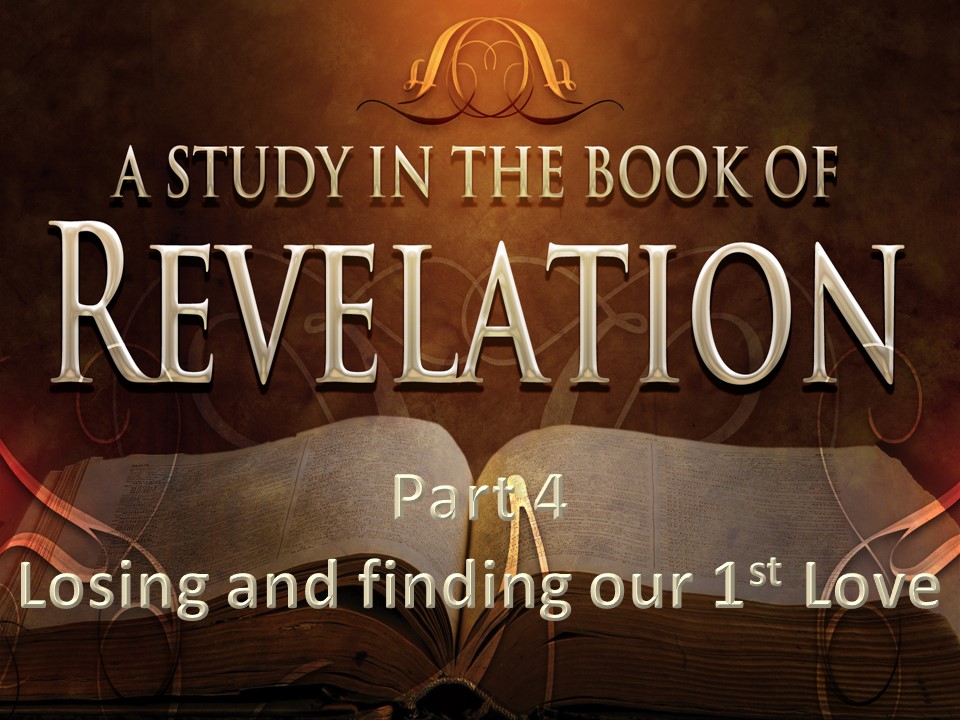
  • Sermon Notes: Revelation Part 4 – Ephesus

    June 29th, 2017

    Revelation Part 4

    1:9-2:7 Ephesus

    Psalm 103


    AUDIO FOR THIS SERMON CAN BE FOUND HERE

    As I noted a few weeks ago, each of these letters to the 7 Churches has the same 4 common elements:

    – An Appeal to the revelation of Jesus in Ch. 1

    – A Declaration of insight (positive and/or negative)

    – A Call to something

    – A Reminder to hear everything Jesus says to all 7, not just what He says to each particular church in its context.

    That is the pattern I’ll be using in working through each of these letters.

    I. (v.1) THE APPEAL TO THE REVELATION OF CHRIST:

    “To the angel of the church in Ephesus write: ‘The words of him who holds the seven stars in his right hand, who walks among the seven golden lampstands.”

    1.1 “To the angel”: This is probably not referring to the pastor since this appellation is not given to pastors anywhere else in the Bible.

    More than likely, this is a reminder that God supernaturally superintends His Church by means of angelic beings who have an assigned, vested interest in the spiritual health of Christ’s congregations.

    We’re not given any more information regarding this state of affairs, so it does not open the door for Christians to appeal directly to those angels nor to interact with them in any way. But it does tell us they are there by God’s assignment and that we are to be aware that we are not simply left on our own.

    Heb. 13 reminds us that the way we conduct ourselves is monitored by such angelic beings, and that we ought to be aware of it. Heb. 13:1–2 “Let brotherly love continue. Do not neglect to show hospitality to strangers, for thereby some have entertained angels unawares.”

    And 1 Cor. 11:10 Paul warns the Church to be careful that she maintains proper order in her services because of the angels – the idea being that these are God’s observers in His Church and report back to Him.

    No local assembly, and no individual in the Church is without divine oversight. Nothing we do goes unobserved.

    1.2 “Him who holds the 7 stars and walks among the lampstands.”

    Not only does Christ Himself have these angelic beings who bear some responsibility for the Churches, but He Himself walks among the Churches – represented by the lampstands as per 1:20.

    As we looked at in detail last time – Jesus remains intimately and personally involved in His Church.

    He is in our midst, and with His eyes of flaming fire – He hears and perceives and knows everything about us AS a Church and as individuals IN the Church.

    It is on this basis that He then makes His assessment of the Ephesian Church – and by implication – ours as well.

    II. (v.2-3 & 6) THE POSITiVE AND NEGATIVE DECLARATIONS:

    2.1POSITIVE:   “I know your works, your toil and your patient endurance, and how you cannot bear with those who are evil, but have tested those who call themselves apostles and are not, and found them to be false. I know you are enduring patiently and bearing up for my name’s sake, and you have not grown weary.”

    This is not an inactive Church – she is a church that works. Jesus says He knows 3 things especially: Their TOIL; Their PATIENT ENDURANCE; Their keenness to sort out false teachers who might come their way.

    These are not people blown about with every wind of doctrine.

    They are not fools for false teachers and teachings.

    They are a discerning bunch and they are willing to make necessary judgments about truth and those who claim to teach the truth.

    They had followed the OT guidelines which God had laid out for testing false prophets – and had rightly applied them to dealing with false teachers or false apostles.

    The Church in its earliest days had few local teachers, so there were many itinerant preachers and teachers like Apollos who God raised up to meet the need. However, there were also some who were self-appointed and saw this as an opportunity to seize power, money and prestige.

    The 2-fold test for such teachers was:

    1. What they taught. Did it accord with received Scripture teaching?
    2. How they lived. Did they live as those redeemed from the World’s values and sin?

    Both had to be in place.

    Jesus adds a 4th commendation in vs. 6: They know how to hate what Christ hates – in this case the works of the Nicolaitans.

    We do not have much detail on this group – but based on what is said about them in vss. 14-15 in the letter to Pergamum, it appears they had some tendency to teach that it was all right for Christians to engage in pagan rites and festivals as a reasonable compromise with the culture.

    Ephesus was known both for its pagan temples – especially to the goddess Artemis (Diana), and to the cult of Emperor worship. There were thousands of priests, priestesses and cult prostitutes.

    Given the fact that much of the economic trade in Ephesus was rooted in trade unions that protected the manufacture and sale of silver images of Artemis – the pressure would be intense to strike a happy compromise in order to secure work as a silversmith or a merchant.  They needed to thrive in that economy and culture.

    Because Paul’s original mission work there, ended up in a riot over the fact that Paul was preaching Christ alone as God (Acts 18-19) – keeping a low profile and not speaking out publicly against idolatry would be especially tempting. Why rock the boat more, when it almost capsized back then?

    Keep your head down. Don’t make unnecessary waves. Compromise here and there. Keep your Christianity to yourself. Stay internally faithful, but publicly quiet and respectable.

    This would be their great temptation. And isn’t it ours as well?

    They seemed to be holding the fort in this regard.

    They hated this teaching and Jesus is markedly pleased with that attitude.

    2.2 (v. 4) NEGATIVE:  “But I have this against you, that you have abandoned the love you had at first.”

    2.3 You have abandoned your first love”

    This abandonment is the subject of a lot of scrutiny by everyone who works through this passage. Just what does Jesus mean and what does it look like?

    We know it had something to do with their outward witness in the Ephesian context.

    I take that from what Jesus warns them of in vs. 5: “repent…If not, I will come to you and remove your lampstand from its place, unless you repent.”

    The connection with Jesus’ teaching about the Church in the Sermon on the Mount comes immediately to mind: Matthew 5:14–16 “You are the light of the world. A city set on a hill cannot be hidden. Nor do people light a lamp and put it under a basket, but on a stand, and it gives light to all in the house. In the same way, let your light shine before others, so that they may see your good works and give glory to your Father who is in heaven.”

    The implication of Jesus’ words in this letter is: “If you won’t take up your charge to BE light in this place, I will remove your light altogether!”

    But in exactly what way had this become the danger they faced?

    The answer surfaces in the statement: “You have abandoned your first love.”

    Look at the whole description again:

    They TOIL – they work hard

    They PATIENTLY ENDURE – they are holding on without fainting

    They PRACTICE DISCIPLINE and judge truth claims well

    They HATE COMPROMISE with the culture

    But it is all being done in some way – lacking love. Lacking passion.

    And there is no surer way of demonstrating a fading or faded love, than holding the fort, doing the grunt work, but without the joy that love inherently brings to the equation.

    They believed the right stuff.

    They did the right things.

    They were dug in for the long haul.

    They were committed.

    But they had abandoned – they had left their first love. They were going through the orthodox motions, but it no longer captivated their hearts.

    Don’t get me wrong, there is much to be said for sticking to one’s clear duties and obligations when the joy of a relationship wanes – but when it remains that way – and nothing is done about it – nothing short of disaster is on the horizon.

    This is the Ephesian condition, and it can easily be yours or mine as well.

    In sum, they had begun to obscure the LIGHT they were meant to be in that dark place, by serving Christ and His cause – however meticulously and orthodoxly – without joy.

    And nothing – nothing is less a witness to the world about the God whom we serve, and the Christ who loves us and redeemed us than to present Him to the world as one who has made us joyless, over-scrupulous, judgmental, perfunctory performers of dead religious duty.

    Now the Ephesians are not alone in this are they?

    Is there anyone who has walked with Christ for any length of time, who has not also experienced dry seasons? Periods when the faith has not been abandoned, and the commitment to truth and to His Word and to His Church – at least outwardly has not shifted – but in truth, inwardly, there is no joy anymore. There is no excitement. The heart has grown cold and formal.

    Yes, you come and sing and pray and have your private devotions, but in reality, your heart is no longer broken over sin…

    You are no longer delighted in the things of God…

    You haven’t wept in joy over the mercy and grace and goodness of God to you in weeks, months, or maybe even years.

    You’ve lost your first love. There is no newness, no freshness in your walk with Christ. It is all old hat, and you’ve hunkered down for the long haul – but you know something is not right. Service in the Kingdom has become all duty and obedience, and it is no longer love that draws your best efforts out of you for the name of Christ.

    His love doesn’t melt you anymore.  The question is – “what do we do?”

    And Jesus provides the answer, even before they, or we ask it.

    III. (v. 5) THE CALL: “Remember therefore from where you have fallen; repent, and do the works you did at first. If not, I will come to you and remove your lampstand from its place, unless you repent.”

    Jesus’ doesn’t merely diagnose their predicament and turn it into prosecution. No.

    Instead, He also gives them a sweet and wonderful prescription to restore them to their previous help.

    And He does so by means of a two-fold remedy.

    3.1 “Remember from where you have fallen.”

    When love and passion have lost their joy, when we have lost the sense and impact of the love of God for us in Christ – we inevitably turn to something else to fill the void.

    In fact, the word for “abandoned” here is always used in the NT of not just leaving a relationship, but leaving it and turning to someone or something else. Not just a faded love, but a redirected love.

    In spiritual life, this most often manifests itself in a turn toward ritual, rite and ceremony. To formality and mere duty in place of joy and vitality.

    And so the first need is this: We must go back to refamiliarize ourselves with the wonder, the joy, the magnificence and the thrill of what brought us to Him in the first place: the glory of His love for us.

    To rehearse and revel in His wondrous love.

    Recovery of our love for Him, begins in recovering awe at His love for us! It must lead us back to gaze upon the cross again until the love of Christ warms, floods and overwhelms our hearts again as it did at the first. For we always leave our love for Him, when we have first lost sight of His great love for us.

    Paul saw this tendency in them much earlier, and made it the basis of his intercession for them his letter to the Ephesian Church: Ephesians 3:14–19 “For this reason I bow my knees before the Father, 15 from whom every family in heaven and on earth is named, 16 that according to the riches of his glory he may grant you to be strengthened with power through his Spirit in your inner being, 17 so that Christ may dwell in your hearts through faith—that you, being rooted and grounded in love, 18 may have strength to comprehend with all the saints what is the breadth and length and height and depth, 19 and to know the love of Christ that surpasses knowledge, that you may be filled with all the fullness of God.”

    To be filled with the fullness of God, to be satisfied and deeply moved in Him – comes only out of “knowing the love of Christ that surpasses knowledge!”

    Filled with His love, we will be filled with love for Him. There is no other way.

    The principle is articulated for us in 1 John 4:19 “We love because he first loved us.”

    We cannot stir up love in a vacuum. It has a seed, a starting place. And the place His love for us is manifested above all others – is Calvary. In Jesus’ willing, loving and free offering up of Himself for our sin – taking the complete wrath of God due to us, so that we might enjoy the complete favor of God due to Him.

    3.2 – Secondly – “repent, and do the works you did at first.”

    Repent! Turn around! Refuse to accept this as a permanent condition to be tolerated or accommodated – but a malady of the soul to be challenged and cured!

    We have a most encouraging example of this tactic written down for us in Ps. 103.

    Spurgeon writes on the opening phrase: “Bless the LORD, O my soul. Soul music is the very soul of music. The psalmist strikes the best key-note when he begins with stirring up his inmost self to magnify the Lord. He soliloquizes, holds self-communion and exhorts himself as though he felt that dullness would all too soon steal over his faculties, as, indeed, it will over us all, unless we are diligently on the watch. Jehovah is worthy to be praised by us in that highest style of adoration which is intended by the term bless. Our very life and essential self should be engrossed with this delightful service, and each one of us should arouse his own heart to the engagement. And all that is within me, bless his holy name. Many are our faculties, emotions, and capacities, but God has given them all to us, and they ought all to join in chorus to his praise. Half-hearted, ill-conceived, unintelligent praises are not such as we should render to our loving Lord. If the law of justice demanded all our heart and soul and mind for the Creator, much more may the law of gratitude put in a comprehensive claim for the homage of our whole being to the God of grace. “

    This is a call, a command to self:

    Bless the Lord soul – bless Him!

    Don’t you dare forget all the benefits that are yours in Christ.

    How He forgives all my iniquities – continuously,

    Heals all my diseases – purposes to cure every defect of sin

    Redeems my life from the pit

    Crowns me with steadfast love and mercy

    Who satisfies me with good

    Who promises to render final justice on all wrongs

    Who is merciful and gracious and slow to anger and ABOUNDING in steadfast love

    Who does not deal with me according to my sins

    Who does not repay me according to my iniquities

    Who removes my transgressions from me as far as the east is from the west

    Remembers my frame that I am only dust

    Whose steadfast love is from everlasting to everlasting

    Whose throne is in the heavens and so He rules over all to make all of these things certain

    BLESS THE LORD, O MY SOUL!

    IV. (v. 7) THE REMINDER: Now – “He who has an ear, let him hear what the Spirit says to the churches. To the one who conquers I will grant to eat of the tree of life, which is in the paradise of God.’

    Conquers? In what way? In respect to repenting from lost love to renewed intimacy and passion.

    And for all who do, there is the promise of enjoyment and pleasure in God for eternity.

    Jesus was still walking in the midst of this joyless Ephesian Church.

    He was still holding their angel in the palm of His hand.

    He is still with you dear saint, you who have lost your first love.

    And He calls you back to the Cross this morning, to be broken in joy and wonder once again.

    He who has an ear – let him hear.

  • Eclipses in the Christian Life

    June 23rd, 2017

    In 1983, the raspy-voiced Welsh singer Bonnie Tyler, rocked the airwaves with her hit song “Total Eclipse of the Heart.” (Remember the hair?) Jim Steinman’s attention grabbing lyrics helped the tune stay stuck in the music zeitgeist of so many. That place where, once you hear it, you keep singing it to yourself over and over.

    Once upon a time I was falling in love

    But now I’m only falling apart

    And there’s nothing I can do

    A total eclipse of the heart

    Once upon a time there was light in my life

    But now there’s only love in the dark

    Nothing I can say

    A total eclipse of the heart

    What Steinman wrote and Tyler sang about, however, was not merely a common phenomena of human relationships. Utilizing the universal human experience of the eclipse, they also describe one of the most ubiquitous experiences every Christian faces in their relationship with Christ. And isn’t it curious how the design of our solar system communicates such truth in the essential makeup of our material world? One might even think it was planned that way.

    Eclipses are what happens when one celestial body moves into the shadow of another celestial body. So here on earth, we have two kinds. A solar eclipse occurs when our moon passes between Earth and the Sun and temporarily blocks out the Sun’s light. A lunar eclipse happens when Earth passes between the Sun and the Moon, causing the shadow of the Earth to block the Sun’s light from hitting the Moon.

    And both beautifully illustrate various ways in which the normal state of affairs in the Believer’s relationship with Christ can suffer.

    The simply pictures are these.

    Mankind was made to bear, to reflect the image of the Living God. Like the Moon, we are not meant to be light generating bodies – producing our own light, but those who – when there are no obstructions, beam with the reflected light of the God who made us. Reflecting the “Light of the World.” It is in this capacity we become too, the light of the world. But not out of ourselves, out of Him.

    But just as in the case of a lunar eclipse, there are times when the World gets in the way. When the things of life, of this Earth and its lures, demands, kingdoms, desires – even GOOD things given to us by God family, work, etc., can take a position such that the light of the Son is blocked out.

    When this happens, we no longer reflect anything. Our light goes out too. For we make no light of our own, it all comes from Him.

    When this happens, we are no longer witnesses of Christ to the World, since the World now occupies space it was not meant to. Things are out of whack.

    In truth, the Sun’s diameter is 109 times that of Earth. You could put well over a million earths inside of the Sun. But in these moments, in these seasons, proper perspective is lost. This World and the things in it, the things of life, have blocked out the light of the larger. And our souls plunge into darkness. Nothing of His light bounces off us to illuminate the World. We go dark. We fail in our mission.

    But then, there is the solar eclipse model. This happens when the Moon, an even smaller object than Earth, blocks out the light of the Sun.

    It is when we ourselves get in the way of the Gospel. When there is so much attention on ourselves, that the plans and purposes and goodness of God are blocked out from others – because we’re in the way.

    Our opinions are more important than His truth. Our personalities eclipse the beauties of God incarnate in Christ Jesus and His cross-work. Our personal concerns, woes, cares, griefs, and priorities take such a place, that the message of the Gospel is lost in our darkness. Indeed, darkness falls over the face of all the earth. For the very ones created to reflect His glory, and redeemed from the Fall, so as to once more make Him known, fill the landscape and block out His light.

    No, nothing has fundamentally changed in the universe. The Moon remains smaller still than even the Earth. The Sun is just as large and shining still in all of its strength. But we are in the way. In our own minds, and to the observation of others, we have taken center stage. And when this happens, darkness falls. Once again, we fail in our mission.

    Eclipses of both sorts come and go are part of the natural order of our solar system. God made it so. But we are meant to live supernaturally, in Christ. We are meant to live in the light, walk in the light, and make His light known. At all times and in all seasons.

    Christian, make sure the World has not blocked out the glory of Christ for you. For if and when it does, you give no light to a lost World either. And then, beware that you are not the source of blocking out the Light of Christ by making your life and circumstances, your joys or your woes, your plans and purposes nor your disappointments somehow occupy the space meant to let the World live in the light of God’s glory, goodness, grace, mercy and redeeming love. Make sure in all things, Christ may still be seen.

    Philippians 1:20–21 “as it is my eager expectation and hope that I will not be at all ashamed, but that with full courage now as always Christ will be honored in my body, whether by life or by death. For to me to live is Christ, and to die is gain.”

  • A thought on 1 Corinthians 10:13

    June 6th, 2017

    God the Father is so good and gracious to His blood-bought ones, that He never allows them to be subjected to any trial, temptation or tribulation – but He is omnisciently confident we can overcome and benefit from: Through the counsel of His Word, the power of His indwelling Spirit, and the exercise of our in faith in utterly depending upon Him.

  • As I was Reading Today – A Tasty Bit of Newton

    June 6th, 2017

    John Newton wrote hundreds if not thousands of poems. During his tenure pastoring in rural Olney, England, he compiled many of his own compositions and those of William Cowper into a collection known as The Olney Hymns. He wanted them to reflect the great themes and truths of Scripture in the common tongue of his people, and sung so as to be memorable.

    Part of his endeavor included writing poems on almost every book and/or major event or theme in the Bible. The one I read last night struck me both because of its familiarity, its context, and additional content.

    Newton wrote but one poem in regard to the book of 1 Chronicles; The theme of which Newton picks out as God’s abiding and amazing grace toward His People, and especially through the Davidic kingship and line. Hence we have the strains of – Amazing Grace.

    Note especially the last two verses. New to me, and sweet as sweet can be. They need to be resurrected and sung once more.

    AMAZING grace! (how sweet the sound)
    That sav’d a wretch like me!
    I once was lost, but now am found,
    Was blind, but now I see.

    2 ’Twas grace that taught my heart to fear,
    And grace my fears reliev’d;
    How precious did that grace appear
    The hour I first believ’d!

    3 Through many dangers, toils, and snares,
    I have already come;
    ’Tis grace has brought me safe thus far,
    And grace will lead me home.

    4 The Lord has promis’d good to me,
    His word my hope secures:
    He will my shield and portion be,
    As long as life endures.

    5 Yes, when this flesh and heart shall fail,
    And mortal life shall cease,
    I shall possess, within the vail,
    A life of joy and peace.

    6 The earth shall soon dissolve like snow,
    The sun forbear to shine;
    But God, who call’d me here below,
    Will be for ever mine.


    John Newton and Richard Cecil, The Works of John Newton, vol. 3 (London: Hamilton, Adams & Co., 1824), 353.


  • What Prevents Me from being Baptized? Sermon notes for 6/4/2017

    June 4th, 2017

    What Prevents Me from Being Baptized?

    Isaiah 53

    Acts 8:26-38

    Matthew 28:19-20

    AUDIO FOR THIS SERMON CAN BE FOUND BY CLICKING HERE

    The doctrine and practice of baptism has fallen on hard times in our generation.

    The whys behind it may be many, but among them is surely the fact that baptism is more often practiced as an archaic and disconnected ritual. It isn’t seen as central to Christianity any more.

    Old things and especially symbolic things need explanation.

    People today – and I lay the fault of this at the feet of Church leadership – fail to see baptism as profoundly central to being a Christian as the 1st century believers did. As the Bible does.

    The early Church knew nothing of someone claiming to be a Believer, a follower of Jesus Christ apart from obeying Him in being baptized.

    Additionally, we have the peculiar tendency of our culture to atomize virtually all thought – a recipe for baptism losing any real psychological impact.

    Let me explain what I mean by atomizing thought.

    Webster defines atomizing as:

    1: to treat as made up of many discrete units

    2: to reduce to minute particles or to a fine spray

    3: DIVIDE, FRAGMENT (an atomized society) also: to deprive of meaningful ties to others (atomized individuals)

    Inc Merriam-Webster, Merriam-Webster’s Collegiate Dictionary. (Springfield, MA: Merriam-Webster, Inc., 2003).

    In religion this can manifest itself in what used to be termed: Cafeteria Christians or Buffet Believers.

    Approaching Christianity as though it lays out a smorgasbord of truths, and you just pick and choose what you like and leave what you don’t.

    Try doing that with something as basic as water.

    Water is H2O. And if someone were to say: “I don’t like being forced into having to always have hydrogen and oxygen mixed this way in order to be hydrated – I prefer to have a glass of hydrogen here and there, and then just a sip of oxygen when I like” – you’d call them a couple of fries short of a Happy meal.

    But it’s no more crazy than trying to separate anything else that needs to be constitutionally bound together in order to be of use in the way God intended it.

    Sexuality w/o marriage

    Christianity w/o Church

    Or gathered worship

    Or prayer

    Or the preaching of the cross and the substitutionary atonement of Christ

    Or Bible reading

    Or holiness of life – and abandoning sin.

    It is why so many professed Christians can’t seem to sort out ethics or sexuality in our day. We approach them as though we can hold views on such matters without reference to the teaching of the whole of Scripture as authoritative for our lives.

    We pick and choose what we want from the Bible, like its comfort or hope, and leave behind its demands and responsibilities. And imagine that is Christianity, and that it somehow too, is salvation.

    It is not.

    And it is why we can’t have Biblical Christianity without baptism as a necessary part – especially in the face of commands like that of Jesus in Matthew 28:18–20 “And Jesus came and said to them, “All authority in heaven and on earth has been given to me. Go therefore and make disciples of all nations, baptizing them in the name of the Father and of the Son and of the Holy Spirit, teaching them to observe all that I have commanded you. And behold, I am with you always, to the end of the age.”

    The Church MUST go – preaching the Gospel in calling men and women to become disciples of Jesus; baptizing them with reference to the triune God; and teaching them to obey Christ!

    These things cannot be atomized – separated from each other. They go hand in hand in Biblical Christianity and form an integral whole.

    Now that takes us back to the narrative we had read for us in Acts 8.

    As we saw when it was read for us, Philip, was one of the 7 who were set apart to take care of the ministry of the Church in Jerusalem. They were to see to dispensing the Church’s resources to the needy in a compassionate and equitable way. This Philip was prompted by an angel to head south out of Jerusalem.

    As he went, he encountered an Ethiopian eunuch – a court official of Candace, the Queen of the Ethiopians.

    This man was probably a “God fearer”.  This was a designation for those who had adopted the Jewish God and who wanted to worship Him with them.  He had been to Jerusalem to worship at the time of Passover to Pentecost. But as a eunuch – emasculated – he would not be permitted to be a full proselyte and considered “A Jew”.

    As Philip nears the man’s chariot, he hears the man reading aloud out of Isaiah 53.

    Philip approaches him, and asks him if he really understands what it is he is reading – to which the eunuch humbly replies, no. I need someone to interpret it for me.

    He was reading vs. 7-8 of Isaiah in particular: “Like a sheep he was led to the slaughter and like a lamb before its shearer is silent, so he opens not his mouth. In his humiliation justice was denied him. Who can describe his generation? For his life is taken away from the earth.”

    Then he asks Philip – was the writer saying this about himself, or someone else? He is practicing a good Bible study method – asking the who, what, why, when and where questions.

    And the text says: Acts 8:35 “Then Philip opened his mouth, and beginning with this Scripture he told him the good news about Jesus.”

    Which then leads to what we might think is a surprising turn of events: Acts 8:36 “And as they were going along the road they came to some water, and the eunuch said, “See, here is water! What prevents me from being baptized?”

    The question we ought to be asking ourselves in reading this is: How did the Eunuch make the leap in logic from Isa. 53 – and how it applies to Jesus – to asking to be baptized as the next step?

    Was this simply the outcome of a part of Philip’s instruction not recorded for us here?

    Or is there something in the Isaiah passage that lends itself to getting the Eunuch to think that way?

    I am going to argue that the Isaiah passage brings up the principle that led the Eunuch to that conclusion – especially when coupled with what the Eunuch most probably observed on the Day of Pentecost in Acts 2. And certainly – what he was forbidden to experience as a full proselyte – even though he wanted to serve the True God.

    We need then to go back to Isaiah 53 and take a quick look at what was written there to make the connection for ourselves.

    Isaiah 53 is one of 4 portions in Isaiah labeled “The Servant Songs.” Places where Isaiah’s prophecies are specifically messianic and portray the Messiah not as a reigning King – as all the Jews wanted and expected, but also as a suffering servant.

    This particular song is startling in its explicitness and content. And it is here the Eunuch was confronted with ideas he desperately needed to be unpacked.

    So the text begins:

    1 “Who has believed what he has heard from us? And to whom has the arm of the LORD been revealed?”

    We have a most amazing report to give – and we wonder who has actually believed it?

    To whom has God seen fit to open their eyes – to see the arm of the Lord in action in what we have reported? To see God’s power on display in the things we are about to discuss.

    The Arm of the Lord is used elsewhere in Scripture to identify God Himself – God acting in power. And here, it will be used in a most interesting way.

    Who has believed our report? is a good question, for Isaiah will lay out 12 astounding things to be considered. All of them vital to understanding the person and work of the Messiah.

    1: 2 “For he grew up before him like a young plant,”

    Though “HE” is the arm of the Lord – the One who IS God’s power, nevertheless, HE grew up before God. He was incarnate. GOD, BUT SEPARATE FROM GOD IN SOME WAY. The “Arm of the Lord” grew up – before or in the sight of The Lord.

    2: “and like a root out of dry ground;”

    HE is The Arm of The Lord incarnate, but in a dry, unfruitful and unproductive place. A place where fruitful life was not going on. Israel was in horrible spiritual condition when HE came.

    Jesus didn’t come the first time because the Jews were all cleaned up and in a good place – He came into darkness, spiritual decline and faithlessness.

    3: “he had no form or majesty that we should look at him, and no beauty that we should desire him.”

    He did not come like unfallen Adam – in all the glory he had before the Fall, nor as a King or Nobleman nor as strikingly handsome. He didn’t stand out in attractiveness to the natural man.

    In fact, this says so much about us too!

    We would not be attracted to the eternal, glorious, divine beauty manifested in the radiance of God’s being, the very image of the invisible God.

    What an indictment!

    What a disclosure of our fallen state.

    How blind must we be that God in human flesh would not be the most sweet, attractive, desirable of all.

    How this exposes us.

    Would you know your fallenness and the depth of it? Then note how much more attractive almost everything and everyone else is compared to Him – especially in our moments of temptation.

    No, we would not see Him in His incarnation as naturally desirable.

    4: 3 “He was despised and rejected by men, a man of sorrows and acquainted with grief; and as one from whom men hide their faces he was despised, and we esteemed him not.”

    Not only would He not be attractive to us, He would be despised – thought little of, and rejected.

    Far from being the toast of the town, the Bon Vivant – most would cross to the other side of the street when they saw Him coming.

    5: 4 “Surely he has borne our griefs and carried our sorrows;”

    All this – and yet it is HE who was weighed down with weight of how sin had ravaged us. It was He who would stretch out His hand time and time again to heal and to relieve the suffering our own sin brought into the world. He would weep and grieve over us, at the very same time we would be rejecting Him.

    6: “yet we esteemed him stricken, smitten by God, and afflicted.”

    And while He was healing and blessing and feeding and preparing to die – we would take the opinion that His low estate and suffering were because of HIS sin! That in His death – God was judging HIM rightly.

    7: 5 “But he was pierced for our transgressions; he was crushed for our iniquities; upon him was the chastisement that brought us peace, and with his wounds we are healed. 6 All we like sheep have gone astray; we have turned—every one—to his own way; and the LORD has laid on him the iniquity of us all. 7 He was oppressed, and he was afflicted, yet he opened not his mouth; like a lamb that is led to the slaughter, and like a sheep that before its shearers is silent, so he opened not his mouth. 8 By oppression and judgment he was taken away; and as for his generation, who considered that he was cut off out of the land of the living, stricken for the transgression of my people? 9 And they made his grave with the wicked and with a rich man in his death, although he had done no violence, and there was no deceit in his mouth.”

    BUT NO! THAT IS NOT THE CASE. HE WASN’T JUDGED BY GOD FOR HIS SIN – BUT FOR OURS!

    OUR SIN? WE HAD ALL STRAYED FROM GOD, EACH OF US LIVING LIFE AS UNTO OURSELVES – FOR OUR PLEASURES AND PURPOSES WITHOUT REGARD TO THE ONE WHO MADE US FOR HIMSELF.

    HE SUFFERED ALL IN OUR PLACE. HE TOOK OUR GUILT. WILLINGLY AND SILENTLY. WITHOUT DEFENDING HIMSELF IN ANY WAY.

    8: 10 “Yet it was the will of the LORD to crush him; he has put him to grief;”

    AND NOTE THIS – IT WAS THE LORD’S WILL – OUT OF HIS LOVE FOR US THAT HE AFFLICTS HIS OWN SON ON OUR BEHALF. UNBELIEVABLE LOVE AND GRACE!

    9: “when his soul makes an offering for guilt, he shall see his offspring; he shall prolong his days; the will of the LORD shall prosper in his hand. 11 Out of the anguish of his soul he shall see and be satisfied;”

    YET IN HIS DEATH – THAT WILL NOT BE THE END. HE SHALL RISE TO SEE HIS OFFSPRING. THOUGH IN THE CROSS IT WILL ALL APPEAR TO BE LOSS, THE WILL OF HIS FATHER WILL PROPSER – AND THE FATHER WILL BE SATIFIED ON OUR BEHALF IN THE ANGUISH OF HIS SON’S SOUL.

    10: “by his knowledge shall the righteous one, my servant, make many to be accounted righteous, and he shall bear their iniquities.”

    AND BY BELIEVING THIS REPORT OF HIS SUBSTITUTIONARY DEATH – MANY WILL BE ACCOUNTED AS RIGHTEOUS WITH HIS RIGHTEOUSNESS, EVEN AS HE WAS ACCOUNTED GUILTY WITH OUR GUILT.

    11: 12 “Therefore I will divide him a portion with the many, and he shall divide the spoil with the strong, because he poured out his soul to death”

    AND IN HIS OBEDIENCE EVEN UNTO DEATH – SO HE WILL INHERIT ALL THE FATHER HAS TO GIVE – AND SHARE IT WITH THOSE WHO BELIEVE!

    12: “and was numbered with the transgressors; yet he bore the sin of many, and makes intercession for the transgressors.”

    AND THIS THEN – IS THE FINAL WORD AND THE KEY TO THE EUNUCH’S RESPONSE: HE – JESUS, WAS NUMBERED WITH THE TRANSGRESSORS. THE SUFFERING SERVANT, THE ARM OF THE LORD, IDENTIFIED WITH THOSE IN WHOSE PLACE HE SUFFERED.

    It is this identification with us in our sin, that calls us then – if we believe – to be identified with Him – to be marked out as His.

    And the way He has asked us to do that – is to be baptized in His name.

    So natural is this impulse to be identified with the One who died for us, that the Eunuch immediately says to Philip: Acts 8:36 “See, here is water! What prevents me from being baptized?”

    No doubt he connected this with what he was not allowed to do previously. For when a Gentile became a proselyte – a full convert to Judaism, he would go through a ritual washing – a baptism as part of being identified with the Jewish community.

    This Eunuch evidently wanted to be a part of that, but due to his physical defect, would never be allowed. But how different this would be in Christ. All obstacles are removed in Jesus. He now asks if he can be fully identified with Christ in a way he could not be part of the Jewish community. And Philip says – YES!

    When we add all to this Jesus’ command as we saw in Matthew 28 – we might well ask any who profess that Jesus has died for their sins – if you have believed the report – if you have received the revelation from God that this Jesus is the Arm of The Lord, crucified for your sins: “What prevents YOU from being baptized?”

    From God’s side – NOTHING. Every sin and short coming has been met in Christ. EVERY ONE!

    No, baptism does not save you. And some for various reasons have been prevented from being baptized by circumstances beyond their control.

    Such are just as saved as any others who believe.

    But it is the natural and Biblical response both of having believed the revelation of Jesus Christ; God incarnate, dying a substitutionary death under the wrath of God for YOUR sins and risen for your justification – AND of wanting to wear the name of the One who died for you – to be numbered with those who are His even as He was numbered with the transgressors.

    What a high gift and privilege this is. And what a command for all those who profess saving faith in Him – and claim to be His disciples.

    He, this Lord Jesus identified with you in your transgression – so completely, that He died in your place on the cross, taking the wrath of God due to you – upon Himself.

    And now, He calls you, if you believe in Him, to enter the waters of Baptism and to be identified with Him – marked out as His. In this most simple and profound act of obedience to Him as your Lord.

    If you believe, what prevents you – from being baptized?

  • Bad Reid. Bad, bad, BAD Reid. It’s OrtlUnd – with a U, not an A!

    June 1st, 2017

    That’s the last time I post while suffering from jet-lag.

    Thanks to my friend Jack (John T) Jeffery, my blunder has been pointed out and corrected.

    Thanks Friend.

    But once again – that is the last time I post while under the influence of jet-lag. Bad bad bad.

    Bad Reid.

    Bad, bad, BAD Reid.

  • Gavin Ortlund’s review of William Paul Young’s “Lies We Believe About God”

    June 1st, 2017

    I was planning to write a review of this book myself (and may still) but Gavin Ortlund’s review for the Gospel Coalition’s website is already here. Take advantage of it.

    GAVIN ORTLAND’S REVIEW

    In short, those of us who thought we saw the seeds of all kinds of heretical views in The Shack get our worst suspicions confirmed and witnessed in full bloom in Young’s “Lies.” Perhaps better titled “Lies I Believe and Tell about God.”

    For me, Young’s book boiled down to these main problems:

    1. An exercise in selective proof-texting. Taking one text as the whole on any view he holds without regard for the immediate context, nor that of the balance of the Bible.

    2. An exercise in mutilated word studies. Almost as bad (perhaps even worse) than concluding butterflies have something to do with butter and flies because of the name.

    3. An exercise in applied eisegesis. If you do not know, eisegesis is the opposite of exegesis. In exegesis, you do your best to dig out what is actually in the text. In eisegesis you pour into the text the meanings you want. Young does this over and over and over.

    4. An exercise in agenda driven theology. Young’s ideas about God inform his understanding of Biblical texts, instead of the text informing what he OUGHT to know about God. It is wholly upside down.

    5. It is an exercise in refusing to incorporate the greater storyline of the Bible. Like plucking 10 sentences at random out of a Shakespearian play, and then stringing them together to tell the story you want to tell.  The result is incoherence and utter confusion.

    Enough of my stuff – read Ortlund’s review for yourself.

  • My Annual Mother’s Day Poem for 2017

    May 14th, 2017

    Mother’s Day

    2017


    Mary, bending down to kiss

    The face of her sweet Son

    Pressed her lips upon the cheek

    Of God’s anointed One


    And every mother since that day

    Gives birth to those who may

    By faith in Christ’s redeeming blood

    Be sons of God one day


    As Mary raised her blessed child

    To serve the God of all

    May each dear Mother in her day

    Take up the same high call


    Young mothers now, or yet to be

    Think much of this your care

    To raise them in the fear of God

    His grace and good to share


    To make them know upon your breast

    How Christ loves, even more

    And waits to pour out love and grace

    From Heaven’s boundless store


    How born in sin and brokenness

    And helpless in our guilt

    Yet in the cross of Christ’s own death

    A cleansing flood was spilt


    To those with sons already grown

    And daughters adult too

    It’s not too late to pour in grace

    Your day is not yet through


    For every moment spent in prayer

    In pleading for their souls

    Will not be disregarded

    By The King who hears and knows


    Each tear you shed in soul’s distress

    To see them saved by grace

    Is noted yet in Christ’s own book

    And kept before His face


    Who knows the errant ones that yet

    Will come to saving faith?

    By means of answered mother’s prayers

    Will enter Heaven’s gate?


    And those who in God’s providence

    Will find no children here

    Do not in vain imagine

    That your God and Christ don’t hear


    What if those – miscarried, lost

    Or by abortion or neglect

    Become your sons and daughters

    When from death we stand erect?


    What if, in Heaven and Earth to come

    Those babes are yet to grow?

    And you bereft of children here

    Will have them there bestowed?


    The motherless and childless both

    In resurrection blessed

    And given to each other there

    As part of God’s great rest


    We rise and call you blessed all

    Who’ve nursed and taught and prayed

    We thank you for your sacrifice

    For all that you have paid


    For mothers now, and yet to be

    We give our thanks and praise

    Before the throne of Him who thought

    To give us mothers – by His grace


  • Revelation Part 3 – Sermon Notes

    May 14th, 2017

    Revelation Part 3

    Revelation 1:9-20


    The way I want to proceed this morning is quite simple:

    I hope to go back and make 3 Observations on the same text we looked at last time – then add a small number of uses for the information given.

    The 3 Observations are:

    1. Jesus’ Glorification and that of the Believer.
    2. Jesus as the Faithful and True Witness.
    3. Jesus Surveying His Church.

    Let’s look at them individually.

    1.0 Jesus’ Glorification and that of the Believer.

    We’ve already looked at the wonder – what we’ve called the soul-shattering vision of Jesus that John received in this portion. And I hope something of the sense of what one commentator called: “the overmastering awe” of seeing the glorified Christ – remains with us all.

    1.2 As we cited from A. W. Tozer last time: “The fear of God is … astonished reverence. I believe that the reverential fear of God mixed with love and fascination and astonishment and admiration and devotion is the most enjoyable state and the most satisfying emotion the human soul can know.”

    1.3 This vision of the glorified Jesus is also meant to give us some sense, some shadow of what we are to expect in our own resurrection and glorification.

    No, we won’t possess all of these mind-melting attributes of the glorified Jesus – but the Apostle Paul DOES note: 1 Corinthians 15:35–44 “But someone will ask, “How are the dead raised? With what kind of body do they come?” You foolish person! What you sow does not come to life unless it dies. And what you sow is not the body that is to be, but a bare kernel, perhaps of wheat or of some other grain. But God gives it a body as he has chosen, and to each kind of seed its own body. For not all flesh is the same, but there is one kind for humans, another for animals, another for birds, and another for fish. There are heavenly bodies and earthly bodies, but the glory of the heavenly is of one kind, and the glory of the earthly is of another. There is one glory of the sun, and another glory of the moon, and another glory of the stars; for star differs from star in glory. So is it with the resurrection of the dead. What is sown is perishable; what is raised is imperishable. It is sown in dishonor; it is raised in glory. It is sown in weakness; it is raised in power. It is sown a natural body; it is raised a spiritual body. If there is a natural body, there is also a spiritual body.”

    There is meant to be some sort of connection here for the Believer – that we will still be ourselves in the resurrection, nevertheless, we will also be magnificently, staggeringly different once Christ’s redemptive work has been fully wrought out. So staggering that a reasonable comparison is almost impossible to communicate.

    This is part of the underlying message of this entire book: Christian! Yes, now is now with all of its cares and worries and woes, but keep your eyes on the resurrection! Unimaginable glory is just ahead! Live consciously so as to possess it in all of its available fullness!

    Don’t get bogged down in TODAY. Live in light of what is to come.

    That said, there is much about TODAY, that still needs to be wrestled with – we’ll see this in the 7 churches, but wrestle with today’s issues in light of the coming fulfillment of Christ’s promises in the resurrection – and the New Heavens and the New Earth.

    Little is more destructive to the soul, and lends itself to sin and compromise on every plane than to live with only the present in view – failing to be striving after all that is to be ours in the resurrection.

    Sin thrives in its most virulent form in the hearts and minds of those who live only for the comforts of today, without regard for the coming judgment and glory of Christ’s return.

    We get a startling example of this in the Old Testament in the life of King Hezekiah.

    Hezekiah was one of the “good” kings of Judah – 700 years before Jesus. He was a godly man.

    We’re told in ch. 20 of 2 Kings that Hezekiah had become ill, and the prophet Isaiah was sent to tell him to get his house in order, because he was going to die.

    Hezekiah pleaded with God to spare his life. And Isaiah is sent back to tell him that God heard his prayers and would add 15 more years to his life.

    During those 15 years, Hezekiah was visited by some Babylonian dignitaries, who had come to see if Judah was worth conquering and plundering. Hezekiah, a bit puffed up with God’s goodness to him and the reprieve on his life decided to show off the kingdom and everything they had – not knowing this was the very recon they were after.

    Isaiah comes to the king and asks what the visitors wanted and what Hezekiah had shown them. He said “I showed them everything!” in his boasting: “I’m a blessed man!  God has miraculously delivered me several times before, and now supernaturally extended my life. I’m invincible!”

    Isaiah then tells him what a grave error that was. The text reads: 2 Kings 20:16–19 “Then Isaiah said to Hezekiah, “Hear the word of the LORD: Behold, the days are coming, when all that is in your house, and that which your fathers have stored up till this day, shall be carried to Babylon. Nothing shall be left, says the LORD. And some of your own sons, who will come from you, whom you will father, shall be taken away, and they shall be eunuchs in the palace of the king of Babylon.”

    The shocking response of Hezekiah to this gives us a window into what is often in our own hearts, even if we do not vocalize it: “Then Hezekiah said to Isaiah, “The word of the LORD that you have spoken is good.” For he thought, “Why not, if there will be peace and security in my days?”

    As long as it is well with me now. As long as I am safe, I am comfortable, I am prosperous, I get what I want now – so what about the future.

    It is this caving to the desires of, and regard for – the immediate – that will come back and play a role in the condition of the 7 churches we’ll examine in the weeks to come. It forms an important backdrop for the rest of the book.

    And it calls each one of us to think about our own situations today.

    How are we living?

    Are we living in light of the coming judgment of God and the eternity that comes after? Or are we allowing the pleasures, the desires or even the fears of today regulate what we choose to do or not to do.

    Are we living for eternity, or for now?

    So Jesus cautions in Matthew 6:19–21 “Do not lay up for yourselves treasures on earth, where moth and rust destroy and where thieves break in and steal, but lay up for yourselves treasures in heaven, where neither moth nor rust destroys and where thieves do not break in and steal. For where your treasure is, there your heart will be also.”

    One old writer I read tells the story of a godly young woman who was being relentlessly pursued by a wealthy man for sex. Once, when cornered she said “Alright, I’ll yield, on one condition.” “Name it!” her pursuer said. “Only hold your hand in the flame of this candle for 10 minutes.” “Preposterous!” he responded, “I could not endure it!” “You could not endure this small flame for a mere 10 minutes, when you would ask me to endure the flames of Hell for eternity for the sake of a few moments of physical pleasure? Preposterous indeed!”

    Go to the 11th chapter of Hebrews and read over and over and over the record of those who “lived by faith” – which the writer there equates with making present day decisions in the light of God’s Word regarding eternal realities. Living with revealed eternity in view is what the Bible means by living by faith. And as the scripture records, “whatever does not proceed from faith IS sin!” (Rom. 14:23c) Whatever discounts the reality revealed by God’s Word – is to live apart from faith. And it is by definition – sin.

    2.0 Jesus as the Faithful and True Witness.

    Not only is this the resurrected and glorified Christ – back in v. 5 He is denominated: Revelation 1:5a “Jesus Christ the faithful witness.”

    This tells us at least 2 very important things.

    2.1 He remained faithful, even though He became a martyr – a witness in the fullest sense.

    He lived out the purpose and plan of the Father, no matter what the opposition, or lure to do otherwise. Remember His temptations in the wilderness?

    There He was tempted to gain His inheritance by some other means than the cross: “Bow down to me” Satan said, and I’ll give you all the kingdoms of this world.

    And, He was tempted to act at the behest of Satan due to His immediate need after fasting 40 days: “Turn these stones into bread.”

    And again, to defend His estimation in the eyes of others by acting apart from God’s directions: “IF you be the Son of God – cast yourself down.”

    Variations of these will be seen in the 7 Churches as well as in every temptation you and I face.

    2.2 His witness was always faithful and true. He was always accurate, and always truthful. This has great import in the passages which follow. His assessment of each Church is accurate, and He is faithful to deliver it in His goodness. He will not pull punches with them. He will be forthright and truthful even where it hurts – but not in order TO hurt, but in order to bring healing and restoration.

    3.0 Jesus Surveying His Church.

    Which brings us to the 3rd observation we need to make from this passage today – as a sort of overview of what we’ll be examining in individual detail in regard to each of the 7 churches in the weeks ahead.

    Jesus tells John to send this revelation to the 7 churches He lists here: Revelation 1:11 “Write what you see in a book and send it to the seven churches, to Ephesus and to Smyrna and to Pergamum and to Thyatira and to Sardis and to Philadelphia and to Laodicea.”

    3.1 Note at the outset that all of the conditions of the various Churches are occurring simultaneously.

    Somewhere at all times, these various conditional prevail in some churches.

    To turn them into specific ages which characterize the whole church at the same time is to err.

    We must hear what the Spirit says to ALL the Churches.

    This, in the final analysis is where the Church’s ills always lay – and thus to call to each one: BACK TO THE WORD!

    Listen to the Word.

    Go back to what HAS has said, is saying, and will say. Forsake your Bibles and hope is all gone.

    3.2 Each Church had and HAS it’s unique temptations due to its context: culturally, geographically, historically, politically, economically, etc. We’ll see how these various features impacted the 7 churches and then how they may impact ours and others.

    Culture: China vs US vs Australia vs. France

    Geographically: Upstate NY – Mormonism, Jehovah’s Witnessism, Spiritualism, Intellectualism.

    Japan – Shintoism, Europe – Secularism,

    As we’ll see, to each Church there will be 4 elements:

    • A Declaration of insight
    • An Appeal to the revelation of Jesus in ch. 1
    • A Call to something
    • A Reminder to hear everything Jesus says, not just what He says to each particular church in its context.

    3.3 Ephesus: Orthodox and active, but loveless in some way. And near to being extinguished for all its solid foundation.

    3.4 Smyrna: Beat up, persecuted, hopeless in this life, but is sweetly encouraged.

    3.5 Pergamum: Urban, compromised by the culture, dependent upon structure.

    3.6 Thyatira: Socially active, but morally compromised by listening to un-Biblical authority.

    3.7 Sardis: Outwardly vibrant but inwardly dead to the Spirit of Christ.

    3.8 Philadelphia: Diminutive but alive and dependent and faithful.

    3.9 Laodicea: Impactless through the deception of prosperity and loss of intimacy with Christ.

    Well what do we do with all of this?

    4.0 Putting these 3 Observations to Use.

    4.1 Christ is in the midst of His Church, even in her weakest and most compromised state, just as He is when she is doing well and suffering persecution with patient endurance.

    4.2 Christ knows His churches intimately. Indeed, He knows us better than we know ourselves.

    4.3 The Church is not monolithic in its challenges, weaknesses, tendencies, victories or experiences. The Church – the true Church of Jesus Christ often looks very different when healthy or ill, pure or compromised, etc.

    4.4 Christ loves His Church even when she is sorely in need. As with Laodicea, He reaffirms His love even as He announces His discipline.

    4.5 His great and precious promises remain true for all who will hear and respond. He promises good things even in the face of our poorest showing.

    4.6 Christ still tends His own flock. He was in the midst of the candlesticks then, and so He is even today. This has not changed.

    4.7 Christ is the faithful and True Witness, who will be as brutally honest as He is immeasurably merciful and compassionate. And He will not fail to extinguish a flame if need be, while still unwilling to crush the bruised reed, or quench the smoking flax.

    He is faithful to give us all we need.

    Faithful to call us into account when needed.

    Faithful to attend His Church in all of her conditions – healthy or sick.

    Faithful to all of His promises.

    Faithful to judge sin.

    Faithful and JUST to forgive us our sins, when we confess and repent.

    And this is as true of the unbeliever today even as it is for the Believer – to whom this passage is primarily written.

    Jesus is just as faithful to call you into account for your sin and unbelief.

    He is just as faithful to forgive and cleanse and save you if you own your sin, confess it, and forsake it in running to Him as your Redeemer.

    And He will be faithful to execute final judgment upon all who reject Him and His Gospel.

    He never fails to discharge any of His offices in even the slightest degree.

    Won’t you come to Him today and be saved from the penalty and the power of your sin?


←Previous Page
1 … 101 102 103 104 105 … 201
Next Page→

Blog at WordPress.com.

Loading Comments...
  • Subscribe Subscribed
    • ResponsiveReiding
    • Join 409 other subscribers
    • Already have a WordPress.com account? Log in now.
    • ResponsiveReiding
    • Subscribe Subscribed
    • Sign up
    • Log in
    • Report this content
    • View site in Reader
    • Manage subscriptions
    • Collapse this bar