Skip to content
  • Home
  • About
  • Blog
  • Atonement
    • The Atonement: Read this first!
    • Confession of an ex-u0022Highperu0022 Calvinist
    • Revisiting the Substitutionary Atonement
    • Discussing the Atonement – a lot!
    • Lecture Notes on The Atonement
  • Sermons
  • ReviewsAll book and movie reviews
    • Books
    • Movies

ResponsiveReiding

  • An Observation, and a Prayer – From Proverbs 28:1

    February 28th, 2016

    Modern Reference

    The Heavenly Father is patient, and does not chasten without warnings and reproofs. But when those warnings and reproofs are repeatedly rejected, He does finally move. In those times, His action is swift, and decisive. Better to hear these rebukes and learn, to confess and repent. To take whatever measures we need to. For when He is forced to act like this, we seldom emerge without permanent damage. Proverbs 28:14

    How far is too far when testing the patience of God? No one knows. That is the point. Some take God’s patience as a sign He is simply pleased with them as is. Others think it simply impossible to provoke Him. The wise man knows “the riches of his kindness and forbearance and patience…is meant to lead you to repentance” (Rom. 2:4).

    So what has God been dealing with you about, that you continue to put off? Don’t wait until it is too late.

    Heavenly Father, grant me a repentant heart. Grant US repentant hearts. Nothing is so wicked as confessing our sin and seeking forgiveness, but not turning from it. It is how every form of idolatry works – just go through the ritual, but no real change is expected or needed. Father, I want my heart to hate the sin that is in me as you do – and love your holiness as you do. I want to want other things – to have sinful things appear as wicked and heinous as they really are, and to see and be attracted to the beauty of holiness as you really are. I plead with you Father – do not leave me as I am. I am so easily fooled and deceived by my own sin. Let me truly walk in the love, light and wisdom that is ours in Christ. Grant me your gift of true repentance from my sins.

  • Sermon Notes for 1 Peter 1:13-22 / The 3 R’s of Encouragement

    February 23rd, 2016

    Slide6

    1 Peter Part 14a

    The 3-R’s of Encouragement

    1 Peter 3:13-22

    AUDIO FOR THIS SERMON CAN BE FOUND HERE


    Peter, having brought his main thought thus far in this letter to the fore in 3:9 – 1 Peter 3:9 “Do not repay evil for evil or reviling for reviling, but on the contrary, bless, for to this you were called, that you may obtain a blessing.”


    And, as having the self-identity of God’s “elect exiles, shown us how the principle can be lived out in 3 contexts:

    With Governments

    In Work Environments

    In the Home


    And, having exhorted us on how to encourage and support one another in the Body of Christ when trials, tribulations and persecutions for the name of Christ come our way –


    Peter now goes on to give us some powerful, useful and practical tools to encourage and equip us.


    This is what occupies the text from 3:13-3:22.


    We can only unpack the beginning of those this morning, in vss. 13-17


    The 3-R’s of Encouragement


    1. 13-14 / Redefining HARM: As Citizens of Christ’s Kingdom.
    2. 15a / Realigning our UNDERSTANDING: How the universe works under Christ’s Lordship.
    3. 15b-17 / Remembering our MISSION: As Christ’s Emissaries in the world.


    1. 13-14 / Redefining HARM: As Citizens of Christ’s Kingdom.


    1 Peter 3:13–14 Now who is there to harm you if you are zealous for what is good? 14 But even if you should suffer for righteousness’ sake, you will be blessed. Have no fear of them, nor be troubled,


    1. Note first, that some may indeed harm us, even when we do good. This is reality, and to be expected.


    We ought not be too surprised if in this fallen world we suffer some injustice.


    Wasn’t Jesus’ crucifixion the single most unjust act ever committed by human hands?


    Should it shock us then if we are treated wrongly at times?


    This is sin’s unmasked face. It is grotesque, ugly and fearsome.


    2. But note secondly that God does not define harm as we so often do.


    Identical words can mean different things to different people in different contexts.


    Bee in one’s bonnet

    Here: Something’s bothering them

    England: A bug inside their car hood


    A pebble in my boot

    Here: Something in my shoe

    England: A stone in the truck of their car


    Here, Peter echoes Jesus’ words from Luke 21:16–18 “You will be delivered up even by parents and brothers and relatives and friends, and some of you they will put to death. 17 You will be hated by all for my name’s sake. 18 But not a hair of your head will perish. “


    Harm in this life can be but physical and emotional, and at that, temporary.


    Compared to eternal spiritual harm, such is nothing.


    Oh to keep that balance in our hearts when tested in this way.


    This reminds us of Jonah’s prayer in the belly of the fish in Jonah 2.


    Jonah 2:1–2 “Then Jonah prayed to the Lord his God from the belly of the fish, 2 saying, “I called out to the Lord, out of my distress, and he answered me; out of the belly of Sheol I cried, and you heard my voice.”


    How does a prayer of thanksgiving fit at this point? Alive, but in the belly of this fish?


    Because, he IS alive, when in fact he was deserving of and preserved from the Hell from which there is no return.

    Yes it is hot.

    Yes it is smelly.

    Yes it is dark and uncomfortable and the future is uncertain – but it is not eternal separation from God and under His undiluted wrath.

    ANYTHING is better than that.

    When one has been so close to utter destruction, being saved by only an inch, is cause for celebration.


    Note 3rd, that as Citizens of Christ’s Kingdom, He has promised that irrespective of the “harm” the World may think to do to us, it will in NO WISE diminish our blessedness.


    In fact, part of the redemptive work of Christ on our behalf, is to so govern His people, that evil perpetrated against us by the World or the Devil, is actually utilized for our good!


    Now the correct balance on this is important.


    For the Believer, evil does not cease to BE evil.


    But such is God’s sovereignty, that one and the same event can have evil intent by one party, and yet good intent from our God.


    This was the pronouncement of Joseph in Gen. Genesis 50:15–20 When Joseph’s brothers saw that their father was dead, they said, “It may be that Joseph will hate us and pay us back for all the evil that we did to him.” 16 So they sent a message to Joseph, saying, “Your father gave this command before he died: 17 ‘Say to Joseph, “Please forgive the transgression of your brothers and their sin, because they did evil to you.” ’ And now, please forgive the transgression of the servants of the God of your father.” Joseph wept when they spoke to him. 18 His brothers also came and fell down before him and said, “Behold, we are your servants.” 19 But Joseph said to them, “Do not fear, for am I in the place of God? 20 As for you, you meant evil against me, but God meant it for good, to bring it about that many people should be kept alive, as they are today.


    Joseph does not deny their evil motives, nor baptize their actions as though they actually did a good thing.


    He acknowledges their evil intent – but notes God’s own GOOD intent in the very same event.


    Much like Acts 2:22–23 “Men of Israel, hear these words: Jesus of Nazareth, a man attested to you by God with mighty works and wonders and signs that God did through him in your midst, as you yourselves know— 23 this Jesus, delivered up according to the definite plan and foreknowledge of God, you crucified and killed by the hands of lawless men.”


    They are not commended for having accomplished God’s will in Christ’s crucifixion, but in fact are condemned for their wickedness.


    Or as in Mark 14 when Jesus us speaking of Judas’ betrayal: Mark 14:21 “For the Son of Man goes as it is written of him, but woe to that man by whom the Son of Man is betrayed! It would have been better for that man if he had not been born.”


    Because God provided salvation through the shed blood of Jesus, does not vindicate Judas from His vile treachery.


    We do not pronounce evil good and good evil in recognizing Christ’s redemptive work in making our sufferings the source of blessings for us.


    But we DO glory in that such is both His power and love toward those who believe.


    1. 15a / Realigning our UNDERSTANDING: How the universe works under Christ’s Lordship.


    1 Peter 3:15a “but in your hearts honor Christ the Lord as holy,”


    a. Jesus Christ is Lord of ALL!


    The one who loves us with the infinite love of God.


    The One who came to die in our place, bearing the full wrath of God upon human sin for the salvation of all who believe.


    He is Lord, not others nor the circumstances.


    b. This Jesus who loves us with infinite love and gave His very life for us – HE IS LORD!


    He is not a disinterested bystander.


    Christ actively rules in His universe. There is no such thing as chance or randomness.


    Caesar is not Lord – nor any government or ruler.

    Circumstances are not Lord.

    Christ is Lord of all.


    Isaiah 40:12–31 Who has measured the waters in the hollow of his hand and marked off the heavens with a span, enclosed the dust of the earth in a measure and weighed the mountains in scales and the hills in a balance? 13 Who has measured the Spirit of the Lord, or what man shows him his counsel? 14 Whom did he consult, and who made him understand? Who taught him the path of justice, and taught him knowledge, and showed him the way of understanding? 15 Behold, the nations are like a drop from a bucket, and are accounted as the dust on the scales; behold, he takes up the coastlands like fine dust. 16 Lebanon would not suffice for fuel, nor are its beasts enough for a burnt offering. 17 All the nations are as nothing before him, they are accounted by him as less than nothing and emptiness. 18 To whom then will you liken God, or what likeness compare with him? 19 An idol! A craftsman casts it, and a goldsmith overlays it with gold and casts for it silver chains. 20 He who is too impoverished for an offering chooses wood that will not rot; he seeks out a skillful craftsman to set up an idol that will not move. 21 Do you not know? Do you not hear? Has it not been told you from the beginning? Have you not understood from the foundations of the earth? 22 It is he who sits above the circle of the earth, and its inhabitants are like grasshoppers; who stretches out the heavens like a curtain, and spreads them like a tent to dwell in; 23 who brings princes to nothing, and makes the rulers of the earth as emptiness. 24 Scarcely are they planted, scarcely sown, scarcely has their stem taken root in the earth, when he blows on them, and they wither, and the tempest carries them off like stubble. 25 To whom then will you compare me, that I should be like him? says the Holy One. 26 Lift up your eyes on high and see: who created these? He who brings out their host by number, calling them all by name, by the greatness of his might, and because he is strong in power not one is missing. 27 Why do you say, O Jacob, and speak, O Israel, “My way is hidden from the Lord, and my right is disregarded by my God”? 28 Have you not known? Have you not heard? The Lord is the everlasting God, the Creator of the ends of the earth. He does not faint or grow weary; his understanding is unsearchable. 29 He gives power to the faint, and to him who has no might he increases strength. 30 Even youths shall faint and be weary, and young men shall fall exhausted; 31 but they who wait for the Lord shall renew their strength; they shall mount up with wings like eagles; they shall run and not be weary; they shall walk and not faint.”


    c. He is holy. And as ontologically holy, He cannot sin against us but can only act for our good;


    and let those considerations govern our thoughts and attitudes, rather than whose hands it is we suffer directly from.


    1. 15b-17 / Remembering our MISSION: As Christ’s Emissaries in the world.


    1 Peter 3:15b–17 but in your hearts honor Christ the Lord as holy, always being prepared to make a defense to anyone who asks you for a reason for the hope that is in you; yet do it with gentleness and respect, 16 having a good conscience, so that, when you are slandered, those who revile your good behavior in Christ may be put to shame. 17 For it is better to suffer for doing good, if that should be God’s will, than for doing evil.


    Thirdly we note, this response to such treatment, is so counter-intuitive to normal human responses that it will evoke wonder from those who observe it in us.


    I know that this verse is often cited generically as a reference to apologetics, but Peter’s statement here is specific to Christians suffering.


    That in our suffering – and most especially in our being persecuted for living for Christ in this fallen world – that our hope in Christ in it all – is so profound and evident, that observers are compelled to find our why we are not hopeless and hapless but content, at peace, fearless and rejoicing!


    This then serves as a means to redeem that suffering and make it a means whereby the Gospel is preached and Christ it put forward before men.


    This is the hope that is so remarkable, men cannot help but wonder where it comes from.
    Note lastly – that we make our response to them not as though defiant and self-triumphant, but with gentleness and respect.


    Their being put to shame for treating us badly is not to be a means of revenge for us, but a means of showing God’s grace and mercy for the sake of their souls.


    Proverbs 24:17–18 “Do not rejoice when your enemy falls, and let not your heart be glad when he stumbles, 18 lest the Lord see it and be displeased, and turn away his anger from him.”


    I worry at just how counter scriptural it is, and how unlike the Spirit of Christ it is, when I hear self-confessed Christians dancing on the ruined reputations and lives of those who have opposed us.


    Think in terms of the present political context, and how much venom by supposed Christians gets spewed at candidates we dislike, and especially if some dirt from their past comes out or they get defeated.


    Why we do not hate them any more than we fear them, and maintain our joy and hope and peace – is to be expressed with GENTELNESS and RESPECT!


    How far popular American Christianity has fallen from this kind of thinking and acting!


    Now who but our wondrous God would have put forth such a pattern to follow? Oh what a glorious God we serve!


    So HOW, are we to live this supernatural life that Peter has reminded us we are called to in a dark and hostile world?


    First and foremost, by mastering the 3-R’s:


    1. 13-14 / Redefining HARM: As Citizens of Christ’s Kingdom.
    2. 15a / Realigning our UNDERSTANDING: How the universe works under Christ’s Lordship.
    3. 15b-17 / Remembering our MISSION: As Christ’s Emissaries in the world.


  • Sermon Notes for 1 Peter – Part 13 / Finally

    February 14th, 2016

    1 Peter Part 13

    “Finally, all of you”

    1 Peter 2:13-3:12

    finally

    AUDIO FOR THIS SERMON CAN BE FOUND HERE

    3:8 – Finally, all of you

    The United States is a nation built upon Rights.

    From the advent of the Magna Carta in 1215 – Signed by King John in Great Britain, down to our own Declaration of Independence from British rule – personal and human rights have been at the center of how we think about ourselves in relationship to governments, institutions, businesses, and even in personal relationships.

    Peter’s letter finds its way to its first audience with mixed realities regarding rights – especially those of the individual toward the then ruling power of Rome.

    No doubt those Jewish Christians who were exiled from Rome in AD 49 when the Emperor Claudius expelled all the Jews – were Peter’s main audience.

    Sometimes in these expulsions, the Emperor would create little colonies of the exiles, giving them at the same time some Roman “rights” and even in some cases full Roman Citizenship.

    But as imposed foreign transplants – there due to religious persecution – the locals looked on them with suspicion and hostility on both fronts. Both the political imposition AND their unique religious identity as Believing Jews.

    They were truly people without a country or a people, in place where they would be consistently harassed by their neighbors on several fronts. Elect Exiles as per 1:1

    How were they to live?  Peter writes to tell them.

    It is no wonder then that one writer noted that in former Yugoslavia and Muslim Indonesia, 1 Peter is the most popular book among Christians.

    And I believe it is an essential book for American Christians to ground themselves in as we see the tide of public and even government opinion edging us ever closer to a similar circumstance in this nation.

    Peter’s first readers could no doubt, in some instances try to stand on their “rights.”

    And that may be our first response as well.

    But Peter is interested in teaching them about something much higher than their (or our) “rights” in society.

    He wants them to begin to live above human rights, and to live instead in Divine Privilege.

    And that, is a horse of such a completely different color, as to maybe not even be a horse at all!

    As Scott McKnight writes: “Peter intends his readers to understand who they are before God so that they can be who they are in society.”[1]

    As you might suspect by the word “FINALLY”, Peter is about to summarize his points thus far in this letter.

    By addressing “all of you” – he is moving from the particular applications we’ve seen so far:

    How the Believer relates to and interacts with hostile secular government and leaders –

    How the Believer relates to and interacts with hostile secular masters or employers –

    How the Believer relates to and interacts with a hostile unbelieving spouse –

    How the Believer relates to and interacts with a believing spouse –

    All in the context of being both God’s elect people – and citizens of Christ’s Kingdom, while also being exiles due to religious persecution as part of this fallen world and its institutions.

    Suffering by Believers in this fallen world is to be expected, and not viewed as something irregular or inexplicable.

    Peter is one with his Master Jesus in this: John 16:33 “I have said these things to you, that in me you may have peace. In the world you will have tribulation. But take heart; I have overcome the world.”

    Jesus told His disciples – and by extension, Believers in every age – that our peace is to be found in Him – in being reconciled to the Father by Christ’s substitutionary sacrifice.

    And also, that having changed sides in the cosmic conflict, we will now suffer tribulation in this world.

    But not to capitulate to the World – because He has overcome it  – and is leading us to live as He did! Above the world and its so-called “rights”.

    The summary statement Peter builds this next section on is found in vs. 9 “Do not repay evil for evil or reviling for reviling, but on the contrary, bless, for to this you were called, that you may obtain a blessing.”

    This is the main concept he has been driving at thus far.

    The world lives on rights. The Christian, as a citizen of the Kingdom, lives more on his or her divine privileges in Christ – than rights.

    The idea here is: For the sake of manifesting Christ’s kingdom in this present age, do not stand on your rights, but take up the privilege of living as an agent of Christ right now, in the presence of this dark and fallen world.

    So the instructions is NOT:

    1. Just grit your teeth and bear it.

    2. Just be the bigger person. Condescending.

    3. It is – and this is ESSENTIAL – for the sake of manifesting the life of Christ right here and now, respond not only in a lack of retaliation or retort, but actually BLESS the other.

    Do that which is making evident the Spirit of Christ right in the very midst of evil – whether they perceive it as such or not.

    BECAUSE – you were called to suffer like this, and to respond like this, that you may also obtain the blessing that comes from God alone.

    To act this way not for the sake of manipulation, but solely because this is what our Heavenly Father has called us to. THIS, is living in stupendous privilege.

    To do it with Worldly Governments.

    With Worldly employers.

    If in such a circumstance, with an Unbelieving Spouse.

    And in the home with a Believing spouse.

    In the Church and everywhere else.

    Wow!

    Now, to respond in KIND to hostility of any sort, is NATURAL.

    We have no better examples of this than in the famed antagonism between Winston Churchill & Lady Astor

    At one gathering, Lady Astor, bugged (as she seemed to perpetually be) by Churchill remarked: “Winston, you are very drunk.”

    To which he promptly retorted: “And you are very ugly, but in the morning, I will sober!”

    At another gathering, Lady Astor was heard to say to Churchill: “If you were my husband, I should poison your coffee!”

    To which he replied: “And if I were your husband, I would drink it!”

    We laugh at those and even find a certain sense of satisfaction in the cleverness and the fittingness of those exchanges.

    No one got hurt. And, as we just noted – it is NATURAL.

    But then there are those who even when insulted, just let it bounce off and offer no reply.

    And, to refrain from a negative response is NOBLE.

    But Peter takes us to a much higher place yet – to actually seek to BLESS in response. THIS, is nothing less than supernatural.

    And again – not in the abstract – just to be “good people” – but to seize upon the opportunity to display the life and Spirit of Christ smack dab in the middle of the darkness that produces the hostility.

    To do it intentionally as Citizens and Agents of Christ’s Kingdom, in a foreign land.

    But Peter is also a realist. He knows not all of us will get to this place very quickly, and even then, there will be lapses no doubt.

    And so we have his opening instruction in this portion:

    Vs. 8 – “Finally, all of you”

    1. Have unity of mind. It would seem here the unity of mind to be had is that which has been given above.

    We know this is NOT absolute UNIFORMITY of thought in every case:

    See: Rom. 14 / Eating meats & Sabbath keeping. 1 Cor. 8 – Food offered to idols.  Mode of baptism, wine or grape juice, etc. etc.

    As Christians, all of us need to have the same concept of God’s order and response to sinful treatment, for the cause of Christ in the world.

    Or, as vs. 9 summarizes the entire portion: Do not repay evil for evil; nor reviling for reviling; but instead – bless – for in such a mindset, is contained your own blessing. Even as Ps. 34 says. BE OF THIS MIND – ALL OF YOU.

    This is the unity of mind he is appealing to here.

    2. Sympathy.   While seeking that unity of perspective, do not fail to sympathize with those suffering.

    Don’t throw out platitudes in suffering like “it’s the Lord’s will, so just endure” – SYMPATHIZE! And especially when they are struggling to truly grasp this extraordinary way of living.

    After all – this is how Christ deals with us in our trials: Hebrews 4:15  “For we do not have a high priest who is unable to sympathize with our weaknesses, but one who in every respect has been tempted as we are, yet without sin.”

    3. Brotherly love.  Cultivate a deeper and connected concern for those who cannot navigate these waters of duality as easily as others.

    In a family, no one gets left behind – but there is labor to help.

    4. A Tender heart.  A. Toward failing Christians in this regard – Those who fail need our compassion, not our censure. There is a difference between weakness and rebellion. We do not shoot our wounded, but help them back to safety to be restored, and then strengthened to fight another day.

    Toward the persecutors, who are so bound in their sin that they resist the very manifestation of the Spirit of God among them, and are lost and in desperate need of a Savior!

    A Humble Mind.  A. OK – so YOU get it. Be grateful you’ve been given grace for it, and do not then wave it as though a personal accomplishment before others. Recognize grace.

    Humble toward those still bound in their sins. You have not accomplished salvation – it was a gift bestowed upon you. Be humble in your interactions with your tormentors. If not for the grace of God, you would be doing the very same thing if not worse.

    And WHY again is this to be our approach?

    Because this is our CALLING!

    1 Peter 3:9 Do not repay evil for evil or reviling for reviling, but on the contrary, bless, for to this you were called, that you may obtain a blessing.

    It is a high and holy calling. To live above the rights of this world, by living in the privileges of the Kingdom of Christ.

    Which, as we have noted all along – can be done only as we rely on the indwelling Spirit of Christ – to live the righteousness of Christ out through us.

    As George MacDonald so eloquently prayed:

    Haste to me, Lord, when this fool-heart of mine

    Begins to gnaw itself with selfish craving;

    Or, like a foul thing scarcely worth the saving,

    Swoln up with wrath, desireth vengeance fine.

    Haste, Lord, to help, when reason favours wrong;

    Haste when thy soul, the high-born thing divine,

    Is torn by passion’s raving, maniac throng.

    [1] Jobes, Karen H. 2005. 1 Peter. (Baker Exegetical Commentary on the New Testament). Grand Rapids, MI: Baker Academic.

  • A Lord’s Supper Poem

    February 7th, 2016

      
    We lift your high and holy name

    God robed in flesh, to earth you came

    And drank up all our guilt and shame

    In the broken bread

    and the blood red cup

    We remember you this hour

    Who walked the Father’s steps each day

    And spoke the words He gave to say

    What e’re the cost in love obeyed

    In the broken bread

    and the blood red cup

    We remember you this hour

    You died in bearing our disgrace

    Upon the Cross you took our place

    The Father’s wrath you full embraced

    In the broken bread

    and the blood red cup

    We remember you this hour

    They laid you in a borrowed tomb

    And gave you up to Death’s dark doom

    In death you took the sinner’s room

    In the broken bread

    and the blood red cup

    We remember you this hour

    Our debt, full paid, you rose again

    And conquered death for fallen men

    For all who’s hope on Thee depends

    In the broken bread

    and the blood red cup

    We remember you this hour

    Ascending back from whence you came

    You took your throne to rule and reign

    And sent your Spirit for our gain

    In the broken bread

    and the blood red cup

    We remember you this hour

    And now we wait your soon return

    Your Spirit’s fire within us burns

    As Bride for Groom, our soul’s do yearn

    In the broken bread

    and the blood red cup

    We remember you this hour

    Christ Jesus, Lord and Reigning King

    Around this table gathering

    We do as you have asked – this thing

    In the broken bread

    and the blood red cup

    We remember you this hour

  • A Lord’s Table Meditation

    February 7th, 2016

    A Communion Meditation for 2/7/2016

    1 Corinthians 11:17-34

    Do-This-in-Remembrance


    Twice, in Vss. 24 & 25 – Paul records Jesus’ own emphasis in what it is He desired in our coming to this table – “Do this in remembrance of ME.”


    Communion confronts the NOETIC effects of sin – Keeping spiritual realities before the mind as lenses that color everything, is a desperate need for the Believer.


    Knowing our weakness in this regard, Jesus condescends to provide a truly potent, powerful gift in the Table set here today.


    Note the focus here: “In remembrance of ME”


    In remembrance of the person and work of Jesus.


    It is not a remembrance of abstract theological truths.


    It is the remembrance of Him.


    Remember – His Person: That He is very God and very man. God incarnate.


    WHO we remember here isn’t just some philosopher or sage. Not some mere miracle worker or wise teacher – He is the Lord of the universe, come in human flesh.


    We must never let our minds let forget either His infinite deity, nor His humble humanity.


    Remember – His Life. Everything He said and did, was done in perfect righteousness and obedience to God the Father – and the means whereby perfect righteousness is imputed to all who trust in Him.


    Born in Bethlehem, He lived a life aimed directly at the cross of Calvary where He would die so the sinful sons and daughters of Adam.


    He lived, that we might live. He lived, with every intent to die for us as much as He lived for us. Manifesting the Father in every word, every action, every attitude, every decision and every breath.


    John 14:8–9 Philip said to him, “Lord, show us the Father, and it is enough for us.” 9 Jesus said to him, “Have I been with you so long, and you still do not know me, Philip? Whoever has seen me has seen the Father. How can you say, ‘Show us the Father’?


    He lived, that we might know the reality of “God with us.”


    Remember – His death: As He Himself would tell us “John 10:17–18 For this reason the Father loves me, because I lay down my life that I may take it up again. 18 No one takes it from me, but I lay it down of my own accord. I have authority to lay it down, and I have authority to take it up again. This charge I have received from my Father.”


    His death was not a tragic accident.


    His body was “broken” – His blood was “shed”.


    It was at once the pinnacle of the revelation human sin – that given a chance we would kill God – the most holy and innocent of all.


    And, it was the pinnacle of the revelation of God’s mercy and saving grace, as He gives His own Son, the sacrifice for human sin, and our substitute, that we might know justice against sin is carried out, while at the same time, those who believe in Him as their sin-bearer – might have forgiveness and cleansing from every and all guilt!


    There was no other death ever like His. Nor will there ever be another.


    For in it, He fully satisfied the Father for us, and took the holy wrath of God against us.


    Remember – His burial:  Ignominious. Humble. In someone else’s tomb.


    And not a pageant, but a real death and a real burial.


    Truly dead for us. Not swooning, or fainting or faking.


    Wrapped by fearful, doubting hands.


    Buried with no recorded anticipation by others of His resurrection, even though He Himself had prophesied it.


    Taking the full of our guilt and shame to the full of its conclusion – the grave. For all sin leads to death. And our sin led to His death.


    Remember – His resurrection:  –  Justification


    Romans 4:24c–25 “Jesus our Lord, 25 who was delivered up for our trespasses and raised for our justification.”


    Remember – His Ascension:   –   Pentecost


    The “one Body” He has made of all who believe in Him by the giving of His indwelling Spirit.


    Ruling until all of His enemies are put under His feet.


    Remember His promised return: – 1 Cor. 11:26 “For as often as you eat this bread and drink the cup, you proclaim the Lord’s death until he comes.”


    That we are a gathering of Believers, obeying in anticipation of His return.

    Remember – His Person:

    Remember – His Life.

    Remember – His death:

    Remember – His burial:

    Remember – His resurrection:

    Remember – His Ascension:

    Remember His promised return:


    In remembering Him – we are specifically NOT remembering OURSELVES

    Our sin

    Our righteousness

    Our worthiness or unworthiness

    All is focused upon Him!


    We lift your high and holy name

    God robed in flesh, to earth you came

    And drank up all our guilt and shame

    In the broken bread

    and the blood red cup

    We remember you this hour


    Who walked the Father’s steps each day

    And spoke the words He gave to say

    What e’re the cost in love obeyed

    In the broken bread

    and the blood red cup

    We remember you this hour


    You died in bearing our disgrace

    Upon the Cross you took our place

    The Father’s wrath you full embraced

    In the broken bread

    and the blood red cup

    We remember you this hour


    They laid you in a borrowed tomb

    And gave you up to Death’s dark doom

    In death you took the sinner’s room

    In the broken bread

    and the blood red cup

    We remember you this hour


    Our debt, full paid, you rose again

    And conquered death for fallen men

    For all who’s hope on Thee depends

    In the broken bread

    and the blood red cup

    We remember you this hour


    Ascending back from whence you came

    You took your throne to rule and reign

    And sent your Spirit for our gain

    In the broken bread

    and the blood red cup

    We remember you this hour


    And now we wait your soon return

    Your Spirit’s fire within us burns

    As Bride for Groom, our soul’s do yearn

    In the broken bread

    and the blood red cup

    We remember you this hour


    Christ Jesus, Lord and Reigning King

    Around this table gathering

    We do as you have asked – this thing

    In the broken bread

    and the blood red cup

    We remember you this hour


  • Likewise, Husbands – 1 Peter 3:7 Sermon Notes (Part 12)

    January 31st, 2016

    Slide1

    1 Peter Part 12

    Likewise, husbands

    1 Peter 2:13-3:7

    AUDIO FOR THIS SERMON CAN BE HAD HERE


    3:7 – Likewise, husbands

    Before we even begin today, by way of keeping a proper perspective, let me remind you that what Peter has written here has nothing to do with HOW one BECOMES a Christian.

    Nor is this instruction given so that we be good little obedient Christians – in the abstract – because God likes nice people.

    One becomes a Christian only by comprehending their sinfulness, and need of Jesus Christ and His substitutionary, atoning sacrifice to reconcile them to God the Father. To be born again by the Spirit of God. To repent of their former sins and rebellion against His Lordship over us, and to look to Jesus as our sin-bearer, that we might be forgiven and restored and recover living according to the purpose for which we were originally made.

    And then, The Triune God invites us into the unfolding and accomplishing of His plans and purposes in the world through Christians revealing Christ in their testimony and lives.

    That’s why passages like these are so important. They bring us back to a life of mission – living for Christ’s own sake. Such lives don’t save us from God’s wrath, they are lived in light of having BEEN saved from His wrath – through faith in Jesus Christ.

    As we saw last week, the word “LIKEWISE” clues us in to a series of connected thoughts.

    1st – 2:13-17: “Be subject FOR THE LORD’S sake to every human institution” – in this case, governments.  Even HOSTILE governments.

    2nd – 2:18-25: “Servants, be subject to your masters with all respect” – Employers, owners, those in another position of authority.

    3rd – 3:1-6: “Likewise, wives, be subject to your own husbands” – Just like in the previous 2, not responding sinfully to THEIR sin.

    “For the Lord’s sake” 2:13 – Because you are set where you are for the accomplishing of God’s purposes and plans.

    Now 4th – “Likewise, husbands, live with your wives in an understanding way” – taking into account God’s purposes, plans and providences.

    1. Likewise – Interesting how it applies here. It appears, mostly in terms of “understanding.”

    A big shift has occurred.

    Up until now, each of the exhortations has applied to those who are UNDER authorities and how to relate to them.

    But addressing the husband here, Peter shifts to one who is IN a position of authority, at least in the household.

    The point being that even though you are the one in authority here, you still LIKEWISE need to understand how to interact, and especially with one who is “weaker” – Others without your power of position.

    Likewise may also include the idea that the wife mentioned here is not a Christian, just as in the portion above addressing a Christian woman with an unbelieving husband.

    The reference to the wife as coheir of the gracious gift of life may at first glance seem to prohibit an understanding that she is not a Christian. However, the hōs kai (3:7) may be read “as even a coheir.” This would then indicate that the husband is to treat his wife as if she were a sister in Christ.[1]

    In either case – whether the wife is believing or not, the basic instruction remains the same.

    1. Understanding.

    The question we must ask is: What does it mean to live with our wives in an “understanding” way? How does that apply to the home?

    The text itself, beginning back in 3:12 indicates at least 5 things.

    A Godly man in Christ, needs to keep in mind – in discharging his role of authority in the home:

    1. God’s arrangement – Understanding how God’s arrangement works in the home, as well as in each of the examples so far beginning in 1:1 – Elect Exiles.

    We best serve others as we serve the God who is behind it all. What are His purposes, plans and providences?

    2. Weakness – Understanding that the woman is not as physically strong as the man. The word here is most used in terms of physical weakness.

    So what?        1. She can be more easily intimidated

    Can be bullied

    The husband must exercise his leadership in such a way that he never bullies or ESPECIALLY – physically intimidates his wife.

    No wife should EVER be in fear of the physical strength of her husband. EVER!

    1. She would have a much harder time if alone – So he must be given to her protection / provision

    3. Wife’s sinfulness DUALITY – Understanding that she is possessed of the same contradictions as ourselves. Simul justice et peccator / Simultaneously saint and sinner.

    Remember how we saw last week this reality in Abraham? A prophet. God’s man. The “father of all who believe” (Rom. 4:11) and yet at times cowardly and weak in character.

    She is neither more sinful than you, nor less. But needs patience and consideration for her sinfulness. So that a husband can never demand more righteousness from her than he demands from himself.

    Think of how patient you are with your own lack of spiritual growth and sanctification – and cut her at least that much slack, if not more!

    We’ll discuss possibly why, more in a minute.

    4. Wife’s status as co-heir – Understanding that she is not a spiritual inferior before God, but in every way an equal. As much a co-heir with Christ as you yourself are.

    If Christ can accuse Paul on the road to Damascus of persecuting HIM, while Paul persecutes the Church – then husbands, keep in mind that you cannot mistreat your wife without also mistreating Christ Himself. And He does not stand idly by at such things.

    5. Interruption of prayers – Understanding that our own relationship with Christ is greatly impacted by how we treat others – and ESPECIALLY our wives.

    As the Psalmist notes in Ps. 66: 6    Come and hear, all you who fear God, and I will tell what he has done for my soul. 17  I cried to him with my mouth, and high praise was on my tongue. 18     If I had cherished iniquity in my heart, the Lord would not have listened. 19         But truly God has listened; he has attended to the voice of my prayer. 20         Blessed be God, because he has not rejected my prayer or removed his steadfast love from me! [2]

    It is a wise thing here men, to consider whether or not your own prayer life has become ineffectual, due to the fact that you are not dwelling with your wife in an understanding way – chafing against God’s providences in your relationship, that she pushes your sin buttons right where they need to be addressed;

    that you have bullied or intimidated or even physically threatened her so that she does not feel safe around you;

    that you are impatient with her sinful failings;

    and that you have not honored her rightly as a true spiritual equal and co-heir with Christ.

    And then you wonder why God does not seem to hear when you pray about other matters.

    This might be the very crucial area which needs to be directly and immediately addressed!

    But we have not done our work in this text until we see how all of this paints a wonderful picture of how it is Christ relates to us as His Bride.

    How Christ dwells with His Bride The Church in an UNDERSTANDING way.

    How He is ever mindful of The Father’s plans and purposes for us. And He ALWAYS acted and acts in accordance with that.

    He gives all to redeem us from our sin, and to gently, lovingly and ceaselessly help us put on the character of the Holy Spirit in growing in His own likeness.

    He knows well our weaknesses, and He never yells, never bullies, never castigates, never humiliates. He remembers our frame that we are but dust. (Ps. 103:14)

    He is aware we can be bullied by the World and by Satan and He comes along side to strengthen, comfort and encourage.

    He knows how defenseless we are apart from His watchful care.

    He sees us as His own co-heirs. Destined to have all that is His as our own. And He delights in it.

    He remains an intercessor for us, and is heard by the Father on our behalf at all times.  Romans 8:34 34 Who is to condemn? Christ Jesus is the one who died—more than that, who was raised—who is at the right hand of God, who indeed is interceding for us.

    Because He is for us, and with us, and loving us, His prayers are informed by that love and commitment and are never hindered because of some failure on His part.

    And what an extraordinary ministry then, such a husband has in the home.

    That a wife is to never feel threatened by her husband any more than the Church is threatened by Christ.

    That a Wife is never rejected by her husband due to her remaining sin, any more than the Bride of Christ is rejected because of her remaining sin – but is accepted and cherished fully.

    That the husband always has his wife’s best interest before the Lord – even as Christ had the Church’s best interest before the Father always at the fore.

    That the husband sees himself as a leader in the home – with someone who is his spiritual equal!

    How Christ elevates His Bride to be a co-heir with Him and to be in position and power and possession of all that is His.

    And the wife can be assured that irrespective of anything else, her husband will be pleading God’s goodness and grace and blessing on her as a primary labor of love in their relationship – even as Christ has risen and ever intercedes for His Bride.

    He will never just pray ABOUT her, but FOR her!

    In fact, Christ fulfills ALL of what we have seen so far.

    In the incarnation, He instigates NO rebellion against the pagan, idolatrous, corrupt and oppressive Roman government – “render unto Caesar the things that are Caesar’s and unto God the things that are His.” (Matt. 22:21)

    Even when persecuted, falsely accused, unjustly condemned and brutally and illegally crucified – He does nothing to foment revolution or rebellion.

    And when He comes, He does not rebel or try to overthrow the Synagogues, the Temple or the Priesthood – though riddled with corruption, heresy and false religion.

    His habit (as per Luke 4:16 ) is to attend Synagogue, and not to create separate house churches to follow Him.

    At the great feasts, He honors the high holy days and does His teaching IN the Temple as much as outside of it. And He tells His disciples (Matt. 23:1-3) “whatever the priests tell you to do, do it, for they sit in Moses seat.” He establishes their authority and position, and never tries to depose one of them nor incentivize His followers to do so.

    In the home, He never disturbs the order, but is subject to His parents though they are fallen and sinful, and He the very righteousness of God, and the Creator of His own parents. (Luke 2:51) “He went down with them and was subject to them” the Gospel record attests.

    Do you imagine Mary and Joseph were perfect parents? Forget it! But He remained under their authority and interacted righteously with them, even in their unrighteousness.

    And then at last  –  as we have already seen – as Husband to His Bride the Church.

    Husbands, Christ calls you to be the husband in your home, that He is to His Church – that His purposes, plans and providences may be utterly and completely fulfilled.

    That your wife, above all others, can taste of the goodness, patience, grace, forgiveness, gentleness and care of God in Christ – THOUGH YOU.

    Oh, how we need to be filled with the Spirit of Christ!

    [1] Jobes, Karen H. 2005. 1 Peter. (Baker Exegetical Commentary on the New Testament). Grand Rapids, MI: Baker Academic.

    [2] 2001. The Holy Bible: English Standard Version. Wheaton: Standard Bible Society.

  • 1 Peter part 11 – Likewise, wives, be subject: It’s not What you Think

    January 29th, 2016

    1Peter-3.1-6

    1 Peter part 11

    Likewise, wives, be subject: It’s not What you Think

    1 Peter 2:13-3:6

    AUDIO FOR THIS SERMON CAN BE FOUND HERE


    Before we jump directly into our text – which is 1 Peter 3:1-6, there are 2 things worth noting to assist us in keeping on track, and both interpreting and applying this text.


    In so doing, these 2 things are useful in all of our Bible study, not just this passage.


    1. You no doubt noticed that the reading we had just had done for us – began back in ch. 2:13.


    CONNECTING THOUGHTS: The word “LIKEWISE” in 3:1 is your clue. It is an appeal to what has come immediately before.


    And what came immediately before were 2 examples of how Christians are to relate to secular and unsympathetic authorities: 13-17 was couched in being sure these persecuted Christian were still able to “honor the emperor” (17).


    18 – 25 Had to do with Christian servants (or slaves or employees) relating to their masters – even unjust masters.


    Learning to suffer injustice without retaliation or rebellion.


    And the goal of this instruction was ultimately – evangelistic. Making the contrary-to-the-world Spirit of Christ highly visible.


    In both, the same principle was being articulated: As God’s royal priesthood in this world, we are NEVER to respond sinfully, to sin inflicted upon us.


    Injustice never gives us leave to act out of order.


    Now, coming to the home and understanding God’s arrangement in the household, the same principle holds true.


    Someone else acting sinfully or poorly, can never be the Believer’s excuse for breaking God’s order or acting sinfully in return.


    We are to be above that.


    We’ll unpack that more precisely in a moment.


    2. PERSONAL APPLICATION: The second thing we need to remind ourselves of in good Bible study – is that it is an abuse of the Word, to see how passages apply to others, without considering how they apply to ourselves first.


    As we saw in looking at Proverbs 31 – it is a common problem in the Church for men to look at a passage like this one and rub some woman’s nose in it and say “See, this is what you ought to be living up to!”

    Or, a wife can do the same with the passage that follows.


    In each of these cases, our sinfulness is revealed in how we read the Word to enforce it respecting others, rather than see what it is saying to me in MY sin and circumstance.


    So, if you come away from your study of the Word armed with things to impose upon others, rather than humbled by how YOUR sin has been exposed and needs dealt with in Christ – you are abusing the Bible.


    With those 2 things in mind then, let’s look at the text.


    V1 – “LIKEWISE” – Just as none of us are to respond sinfully to our government, even in its corruption; nor perhaps our masters or employers, even in their corruption, so Christian wives, LIKEWISE, learn not to respond sinfully to your husbands, even when they sin.


    Peter insists this applies even if that husband is NOT a Christian – which is most likely what is meant by the phrase “even if some do not obey the Word.”


    Do not use your husband’s sins or shortcomings, nor his status as an unbeliever – as an excuse to respond in sinful ways, or as an indication they have abdicated their role in this home before God, because they fail to execute it well.


    What is interesting – is what Peter says in vss. 5–6 “For this is how the holy women who hoped in God used to adorn themselves, by submitting to their own husbands, 6 as Sarah obeyed Abraham, calling him lord. And you are her children, if you do good and do not fear anything that is frightening.”


    His citation of Sarah is really interesting here.  Mainly, because the only place in Scripture that Sarah called Abraham “Lord”, was in her heart, in Genesis 18:12.


    So one wonders, whatever might Peter mean?


    It was in my own study at this point that I went back to build a bit of a biographical sketch of Sarah to try and get a handle on Peter’s thought.


    And what we find, is a fascinating study, which sheds some real light on understanding what the Holy Spirit is driving home in her example.


    Gen. 11:30 Now Sarai was barren; she had no child: She was no stranger to disappointment perhaps frustration and lack of fulfillment.

    Gen. 11:31 In a patriarchal society, she was removed from the familiarity of her upbringing and the wealth and cosmopolitan atmosphere of Ur, was moved to a foreign place, and then suffered the loss of her father-in-law.

    Gen. 12 – Sarai is uprooted once again, this time from a place of apparent prosperity to an unknown place in Canaan. Abram is 75 at this point.

    Gen. 12:10 – Now they face famine, and have to move again – this time to Egypt.

    Gen. 12:11-20 – Sarai is victim to Abram’s fearful interactions with the Egyptians which finds her abducted by the Egyptians and in the middle of a hot mess until God delivers them.

    Gen. 13:1 – On the move again, Abram moves them to the Negeb. A quasi-desert region known for little rainfall and arid conditions.

    Gen. 13 – The Negeb appears to be unsuitable to sustain the large amount of livestock Abram had accrued, so he moves them yet again back to Bethel where he had previously built and altar to the Lord.

    Gen. 13 – Once back in Bethel, family strife breaks out between Abram and Lot. Lot leaves and goes to live near Sodom, and Abram stays and settles where he is. Sarai is further isolated from her family. And in 17, Abram moves yet again to the “Oaks of Mamre” near Hebron.

    Gen. 14 – Life is not all roses. The 5 Kings war breaks out and Lot and all his are abducted and carried off. Sarai sits by while Abram takes 318 men from his household and pulls off a daring rescue of Lot and all the others abducted. Immediately after, Abram is met by Melchizedek.  The strange contradiction of Abraham’s courage at chasing down 5 kings and their armies with only 318 men, yet his inability to stand between Sarai and Hagar is highlighted.

    Gen. 15 – At their advanced ages, Abram is promised to have a son of his own as an heir, even tho Sarai is once again termed “barren.”

    Gen. 16 – After 10 years of God’s promise of a son not happening, Sarai – perhaps broken hearted at her own ability to conceive and not wanting to see her husband not have the son he so desperately wanted – suggests that maybe a surrogate is the way to go. She puts forward Hagar her handmaid as the candidate.

    Gen. 16 – Instead of solving the problem, it generates even more. Hagar begins to imagine herself as more primary to Abram than Sarai, and caught between them – Abram wishing to protect Sarai’s status in the household, tells her that even tho Hagar may have borne the child, Sarai is STILL the mistress of the household and Hagar is STILL under her authority and in weakness, dumps the whole mess back in Sarai’s lap.

    Gen.16  – After Hagar’s attempt at running away – Sarai receives her back into the household along with Ishmael. This had to have been hard, as well as an extraordinarily painful reminder both of her infertility, and of her animus against Hagar due to her own decision to give Hagar to Abraham in the first place.

    Gen. 17 – Sarah endures the situation for 13 years with no hope of anything changing, barring a miracle.

    Gen 17 – Sarah’s name is changed – and she is incredulous at the prophecy of her still having a child.

    Gen. 19 – Sarah calls Abraham “Lord” in her heart.

    Gen. 19 – Sarah witnesses the supernatural destruction of Sodom.

    Gen. 20 – Abraham is on the move again – this time to Gerar. And once again Sarah is victim to Abraham’s cowardice and drawn into his deception of Abimelech.

    Gen. 21 – Isaac is born, and once again animosity between Sarah and Hagar explodes – and once again Abraham shows his weak character in failing to deal with it.

    Gen. 22 – The Scripture is strangely silent on Sarah’s experience of Abraham’s attempted sacrifice of Isaac. But we cannot imagine no impact on her at all.

    Gen. 23 – Sarah dies at Hebron – after yet another move by Abraham.


    Virtually never having true roots to put down in one place.

    Living with the wonder AND the contradiction of Abraham’s faith and obedience to God on the one hand, and his weakness and fearfulness on the other.

    Yet he is her husband. And she sticks with him through it all.

    And Peter would hint – without fear and giving in to inner churning all the time.

    What a wonder indeed!


    Peter’s point? A Believing wife ought to submit to an unbelieving husband, the same way she would submit to a believing husband.


    How many a gal has thought if I could just get a godly husband, what heaven that would be!


    And by invoking Sarah & Abraham – Peter demonstrates that godly men, even prophets like Abraham, can also be real jerks at times!


    And the fact they ARE jerks, doesn’t dissolve the order in the home God has ordained.


    So how IS a wife to respond well in such circumstances? 3:1  SUBMIT


    What EXACTLY does it mean to be “SUBJECT” to your husband?        That is the $50,000 question.


    This “subjection” is located in 3 things principally: 3 couplets.


    1. V2 – “RESPECTFUL and PURE conduct.

    RESPECTFUL – Not throwing off the order God proscribes for the home.


    “In Greco-Roman society it was expected that the wife would have no friends of her own and would worship the gods of her husband (Plutarch, Advice §19).”[1]


    Not using his failing as an excuse to usurp his rightful place, and being careful to protect his reputation and standing in society.


    Going along as far as she possibly can – without violating her conscience before God.


    PURE / UPRIGHT / CHASTE – Not looking to someone or something else for what is lacking in your man. Faithful to the marriage covenant.


    And to do that in a…

    2. V 4 – GENTLE and QUIET spirit. Maintaining an inward repose that rests in Christ’s sovereignty and prevents division and conflict.

    Sarah was not afraid to speak her mind or face Abraham when she needed to. BUT – apparently, she did not do so in a panic. She could do it calmly, clearly, and not being driven by inward agitation.


    From the rest of the context it appears that this gentle and quiet spirit is located mainly in a lack of fretfulness, which often spills over into nagging, manipulating, etc. Not being frightened by frightening things. That is a tall order, and a very high call.


    Note that in 3:15 – these very same 2 things, respect and quietness are applied to ALL Christians – men AND women undergoing difficulty at the hands of those who are not respectable.


    And so continuing…

    3. V 6 – DOING GOOD and being UNAFRAID. Continuing to be Christ-like in responses, and TRUSTING the LORD, more than the circumstance or your husband.


    2 Questions:


    1. Why would a Believing Wife SUBMIT to an Unbelieving husband?


    V 3 – That “they may be won”.

    “Peter’s concern that Christian wives continue to submit to their own husbands not only shields Christianity from the accusation that it is a social evil but is also clearly motivated by evangelistic intent. The unbelieving husband observes virtues in the wife’s good demeanor that are motivated by her relationship with Christ, virtues not inferior to those motivated by Greek moral philosophy. Observing this, the man himself may be won to Christ “without words,” for in that culture it is shameful for the wife to presume to instruct her husband (which may also be a concern in 1 Tim. 2:11–12). Here is a situation where silence is the more effective means of communication.[2]”


    HOW would a Believing wife SUBMIT to an Unbelieving husband?

    1. V2 – “RESPECTFUL and PURE conduct.
    2. V 4 – GENTLE and QUIET spirit.
    3. V 6 – DOING GOOD and being UNAFRAID.


    Why these three?


    Because submission has more to do with submitting to God’s PLANS, PURPOSES and PROVIDENCE, than it does to submitting to a person.


    How much more in a marriage where both are Believers?


    “Witness the power and position a Believing woman has because of Christ.  [the husband] also sees in this affirmation that his wife’s or slave’s submission is motivated no longer by the expectations of Roman society or the principles of Greek moral philosophy but instead by the authority and example of the crucified and resurrected Christ.[3]”


    The Christian wife takes up this challenge in being subject to her husband NOT so that men look or feel better. She does it because she is on a mission.

    To an unsaved husband, to be the means of his conversion.


    To the saved husband, she is in partnership with him to manifest Jesus Christ in this fallen world so as to see many brought to Christ.


    She is serving God faithfully and powerfully in a ministry of reconciliation.


    Seeing men and women they come into contact with, brought to the saving knowledge of Jesus Christ through Spirit filled living, above culturally dominated living.


    This, is ministry!


    And as always, we need to point you back to what it is Christ won for Believers when H rose from the dead and ascended on high.


    i.e. – The sent, and indwelling Holy Spirit.


    Such a ministry can only be undertaken by walking in constant, conscious, deliberate dependence upon the Spirit of God.

    [1] Jobes, Karen H. 2005. 1 Peter. (Baker Exegetical Commentary on the New Testament). Grand Rapids, MI: Baker Academic.

    [2] Jobes, Karen H. 2005. 1 Peter. (Baker Exegetical Commentary on the New Testament). Grand Rapids, MI: Baker Academic.

    [3] Jobes, Karen H. 2005. 1 Peter. (Baker Exegetical Commentary on the New Testament). Grand Rapids, MI: Baker Academic.

  • There are books, and there are BOOKS!

    January 26th, 2016

    vishal

    There are books, and then there are BOOKS.

    There are books that inform, or entertain or simply distract.

    And then there are books that are insightful, informative, analytical, instructive, myth-busting, world-view shaping, broad and important.

    One such book (of very few that fits into the latter category) is Vishal Mangalwadi’s “The Book That Made Your World: How The Bible Created The Soul of Western Civilization.”

    From part 1: “The West without it’s Soul: From Bach to Cobain” – to chapter 20: “The Future: Must the Sun set on the West?” – you will be drawn into an understanding of Western Culture, how it was formed, where it is now, what is wrong and how we can get back on track.

    Mangalwadi’s breadth of comprehension of key factors, depth of analysis, and unashamed defense of the Bible as essential to Humanity’s true progress is breathtaking, readable, digestible, challenging and encouraging.

    Vishal Mangalwadi is an Indian scholar, philosopher, thinker and Christian. His background in Indian culture, experiencing the influences of Hinduism, Buddhism and Islam and Biblically informed Christianity quit him to analyze civil, social, political and spiritual matters from a number of clarifying perspectives.

    And yes, I am struggling through a fit of adjectival overload in trying to be brief, informative and compelling in one fell swoop! It ain’t easy! Feel my pain.

    Let me try to convince you to buy and read this book by stating only 5 of what I believe are its most compelling features in bullet points, instead of writing a review that would rival Mangalwadi’s book in length.

    1. It is VERY readable. The Dr. unpacks deep and broad subjects with extraordinary accessibility. No one need fear it. Yes, he will delve deeply into political theory, sociology, philosophy, religion, psychology and even music – but you will never think you’ve been force fed from fire hose or made to contort your brain to accommodate the influx.
    2. It is INTERESTING. Some of the subjects he addresses so deftly, are frankly ones I would not spend much time on separately, for fear of ossifying my brain and my mind. But he takes you there with ease, and uses a verbal machete in chopping out the weeds.
    3. It is BROAD. Global history. Intellectual Movements. Key historical figures and events. Philosophical schools of thought. Various worldviews and their inevitable consequences. Biblical correctives. Reality from God’s point of view. Humanity. Science. Love. This book is an education unto itself – an entire self-contained curriculum.
    4. It is DE-MYTHOLOGIZING. As educational systems come under the sway of various worldviews, history get re-written, misunderstood, and its worst features repeated. Truth clears the sticky, inky residue of such misinformation away to let the Light shine in illuminating what was lost in the darkness.
    5. It is CHRIST centered and BIBLE BASED. Mangalwadi is no mere theorist, nor narrow fundamentalist. He sees facts, comprehends them cohesively, and analyzes them Biblically. And he never gets himself, or you, lost along the way.

    For me, I plan to get a few groups going where we are reading this book and discussing its contents together.

    If you are not a reader – please try this one any way. It will draw you in.

    If you are a reader – add it to the top of important books to be read this year. You WILL thank me.


  • 1 Peter Recap – Sermon Notes part 10

    January 17th, 2016

    Slide2

    1 PETER Part 10

    Recap

    1 Peter 1:1–25; 1 Peter 5:12


    AUDIO FOR THIS SERMON CAN BE FOUND HERE

    Having been away from our study in 1 Peter for 2 months, it seemed reasonable to me to step back into our study by giving an overview of the letter once more – and then to draw some key principles out – helping us see our study in its context.


    So I’ll begin by giving you a very broad outline of 1 Peter, and then we’ll look at some of the key concepts the Holy Spirit has provided here – aimed at equipping God’s People to live well for Him in a culture hostile to the Christian Worldview.


    Some of the concepts might overlap a bit from chapter to chapter – but in general – the central idea in each is pretty easy to identify.


    You might recall the confusion the Apostles faced in the immediate aftermath of Jesus’ crucifixion. John 20:10 – “fear of the Jews”


    They had believed in Jesus as God’s sent Messiah.


    And they attached to that understanding, a certain sense of how Jesus’ Messiahship would play out.


    That view was somewhat informed by OT prophecies which spelled out what the final manifestation of God’s Kingdom would look like.


    Those images are fabulous and filled with joy and perfection.


    Unfortunately, those concepts were not informed by an understanding that the Messiah would come FIRST as a suffering servant, dying as God’s atoning sacrifice for human sin on the cross, then rising again – and then to establish the fullness of the Kingdom when He returns.


    They had an anticipation of the Messiah breaking the yoke of Roman oppression, restoring Israel as an independent state, and ushering in the fullness of God’s Kingdom on earth was what they were operating on.


    It was a lofty and all-encompassing vision, anticipating an immediate fulfillment of all its parts.


    And this view was still there even after His resurrection.


    Acts 1:1-5 carries the account:


    Acts 1:6


    But in vs. 7, Jesus redirects their thinking.


    How and when and what the Kingdom would look like in time, was not to be occupying their thoughts.


    Wait for the promise of the Spirit – and then be my witnesses.


    This was to be their focus – being Spirit empowered witnesses of the Gospel of Jesus Christ – until He returns.


    Coupled with the way He had unfolded what the intervening future would look like in Matthew 24 – they would know WHY they needed His indwelling Spirit so badly – because life for many if not most Christians was going to be hard, and filled with many pitfalls and temptations and trials and opposition in the years until He returned.


    This is what Peter had to come to grips with, and now he was living it and so were those he was writing to.


    As we’ve noted before, Peter’s audience was most likely comprised of Christians – mainly Jewish Christians – who had been ejected from Rome, and forcibly relocated to this vast, backward area in Northern Turkey.


    As Karen Jobes in her commentary notes: “The picture that emerges of the regions to which Peter wrote is one of a vast geographical area with small cities few and far between, of a diversified population of indigenous peoples, Greek settlers, and Roman colonists. The residents practiced many religions, spoke several languages, and were never fully assimilated into the Greco-Roman culture (Frank 1932: 374; S. Johnson 1975: 143; Yakar 2000: 61–65)[1]”


    They looked funny to the peoples in these regions. Sounded funny, had strange customs and had a worldview unlike any of their new neighbors.


    They truly were “exiles” and dispossessed of their previous homes, environment and lifestyle – not to mention their former Christian community – life was in total disarray, and dangerous.


    How then were they to live?


    More – how were they to live Christ – live as The Church in these places?


    This was overwhelming and would no doubt tempt them to hopelessness and maybe even abandoning the faith altogether.


    How to live out the Christian life in a place that didn’t understand Christianity in the slightest, and worse, would be hostile to it?


    Welcome to where 21st century Christians will soon find themselves in this very country – as we see so many in foreign lands like Syria and other Middle-eastern societies – unless God intervenes.


    OpenDoors is an organization committed to aide Christians in oppressive societies. Their website states: “According to The Pew Research Center, over 75% of the world’s population lives in areas with severe religious restrictions (and many of these people are Christians). Also, according to the United States Department of State, Christians in more than 60 countries face persecution from their governments or surrounding neighbors simply because of their belief in Jesus Christ.”


    Additionally, in 2015: “More than 7,100 Christians were killed for faith-related reasons, said Open Doors president David Curry.

    Open Doors also calculates that 2,400 churches were attacked or damaged, more than double the number in 2014.”

    Overview:


    Chap. 1 The internal struggles. Peter recognizes that those in such circumstances will suffer an identity crisis first of all.


    How are they to think of themselves in this environment?


    1 Peter 1:1–2 Peter, an apostle of Jesus Christ, To those who are elect exiles of the Dispersion in Pontus, Galatia, Cappadocia, Asia, and Bithynia, 2 according to the foreknowledge of God the Father, in the sanctification of the Spirit, for obedience to Jesus Christ and for sprinkling with his blood: May grace and peace be multiplied to you.

    Elect Exiles

    RACE, CITIZEN, PRIESTHOOD


    The Spirit writing through Peter says: Remember that though you are exiles – you are God’s exiles – still His elect. And these two realities are not contradictory.


    Christians must settle it in their own hearts, that hardship and opposition and being marginalized in a secular or hostile culture is NOT somehow contrary to still being God’s eternally elect people, and living under the tent of His mercy and all-encompassing grace.


    No matter where life finds us in God’s Providence, we are still His, still called to be holy, and still to fix our hope on Christ’s return, and not a change in our outward circumstances.


    Chap. 2 How we are to relate to those around us – especially the unbelievers.

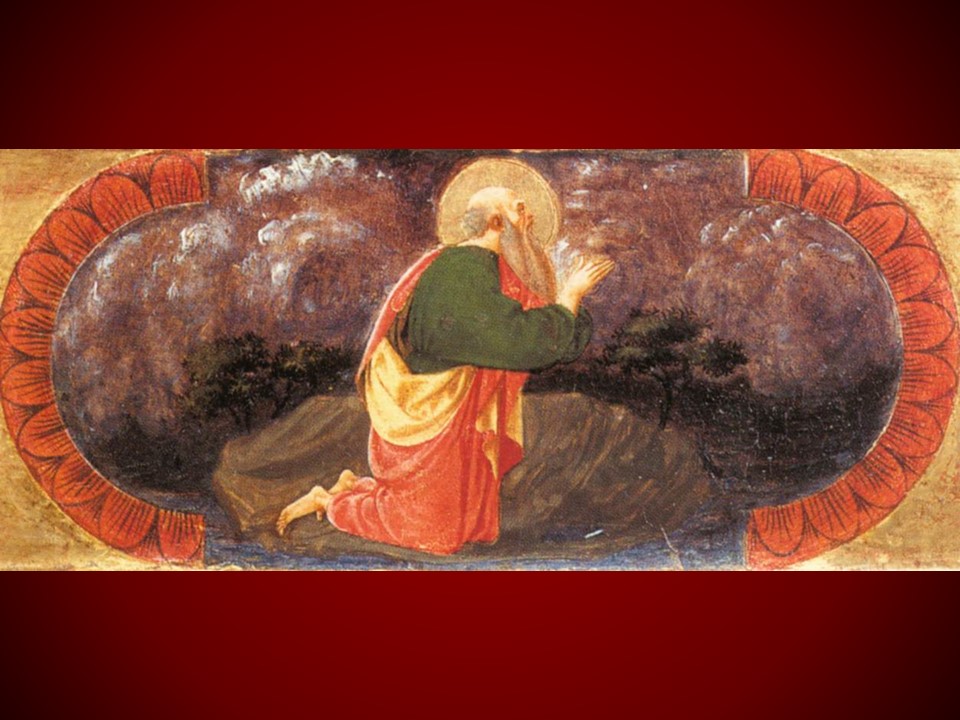
    [[  IMAGE  ]]  1 Peter 2:9–12 But you are a chosen race, a royal priesthood, a holy nation, a people for his own possession, that you may proclaim the excellencies of him who called you out of darkness into his marvelous light. 10 Once you were not a people, but now you are God’s people; once you had not received mercy, but now you have received mercy. 11 Beloved, I urge you as sojourners and exiles to abstain from the passions of the flesh, which wage war against your soul. 12 Keep your conduct among the Gentiles honorable, so that when they speak against you as evildoers, they may see your good deeds and glorify God on the day of visitation.


    Christians have this amazing calling and privilege to “proclaim the excellencies of His who called [us] out of darkness into His marvelous light.”


    And so they were not to simply buck the system of the government that persecuted this way – but to submit to it all they could as part of God’s appointment.


    It is a bold and counter-intuitive call to live supernaturally for the sake of blessing those around us – even those who might persecute us.


    To make the places we live in better places for all – because we are there.


    This submission to secular authorities and governments was not absolute however.


    As we saw in our study – if ANY AUTHORITY – Employer, Government, Elder or even a parent: REQUIRES us to do anything God’s Word forbids us to do…


    OR


    FORBIDS us from doing anything God’s Word requires us to do – in those instances, we not only can, but we MUST disobey.


    Yet this is done with honor and respect, and not in anger or retaliation.


    Chap. 3 Personal relationships with both believers and unbelievers.


    Beginning with husbands and wives.


    Even when such relationships complicated when one is a Believer and the other is not.


    Then with neighbors and any others we might engage with.


    We have BEEN blessed, that we might bless.


    1 Peter 3:14–18 But even if you should suffer for righteousness’ sake, you will be blessed. Have no fear of them, nor be troubled, 15 but in your hearts honor Christ the Lord as holy, always being prepared to make a defense to anyone who asks you for a reason for the hope that is in you; yet do it with gentleness and respect, 16 having a good conscience, so that, when you are slandered, those who revile your good behavior in Christ may be put to shame. 17 For it is better to suffer for doing good, if that should be God’s will, than for doing evil. 18 For Christ also suffered once for sins, the righteous for the unrighteous, that he might bring us to God, being put to death in the flesh but made alive in the spirit,


    Chap. 4 Continuing to minister to others tho opposed in circumstances. Do not leave off improving the graces in you by the Spirit. Employ them to bless others.


    We do this for society as a whole – but ESPECIALLY toward other Believers.


    1 Peter 4:7–11 The end of all things is at hand; therefore be self-controlled and sober-minded for the sake of your prayers. 8 Above all, keep loving one another earnestly, since love covers a multitude of sins. 9 Show hospitality to one another without grumbling. 10 As each has received a gift, use it to serve one another, as good stewards of God’s varied grace: 11 whoever speaks, as one who speaks oracles of God; whoever serves, as one who serves by the strength that God supplies—in order that in everything God may be glorified through Jesus Christ. To him belong glory and dominion forever and ever. Amen.


    Chap. 5 Not abandoning “church” in troubled times.


    1 Peter 5:1–5 So I exhort the elders among you, as a fellow elder and a witness of the sufferings of Christ, as well as a partaker in the glory that is going to be revealed: 2 shepherd the flock of God that is among you, exercising oversight, not under compulsion, but willingly, as God would have you; not for shameful gain, but eagerly; 3 not domineering over those in your charge, but being examples to the flock. 4 And when the chief Shepherd appears, you will receive the unfading crown of glory. 5 Likewise, you who are younger, be subject to the elders. Clothe yourselves, all of you, with humility toward one another, for “God opposes the proud but gives grace to the humble.”


    Those with shepherding skills, are not to stop serving in that capacity, nor are those who are being shepherded to cease from living in that relationship to the Church.


    This then is what Christianity looks like, lived under less than optimal circumstances.


    Let me draw out a few observations and principles then from this overview of 1 Peter.


    1. Suffering is not contrary to the Gospel nor to be thought of as a defeat for the Christian.


    Abraham Kuyper: The world after the fall is no lost planet, only destined now to afford the church a place in which to continue her combats; and humanity is no aimless mass of people which only serves the purpose of giving birth to the elect. On the contrary the world now, as well as in the beginning, is the theatre for the mighty works of God, and humanity remains a creation of His hand, which, apart from salvation, completes under this present dispensation, here on earth, a mighty process, and in its historical development is to glorify the name of Almighty God.


    2. Love for the souls of lost people, and for those in Christ is not to be replaced by anger, fear, retaliation or rebellion.


    3. Love and fidelity to Christ and His Church must continue.


    4. Holiness is still to be pursued – not caving to the morals of the culture.


    5. Being in difficult circumstances is to be co-opted by the Christian – because of Grace and the Indwelling Spirit, for displaying Christ in this dark world, and for learning how to deny self in combatting sin.


    6. Our hope is to remain fixed on what will be ours when Christ returns – not in a change of outward circumstances.


    7. Look at the amazing privilege Christ has purchased for Believers in His death, burial and resurrection. To live above the world in these ways, while still in it.


    This a high, and amazing call.


    It is one which will mark us out as so different from everyone around us, that they cannot help but wonder why we have such hope and peace. And why we do not retreat from the world to form our own little enclaves.


    And such can ONLY be lived in the power of Christ’s Spirit – informed by His Word, and relied upon in utter reliance upon Him in prayer.


    If God move us not, we cannot move: therefore, it is a most necessary part of our christian wisdom, to keep our subordination to God, and dependance on him; to be still in the path where he walks, and in that way where his Spirit doth most usually move. Take heed of being estranged or separated from God, or of slacking your daily expectations of renewed help, or of growing insensible of the necessity of the continual influence and assistance of the Spirit. When you once begin to trust your stock of habitual grace, and to depend on your own understanding or resolution for duty and holy walking, you are then in a dangerous, declining state. In every duty remember Christ’s words, “Without me ye can do nothing;” (John 15:5;) and, “not that we are sufficient of ourselves, to do any thing as of ourselves, but our sufficiency is of God.” (2 Cor. 3:5.)[2]


    [1] Karen H. Jobes, 1 Peter (Baker Exegetical Commentary on the New Testament; Grand Rapids, MI: Baker Academic, 2005), 22.

    [2] Baxter, Richard & William Orme. 1830. The Practical Works of the Rev. Richard Baxter. . Vol. 22. London: James Duncan.

  • FEAR NOT! Sermon notes for 1/10/2016

    January 10th, 2016

    Slide2

    Facing a Fearful World.

    Read: MATTHEW 10:1-33

    Luke 2:8–14

    John 12:12–15

    Revelation 1:9–18


    In the aftermath of last year’s terrorist attacks – like:

    the November attack in Paris that took so many lives…

    followed so quickly by the San Bernardino attack in December…

    Then the foiled attack here in Rochester on New Year’s Eve…

    These added to the constant news of ISIS and its horrific growth and action, coupled with the upcoming election…

    It seems only natural for fear to begin to rule the day.

    Believers and unbelievers alike – at this moment in time – can be absolutely ruled by fear of what’s coming next.

    As Vishal Mangalwadi wrote in: The Book that Made Your World – “In turbulent times, people tend to bow to whoever promises security, stability, and justice.”

    Yet, for those who are in Christ by faith, God’s Word bids us to a very different mindset.

    The Biblical mindset is not one that ignores that some things are truly fearful – but one that is driven by faith MORE than fear.

    One that recalls a sovereign God still working in His world.

    A mindset ruled more by the revealed truth of His Word than by the news, the commentators, the pundits – AND, our own imaginations.

    This is not to ignore very real and present dangers – but it is to put them back into perspective.

    Back into the framework that reminds us that God has a plan for human history – and that all things will be seen finally to converge into the fulfillment of that plan – no matter how scary and out of control the world around us is, or seems.

    This is the hope – and not a BASELESS hope – but the ASSURED hope of those who are Christ’s by faith in His atoning death.

    Those who are born again by the Spirit of God.

    If there is one thing I personally find increasingly troublesome in our own secular age, it is how easily people seem to be placated, at least for small amounts of time, by mere, sentimental platitudes spun out in every direction.

    Biblical hope does not just emptily say: “Things will be alright.”

    Or even just “FEAR NOT”.

    The Prophet Jeremiah faced a remarkably parallel situation to ours in his day in ancient Israel.

    His nation, on the brink of economic collapse and military destruction by a foreign nation – said this by the Holy Spirit: Jeremiah 6:12–15

    12 Their houses shall be turned over to others, their fields and wives together, for I will stretch out my hand against the inhabitants of the land,” declares the Lord.”

    Why should such a situation exist? He goes on: 13 “For from the least to the greatest of them, everyone is greedy for unjust gain; and from prophet to priest, everyone deals falsely.

    And when such corruption exists, prophets and priests and those who wish to calm their own souls will turn to empty platitudes to make themselves and others feel better.

    Jeremiah describes that condition this way:  14 They have healed the wound of my people lightly, saying, ‘Peace, peace,’ when there is no peace.

    And why no real peace?  15 Were they ashamed when they committed abomination? No, they were not at all ashamed; they did not know how to blush. Therefore they shall fall among those who fall; at the time that I punish them, they shall be overthrown,” says the Lord.

    A powerful and insightful indictment.

    I for one cannot imagine that our own nation will be spared further troubles, even by the hand of God in the face of our own moral and spiritual decline.

    Indeed, only a wholesale revival, a supernatural outpouring of God’s Holy Spirit upon the Church – calling us AS THE CHURCH back from our sin and compromise in as much as we too have fallen into rank materialism and moral ambiguity – and then on the general populace – calling multitudes to forsake their sin and turn to Christ for forgiveness.

    But as we pray and wait for such a revival – IF, the Lord should be pleased to pour it out before what remains of our Biblically informed culture (even if it is only informed in the slightest bit) is snuffed out altogether – what hope, what help can the Believer count on in such fearsome times?

    The New Testament speaks to this tendency to fearfulness in 4 key places.

    3 by Jesus Himself.

    But 4 places I’d like to examine just briefly with you this morning.

    And I want you to take notice in each of these, that the command to “fear not” is never spoken in the abstract – as an empty platitude without foundation.

    In each case, there is a “BECAUSE”. A “FOR” – that calls us to rest in a Biblical reality which is the comfort of those in Christ – no matter what the external circumstances may be.

    It is NOT a word to us that we will be spared what is genuinely fearful.

    Nor is it an encouragement to all mankind that they can just keep on defying the right of God to rule their hearts and lives and assume He will bless them anyway.

    These things, belong properly and exclusively to those are truly His by faith.

    The 1st comes to us in the passage we had read for us as we began this morning:

    1. Matthew 10:16-23 / 28–31 Fear not, because God’s Children are greatly valued by Him.

    The context here is familiar to all of us.

    Jesus is sending His 12 disciples out on their first mission to teach, preach and heal in Judea.

    And He pulls no punches. This is a mission that is going to be fraught with danger.

    So He prefaces everything by warning them:  16 “Behold, I am sending you out as sheep in the midst of wolves, so be wise as serpents and innocent as doves. 17 Beware of men, for they will deliver you over to courts and flog you in their synagogues, 18 and you will be dragged before governors and kings for my sake, to bear witness before them and the Gentiles. 19 When they deliver you over, do not be anxious how you are to speak or what you are to say, for what you are to say will be given to you in that hour. 20 For it is not you who speak, but the Spirit of your Father speaking through you. 21 Brother will deliver brother over to death, and the father his child, and children will rise against parents and have them put to death, 22 and you will be hated by all for my name’s sake. But the one who endures to the end will be saved…

    And if that were all He said – I’ve little doubt anyone would have gone a step further. The 12 would have said: “NO THANKS!”

    But He doesn’t stop there.

    Yes, the dangers will be real, and they will be harrowing and fearful.

    But listen to what comes next: 28And do not fear those who kill the body but cannot kill the soul. Rather fear him who can destroy both soul and body in hell. 29 Are not two sparrows sold for a penny? And not one of them will fall to the ground apart from your Father. 30 But even the hairs of your head are all numbered. 31 Fear not, therefore; you are of more value than many sparrows.

    Did you catch that last phrase?

    This isn’t just “chin up! You’re off doing God’s work you know” – no.

    He then says no matter what, you have to keep in mind this amazing fact of just how valuable you are in the eyes of your God.

    Christian, you are not expendable fodder – just pawns on a cosmic chessboard.

    You are God’s won children, His prize, His dear children, choice in His eyes.

    Now the Disciples at this point had little more than Jesus’ word on it.

    But we – we have the Cross to look back upon.

    As Believer’s we can see what He was willing to pay in order to secure us unto Himself.

    What a cost! The very life and blood of Christ the everlasting Son!

    So we can exclaim with the Apostle Paul: Romans 8:32 He who did not spare his own Son but gave him up for us all, how will he not also with him graciously give us all things?


    2. Luke 2:8–14 / Fear not because our Savior has come.

    We can hardly pass up this next passage especially at this time of the year where we have just celebrated the incarnation.

    The words in this text, are glorious words spoken to the Shepherds by angels when they appeared to them announcing Jesus’ birth.

    8 And in the same region there were shepherds out in the field, keeping watch over their flock by night. 9 And an angel of the Lord appeared to them, and the glory of the Lord shone around them, and they were filled with great fear. 10 And the angel said to them, “Fear not, for behold, I bring you good news of great joy that will be for all the people. 11 For unto you is born this day in the city of David a Savior, who is Christ the Lord. 12 And this will be a sign for you: you will find a baby wrapped in swaddling cloths and lying in a manger.” 13 And suddenly there was with the angel a multitude of the heavenly host praising God and saying, 14 “Glory to God in the highest, and on earth peace among those with whom he is pleased!”

    Once again notice that the admonition to “fear not” is not in the abstract – not even “fear not because we said so” – even tho they were angels!

    No, the shift from fear to faith is rooted here in that fact the Savior has been born –

    Born as prophesied –

    Born in the City of David as prophesied –

    And that this Savior is Christ – THE LORD!

    God in human flesh!

    Peter alludes to this same concept in 1 Peter 3 – something we’ll unpack in more detail later in our study there –

    But notice this for now: 1 Peter 3:13–15 13 Now who is there to harm you if you are zealous for what is good? 14 But even if you should suffer for righteousness’ sake, you will be blessed. Have no fear of them, nor be troubled, 15 but in your hearts honor Christ the Lord as holy, always being prepared to make a defense to anyone who asks you for a reason for the hope that is in you; yet do it with gentleness and respect,

    We face the worst of all the uncertainty of this fearful world in its fearful state by refusing to give these fearful things any honor in our hearts – but instead – honoring Jesus Christ as the Lord and Sovereign Ruler over all – even over the worst of our enemies!

    And THAT Beloved – in this fearful age, is so absolutely counter-intuitive and contrary to human reasoning – that in these dark times, people will be compelled to seek us out and ask us why we are not all tied up in the same knots they are over everything.

    It is a testimony to our God of the highest order when we face fearful things in such utter confidence and joy because of Christ.

    Christ has come.

    The Lord of all is alive forever more!


    3. John 12:12–15 / Fear not because God’s Word is true and unfailing.

    12 The next day the large crowd that had come to the feast heard that Jesus was coming to Jerusalem. 13 So they took branches of palm trees and went out to meet him, crying out, “Hosanna! Blessed is he who comes in the name of the Lord, even the King of Israel!” 14 And Jesus found a young donkey and sat on it, just as it is written, 15 “Fear not, daughter of Zion; behold, your king is coming, sitting on a donkey’s colt!”

    Why should Jesus riding on a donkey’s colt into Jerusalem be of any comfort at all – so that Jesus should say to them “fear not” on this occasion?

    The connection isn’t hard to make: Even the most obscure of details in prophecy cannot fail – but will all be fulfilled.

    If even this seemingly insignificant and obscure prophecy from Zechariah 9 – uttered some 500 years earlier – was certain, then how absolutely sure are His other promises?

    The promise to cleanse from all sin and guilt – everyone who comes to Him by faith.

    His intention to keep all of His own and lose none of us –

    His promise to be always with us, even to the very end of time –

    His promise of the indwelling Holy Spirit –

    His promise to complete the work of conforming us to His image –

    The promise of His 2nd coming –

    The promise of the resurrection unto eternal life of every Believer –

    The promise of eternal life and the New Heavens and the New Earth –

    The promise of the end of all sin, all suffering, and injustice, all pain and sorrow and tears and death!

    Fear not – Because “Heaven and earth will pass away, but not the slightest jot or tittle of His Word will in any wise fail.

    Not one letter or punctuation point!

    NOTHING!


    Lastly:

    4. Revelation 1:9–18 / Fear not because of who and what Christ is in His reigning glory and power.

    Last, consider this portion in Rev. ch. 1.

    John is on the Island of Patmos when he receives this incredible vision of Jesus Christ.

    He sees and hears Jesus – who commissions him to send messages to the 7 churches in Asia Minor.

    In that vision he sees Jesus represented in unspeakable glory – and depicted as walking among His churches.

    He is clothed in a long robe –

    He has a golden sash around His chest

    His hair is white like wool

    His eyes like a flame of fire and His feet like burnished bronze

    His voice is like the roar of many waters

    In His right hand He holds 7 stars –

    From His mouth comes a sharp – two-edged sword

    And His face is shining like the sun in its full strength.

    9 I, John, your brother and partner in the tribulation and the kingdom and the patient endurance that are in Jesus, was on the island called Patmos on account of the word of God and the testimony of Jesus. 10 I was in the Spirit on the Lord’s day, and I heard behind me a loud voice like a trumpet 11 saying, “Write what you see in a book and send it to the seven churches, to Ephesus and to Smyrna and to Pergamum and to Thyatira and to Sardis and to Philadelphia and to Laodicea.” 12 Then I turned to see the voice that was speaking to me, and on turning I saw seven golden lampstands, 13 and in the midst of the lampstands one like a son of man, clothed with a long robe and with a golden sash around his chest. 14 The hairs of his head were white, like white wool, like snow. His eyes were like a flame of fire, 15 his feet were like burnished bronze, refined in a furnace, and his voice was like the roar of many waters. 16 In his right hand he held seven stars, from his mouth came a sharp two-edged sword, and his face was like the sun shining in full strength. 17 When I saw him, I fell at his feet as though dead. But he laid his right hand on me, saying, “Fear not, I am the first and the last, 18 and the living one. I died, and behold I am alive forevermore, and I have the keys of Death and Hades.

    The Christ who has come in human flesh and walked among us –

    Is the same Risen Christ who STILL walks among His Churches – from the most faithful and dedicated, to the weakest and most infirm.

    And this Christ, our Lord and Savior Jesus is:

    1. “The first and the last” – The one who is the sum of all God’s plans and purposes.
    2. “The living one” – Crucified but risen – with power over death.
    3. Has “the keys of Death and Hades” – Has absolute authority over all life and death, and the judgment of all sin in the flames of Hell itself.

    Satan does not rule Hell – Christ does!

    ISIS does not rule death – Christ does!

    The Congress doesn’t have ultimate authority – Christ does!

    No political party has carte blanche – Christ does!

    No power on earth has absolute power and authority – Christ does!

    And this Christ, this Jesus, is the one who gave His life for us, that we might have cleansing from all sin and guilt in His own blood –

    That we might be delivered from the wrath of God –

    And who will ultimately judge all humanity in perfect righteousness – with the power to carry out final sentence upon all.

    This one is the Believer’s Savior, Healer, Master, Friend and Brother.

    FEAR NOT! Christian.

    We’ve no true idea of just how much value God places upon His children –

    Our Christ has come and died for our sins and risen again –

    Every minute prophecy about Him He completely fulfilled, which gives us every ground to believe the remaining promises He will still fulfill

    And in His resurrected glory He rules and reigns not just in Heaven – but over the earth and all those in it.

    FEAR NOT! Jesus Christ is Lord of all.

    Now let me ask – do you know Him as YOUR Lord?

    Or is this Christ your enemy?

    If He is not your Lord, if you’ve not been reconciled to Him, you have EVERYTHING to fear.

    This world is a terrifying place and you ought to be terrified in it.

    More, God’s judgment upon all who reject Him is infinitely more terrifying yet!

    But if you are His by faith in Christ’s atoning sacrifice, you have NOTHING to fear, no matter how fearful things may be.

    Nothing to fear in all of Heaven or Earth.

    Nothing past, nor present nor yet in the future.

    For as the Apostle Paul so potently said: Romans 8:31–39  What then shall we say to these things? If God is for us, who can be against us? 32 He who did not spare his own Son but gave him up for us all, how will he not also with him graciously give us all things? 33 Who shall bring any charge against God’s elect? It is God who justifies. 34 Who is to condemn? Christ Jesus is the one who died—more than that, who was raised—who is at the right hand of God, who indeed is interceding for us. 35 Who shall separate us from the love of Christ? Shall tribulation, or distress, or persecution, or famine, or nakedness, or danger, or sword? 36 As it is written, “For your sake we are being killed all the day long; we are regarded as sheep to be slaughtered.” 37 No, in all these things we are more than conquerors through him who loved us. 38 For I am sure that neither death nor life, nor angels nor rulers, nor things present nor things to come, nor powers, 39 nor height nor depth, nor anything else in all creation, will be able to separate us from the love of God in Christ Jesus our Lord.


←Previous Page
1 … 110 111 112 113 114 … 199
Next Page→

Blog at WordPress.com.

Loading Comments...

    • Subscribe Subscribed
      • ResponsiveReiding
      • Join 408 other subscribers
      • Already have a WordPress.com account? Log in now.
      • ResponsiveReiding
      • Subscribe Subscribed
      • Sign up
      • Log in
      • Report this content
      • View site in Reader
      • Manage subscriptions
      • Collapse this bar