• Home
  • About
  • Blog
  • Atonement
    • The Atonement: Read this first!
    • Confession of an ex-u0022Highperu0022 Calvinist
    • Revisiting the Substitutionary Atonement
    • Discussing the Atonement – a lot!
    • Lecture Notes on The Atonement
  • Sermons
  • ReviewsAll book and movie reviews
    • Books
    • Movies

ResponsiveReiding

  • Margin notes: Being “Evangelical” Pt. 2

    November 5th, 2019

    Evangelical. We hear it in the press all the time. Almost exclusively in political terms. The “Evangelical right” as a voting block. That is the way most people hear, understand and interact with the word. But it wasn’t always so.

    Going back to the days before the Reformation, “evangelicals” were just what the name means – they were “gospelers” – heralds of the saving Gospel of Jesus Christ. Evangelicals were simply those who had heard, believed, and now spread the “good news” – the Gospel – the “evangel” that Jesus had died to make an atonement for human sin, that all who put their trust in His substitutionary death, could be, WOULD be, reconciled to God.

    We’ve come a long way. And sadly we’ve let those outside of Evangelicalism reshape how that label is understood and used. And perhaps, even those who consider themselves evangelicals might be surprised to know what that has meant historically. And to that end, we are reviewing Bishop J. C. Ryle’s five leading features of Evangelical Religion.

    Last time we looked at number  – (a) The first leading feature in Evangelical Religion is the absolute supremacy it assigns to Holy Scripture, as the only rule of faith and practice, the only test of truth, the only judge of controversy.

    Today, I submit to you number 2. Here’s Ryle: (b) The second leading feature in Evangelical Religion is the depth and prominence it assigns to the doctrine of human sinfulness and corruption.
    Its theory is that in consequence of Adam’s fall, all men are as far as possible gone from original righteousness, and are of their own natures inclined to evil. They are not only in a miserable, pitiable, and bankrupt condition, but in a state of guilt, imminent danger, and condemnation before God. They are not only at enmity with their Maker, and have no title to heaven, but they have no will to serve their Maker, no love to their Maker, and no meetness for heaven.

    We hold that a mighty spiritual disease like this requires a mighty spiritual medicine for its cure. We dread giving the slightest countenance to any religious system of dealing with man’s soul, which even seems to encourage the notion that his deadly wound can be easily healed. We dread fostering man’s favourite notion that a little church-going and sacrament-receiving,—a little patching, and mending, and whitewashing, and gilding, and polishing, and varnishing, and painting the outside,—is all that his case requires. Hence we protest with all our heart against formalism, sacramentalism, and every species of mere external or vicarious Christianity. We maintain that all such religion is founded on an inadequate view of man’s spiritual need. It requires far more than this to save, or satisfy, or sanctify, a soul. It requires nothing less than the blood of God the Son applied to the conscience, and the grace of God the Holy Ghost entirely renewing the heart. Man is radically diseased, and man needs a radical cure. I believe that ignorance of the extent of the fall, and of the whole doctrine of original sin, is one grand reason why many can neither understand, appreciate, nor receive Evangelical Religion. Next to the Bible, as its foundation, it is based on a clear view of original sin.”

    RAF: Dare I say that if many would accept the 1st feature as a given, many others who think of themselves as Bible-believing, evangelical people in practice, if not in concept, reject this second notion. In the age of self-actualization, personal empowerment and hyper-motivationalism, the thought that any of us – with the possible exceptions of names like Adolf Hitler or maybe Ted Bundy – are not bad people at our core, but basically good. But a sound evangelical – Biblical understanding of human nature since the Fall in Eden is that of thoroughgoing and humanly irreversible corruption and enmity with God. And it is why we need to be so Gospel-centered. Why we so desperately need a divine Savior who can raise us from our spiritual death, cleanse us from our inward defilement, atone for our cosmic crimes against our Creator, and clothe us with His own righteousness that we might be reconciled to God. It is why we need Jesus Christ.

    This, is absolutely central to Evangelical Religion as Ryle puts it. And he is right.

  • Margin notes: Being “Evangelical” Pt. 1

    November 1st, 2019

    Labels are funny things. Some we take to ourselves, and others are assigned to us. Of those assigned to us by others, some are complimentary, some merely descriptive, and some even derisive.

    The label “Christian” for instance was not one Believers gave to themselves, but was mostly likely hung on them by those who opposed them in Antioch (Acts 11:26). Being watched from the outside, some said “these are – you know, those Christ-ians, those people who claim Jesus was the Christ and rose from the dead.” It meant you were out of step with the mainstream. Perhaps even a kook. But Believers adopted the term even though it wasn’t meant as a compliment. Even as it is no longer a compliment in our culture. It was a very similar situation with the label “Methodists.” Those who subscribed to the theology and approach of John and Charles Wesley were scorned as those “Methodists” – who thought a life given over to searching and knowing the Scriptures, and methodically approaching life in Christ was kooky. But the Methodists took the scornful term and owned it.

    Now the label Evangelical wasn’t a term of derision originally – but it has become so to many in our day. Over-association with politics as well as some other factors has brought that about. Some, like myself, have wondered if the term is useful anymore because it has been so removed from its roots. Then reading recently in the works of J. C. Ryle, the 19th century, 1st Anglican Bishop to Liverpoool, my fervor for being clearly “Evangelical” was renewed. In his little book “Knots Untied” Ryle outlined what he called “the five leading features” of Evangelical religion. So for the next few days I’m going to give you those features – one a day. With hopes that many will be true Evangelicals in the days to come. And to help recover what has been lost to us recently in how the term has been hi-jacked.

    This, is true Evangelicalism. And why I still call myself an Evangelical.

    Here is his first feature.

    Ryle writes: “(a) The first leading feature in Evangelical Religion is the absolute supremacy it assigns to Holy Scripture, as the only rule of faith and practice, the only test of truth, the only judge of controversy.

    Its theory is that man is required to believe nothing, as necessary to salvation, which is not read in God’s Word written, or can be proved thereby. It totally denies that there is any other guide for man’s soul, co-equal or co-ordinate with the Bible. It refuses to listen to such arguments as “the Church says so,”—“the Fathers say so,”—“primitive antiquity says so,”—“Catholic tradition says so,”—“the Councils say so,”—“the ancient liturgies say so,”—“the Prayer-book says so,”—“the universal conscience of mankind says so,”—“the verifying light within says so,”—unless it can be shown that what is said is in harmony with Scripture.

    The supreme authority of the Bible, in one word, is one of the corner-stones of our system. Show us anything plainly written in that Book, and, however trying to flesh and blood, we will receive it, believe it, and submit to it. Show us anything, as religion, which is contrary to that Book, and, however specious, plausible, beautiful, and apparently desirable, we will not have it at any price. It may come before us endorsed by Fathers, schoolmen, and catholic writers;—it may be commended by reason, philosophy, science, the inner light, the verifying faculty, the universal conscience of mankind. It signifies nothing. Give us rather a few plain texts. If the thing is not in the Bible, deducible from the Bible, or in manifest harmony with the Bible, we will have none of it. Like the forbidden fruit, we dare not touch it, lest we die. Our faith can find no resting-place except in the Bible, or in Bible arguments. Here is rock: all else is sand.”

    To which I reply: Amen! But it does make me wonder how many today who might claim to be Evangelical, would take this as the foundation stone it really is?

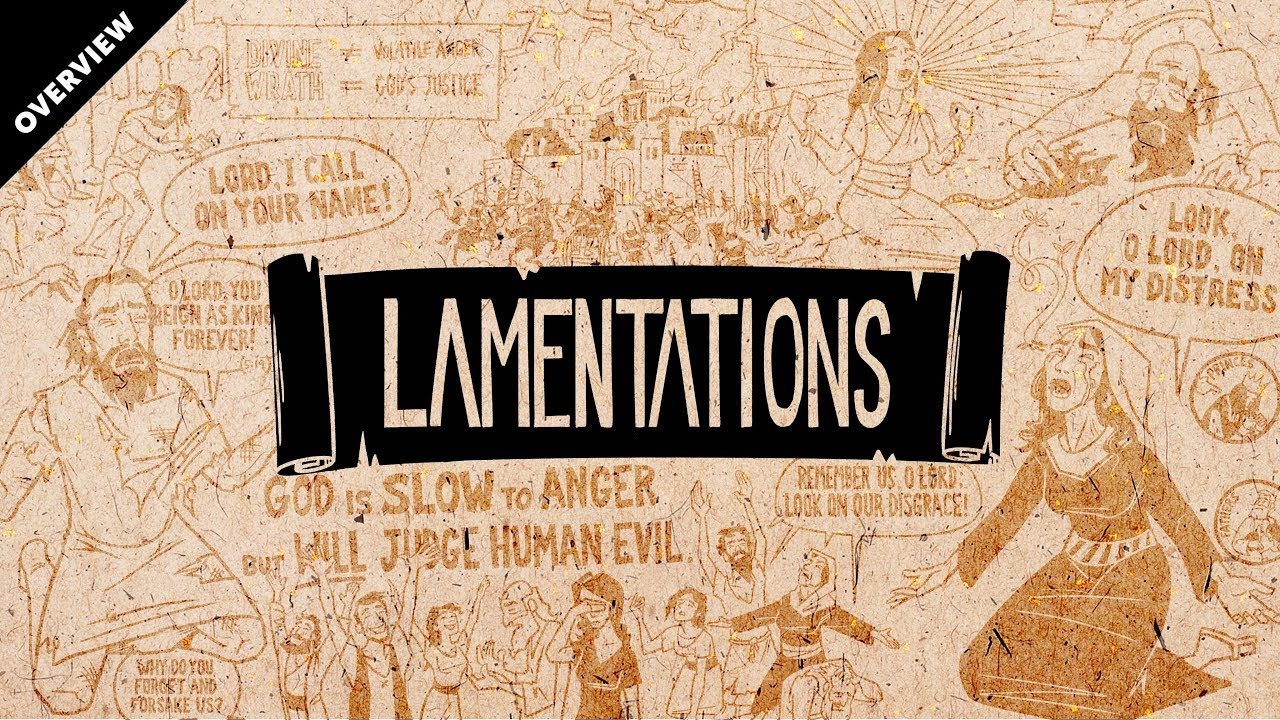
  • Margin notes: Lamentations

    October 30th, 2019

    Lamentations 5:21 (ESV) — Restore us to yourself, O Lord, that we may be restored! Renew our days as of old—

    Few, if any, would say Lamentations if their favorite book in the Bible. But its 5 short chapters need to be read often. In the end, it is as hopeful as it is harrowing. But we need to be reminded over and over that God does not take sin lightly – even in His chosen ones.

    Grace is not license TO sin, but freedom FROM sin.

    Oh that our hearts would drink this in.

    This short book with is unique acrostic arrangement was composed so as to aid the readers in memorizing it. Not that they might remain forever shameful, but that they might be forever warned. To be reminded over and over of the effects of sin. To see it in all of its destructive wretchedness.

    Temptation makes sin look so attractive, but it ALWAYS ends in hideous pain and torment. No one imagines when they try to steal some fleeting but forbidden dainty that it is so full of poison as to bring destruction even into the lives of our children and grandchildren. But it is so. God does not warn us against it to rob of some joy, but to keep us from the result, and to direct us to true, lasting, divine joy. To find our joy in Christ Jesus and His redeeming grace.

    Prov. 10:22 “The blessing of the Lord makes rich, and he adds no sorrow with it.” The PRETENDED blessings of the world, make us bankrupt, and are shot through and through with nothing but sorrow.

  • Margin notes: What’s love got to do with it?

    October 29th, 2019

    1 Corinthians 16:22 (ESV) — If anyone has no love for the Lord, let him be accursed. Our Lord, come!

    Sometimes, you can read something in God’s Word which you’ve read a multitude of times, that hits you with such fresh force it takes you up short. Such was true for me as I hit upon this all-too-familiar passage today. Let the gravity of these words sink in – “If anyone has no love for the Lord, let him be accursed.”

    This really is a most sobering and searching verse.

    We are prone to talk about individual faith by that term alone – faith, or belief. So many a person claims to believe in God, believe in Christ, believe in the Bible. Believe in the Gospel etc.. But bare belief is only one side of the coin. If there is no “love for the Lord” – no desire to see Him, be with Him, delight in Him and especially to find Heaven that place where we will see and experience His unveiled glory – if that is not a motivating factor in our hearts – whatever else we may profess to “believe”, we are still accursed.

    Now this is a deeply necessary consideration. Paul says it in the most stunning of terms. He does not say if one has no love for the Lord, they need help – but that they are actually accursed.

    We must search ourselves in this regard.

    Many if not most desire “Heaven” in the sense of an existence without the scars and plagues of sin. Or simply as the pleasant alternative to Hell. But do we desire Heaven because we love Him and want to be with Him? Yes, we groan with all of Creation for the day when the Fall’s effects will be totally reversed, but Oh, to truly love His appearing (2 Tim. 4:8). To long to see the face of the One who died for us. To so contemplate the Resurrection and Return in terms of comprehending that seeing His glory is so magnificent that everything we might have here and now or in the most perfect of imagined worlds is nothing but dung in comparison.

    So I ask you, do you love Him? I know, none of us loves Him as we ought, as He deserves, nor even as much as we can. But if we have no love for Him as who and what He is and not just for what He has done, then we are still lost. Still in the gall of iniquity. Still in need of saving grace. Grace which births in our hearts a love for Him whom we have not yet seen.

    O beloved – if you find a lack there, pray that you might love Him. Pray for the enlarging of your heart – for an ever-increasing capacity to see Him and cherish Him and delight in Him. And to find that love for Him the strongest of all motivations in all that you do. Holy Spirit, fill us with a renewed and ever stronger and clearer love for Christ Jesus. Fill our hearts with Him today. 


  • Margin notes: What’s with all the names?

    October 25th, 2019

    Nehemiah 10:1–27 (ESV) — 1 “On the seals are the names of Nehemiah the governor, the son of Hacaliah, Zedekiah, 2 Seraiah, Azariah, Jeremiah, 3 Pashhur, Amariah, Malchijah, 4 Hattush, Shebaniah, Malluch, 5 Harim, Meremoth, Obadiah, 6 Daniel, Ginnethon, Baruch…26 Ahiah, Hanan, Anan, 27 Malluch, Harim, Baanah.

    Every Friday morning, a number of men from our Church under the leadership of Mike Holbein gather for an hour to do just 1 thing: read the Bible out loud to one another. We’re reading it all the way through in chronological order. It is a precious time.

    This morning found us reading the 10th chapter of the book of Ezra, and the first 10 chapters of Nehemiah. And let me tell you, those seemingly endless lists of hard to pronounce names can be pretty challenging. and it is easy to ask ourselves – what is the deal here? What is with all of the nearly unpronounceable names of people thousands of years removed from us? Why are these lists even in the Word of God? And those aren’t wrong questions to ask. But let me make a couple of suggestions for when you get to those passages and are tempted to just skip over them.

    1. There are more than 80 names noted in Neh. 10 alone. And God knows each one of them. None who give themselves to serve Him and His Kingdom are ever forgotten. They are not faceless and nameless, our God knows each and every one of His own. He knows you. By name. And He does not forget you. These 80+ in this chapter may mean little or nothing to us this far removed from them – they have been inscribed in the everlasting Word of God. Just as every Believer is inscribed in the wounds of the Savior. None, no matter how obscure, are without eternal remembrance. By name.
    2. They were not listed because of great feats of faith or spectacular accomplishments. They are listed, because they are God’s people. Regular people. Just God’s people in that place, at that time, living for Him. They aren’t superstars. They aren’t heroes. God’s people because they are God’s people are all remembered by Him. “He keeps all of His bones, and none of them is broken.”
    3. In Ch. 3 there is another list of names. People who were all involved in rebuilding the wall of Jerusalem. That chapter is a marvel to read. Who all were involved in restoring and rebuilding the city? Everyone. There were governors and commoners; Levites and Priests, laboring beside perfumers, goldsmiths and men whose leadership declined to join in. Women were engaged in it, along with soldiers and servants. No one too high or too low – but each put their labor into seeing the City of God restored. Their qualifications were willingness – not specified skills. And so it is we are reminded that all of us with our various gifts and abilities are engaged in building Christ’s kingdom. Wherever and whatever our context may be. Musicians, programmers, doctors, lawyers, salesmen, project managers, housewives, mechanics, floor sweepers, scientists, etc. These and thousands more are joined together in building His kingdom, not because we are “builders” by trade – but because whatever our trade – we are His – in that place. There were no vocational contractors in this crew – just willing servants of God. Like you, and like me.
    4. And, there were lists of the giving that people engaged in – their offerings for the work of the Temple and support the priesthood. God remembers every 1/3 of a shekel. It is all written down, all recorded. All remembered. Every little thing each of us has contributed to the work of Christ is eternally remembered. No matter how small, it is not discounted, but celebrated and memorialized.

    Don’t let these seemingly boring lists get by you Christian. For your name is written among them too – in God’s eternal book of remembrance.

  • Margin notes: Getting my vision back

    October 24th, 2019

    Psalm 73 (ESV) — A Psalm of Asaph. 1 Truly God is good to Israel, to those who are pure in heart. 2 But as for me, my feet had almost stumbled, my steps had nearly slipped. 3 For I was envious of the arrogant when I saw the prosperity of the wicked. 4 For they have no pangs until death; their bodies are fat and sleek. 5 They are not in trouble as others are; they are not stricken like the rest of mankind. 6 Therefore pride is their necklace; violence covers them as a garment. 7 Their eyes swell out through fatness; their hearts overflow with follies. 8 They scoff and speak with malice; loftily they threaten oppression. 9 They set their mouths against the heavens, and their tongue struts through the earth. 10 Therefore his people turn back to them, and find no fault in them. 11 And they say, “How can God know? Is there knowledge in the Most High?” 12 Behold, these are the wicked; always at ease, they increase in riches. 13 All in vain have I kept my heart clean and washed my hands in innocence. 14 For all the day long I have been stricken and rebuked every morning. 15 If I had said, “I will speak thus,” I would have betrayed the generation of your children. 16 But when I thought how to understand this, it seemed to me a wearisome task, 17 until I went into the sanctuary of God; then I discerned their end. 18 Truly you set them in slippery places; you make them fall to ruin. 19 How they are destroyed in a moment, swept away utterly by terrors! 20 Like a dream when one awakes, O Lord, when you rouse yourself, you despise them as phantoms. 21 When my soul was embittered, when I was pricked in heart, 22 I was brutish and ignorant; I was like a beast toward you. 23 Nevertheless, I am continually with you; you hold my right hand. 24 You guide me with your counsel, and afterward you will receive me to glory. 25 Whom have I in heaven but you? And there is nothing on earth that I desire besides you. 26 My flesh and my heart may fail, but God is the strength of my heart and my portion forever. 27 For behold, those who are far from you shall perish; you put an end to everyone who is unfaithful to you. 28 But for me it is good to be near God; I have made the Lord God my refuge, that I may tell of all your works.

    Psalm 73 has long been one of my favorites. Asaph has walked down the same streets I have. Thought the same thoughts. And needed the same correction. Perhaps you’ve been there too. So what I would call your attention to today is to a clearer vision of things, when they seem to get distorted. And let me do it by means of a homey but I pray useful paraphrase of this powerful and much-needed reminder. It runs verse by verse.

    1. God IS good to His children.

    2. But I almost blew it by a stupid error.

    3. I was jealous, because it seems some people can get away with anything.

    4. They have no fear of future punishment.

    5. They live a life of ease.

    6. So they gloat! But all is not well.

    7. They LOOK satisfied.

    8 & 9. They talk a big game.

    10. And sometimes we Christians are intimidated by that.

    11. They try to sway us by what they say about God.

    12. And they point to other wicked men in ease as examples to us.

    13. So I started to think: “I serve God for nothing!”

    14. I don’t have the easy life they have.

    15. And if I cop their attitude and admit its true, other Christians would be offended.

    16. The more I thought about it, the worse it got.

    17. UNTIL, until – until I went to God about it. And He showed me the bottom line.

    18. These guys are on really thin ice – and ARE going to fall through.

    19. In a split second their world will cave in on them.

    20. Like being terrifyingly startled awake from a pleasant dream – God will start to judge them.

    21. It hurt to see what an idiot I’ve been.

    22. How stupid! I’ve got the brain of gopher!

    23. And yet Lord, you still hang on to me.

    24. In fact, you’ll continue to teach me until Christ comes, or I die.

    25. If my future is wrapped up in you, my present must be also.

    26. Even when my body and my heart give out, you will preserve me forever.

    27. But the wicked ones will be destroyed as surely as if it is already done.

    28. So my life will be spent in drawing nearer to you, for I have learned to trust you completely. And in so doing, others will come to know you as I have.


  • Margin notes: True blessedness

    October 23rd, 2019

    Psalm 65:4 (ESV) — 4 Blessed is the one you choose and bring near, to dwell in your courts! We shall be satisfied with the goodness of your house, the holiness of your temple!

    The great object in salvation is, God’s restoring us to Himself. He chooses us to bring us near. To dwell in His courts. To enter into a full and intimate relationship.

    To be “saved” and to live life apart from Him as though He is just a distant deity is to fail to enter into salvation at all. He chooses us, that He might bring us near. And not just for a one-time audience, or in certain seasons, but to dwell in His courts. And it is only as we take this up and pursue it that we can find the satisfaction our souls long for. Only in dwelling with Him, can we grow to be happiest with the goodness of His house, and the holiness of His Temple. If we are dissatisfied with God, it is not because we have found something lacking in Him. It is because we have not had enough of Him yet.

    Heavenly Father, grant me an appetite that refuses to be satisfied with anything else but the goodness of your house and the holiness of your temple. Grant a holy discontent with everything and anything other than these. With anything less than You in all of your glory. For that alone is true blessedness.

  • Margin notes: Misreading Providence

    October 22nd, 2019

    Jeremiah 44:15–19 (ESV) — 15 Then all the men who knew that their wives had made offerings to other gods, and all the women who stood by, a great assembly, all the people who lived in Pathros in the land of Egypt, answered Jeremiah: 16 “As for the word that you have spoken to us in the name of the Lord, we will not listen to you. 17 But we will do everything that we have vowed, make offerings to the queen of heaven and pour out drink offerings to her, as we did, both we and our fathers, our kings and our officials, in the cities of Judah and in the streets of Jerusalem. For then we had plenty of food, and prospered, and saw no disaster. 18 But since we left off making offerings to the queen of heaven and pouring out drink offerings to her, we have lacked everything and have been consumed by the sword and by famine.” 19 And the women said, “When we made offerings to the queen of heaven and poured out drink offerings to her, was it without our husbands’ approval that we made cakes for her bearing her image and poured out drink offerings to her?”

    Jeremiah prophesied and wrote in troubled times. Judah and Jerusalem had fallen to the military power of the Babylonians. Countless numbers were taken into exile in Babylon, and countless others killed in the battles, staved and left in utter ruin. All because the Jewish nation had persisted in turning to worship idols and false gods, while still claiming to be God’s people. A condition God’s prophets had warned against for many, many years. The warning being that if they did not repent, they would be ruthlessly conquered. And so it happened.

    For those left in Judah, it was mayhem. Despite God’s word to them to surrender and endure God’s chastening for their idolatry at the hands of the Babylonians, they continued to rebel and then seek refuge in Egypt – again, contrary to God’s word to the through the prophets. And in the text above, they are arguing yet again with Jeremiah. They look back at how things were in Judah before the Babylonian siege. And it was a prosperous time. The problem is, they attached their prosperity to their idol worship rather than to God’s patience in the face of their idolatry. Hence the very skewed reasoning in the text. Back when we were serving those other gods, things were good! Only since we’ve been prevented from doing that have things gone bad.

    The simple but profound lesson is this: Sin so distorts our perceptions, that we cannot discern God’s patience with us in our rebellion – and instead – conclude our rebellion actually brings us gain. This is a classic case of how tenuous it is to try and read providence apart for the word of God. You can make any event mean anything you want. This is so dangerous, and so prevalent in the Church today.

    It is a graphic exposition of Romans 2:4 (ESV) — 4 Or do you presume on the riches of his kindness and forbearance and patience, not knowing that God’s kindness is meant to lead you to repentance?

    Believer, you may be walking in conscious rebellion against God’s Word today, but because life seems good and fruitful, fun and prosperous, that God is therefore necessarily pleased with you. Or, the converse may be so. You are walking in faithfulness and as obediently with the Lord as you know how, but life is in disarray and hard at every turn. Go back to His Word. The only safe place to analyze your situation is through the lens of Scripture. If life is “good”, do not automatically assume all is well. Judgment may be just around the corner. And hardship may not at all be any sign of His disapproval, but rather desert where He reveals Himself as your sustainer against all odds. Trust in the Gospel, not the circumstances. Trust in His promises, not your experience. Rest in His Word, and no place else. That alone is the safe place. And in time, you will see it fully revealed.


  • Margin notes: A Conflict of Laws

    October 18th, 2019

    Romans 8:1–2 (ESV) — 1 There is therefore now no condemnation for those who are in Christ Jesus. 2 For the law of the Spirit of life has set you free in Christ Jesus from the law of sin and death.

    The book of Esther presents a wonderful way of illustrating this short but all-important passage. You will remember that a high ranking official in the Persian Empire by the name of Haman, was an enemy of the Jews. Haman nudged the King into making a decree that on a certain day of the month later in the year, everyone was free to kill and plunder their Jewish neighbors throughout the kingdom. He had led the King to believe the Jews were enemies of his rule and bad for the state. This was really driven by his own animus against a godly Jew named Mordecai.

    Mordecai had raised his orphaned niece Hadassah (Esther) and she had recently become Queen. But this edict inspired by Haman would mean the slaughter of her people. Esther exposed Haman’s plan to the King. Haman was executed and the Queen then asked that the edict be repealed. But there was a problem. The law of the Medes or the Persians said that no edict of the King could be changed once it was signed and sealed. It was irreversible. It appeared there was no answer. But God gave an answer to Mordecai and Esther. The King let them write another edict, that he also signed. This one said that on the day the Jews were scheduled to be slaughtered, they were allowed to take up arms against their persecutors and plunder their goods! And so the tables were completely turned and the Jews were saved while 75,000 of their enemies were killed.

    What does this have to do with Romans 8? The Law of sin and death which God set in place, cannot be abrogated, just like any law of the Medes and Persians. “Sin and you will die” the law reads. It was given in the Garden, and remains true to this day. How then can anyone be saved? By another law. The law of the Spirit of life in Jesus Christ. This law reads: “Believe, and you will live.”

    The old law is still in effect. But where that law abounds, the law of grace much more abounds. And those condemned under it are not only spared, but granted eternal life in Christ, and the promise of ruling and reigning with Him for all eternity.

    No, God’s demand of perfect holiness has never gone away. But it was fulfilled in Jesus Christ. Fulfilled in His life, death, burial and resurrection. And all those in Him are now free from the law of sin and death. The law of the Spirit of life has set you free in Christ Jesus.

    And that dear friend, is the good news of the Gospel.

  • Margin notes: Remembering our warfare

    October 17th, 2019

    Finally, be strong in the Lord and in the strength of his might. 11 Put on the whole armor of God, that you may be able to stand against the schemes of the devil. 12 For we do not wrestle against flesh and blood, but against the rulers, against the authorities, against the cosmic powers over this present darkness, against the spiritual forces of evil in the heavenly places. 13 Therefore take up the whole armor of God, that you may be able to withstand in the evil day, and having done all, to stand firm.  Eph 6:10–13.

    I don’t know about you, but it is easy for me to forget that the normal Christian life is one of perpetual warfare. I don’t like it. I want to set it aside. I want to live in peace and joy and not need to be constantly vigilant about my soul. That day IS coming – but it isn’t here yet. This is the day of battle. This is the age of conquest. And while we battle on 3 fronts, the Word, the Flesh and the Devil – I find the battle against my own flesh to be the most difficult. I do so because the other 2 are outside of me, but the battle against the flesh is internal, it is very really against myself.

    Now in a prolonged battle, weariness is a constant concern. And if we are battling in our own strength, weariness is impossible to avoid. It is why our text calls us to be strong in the Lord and in the power of HIS might. To stand constantly depending upon the work Christ has already finished on our behalf. To find the one place where we can stand firm – in a Gospel of the finished work of Christ on the Cross, having already paid the price for all my sin – even those I’ve yet to commit, and therefore standing in the perpetual light of the Father’s smile. Fully accepted in the Beloved. And clothed with His righteousness, and not my own. And it is the battle to retain such things in my own heart and mind as static truths that I sometimes fail.

    But let me encourage you today with a quote I’ve oft cited before from that grand divine of the 19th century, J. C. Ryle. With hopes that you will be reminded once again that Believers alone are blessed to be in this battle at all. Unbelievers are just content in their chains. Oh, they may struggle against some behavior which causes them trouble, but they never fret over sin as sin, as an offense to their God. This is our turf. And if you know something of that battle today – take heart. It is a mighty proof that He is yours and you are His. Be strong in the Lord my friend. You are in a battle of His design. Put on His armor. And go out to fight again today. He has promised eventual victory over every sin.

    So Ryle: “We may take comfort about our souls if we know anything of an inward fight and conflict. It is the invariable companion of genuine Christian holiness. It is not everything, I am well aware, but it is something. Do we find in our heart of hearts a spiritual struggle? Do we feel anything of the flesh lusting against the spirit and the spirit against the flesh, so that we cannot do the things we would? (Gal. 5:17.) Are we conscious of two principles within us, contending for the mastery? Do we feel anything of war in our inward man? Well, let us thank God for it! It is a good sign. It is strongly probable evidence of the great work of sanctification. All true saints are soldiers. Anything is better than apathy, stagnation, deadness, and indifference. We are in a better state than many. The most part of so-called Christians have no feeling at all. We are evidently no friends of Satan. Like the kings of this world, he wars not against his own subjects. The very fact that he assaults us, should fill our minds with hope. I say again, let us take comfort The child of God has two great marks about him, and of these two we have one. HE MAY BE KNOWN BY HIS INWARD WARFARE, AS WELL AS BY HIS INWARD PEACE.”

    J. C. Ryle, Holiness: Its Nature, Hindrances, Difficulties and Roots (London: William Hunt and Company, 1889), 82.

←Previous Page
1 … 78 79 80 81 82 … 197
Next Page→

Blog at WordPress.com.


Loading Comments...
 

    • Subscribe Subscribed
      • ResponsiveReiding
      • Join 421 other subscribers
      • Already have a WordPress.com account? Log in now.
      • ResponsiveReiding
      • Subscribe Subscribed
      • Sign up
      • Log in
      • Report this content
      • View site in Reader
      • Manage subscriptions
      • Collapse this bar