• Home
  • About
  • Blog
  • Atonement
    • The Atonement: Read this first!
    • Confession of an ex-u0022Highperu0022 Calvinist
    • Revisiting the Substitutionary Atonement
    • Discussing the Atonement – a lot!
    • Lecture Notes on The Atonement
  • Sermons
  • ReviewsAll book and movie reviews
    • Books
    • Movies

ResponsiveReiding

  • As I was reading today: Matthew 2

    June 4th, 2019

    Matthew 2:19–22 (ESV) — 19 But when Herod died, behold, an angel of the Lord appeared in a dream to Joseph in Egypt, 20 saying, “Rise, take the child and his mother and go to the land of Israel, for those who sought the child’s life are dead.” 21 And he rose and took the child and his mother and went to the land of Israel. 22 But when he heard that Archelaus was reigning over Judea in place of his father Herod, he was afraid to go there, and being warned in a dream he withdrew to the district of Galilee.

    I like the habitual and the familiar. I like formulas. Uniformity. Especially in life, I like to know how things work. I like the predictable. But life isn’t always like that, and this is also true in our life with Christ.

    If you are anything like me, you may want to have God and His ways kind of figured out too. In each situation, God will do X, and I can live in the comfort that “this is how it works.” Except when it doesn’t. And a good case in point is from this interesting part of the narrative of the early life of Jesus.

    We all know the basic facts of this part of the account. When the Wise men from the East appeared seeking the one who was born “King of the Jews” they went first to King Herod. Herod, who never missing an opportunity to suspect that others wanted his power and position, tried to trick the Wise men into coming back to tell him who and where this newborn King was. But God warned them in a dream. And hightailing it out of town by another route, Herod’s plan to eliminate his possible opponent was foiled. So he tried again. This time more brutally. He had all the boys under the age of 2 born within a certain region killed, figuring he’d eliminate all possible contenders. He was wrong.

    Once again, God stepped in and warned Joseph by an angel in a dream to take Mary and Jesus and flee to Egypt. And they remained there until once again – by angelic direction – Joseph was told he should return to Israel. That is, until he heard that Herod’s son now sat in his father’s former throne. At this point Joseph was scared. And the plan was modified.

    Now I went through all that to say this:  The first warning to flee came from an angel without anything prior on Joseph’s part. But this warning appears to come on the heels of Joseph’s concern over Herod’s son now being in power.

    Here’s the point: Though there are times when God intervenes without our being aware of the danger ourselves, there are also times when our concerns are the trip wire to God’s intervention. I would guess that Joseph’s concern was probably expressed in prayer, and that the angel was sent in response. The point being, we cannot reduce our walk with Him to formulaic expectations. Our walk with God is dynamic, fluid, and meant to be lived out – not mechanically, but in a living way. Sometimes God just acts. Sometimes He acts in direct response to prayer. Because He acts sovereignly at times is no reason to neglect prayer, and because He responds to prayer is no reason to doubt His watchful care at all times. Both are realities we wondrously live in the light of.

    He is a good God, but a living one – one who acts and interacts with us in real time. Trust Him, and seek Him. We need to do both.


  • Romans 8 – A Prayer

    May 23rd, 2019

    For well over a decade now I’ve been a member of the Fellowship of Independent Reformed Evangelicals (F.I.R.E.). FIRE is a wonderful, international association of like minded Churches and individuals. And this week I had the pleasure of attending our latest international conference held at Providence Church in Rowlett TX. It was an unusually sweet time with old friends and many new ones.

    The theme this year was Romans 8 and the slate of speakers each took a portion of that majestic passage until the whole was covered. We were truly blessed.

    I was given the privilege of offering the closing prayer. Sometimes as it happens, my thoughts organize themselves in verse. In this case, attempting to summarize the key points emphasized by the speakers and the chapter – I composed the following as my prayer. I pray it will be a blessing to you.

    What then shall we say Dear Lord

    For all that we have heard

    As each approached the sacred desk

    To break to us your Word?

    The riches of our Christ and King

    Of condemnation gone

    The Spirit, and our life in Christ

    Christ’s true new day has dawned

    The law of sin and death undone

    In Christ sent in the flesh

    You Father, sent your Only Son

    To grant true life afresh

    And by the Spirit’s residence

    To grant a Heav’nly mind

    Abolishing hostility

    Our hearts to yours to bind

    And how the power of canceled sin

    You grant to each you’ve bought

    No more a debtor to its bonds

    This victory you have wrought

    You dealt to fear its fatal blow

    Placed “Abba!” on our lips

    And made us fellow heirs with Christ

    With all His glorious gifts

    Redeeming all our sufferings

    Transforming every groan

    Into hymns of sweetest praise

    Tho in inexpressible moans

    Your precious Spirit intercedes

    When we’re too faint to cry

    Divine and Triune pleading

    Your own transcendent sigh

    Loving, yea predestinating

    First called then justified

    Not failing in the smallest thing

    Til we are glorified

    You who did not spare your Son

    What won’t you give us free?

    For all in Him you’ve given us

    Oh, give us eyes to see!

    And add to all, inseparably

    You bind us fast in love

    Our names engraven on His hands

    Til home at last above

    The weak made more than conquerers

    The wicked made anew

    Declared as saints in Christ alone

    Dear Lord – all praise to you.

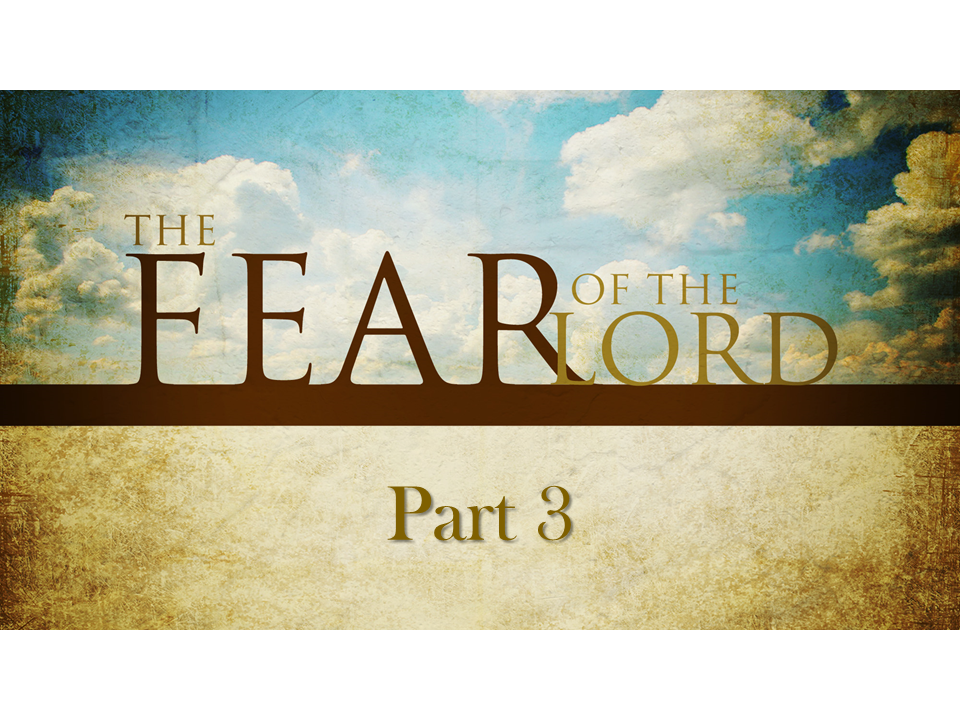
  • The Fear of The Lord Part 2

    May 12th, 2019

    The Fear of the Lord Pt. 2

    Reid A Ferguson

    Psalm 139; Deuteronomy 10:12–13; Proverbs 2:1–5

    AUDIO FOR THIS SERMON CAN BE FOUND HERE

    Last time we began to look at this topic of “The Fear of The Lord.” A phrase found all through the Scriptures and given significant emphasis in places like: ‌Deuteronomy 10:12–13

    Deuteronomy 10:12–13 ESV / “And now, Israel, what does the Lord your God require of you, but to fear the Lord your God, to walk in all his ways, to love him, to serve the Lord your God with all your heart and with all your soul, and to keep the commandments and statutes of the Lord, which I am commanding you today for your good?”

    At first blush, fearing God seems counterintuitive to loving Him and being loved by Him.

    But as we began to see, there is no disparity between the reverential awe that is brought on by contemplating God in His greatness, attributes, nature and acts, and loving Him. In fact, the more we see Him as He really is, the more awed we are at Him AND, the more we come to love Him. Because what is revealed about Him makes Him the most lovable of all objects and beings in the universe.

    But we cannot get to that place without looking beyond the glory of His immensity, genius and power in Creation – to the glory of His self-revelation in His Word, and His acts.

    So you’ll recall that we are following this outline:

    The Fear of the Lord:

    1 – Why Should I Care?

    2 – What it isn’t.

    3 – What it is.

    4 – How it is obtained.

    5 – What are its benefits?

    We dealt with #1, #2 & #3 last time, and suggesting a boiled down definition of “the fear of the Lord” to 2 words: Reverential Awe.

    Then moving on to #4 we began to explore how a reverential awe is birthed in us when we rightly explore how it is obtained.

    Gaining the Fear of The Lord

    1. Creation
    2. The Word
    3. His Acts

    All 3 of which confront us with God’s nature such that a speechless, reverential awe is all we are left with. One which then ought to fill our hearts and minds so as to govern all of life.

    And as I mentioned last time, Scripture informs us this fear of the Lord must be intentionally sought. It does not come automatically.

    This becomes very clear in Proverbs 2:1-5

    Proverbs 2:1–5 ESV / My son, if you receive my words and treasure up my commandments with you, making your ear attentive to wisdom and inclining your heart to understanding; yes, if you call out for insight and raise your voice for understanding, if you seek it like silver and search for it as for hidden treasures, then you will understand the fear of the Lord and find the knowledge of God.

    So here is where see how God’s Word is that 2nd means of encountering and fostering the fear of the Lord.

    Note this text: Receiving God’s Word, storing up His commands, being attentive to His wisdom, turning our hearts to understanding, calling out (i.e.  -praying for discernment and understanding), seeking it like precious metal and hidden treasure. THEN – you will understand how to fear the Lord. You will gain knowledge of Him that brings the soul into reverential awe.

    It is clear then that we need more revelation than Creation can give us.

    As Paul tells us, a certain amount can be known about God in Creation: Romans 1:19-20, says we can grasp something of His genius, rationality, power and transcendence in how Creation manifests immensity, timelessness, symmetry and order and its design to bless and sustain human life.

    But what we cannot know from creation is our relationship to Him, the nature of sin and redemption and His plan of salvation. For these we need some special revelation – a revelation which we receive above all in His Word.

    His Word explains Creation and the God behind it. And so some Biblical passages especially lend themselves to fostering this reverential awe in unique ways.

    One thinks of Daniel 4 for instance and the testimony of the Babylonian King Nebuchadnezzar after his recovery from the madness God visited with to humble him: Daniel 4:34-35

    Daniel 4:34–35 ESV / At the end of the days I, Nebuchadnezzar, lifted my eyes to heaven, and my reason returned to me, and I blessed the Most High, and praised and honored him who lives forever, for his dominion is an everlasting dominion, and his kingdom endures from generation to generation; all the inhabitants of the earth are accounted as nothing, and he does according to his will among the host of heaven and among the inhabitants of the earth; and none can stay his hand or say to him, “What have you done?”

    This is a profound revelation of God’s sovereign rule over mankind and the affairs of mankind. Not so as to obliterate human responsibility, but so as to demonstrate how God still works and rules within this sphere to bring about His sovereign plan even while man acts out of his own fallen will.

    In fact, an prominent feature of New Testament preaching from the Day of Pentecost on was to point to God’s active rule over human affairs, even as humanity acts according to its will, and the Enemy of our souls does as well: But God rules over all.

    Or think of Isa. 40 or Acts 17 where we not only read of God creating all things but of his active role in the affairs of men.

    But there is one passage which in appealing to 3 attributes of God stands out as a particularly useful means of creating the right and reverential awe of God – and it is the 139th Psalm.

    It is laid out in this wonderful pattern:

    1. vss. 1-6 / God’s Omniscience.
    2. vss. 7-12 / God’s Omnipresence.
    3. vss. 13-16 / God’s Omnipotence.
    4. vss. 17-24 / 3 Applications.


    1. vss. 1-6 / God’s Omniscience.

    If you are not familiar with it, OMNISCIENCE is just a fancy word for saying God knows EVERYTHING.

    And the text bears out the nature of this “everything” by bringing it down to a very personal level.

    And we need to grasp the contrast here: The God who we looked at last time, who spoke this vast universe into existence in all of its unfathomable immensity, complexity and wonder – and who continues to operate and sustain it all – is the same God who knows us individually on an unimaginably intimate and minute scale.

    Something God Himself testifies to regarding EVERY single creature in Job 38-41.

    So what does David, a single man say about how God “knows” him?

    1. Ps. 139:1

    English Standard Version Psalm 139 / O Lord, you have searched me and known me!

    Listen to this. David testifies that this God of creation doesn’t just know OF David – but KNOWS David – and has even “searched” him. Scrutinized him. Examined him. And just how extensively will be brought out as we go.

    1. Ps. 139:2a

    English Standard Version Psalm 139 / You know when I sit down and when I rise up;

    One would think such a massive God would have no time or inclination to note such things but here is the testimony. He knows every time I sit down and every time I get up. The most mundane, repetitive and ordinary of things. Nothing, nothing – escapes His all-seeing eye and notice.

    1. Ps. 139:2b

    English Standard Version Psalm 139 / you discern my thoughts from afar.

    Imagine this! How he drills down even deeper. Now some interpret this phrase to mean that God, being far off in Heaven, still detects even our thoughts.

    But I tend to consider this as Spurgeon did when he wrote: “Before it is my own it is foreknown and comprehended by thee. Though as yet I be not myself cognizant of the shape my thought is assuming, yet thou perceivest its nature, its source, its drift, its result.”

    God knows our every thought even before it is fully formed in our own minds. And He is aware of us all on this level – everyone of us, all at once.

    1. Psalm 139:3a

    English Standard Version Psalm 139 / 3 You search out my path and my lying down,

    You search out where in life I am going, and even where and how I take my rest.

    1. Psalm 139:3b

    English Standard Version Psalm 139 / and are acquainted with all my ways.

    He knows every foible, every quirk, every tendency and reasoning, feeling, action and reaction. ALL our ways.

    1. Psalm 139:4

    English Standard Version Psalm 139 / Even before a word is on my tongue, behold, O Lord, you know it altogether.
    You know everything I say. More! Everything I WILL say even before I say it.

    1. Psalm 139:5

    English Standard Version Psalm 139 / You hem me in, behind and before, and lay your hand upon me.

    And every step I take is guided by your providence, in all my progress, all my digressions, all my future and all my past. You have your hand on me personally.

    And when David considers all of this he can only gasp out: Psalm 139:6

    English Standard Version Psalm 139 / Such knowledge is too wonderful for me; it is high; I cannot attain it.

    To even imagine this level of God’s personal knowledge of just me as one lone human being is so overwhelming, I can’t really grasp it. It is too far above my capacity to really take in sufficiently. It is way over my head.

    And beloved- this is God’s knowledge of you too! And it ought to fill us with just as much awe and wonder.

    Nothing is hidden from His gaze. As Hebrews 4:13 reminds us –

    Hebrews 4:13 ESV / And no creature is hidden from his sight, but all are naked and exposed to the eyes of him to whom we must give account.

    And so will anyone dare to imagine they can approach this God with clean hands? Without His intimate knowledge of every foul thought, every empty and filthy imagination, every doubt, bad attitude and preoccupation with the worthless things of this world? Every inward inclination toward abuse, anger, greed, prejudice, selfishness, impurity, pride, faithlessness, jealousy and autonomy from His Lordship – He knows them all in their most wretched depths.

    And yet in Christ He accepts us and loves us and receives us as His own.

    And not at arm’s length, but as the father of the prodigal son in Luke 15 – falling on our necks, weeping over us and preparing a glad feast in our honor when we return to Him in repentance and seeking forgiveness.

    What a glorious God!

    And how I wish we had time this morning to unpack the other 2 portions here in the same detail. But let me just skim them quickly so we do not lose them altogether.

    1. vss. 7-12 / God’s Omnipresence.

    Yes, our God is Omniscient, but He is also Omnipresent – always with us in every place we go.

    Ps. 139:7-12

    Psalm 139:7–12 ESV / Where shall I go from your Spirit? Or where shall I flee from your presence? If I ascend to heaven, you are there! If I make my bed in Sheol, you are there! If I take the wings of the morning and dwell in the uttermost parts of the sea, even there your hand shall lead me, and your right hand shall hold me. If I say, “Surely the darkness shall cover me, and the light about me be night,” even the darkness is not dark to you; the night is bright as the day, for darkness is as light with you.

    Now we are struck with a conundrum aren’t we? I don’t know about you but when I stop to consider such a God as this, I want to hide my face from Him. Like Adam and Eve in their sin, I don’t want to be found out in my guilt and sinfulness. I want to seek some way of covering myself from that all penetrating gaze: But it can’t be done.

    Once again, as Spurgeon notes: When David asks: “where shall I go from your Spirit?”

    “No answer comes. From the sight of God he cannot be hidden, but that is not all—from the immediate, actual, constant presence of God he cannot be withdrawn. This makes it dreadful to sin, for we commit treason at the very foot of his throne. His mind is in our mind, himself within ourselves. His Spirit is over our spirit; our presence is ever in his presence.”

    And isn’t this both, glorious and disturbing. Disturbing in that we cannot hide anything of our weakness, failings and sins from Him – but glorious in that nothing can ever befall His own that He is not right here with us. In every sorrow, grief, struggle and fear, we have a God who is never far off, never distant, but with us every step of the way. The very thing Jesus needed to remind His disciples of when He was preparing to leave them physically: Matthew 28:18-20

    Matthew 28:18–20 ESV / And Jesus came and said to them, “All authority in heaven and on earth has been given to me. Go therefore and make disciples of all nations, baptizing them in the name of the Father and of the Son and of the Holy Spirit, teaching them to observe all that I have commanded you. And behold, I am with you always, to the end of the age.”

    Our Omnisicent – all-seeing, all-knowing God, our every present God, who is also Omnipotent – our all-powerful God.

    1. vss. 13-16 / God’s Omnipotence

    Once again time will not allow a full treatment here but look
    again at how the Holy Spirit through David puts the spotlight on this attribute of God by focusing it on the personal.

    Oh how it ought to fill each one of us with awe to know that we have been personally crafted by the hand of this God to be who we are.

    Psalm 139:13-16

    Psalm 139:13–16 ESV / For you formed my inward parts; you knitted me together in my mother’s womb. I praise you, for I am fearfully and wonderfully made. Wonderful are your works; my soul knows it very well.
    My frame was not hidden from you, when I was being made in secret, intricately woven in the depths of the earth. Your eyes saw my unformed substance; in your book were written, every one of them, the days that were formed for me, when as yet there was none of them.

    What a wonder – what a miracle, what a display of infinite wisdom and power is the creation of the human being in body, soul and spirit.

    18th century theologian Andrew Fuller noted in this passage: “The human frame is so admirably constructed, so delicately combined, and so much in danger of being dissolved by innumerable causes, that the more we think of it, the more we tremble, and wonder at our own continued existence.”

    How then does David apply this tour of God’s omniscience, omnipresence and omnipotence to his own life?

    3 ways.

    English Standard Version Psalm 139 / How precious to me are your thoughts, O God! How vast is the sum of them! If I would count them, they are more than the sand. I awake, and I am still with you.

    1. vss. 17-18 Application 1. I can trust you with my weakness. Sleep. We are never more vulnerable and helpless than when asleep. Utterly defenseless. But because God thinks on us immeasurably – because we are the object of His deep scrutiny and consideration – we need fear nothing else.

    Psalm 139:19-22

    Psalm 139:19–22 ESV / Oh that you would slay the wicked, O God! O men of blood, depart from me! They speak against you with malicious intent; your enemies take your name in vain. Do I not hate those who hate you, O Lord? And do I not loathe those who rise up against you? I hate them with complete hatred; I count them my enemies.

    1. vss. 19-22 Application 2. BUT! I can trust you with my trials. Your enemies become my enemies. Be they human opposition, sin, or adverse Circumstances. I can call on the all-powerful, all-knowing, all-present one to stand up in my defense.

    Psalm 139:23-24

    Psalm 139:23–24 ESV / Search me, O God, and know my heart! Try me and know my thoughts! And see if there be any grievous way in me, and lead me in the way everlasting!

    1. vss. 23-24 Application 3. I can trust you with my sanctification.

    Since you know me, since you rule over me, since you are near me so as to know my most inner being: Work in me to make me like Jesus. I can trust you not just to detect, but todetect and deal with all my sin. Lead me after yourself.

    David’s direction to us? Such considerations produce humility,  and the desire to follow after our great and wonderful God.

    And are the considerations of God’s awesome nature in His all-knowing, everywhere-and always present and all-powerful glory not fitting considerations as we come to the table this morning?

    Think about this as you come today – if you are His:

    1 – He knows our sin. All of it. The full extent of it beyond anything we are aware of. And still He loves us in His limitless grace.

    2 – He has the power to deal with our sin in its totality. As to its guilt and defilement in the Cross, its remaining power by His indwelling Spirit, and its very presence in the resurrection.

    3 – He is present with us. In the person of His Spirit. “I will never leave you nor forsake you.” Philippians 2:13

    Philippians 2:13 ESV / for it is God who works in you, both to will and to work for his good pleasure.

    He knows our sin better than we.

    But His power is such that all sin is met in the atoning sacrifice of Jesus Christ – so that the worst of all sinners may be fully cleansed, forgiven and justified before Him.

    And He so joins Himself to us as to always be with us, at all times, in all things. Never forsaking the trophies of His grace.


  • My Annual Mother’s Day Poem

    May 12th, 2019

    Mother’s Day – 2019

    With Apologies to Edgar Allen Poe and his Raven


    Once upon a midnight dreary, Mother dear, both weak and weary

    Paced while waiting on the hospital floor

    When pains of childbirth finally caught her, she brought forth her first born daughter

    And smiling at this face she now adored

    In maternity’s love fueled haze thought to herself

    I think we’ll have one more.


    Thus in an August later, after, a son was born with love and laughter

    Now the tribe once three had become four

    And how she loved their family unit, the perfect four, none could impugn it

    And yet a longing nagged her at her core

    The joyous haze once more descended induced again the thought:

    I think we’ll have one more.


    Tis here the story, true but crazy, takes its twist, still true – if hazy

    Adding to the tribe with just one more

    Another son! I came so speedy, so what my eyes were small and beady?

    Wouldn’t I be welcomed at the door?

    It took no time to set a tone eliciting the plaintiff cry to come:

    So quoth my mother dearest: “never more!”


    My goodness Ray, what have we done? In birthing this, this – other son?

    All knew that she was rattled to the core

    An obstreperous, weird little creep, their sole relief – when I would sleep

    She sought the face of God and did implore

    Forgive my past ill-thought conception and the haste-filled prayers –

    I never should have thought it: Just one more

    As time would pass, tho nearly feral, and courting daily new-found peril

    Straining all her patience, and then more

    She weathered each new strange condition, embarrassing and odd position

    Yes, still my mother loved this one she bore

    But inside her sainted heart she muttered in the deeps of dark

    I swear, I swear, I swear it: Never more


    A decade plus was then well spent, in pondering how to repent

    Enduring spawn that rattled Hades’ door

    Two normal kids, and then there’s me, ‘tis truly all a mystery

    What sins could she be suff’ring all this for?

    Tis then she hatched the plan to try and set it all to rights

    And shocking all with news: Ah, just one more


    And so in time, there came another, tho I swear from another mother

    Like Seth to stand in place of Abel’s store

    A tweaky, twerpy little child, but with a countenance so mild

    Can anything be more a total bore?

    My fiendish labor’s work undoing, with nauseating, cutesy cooing

    I rue the day my Mother said: One more.


    But such is grace, and a mother’s love, it MUST come down from God above

    To guide and pray and nurture our small four

    And never, ever losing hope, though number three was a colossal dope

    She sought the Lord through many trials sore

    And finishing her duty in the last of us to come could cry –

    Oh thank you! I promise! And you can quote me: Never more!

  • The Fear of The Lord Part 1

    April 29th, 2019

    The Fear of The Lord Pt. 1

    Reid A Ferguson

    Audio for this Sermon can be found HERE

    Another topic which was suggested to me by several people was addressing “The Fear of The Lord.”

    The phrase is found all through the Scriptures. And so you ask yourself what this is all about? And how does it fit with the Gospel and passages like: 1 John 4:18 ?

    1 John 4:18 ESV / There is no fear in love, but perfect love casts out fear. For fear has to do with punishment, and whoever fears has not been perfected in love.

    We’re Christians. We’re joined to God in Jesus Christ who has died for our sins. How does living in God’s love and acceptance square with notions of fearing God? What gives?

    These are good and right questions. And I hope to give us some light on it from God’s Word. And I am going to follow this outline:

    The Fear of the Lord: 1 – Why Should I Care? 2 – What it isn’t. 3 – What it is.  4 – How it is obtained. 5 – What are its benefits?

    1- The Fear of the Lord: Why Should I Care?

    There are a number of good reasons for spending time on this topic.

    1st off is the frequency with which it’s mentioned in the Scripture.

    The phrase “fear of the Lord” itself is used more than 30 times. When you add to that other similar phrases like fearing God or God-fearing and the like – you have well over 100 instances.

    So it is a theme that pervades Scripture – both the Old and New Testaments.

    The Holy Spirit didn’t inspire that many mentions by accident.

    2nd, The nature of some of those references catch our attention.

    Proverbs 1.7 for instance reminds us how the fear of the Lord is the very beginning of true wisdom.

    Proverbs 1:7 ESV / The fear of the Lord is the beginning of knowledge; fools despise wisdom and instruction.

    Wisdom we are aware, is the skill of walking rightly with God in life.

    Then we confront a passage like Deut. 10.12-13

    Deuteronomy 10:12–13 ESV / “And now, Israel, what does the Lord your God require of you, but to fear the Lord your God, to walk in all his ways, to love him, to serve the Lord your God with all your heart and with all your soul, and to keep the commandments and statutes of the Lord, which I am commanding you today for your good?”

    We are met with the emphasis God Himself places upon this idea when addressing His people.

    This is the supreme thing the Lord requires of His people – to fear Him.

    To fear Him – which in some way also encompasses walking in His ways, loving Him, serving Him with all our hearts and souls and keeping or treasuring His commandments and statutes.

    That is a pretty powerful call.

    When it is all said and done, what does God require of His people most?

    To fear Him. This needs to be understood.

    Or consider Peter’s summary after telling the saints that the will of God is that we should silence the ignorance of foolish people by doing good. Which he then exhorts us to do by living as free people, not using our freedom as an excuse for sin, but living as servants of God – and so 1 Peter 2:17

    1 Peter 2:17 ESV / “Honor everyone. Love the brotherhood. Fear God. Honor the emperor.”

    Peter asserts the normal Christian life includes the fear of the Lord.

    These are just a few of the compelling passages that require us to reckon with the fear of the Lord.

    3rd, we read in several places that the absence of the fear of the Lord is the defining feature of the lost.

    Romans 3:9-18 uses it as the summary description of all outside of Christ.

    Romans 3:9–18 ESV / “What then? Are we Jews any better off? No, not at all. For we have already charged that all, both Jews and Greeks, are under sin, as it is written: “None is righteous, no, not one; no one understands; no one seeks for God. All have turned aside; together they have become worthless; no one does good, not even one.” “Their throat is an open grave; they use their tongues to deceive.” “The venom of asps is under their lips.” “Their mouth is full of curses and bitterness.” “Their feet are swift to shed blood; in their paths are ruin and misery, and the way of peace they have not known.” “There is no fear of God before their eyes.”

    In Genesis, when Abraham was excusing his lie about Sarah being his 1/2 sister to Abimelech – he said the reason he lied was: Gen. 20.11

    Genesis 20:11 ESV / Abraham said, “I did it because I thought, ‘There is no fear of God at all in this place, and they will kill me because of my wife.’

    Abraham’s reasoning was clear – people with no fear of God are people who would live without accountability for their actions, and thus do whatever they want.

    While he was wrong about Abimelech in this case, he was right in principle.

    When there is no sense of accountability among people, all restraint disappears. And where there is no sense of ultimate accountability, we lose even the most basic morality; indeed, we have no basis FOR morality itself. After all, who is to say anything is truly right or truly wrong, except in each individual’s eyes? And if there is no ultimate accountability to anyone or anything above ourselves – then who cares what we do?

    So why should we care about this issue of the fear of the Lord?

    Because Scripture addresses it so often.

    Because Scripture places such emphasis upon it.

    Because a lack of the fear of the Lord is the signal mark of those who are Godless and lost.

    2 – The Fear of the Lord: What it ISN’T.

    Before we venture too far, let me take just a few minutes to take some errant notions of the fear of the Lord off of our plates. For sadly, we can develop ideas of this concept from less than reliable sources.

    1 – The Biblical fear of the Lord is not the slavish fear of the pagan. That is what drives ritualism and the idea that we need to keep God happy through a complex system of rules, regulations, rites and ceremonies.

    It flatly ignores Scripture like Matt. 9.13

    Matthew 9:13 ESV / Go and learn what this means: ‘I desire mercy, and not sacrifice.’ For I came not to call the righteous, but sinners.”

    Or Hosea 6.6

    Hosea 6:6 ESV / For I desire steadfast love and not sacrifice, the knowledge of God rather than burnt offerings.

    It treats the God of the Bible like the false gods of idol worshippers.

    2 – The Biblical fear of the Lord is not walking with God like He is perpetually testy and irritable. Tiptoeing around an infinite minefield where He is liable to explode at any moment or is constantly cantankerous and easily upset.

    The fruit of the Spirit – the inherent disposition of God is JOY! In His presence is fullness of joy David proclaims.

    God’s natural disposition is beautifully outlined for us in Gal. 5 – Love, joy, peace, longsuffering, kindness, faithfulness, gentleness and self-control. This is His very nature.

    We do not serve the God of the Perpetually Provoked. The approach to His throne is not paved with celestial eggshells.

    3 – The Biblical fear of the Lord is not like living with one who is irrational.

    Yes, there are times when His wisdom and understanding so outstrip our highest abilities that we are left confused – but that is not because He is capricious or irrational. His decisions are all wise and fully in keeping with perfect wisdom and holiness: Even when we do not understand.

    4 – The Biblical fear of the Lord is not owing to His being petty or punitive.

    Just, yes. But justice which also offers grace to all in the preaching of the Gospel.

    Love, as His Word reminds us, covers a multitude of sins. When we fall, He does not kick or abuse His own, but seeks us out like He did Adam even though we are so ready to hide ourselves.

    His desire is always that we would run to Him in our failures and sins, so that we might find mercy. Heb. 4.15-16

    Hebrews 4:15–16 ESV / For we do not have a high priest who is unable to sympathize with our weaknesses, but one who in every respect has been tempted as we are, yet without sin. Let us then with confidence draw near to the throne of grace, that we may receive mercy and find grace to help in time of need.

    When do I need mercy most? When I’ve sinned. That is my time of need!

    And where do I find that sympathy and mercy? Drawing near to His throne in faith.

    The fear of the Lord is not a slavish fear rooted in trying to appease an intractable, irritable, cranky, unappeasable, irrational, petty or punitive God.

    These are all wicked distortions which put us off from the true fear of the Lord and it’s blessings.

    3 – The Fear of The Lord: What it is.

    Let me do my best to give you 2 definitions. 1, is somewhat comprehensive, and the other is shorthand for it.

    And I am going to draw this first and foremost from where the Bible itself begins – with God’s  self- revelation.

    1 – The Fear of the Lord is: A right perception of God that produces a heart and mind governed by a fitting response to the revelation of God in His Creation and Word regarding His; Nature; Position; Word and Acts.

    A RIGHT perception of God – Understanding Him as He really is…

    A perception so overwhelming, it evokes a response that matches the revelation of Him we receive in Creation and His Word…

    As we fully come to grips with His Nature, His Position – or I might say His rights – His Word and His Acts.

    We’ll unpack these as we go.

    But if we want a handier, briefer definition – we could possibly boil it to down to this:

    2 – The Fear of the Lord is: Reverential Awe.

    Reverential awe.

    A sense of Him which brings us to revere Him, but to stand in a pure awe, inspired by His greatness, goodness, transcendence and glory.

    Which leads us then to the big question – how do we get there?

    4 – The Fear of The Lord: How it is obtained

    The obvious question is: If the Bible places such importance on this issue – how do I get there?

    I don’t know about you, but I do not – without thought and effort – walk around all day in the reverential fear and awe of God.

    We tend to think of Him in a far more detached way.

    For some that may be more of an experience of intimacy or closeness – which is right and good as well. But we can get overly familiar too – in the sense that familiarity can breed contempt.

    But awed? Amazed? Stunned?  Overwhelmed? Drawn out of ourselves in wonder? Feeling the need to bow low in reverence?

    How little those concepts enter into even into our worship of God, let alone our daily thoughts and experience of Him.

    This comes home to us in our day when so much of modern – so-called – worship music can be categorized by the phrase “Jesus is my boyfriend.” Sentimentalism devoid of anything like what might inspire awe in the heart and mind.

    Who today writes lyrics like Walter Chalmers Smith?:

    Immortal, invisible, God only wise,
    In light inaccessible hid from our eyes,
    Most blessed, most glorious, the Ancient of Days,
    Almighty, victorious, Thy great name we praise.

    Unresting, unhasting, and silent as light,
    Nor wanting, nor wasting, Thou rulest in might;
    Thy justice like mountains high soaring above
    Thy clouds which are fountains of goodness and love.

    To all life Thou givest, to both great and small;
    In all life Thou livest, the true life of all;
    We blossom and flourish as leaves on the tree,
    And wither and perish, but nought changeth Thee.

    So what can be done here? How can we recapture this rightful and necessary aspect of the Christian life?

    I believe the Bible gives us 3 primary ways to do this: Only one of which we’ll be able to touch in this morning. But here are the 3.

    a. Creation b. The Word c. His Acts

    All 3 confront us with God’s nature such that a speechless, reverential awe is all we are left with. One which then ought to fill our hearts and minds so as to govern all of life.

    But an awe which must be intentionally pursued.

    Why? Because as Romans reminds us – since the Fall, the human condition is one which suppresses the knowledge of God.

    Paul gives this concept to us in 4 key phrases:

    English Standard Version Chapter 1/ who by their unrighteousness suppress the truth.

    English Standard Version Chapter 1 / For although they knew God, they did not honor him as God or give thanks to him

    English Standard Version Chapter 1 / because they exchanged the truth about God for a lie and worshiped and served the creature rather than the Creator, who is blessed forever!

    English Standard Version Chapter 1 / And since they did not see fit to acknowledge God

    We come into the world suppressing the truth about God through our unrighteousness – especially in ignoring our own consciences.

    Being made in His image to reflect Him – when we sin, we obscure that image.

    We fail to give Him His proper honor as God or live in thankfulness for the life, world and station as His image-bearers He has given us.

    We then turn God into something we prefer honoring, serving our own desires above serving Him.

    And in the end we simply do not acknowledge Him for who and what He is – and the absolute rights He has over us as His creation.

    This being the universal tendency of our fallen nature – we need to fight against it so that He holds the right place in us once more.

    This requires exposing ourselves to Him in the fullness of His revelation as much as we can. For such is our fallenness that we do not retain the consciousness of His glory even after repeated experiences of it.

    We are just like the Israelites who saw miraculous plagues God used to deliver them from the Egyptians; marched through the Red Sea on dry ground; were led by a pillar of fire by night and cloud in the day; ate manna every day; and standing in the sight of Mt. Sinai where there were thunderings, lightnings and angelic trumpets blasting – still coaxed Aaron to make a golden calf for them: Because a small, movable, tangible god pleases us more, stretches us little and scares us not at all.

    But Scripture calls us back to ponder a God of such glory, grandeur, immensity, power and unrestrainable freedom – that it makes the soul tremble.

    And it does this by its very opening line: Genesis 1:1

    Genesis 1:1 ESV / In the beginning, God created the heavens and the earth.

    1. Creation is the first way we begin to catch an awe inspiring glimpse of our God. And how often we forget it.

    Have you ever been asked, or asked yourself what the most important verse in the Bible is?

    The answer is simple and incontrovertible: Genesis 1.1

    Genesis 1:1 ESV / In the beginning, God created the heavens and the earth.

    Why would I say that is the most important verse in all the Bible? Because apart from it, the rest of the Bible makes no sense whatever. And all of its claims, including those of Jesus, the incarnation, His death and resurrection have no context.

    If this is not God’s world, created by Him for His purposes then mankind means nothing, the Fall means nothing, the promise of redemption means nothing, salvation means nothing, morality and justice mean nothing, and eternal life means nothing. All are just happenstance events in an eternal, impersonal universe which always was, and will be, and which has no rhyme or reason to it.

    Take away Genesis 1.1 – and you take away all notions of truth and reality. We can construct whatever reality our randomly assembled synapses burp up, and no one can tell us differently. And life can only mean whatever we imagine it to mean. Then it’s gone.

    This is why in fact so many wish to have it just that way, and why Christians must always fight for the truth of the first revelation: That God created the heavens and the earth.

    Give this up – and you give up all reality as God reveals it.

    Seek to plumb its depths, and you begin to confront an awe that begins to restore the soul in a most magnificent way.

    Here, is where reverential awe – where the fear of the Lord begins. Just where the Bible begins. And that is no accident.

    It is interesting to note that the single most used means of self-identification of Old Testament saints was: They served the God who made the heavens and the earth. This differentiated them from all other people and religious groups.

    The very thing Paul bring his hearers back to on Mars Hill in Acts 17.

    What is Gen. 1:1 begging us to do? To consider the magnitude of the universe. The complexity and impossibility of life. The wonder of a world made for human habitation. The variety, beauty and splendor of the flora and fauna which surrounds us. The provision for enjoyable human life in the cycle of rains and multiplicity of grains, fruits, vegetables. The improbability of the delicate mix of cosmic conditions needed to sustain life here.

    The reality of our living on a ball of dirt twirling at 1000 mph, while hurtling through space at around 66,000 mph in an elliptical orbit around a star which itself (with us) us is moving at over 480,000 mph, to make its 225 million year trip of 1 galactic rotation. All of this within a galaxy which itself is moving through the universe at somewhere near 1.3 million mph.

    And our galaxy, the Milky Way is moving at this rate of speed through a sea of more than 100 billion other galaxies.

    Now, when you say: God created the heavens and the earth – you are saying something!

    Who is this God? WHAT is this God? That he could merely by desiring it make all of this come to be? And administrate it!

    Who or what is this God who not only brought all of this into existence, but who sustains it and who could walk on every atom of it like each were a planet of their own – and simultaneously at that?

    VIDEO  

    And this beloved is the God we pray to. The God who made us.

    No wonder David must exclaim: Psalm 144:3

    Psalm 144:3 ESV / O Lord, what is man that you regard him, or the son of man that you think of him?

    Or Job to cry out: Job 7.17

    Job 7:17 ESV / What is man, that you make so much of him, and that you set your heart on him,

    This is the God we sin against. This is the God we accuse of not ordering our lives rightly. This is the God whose name we take in vain. This is the God who we think is not big enough to meet our problem or needs. This is the God we ignore most of the time. This is the God we find it too difficult to get out of bed to worship. This is the God whose Word we neglect to read. This is the God who we question when we see injustice, experience hardship or don’t get our own way. This is the God we blame for not intervening in our affairs just the way we want.

    Indeed, this is the God who made mankind alone in His image. The God who took on human flesh to redeem us from our pitiful, hateful wicked rebellion against His rights as God and in the face of His love, holiness, justice and glory. The God who loved so that He sent His only begotten Son, that whoever believed in Him might have ever lasting life. The God who has promised Heaven for those who trust Him, and Hell for those who persist in their rebellion against Him in refusing to believe in His Son. The God who makes a new heavens and a new earth. The God who died on Calvary’s cross for sinners.

    The God whom Job said – when getting a view of this very creation in His day: Job 42:1-6

    Job 42:1–6 ESV / Then Job answered the Lord and said: “I know that you can do all things, and that no purpose of yours can be thwarted. ‘Who is this that hides counsel without knowledge?’
    Therefore I have uttered what I did not understand, things too wonderful for me, which I did not know.  ‘Hear, and I will speak; I will question you, and you make it known to me.’ I had heard of you by the hearing of the ear, but now my eye sees you; therefore I despise myself, and repent in dust and ashes.”

    This is the God who says to you – come unto me all you who are weak and heavy laden, and I will give you rest.

    The God who said: “I am the way, and the truth, and the life. No one comes to the Father except through me.”

    Christian – take heart. This is your God.

    You need to recover the big-ness the majesty and power of this God. Especially in times of trial and temptation.

    This God is bigger than your weaknesses. Bigger than your physical ailments or disabilities – no matter how severe. Bigger than American politics, climate change, terrorism or global economics. He is bigger than your past, your future and every aspect of your present. Bigger than your depression. Bigger than your cancer. Bigger than your marriage. Bigger than your eyesight, your hearing, your arthritis, your erring children, your loneliness, your boss, your retirement or any situation you find yourself in today or may face in the future. And above all – He is bigger than your guilt and shame and sin.

    When I am facing my darkest hours – I need a God who is so far above all these things so that these things themselves are dwarfed by comparison, and my heart can be brought to rest in the midst of it.

    It is my habit in those seasons to seek out books, Scriptures, sermons and music that focuses my soul back on a big, BIG God in whom I can trust.

    This is the heritage of every Believer. But oh how easily these things can eclipse our vision of Him if we do not purposely strive to recover it.

    And Unbeliever today. This is the God we call you to bow the knee to. To give up your foolish rebellion against and yield to. To acknowledge His right of supremacy over your life and see and believe.

    Come and be reconciled to Him today. This great and awesome God – personally calls to you to become His child. To have your sins forgiven on the basis of Jesus’ substitutionary death on the Cross.

    To become your Lord and King.

    To give you new life in Jesus Christ.


  • He has Risen! – Easter Sunday – 2019

    April 22nd, 2019

    He Has Risen: Mark 16:6

    Resurrection Sunday 2019

    AUDIO FOR THIS SERMON CAN BE FOUND HERE

    There are times when the economy of words in the Scripture just cannot be outdone.

    In fact, while I wish to turn your attention to just 3 words in our text today – in the original Greek, it was only 1 word: ἠγέρθη

    “He has risen.”

    No more important words in the whole of human history have ever been spoken. And none with more eternal significance.

    And I want simply to take them one at a time to gain a taste of that importance and significance.

    We start with this emphasis:

    HE, has risen

    Who it is that is being spoken about here makes all the difference.

    The preceding verses set the stage.

    Mark 16:2–6 ESV

    And very early on the first day of the week, when the sun had risen, they went to the tomb. And they were saying to one another, “Who will roll away the stone for us from the entrance of the tomb?” And looking up, they saw that the stone had been rolled back—it was very large. And entering the tomb, they saw a young man sitting on the right side, dressed in a white robe, and they were alarmed. And he said to them, “Do not be alarmed. You seek Jesus of Nazareth, who was crucified. He has risen; he is not here. See the place where they laid him.

    Mary Magdalene, Mary the mother of James, and Salome did not come seeking just anybody – as the angel said to them: “You seek Jesus of Nazareth, who was crucified.”

    Note 3 things in that statement:

    1. They came seeking Jesus, the one who’s Father, Joseph was told: “you shall call His name Jesus, for He will save His people from their sins.”

    There were many in that day who bore the name Jesus.

    Jesus or Joshua, was a very common name in that time. In and of itself it meant nothing except that in this case, Joseph was divinely instructed to give Him this name because of what He would do: He would save His people from their sins.

    Joshua, his namesake in the Old Testament, the successor to Moses would be the one who finally led the Jewish people into the Promised Land: The one who would bring them into full possession of the promises of God.

    And so it’s only fitting that this Jesus, THIS Joshua would be the one to finally bring all those who sought God to inherit all the promises of God to those who love Him and are loved by Him.

    As the Apostle Peter would later write: 1 Peter 1:3–6 ESV / Blessed be the God and Father of our Lord Jesus Christ! According to his great mercy, he has caused us to be born again to a living hope through the resurrection of Jesus Christ from the dead, to an inheritance that is imperishable, undefiled, and unfading, kept in heaven for you, who by God’s power are being guarded through faith for a salvation ready to be revealed in the last time. In this you rejoice, though now for a little while, if necessary, you have been grieved by various trials,

    But as I said, they came seeking a specific Jesus: The Jesus who was – as the angel called Him – “Jesus of Nazareth.”

    ​Mark 16:6 ESV / And he said to them, “Do not be alarmed. You seek Jesus of Nazareth, who was crucified. He has risen; he is not here. See the place where they laid him.

    In other words, you seek the One who fulfilled the prophecies of the Old Testament regarding the Messiah. The One who was born in Bethlehem but reared in that cast-off backwater Nazareth – a place where He fully identified with us as having nothing earthly to recommend us to God.

    For Nazareth was known not only as having no prominence, but was proverbial as a place where nothing good could be expected to issue from. Just like out of this fallen human race in rebellion against God.

    1. Mark 16:6ESV / And he said to them, “Do not be alarmed. You seek Jesus of Nazareth, who was crucified. He has risen; he is not here. See the place where they laid him.

    You seek the crucified One. The one who was the sacrificial Lamb of God, designated to take away the sins of the world.

    The One appointed to take upon Himself the guilt of fallen humanity that all those who put their trust in Him as their sin-bearer before God, might have the full forgiveness of sin, and be granted eternal life with Him.

    But we must also notice that they sought a WHO, and not a WHAT.

    You may have come here today seeking a “what.”

    Comfort from your grief and the pain of a lost one.

    Maybe you’ve come seeking answers; an end to confusion in life.

    Maybe you are here seeking peace or a sense of the transcendent.

    Maybe you do not know what you are looking for exactly.

    But I can tell you on the authority of God’s word that comfort, answers, clarity and transcendence are never to be found in seeking them themselves. They are meant, WE are meant as the human race created in God’s image – to find all of those in Jesus Christ alone.

    In the WHO of all Creation.

    The One in whose image we were created, and so the only one who can bring life to make the sense it is supposed to make.

    When the Apostle Paul wrote his short letter to the Church at Colosse he mentioned how he struggled both for them and other Churches: Colossians 2:2–3 ESV / that their hearts may be encouraged, being knit together in love, to reach all the riches of full assurance of understanding and the knowledge of God’s mystery, which is Christ, in whom are hidden all the treasures of wisdom and knowledge.

    I pray with the Apostle Paul that you would find this Christ today in whom are hidden all the treasures of wisdom and knowledge.

    HE, has risen

    He, this Jesus. This Jesus of Nazareth who was crucified. This is the One they sought – and it bids me ask you today who is it you seek?

    This Jesus was not the first one ever raised from the dead. In Jesus’ own ministry He raised at least 3 others.

    In Luke 7 it was the only son of a Widow in the city of Nain. Then in Luke 8 it was the 12 year old daughter of a prominent man. And most famously in John 5 , Lazarus, the brother of Mary and Martha, who Jesus loved.

    Now it was true these all were given life again, but they would also go on to die yet again. They did not have life in themselves as He did.

    Perhaps you are here today at an Easter service where mourning the loss of a loved one in the context of resurrection makes you wish they could be with you once again. But even if they were to return, it would only be for a season.

    But this grand and glorious HE – this Jesus of Nazareth who was crucified – He comes bringing the hope of an eternal and everlasting life for all who look for and to Him.

    As Peter would preach on the Day of Pentecost, Acts 2:24 ESV / God raised him up, loosing the pangs of death, because it was not possible for him to be held by it.

    It was not POSSIBLE for Him to be held by death and the grave.

    Oh! This Jesus, He is the very source and sustainer of life itself. And He, beloved can give you new life today, everlasting life if you will but turn to Him to satisfy God on your behalf for all of your sins.

    Who He is that is risen makes all the difference in the world. So much so that even Jesus when first appearing to Mary Magdalene asked her: “Whom are you seeking?”

    It is as thought He was saying: “Think about it Mary – if Jesus was who He said He was, and did the things He did – why would come seeking Him in a graveyard?”

    And if we are seeking just a Jesus who will help us with our woes, comfort us in our sorrows and be a wonderful teacher and example – we’re aiming far, far too low.

    Whatever your grief or care or concern today dear one, do not come to this Easter just seeking some sage, symbol or religious figure.

    Come seeking the eternal Son of God – God incarnate, in human flesh in the person of Jesus Christ.

    And He has risen.

    HE, the angel said, has risen

    But there is a 2nd word of vital importance here:

    He HAS risen Past tense.

    When these women went to the tomb, they in fact hadn’t the slightest hope that Jesus was raised up from the dead.

    They went with the intent of mourning Him, and memorializing Him.

    And it wasn’t because they had no understanding or belief in the Jewish teaching that there would one day be a resurrection of all the dead for final judgment. They fully understood that.

    They went with the thought that one day He would be raised up too – but for now, all that filled their vision was His being gone. That overshadowed everything.

    So we can only imagine their shock when this angelic messenger told them Jesus had ALREADY been raised.

    What could that possibly mean?

    And we must note here in passing how it is that their lack of faith was no hindrance to His rising up.

    He does not depend upon us to act, but He does all for us, in our dreadful weakness and unbelief

    So they came not believing.

    Did it mean He hadn’t really died, but just swooned under His injuries as some even today might teach?

    Did it mean someone else had come earlier and taken His body like Mary Magdalene certainly thought at first?

    No. Neither of these. The truth was, this Jesus had already been raised from the dead.

    And here, we must fall back on that one word in the original Greek to capture what is being said. Quite literally it should be read: He has been raised up already!

    In fact, of all the things clearly demonstrating the nature of the Trinity it is this act. For in Acts 3:15, Peter confronting his enemies reminds them: Acts 3:15 ESV / and you killed the Author of life, whom God raised from the dead. To this we are witnesses.

    God raised Him from the dead. Romans 8:11 tells us it was the Spirit who raised Jesus from the dead. And Jesus Himself declared in John 2 that if He were killed, He would raise Himself from the dead.

    Jesus being raised from the dead was the quintessential work of the whole Godhead in carrying out the reversing of the curse that has plagued the human race since our first sin of rebellion in the Garden of Eden: Death has already – in the raising of Jesus been overcome.

    And for all who trust in Him, as 1 Cor. 15:22-26 tells us: 1 Corinthians 15:22–26 ESV / For as in Adam all die, so also in Christ shall all be made alive. But each in his own order: Christ the firstfruits, then at his coming those who belong to Christ. Then comes the end, when he delivers the kingdom to God the Father after destroying every rule and every authority and power. For he must reign until he has put all his enemies under his feet. The last enemy to be destroyed is death.

    This, He has proven to be the truth by His own resurrection from the dead.

    What greater proof could there be?

    Thirdly then:

    He has RISEN

    What does it mean that He HAS risen – so what?

    And how I wish we could spend a few hours together sorting through the wonder of this beloved – but let us just cite a few choice things that come to certainty in the fact that Jesus has indeed risen.

    1. As I’ve already alluded to: Death has a end. Because He has risen and overcome death – He can bring life to each and every one who puts their trust in Him.
    2. As Paul would teach in Romans 4, Jesus was given over to be crucified for our sins, but He was raised for our justification: He was raised to prove that sin had been fully paid for in such a way, that all who believe in Him might be pronounced JUST – NOT GUILTY – before the judgment bar of God. Before the God who knows the very thoughts and intents of our hearts. Who knows all of our deepest and most hidden sins.
    3. Because Jesus was raised from the dead, we can have absolute confidence that everything He promised to those who love Him will come to pass. If He can overcome the universal enemy of man in death, what CAN’T He do?
    4. Because He has been raised up, we know that there will be a final reckoning and judgment which will bring ultimate justice to this universe. A universe plagued by so much injustice and corruption. There WILL be final judgment against all those who thought they escaped punishment in this life through death. All injustice will be set to right.
    5. Because He has been raised, He will – as those who trust Him – raise us up one day to be with Him.
    6. Because He has been raised, we know that all who died in Him believing will return with Him when He comes.
    7. Because He has been raised, we have the guarantee of all that is promised as ours as put to us in Romans 8:32–39ESV / He who did not spare his own Son but gave him up for us all, how will he not also with him graciously give us all things? Who shall bring any charge against God’s elect? It is God who justifies. Who is to condemn? Christ Jesus is the one who died—more than that, who was raised—who is at the right hand of God, who indeed is interceding for us. Who shall separate us from the love of Christ? Shall tribulation, or distress, or persecution, or famine, or nakedness, or danger, or sword? As it is written, “For your sake we are being killed all the day long; we are regarded as sheep to be slaughtered.” No, in all these things we are more than conquerors through him who loved us. For I am sure that neither death nor life, nor angels nor rulers, nor things present nor things to come, nor powers, nor height nor depth, nor anything else in all creation, will be able to separate us from the love of God in Christ Jesus our Lord.

    Not the least among these all being that Jesus Christ Himself has been raised to the right hand of God the Father – to pray for, intercede on behalf of, all those who put their trust in Him – in ALL things.

    HE HAS RISEN!

    And all that is His as God the Son, is ours if we are in Him by faith.

    What a glorious resurrection this is indeed.

  • Why go to Church? Part 1

    April 19th, 2019

    AUDIO FOR THIS SERMON CAN BE FOUND HERE

    I saw it just this week in a Facebook post: “Does a Christian HAVE to go to church?”
    The debate raged hotly.
    And of course, we need to ask just what one means by the question: Do you mean it technically? Or actually? So in one sense – it depends.
    Let me ask a different question for clarity’s sake: Can a person be married if they never talk to their spouse, ignore their needs or wants, live in another location, fail to grant conjugal rights and date other people?
    Well technically married? Yes. But can they have a marriage? That is quite different thing isn’t it?
    Maybe we should ask it this way: Can one voluntarily and habitually abstain from Church and be a Christian? Sure. But not much of one. And the Biblical reasons why not are quite compelling.
    Interestingly enough, this was one of those topics proposed to me to cover in this little break we’re having from our usual systematic study of a book of the Bible. And it is a vitally important one especially in today’s world where the internet and other media access have given rise to what we might call “the virtual church.”
    Don’t get me wrong: I love the access technology has given us to preachers and teachers we might otherwise never have the opportunity to learn from. Although that does have inherent danger to it as well. It is tempting to think all I need for my spiritual health is to listen to the best preachers I can on the web. But of course all the rough and tumble, the scraping and abrasion that comes from actually having to interact with people each week – having to forgive them, see my faults, overlook their faults, and serve them gets lost in the process. The stuff of real growth.
    A few years ago Sky and I attended a funeral where the pastor of the Church was not a little bitter about this trend. In what was NOT a good display, his sermon went down a by-path when he went off on folks. He was bemoaning the fact that here he was conducting an actual funeral for someone he knows, when as it is, lots of folks from week to week stay at home and get their “church” on TV or on the computer. That’s when he said something to the effect of: “So the next time your loved one dies or is in the hospital, call your celebrity pastor and ask him to sit by their beside or pray with them. Call the TV preacher when you want to get married. See if the one you’re sending your money to across the country will come and preach this funeral for you!” As I said, he was a bit bitter. But he did have a point of sorts.
    For those who are shut-ins or otherwise unable to meet with a local assembly – with you, I find this technological access could not be more valuable. But just as those who for some medical reasons may not be able to eat regular food can have their life sustained by feeding tubes and other means – these are never meant to be permanent arrangements except under the most extreme conditions.
    And from the Biblical models we’ll see this week and maybe the next several weeks, the supplement we may receive from being able to go on line, listen to podcasts or watch videos etc., is wonderful – but it is not meant to be the norm for a host of reasons.
    Beyond all that, I want to unpack what I believe to be the foundational reason for the necessity of gathering with the saints in public worship out of our text in 1 Peter: That of the call, right, privilege and sacred duty of Priesthood of the Believer. 1 Peter 2:1–10 / ESV / So put away all malice and all deceit and hypocrisy and envy and all slander. Like newborn infants, long for the pure spiritual milk, that by it you may grow up into salvation— if indeed you have tasted that the Lord is good. As you come to him, a living stone rejected by men but in the sight of God chosen and precious, you yourselves like living stones are being built up as a spiritual house, to be a holy priesthood, to offer spiritual sacrifices acceptable to God through Jesus Christ. For it stands in Scripture: “Behold, I am laying in Zion a stone, a cornerstone chosen and precious, and whoever believes in him will not be put to shame.” So the honor is for you who believe, but for those who do not believe, “The stone that the builders rejected has become the cornerstone,” and “A stone of stumbling, and a rock of offense.” They stumble because they disobey the word, as they were destined to do. But you are a chosen race, a royal priesthood, a holy nation, a people for his own possession, that you may proclaim the excellencies of him who called you out of darkness into his marvelous light. Once you were not a people, but now you are God’s people; once you had not received mercy, but now you have received mercy.”
    Did you catch verses 5 & 9? 5 – you yourselves like living stones are being built up as a spiritual house, to be a holy priesthood, to offer spiritual sacrifices acceptable to God through Jesus Christ…9 But you are a chosen race, a royal priesthood, a holy nation, a people for his own possession, that you may proclaim the excellencies of him who called you out of darkness into his marvelous light.
    You may not consider this very often, maybe no one has ever taught it to you at all – but when you became a Believer in Jesus Christ as your sin-bearer, you were ordained into the priesthood of the Believers.
    This recovery of the priesthood of each believer back from the Medieval captivity it suffered under Romanism, was one of the keystones of the Protestant Reformation.
    The essential reality of that recovery wasn’t to destroy the need for preachers and teachers in the Church – numerous places in the New Testament reaffirm the necessity of those roles along with certain structures like Deacons and Elders. But what the Reformers were seeking to recover for folks is that we need no mediator, no human go-between between ourselves and God – especially in prayer and for the forgiveness of sins. But there is more to this Priesthood idea than that.
    Now it is as true with this issue as it is with anything else: it can be taken to extremes. People can begin to imagine themselves as Church unto themselves and that they do not need the rest of the Body of Believers. Trinitarian theology isn’t built around a human “me, myself and I.” Paul puts the decisive nail in the coffin of that idea in 1 Corinthians 12:12–21 / ESV / For just as the body is one and has many members, and all the members of the body, though many, are one body, so it is with Christ. For in one Spirit we were all baptized into one body—Jews or Greeks, slaves or free—and all were made to drink of one Spirit. For the body does not consist of one member but of many. If the foot should say, “Because I am not a hand, I do not belong to the body,” that would not make it any less a part of the body. And if the ear should say, “Because I am not an eye, I do not belong to the body,” that would not make it any less a part of the body. If the whole body were an eye, where would be the sense of hearing? If the whole body were an ear, where would be the sense of smell? But as it is, God arranged the members in the body, each one of them, as he chose. If all were a single member, where would the body be? As it is, there are many parts, yet one body. The eye cannot say to the hand, “I have no need of you,” nor again the head to the feet, “I have no need of you.”
    And our text today mitigates against that thinking too – 5 – you yourselves like living stones are being built up as a spiritual house, to be a holy priesthood, to offer spiritual sacrifices acceptable to God through Jesus Christ…9 But you are a chosen race, a royal priesthood, a holy nation, a people for his own possession, that you may proclaim the excellencies of him who called you out of darkness into his marvelous light.
    We are not just “priests” as though we can be rogue or lone-ranger priests – we are part of a priest-HOOD, built together as a “spiritual house”, a “race” and a “nation” and a “people.”
    These are all collective and communal terms. No single person is a whole house, a race, a nation, a people or a priesthood. No one is a priest unto or by themselves, but are part of a priesthood. This of course is borne out in the Old Testament typology of Israel’s priesthood. There was no such thing as a lone priest who served whenever or wherever they felt like. They all ministered together as a group. And that, only in the context of the Tabernacle first, and then in the Temple. They functioned in the context of gathered public worship. The only time that pattern was not followed is in the tragic accounts in Judges 17-20 where we have 2 bizarre and gruesome illustrations of what happens when a Priest goes independent. The Priests labored TOGETHER, never independently. And the language of our text today clearly indicates that same reality for the New Covenant Priesthood.
    What then are the constituent aspects of our Priesthood? What does that look like? Peter is going to mention just 3 in this short passage I want to focus on this morning. One of them especially bringing us right to the Lord’s Table today.
    1. The Word
    2. Sacrifice
    3. Proclamation
    Peter see the Believer’s priestly role in regard to the Word of God, offering up sacrifices and proclaiming the excellencies of Christ. The Word; Sacrifice; Proclamation
    In the portion from Leviticus we had read for us already, we confronted a most stunning chapter in the history of Israel and it’s Priesthood. Aaron and his 4 sons had just been ordained to the Priesthood when 2 of them, Nadab and Abihu decided to go rogue. And they were killed for it by fire coming down out of Heaven. Lev. 10:1 explains: ESV / “Now Nadab and Abihu, the sons of Aaron, each took his censer and put fire in it and laid incense on it and offered unauthorized fire before the LORD, which he had not commanded them.”
    The admonition given by God in Ch. 16 in the aftermath of this tragedy helps explain the problem. The Law said only the High Priest could enter into the holy of holies and that alone, and only once a year – on the Day of Atonement. Full of themselves, these 2 just thought they could play fast and loose with the worship of God and be really innovative entering together. Additionally, offerings had to be employed as proscribed by God – just waltzing in with fire for the altar of incense was unacceptable. God’s instructions were clear – the fire had to come from coals off the altar outside. They apparently skipped this which is why it is called “strange” or “unauthorized fire”. So Leviticus 10:3 notes: ESV / Then Moses said to Aaron, “This is what the LORD has said: ‘Among those who are near me I will be sanctified, and before all the people I will be glorified.’ ” And Aaron held his peace. God is to be sanctified – set apart – by our observing how He WANTS to be worshiped, and not just willy-nilly, according to our whims. And it is up to us to find out what that looks like from what He has revealed. He will be sanctified – set apart according to the honor due Him, and not approached according to our own imaginations or desires.
    And how is that to be done? Leviticus 10:8–11 ESV / And the LORD spoke to Aaron, saying, “Drink no wine or strong drink, you or your sons with you, when you go into the tent of meeting, lest you die. It shall be a statute forever throughout your generations. You are to distinguish between the holy and the common, and between the unclean and the clean, and you are to teach the people of Israel all the statutes that the LORD has spoken to them by Moses.”
    It is up to the Priesthood to soberly preserve the right worship of God in society by paying close attention to the teaching of His Word. So it is our text reminds us in the context of the Believer’s Priesthood today: 1 Peter 2:2 ESV / Like newborn infants, long for the pure spiritual milk, that by it you may grow up into salvation—
    As the Priests then had the responsibility to instruct the people in God’s ways and how He is to be worshiped, AND, model it for them – so that still remains for us. It is a task which cannot be separated from a life-sustaining dependence up the pure spiritual milk of God’s Word.
    Why do we frame our own worship services today around certain core elements like prayer, praise, the reading and expounding of the Word and the sacraments of Baptism and The Lord’s Table? Because these are drawn from the Scriptures and the practice of the early Church under the oversight of the Apostles. The Word MUST inform what we do. We are His Priesthood – and the protection and preservation of the right worship of God in the world is committed into our care.
    So why do His Priests have to come to Church? That we might discharge this sacred duty together. Keeping Biblical worship alive as a testimony to the true and living God both in our generation and in our location. And we become avid students and protectors of the Word so that we too can: “distinguish between the holy and the common, and between the unclean and the clean, and you are to teach the people of Israel all the statutes that the Lord has spoken” (Leviticus 10:10–11, ESV)
    Secondly, we come to Church to fulfill our Priestly role in offering up sacrifices. In the OT there were daily sacrifices, occasional sacrifices when people sinned, made vows or gave thanks, and proscribed yearly sacrifices. But our sacrifices are not the sacrifices of the OT Priesthood. Now that the New Covenant is in effect – now that Jesus has fulfilled all of those OT types by His own death on Calvary for our sins, we come to offer “spiritual sacrifices acceptable to God Jesus Christ.” 1 Peter 2:5 ESV / you yourselves like living stones are being built up as a spiritual house, to be a holy priesthood, to offer spiritual sacrifices acceptable to God through Jesus Christ.
    Now once again, God made it clear through the types and shadows of the Levitical Priesthood that this is a group activity and not one done solo. In fact, there was to be no such thing as private sacrifice in Israel under any circumstances.  Lev. 17:3-4 spells it out. ESV / If any one of the house of Israel kills an ox or a lamb or a goat in the camp, or kills it outside the camp, and does not bring it to the entrance of the tent of meeting to offer it as a gift to the LORD in front of the tabernacle of the LORD, bloodguilt shall be imputed to that man. He has shed blood, and that man shall be cut off from among his people.
    Sacrifice needed to be a public thing, not private. For it is only fitting that the public worship of God be preserved. It did not mean people couldn’t pray or seek God on their own – but it did mean there had to be a high regard for honoring God as He wants to be honored, and that in a public manner which is watched over and conducted by the collective Priesthood. Now, under the New Covenant we have this instruction for our sacrifices in Hebrews 13:15–16 ESV / Through him then let us continually offer up a sacrifice of praise to God, that is, the fruit of lips that acknowledge his name. Do not neglect to do good and to share what you have, for such sacrifices are pleasing to God.
    Praise Him at home and in the workplace for sure – but by all means do not neglect to gather with the whole of the Priesthood and offer up sacrifices of praise and thanksgiving that honor and acknowledge His name! Do it as a public spectacle and testimony to the nations that God has a people who worship Him as He desires, and as is fitting His glory. And there is no question that we cannot do good to others and share what we have apart from being together. This again is the sacred privilege and duty that is attached to our Priesthood. Why would we neglect such a trust as it has been committed unto to us to serve Him publicly in this way?
    I’ve often heard people argue the false dichotomy of “do you come to worship to give God something or to get something from Him?” The answer must be YES! Both! I come to offer up my sacrifices of praise publicly as one of His Priests, and to receive at His hand the Word broken to my soul in the midst of the assembly. True Biblical worship must incorporate both. Only coming to Church to receive denies my priestly call and turns worship into something for me rather than for the fame of His name. And only coming to give makes it seem as though I am God’s benefactor and not His servant dependent upon Him Both elements must be present according to His dictates.
    Do you want to know how to honor God well fellow Priests of the most High God? Psalm 50:14–15 ESV / Offer to God a sacrifice of thanksgiving, and perform your vows to the Most High, and call upon me in the day of trouble; I will deliver you, and you shall glorify me.”
    We honor God most pleasingly when we demonstrate to the world around us in public worship, how we acknowledge His faithfulness to us in thanksgiving, and pray to and call upon our God together. How we honor Him by showing them we depend more upon Him than anything the world can offer, in prayer.
    But 3rd this morning – and this brings us specifically to what we do now in coming to the Lord’s Table – we fulfill our Priesthood when there is –
    The Word
    Sacrifice

    Proclamation

    1 Peter 2:9 ESV / But you are a chosen race, a royal priesthood, a holy nation, a people for his own possession, that you may proclaim the excellencies of him who called you out of darkness into his marvelous light. We are called to be a royal Priesthood – which Priesthood includes the proclamation of the excellencies of Him who called us out of darkness into His marvelous light.
    The Lord’s Table once again is not a private affair. It is both public and communal. In fact, the idea of taking communion privately is an oxymoron. It is COMM-UNION – communal by nature. A symbol of the common union all of us share who have believed the Gospel, been born again and been joined together by sharing the same Spirit of Christ Jesus. No, we do not all preach. We have not been universally gifted for it. Nor do we all teach. We’ve not all been gifted the same there either. But as His ordained Priesthood, we are all equal proclaimers of the excellencies of the Lord Jesus as the incarnate Son of God, the sinless Lamb of God slain for our sins. The full satisfaction for our guilt before the Father – and in the joyous anticipation of His return and our resurrection to be with Him forever.
    It is in this mindset – as a unified Priesthood – Paul tells us:  1 Corinthians 11:26 ESV / For as often as you eat this bread and drink the cup, you proclaim the Lord’s death until he comes. Must Christians come to Church? How else can we fulfill the sacred honor and duty of our royal Priesthood? It cannot be done apart from the rest of Christ’s Priests. And so we come today.
  • A Passion Night’s Prayer

    April 19th, 2019


    My Father, now the hour has come,
    The time to glorify your Son
    This thing that only you can do
    That I might glorify you too
    You’ve giv’n the Son authority
    O’er all of this humanity
    And life eternal to command
    For those you’ve placed within my hand
    Eternal life in knowing you
    The only God, the one, the true
    And Jesus Christ whom you have sent
    For sinners will my life be spent
    That I may finish all your will
    I spoke your Word. My blood I’ll spill
    That they might know I come from you
    Your cup of wrath I’ll finish too
    And now I bend my knee in prayer
    For these you’ve put within my care
    Oh Father, as I come to Thee
    Preserve them in your name ‘s my plea
    While I was here I kept them all
    Except the one ordained to fall
    But now I leave them in the world
    And Satan’s darts will sure be hurled
    They’ve heard your Word and hold it true
    Protect them till they come to you
    Please separate them as your own
    Until you bring them safely home
    Nor do I ask but for these few
    But for the ones who’ll come to you
    Believing what they preach of me
    The Gospel of my Cross receive
    And Father, still I ask you more
    That they may have the fullest store
    To see my glory beaming bright
    Dispelling all of sin’s dark night
    They, one in Me as I’m in you
    The World to see this wonder too
    That loving them as you loved Me
    Such joy be their’s eternally
    The World is lost not knowing you
    But these, your Gift, they know it’s true
    They know I’m sent from up above
    Now fill them, fill them, with your love
  • Why go to Church? Part 2

    April 19th, 2019

    Why go to Church? Pt. 2

    AUDIO FOR THIS SERMON CAN BE FOUND HERE

    Last time, we began to look at this question by exploring the nature of all Believers being a Priesthood unto God. And we looked at it mainly in the context of gathered public worship. That we get together like this on a Sunday to indulge in our Priestly privileges: Especially by preserving the right worship of the One True God in society.

    We gather to take in the nourishment of the sincere milk of God’s Word; to offer up spiritual sacrifices of praise and thanksgiving; and to proclaim the excellencies of Him who called us out of darkness into His marvelous light.

    But there is much more for us to explore on this topic. And part of that exploration is necessary due to 2 common misunderstandings. And so I want to work from 1 key text this morning: Acts 2:42-47

    Acts 2:42–47 ESV / And they devoted themselves to the apostles’ teaching and the fellowship, to the breaking of bread and the prayers. And awe came upon every soul, and many wonders and signs were being done through the apostles. And all who believed were together and had all things in common. And they were selling their possessions and belongings and distributing the proceeds to all, as any had need. And day by day, attending the temple together and breaking bread in their homes, they received their food with glad and generous hearts, praising God and having favor with all the people. And the Lord added to their number day by day those who were being saved.

    Narrative texts always call for special attention. Just because an event is recorded doesn’t mean it’s necessarily good. That Judas went and hanged himself is not meant to be a paradigm for us. But when events coincide with other Biblical teaching, and, as in this case – we see how the Church drew from it historically – we have a good level of confidence. There are 3 elements I want to touch on in this text as displaying what the early Church looked like under the direct supervision of the Apostles.

    1. The DEVOTION of the Believers

    The Believers did not simply attend services, they were a group DEVOTED to some specific things. One lexicon defines this word “devoted” as: “to persist in adherence to a thing; to be intently engaged in, attend constantly to.” Serving Christ together was not a passing part of life – it became the hub around which their lives now revolved. But what was it specifically they devoted themselves to? 4 things. Acts 2:42

    Acts 2:42 ESV / And they devoted themselves to the apostles’ teaching and the fellowship, to the breaking of bread and the prayers.

    a. The apostle’s teaching: Literally, to the Apostles themselves teaching – not just to a body of truth. We know from the different words the Bible uses there were basically 4 kinds of preaching. We can’t explore those now, but they devoted themselves to having the Word of God expounded and applied to their lives. They were devoted to Biblical preaching.

    b. The Fellowship: Involvement in each other’s lives. Knowing each other’s needs. It is why the word gets translated in another place as “partnership.” They joined as partners in the cause of Christ. This gets characterized a few verses later as doing whatever it took – even selling property or goods to see each other were cared for. We’ll come back to this.

    c. The Breaking of bread: Shared meals which always included a reference to the idea of communion or the Lord’s Table. Eventually it became a technical term just for the Lord’s Supper.

    d. The Prayers: They were a praying Church.

    So we note first how Christians were marked out by how they were devoted to: The teaching of the Apostles; The Fellowship of Believers; The Breaking of Bread; and The Prayers. Devotion to these things speaks to us especially in our day where Christians face the twin giant enemies of: Distraction and Apathy.

    The distraction of a 24 hour news cycle that incessantly cries out for our attention to all sorts of things – most of which we can do little if anything about – except be occupied with. Sports and other activities also vie for the Sunday time slot.

    But then there is spiritual apathy: A loss of urgency and importance regarding the state of health and growth of one’s soul in the image of Christ. A willingness to be content with what we might call a bare salvation instead of a commitment to be actively engaged in what we know is the goal of Scripture for us as stated in places like Ephesians 4:11–14 ESV / And he gave the apostles, the prophets, the evangelists, the shepherds and teachers, to equip the saints for the work of ministry, for building up the body of Christ, until we all attain to the unity of the faith and of the knowledge of the Son of God, to mature manhood, to the measure of the stature of the fullness of Christ, so that we may no longer be children, tossed to and fro by the waves and carried about by every wind of doctrine, by human cunning, by craftiness in deceitful schemes.

    1. DEVOTION

    2. INVESTMENT

    We see the nature of this investment in vss. 44 &45

    Acts 2:44–45 ESV / And all who believed were together and had all things in common. And they were selling their possessions and belongings and distributing the proceeds to all, as any had need.

    Here is another common misunderstanding we need to address. Some have thought these verses teach that there was some form of communism or socialism afoot here. But that is to ignore the balance of Scripture. e.g. When we get to Ch.5 we read of the account of Ananias and Sapphira and how they claimed to have sold a piece of property for a certain amount of money to give to the Apostles to meet the needs of the needy. But Peter plainly reminds them that when they owned the property it was theirs to do with as they pleased, as were the proceeds of the sale. These didn’t automatically become communal property.

    The early Church did not have all their goods in common as though private ownership disappeared. This was a voluntary giving up of some things so that those among them who were truly in need were provided for. They had all things in common in this sense: They shared common concern for one another’s welfare so that what they had was to be employed to meet one another’s needs.

    But if we imagine this to be merely a financial or material concern – we completely miss the balance of Scripture. As we’ll see in a minute, if we do not have a burden for the needs of our brothers and sisters in Christ – and ESPECIALLY for their spiritual needs, we cannot carry out the most vital aspects of being committed to one another – of being invested in the lives of some group or body of Believers. They had a common faith which led to common goals and therefore common concerns for one another in concert with those goals. Above all, the goal of growing together into the image of Christ – taking on His character in spiritual growth.

    Which brings us to the 3rd consideration here:

    1. Devotion

    2. Investment

    3. Commitment

    And this commitment showed itself in a very specific way: Acts 2:46–47 ESV / And day by day, attending the temple together and breaking bread in their homes, they received their food with glad and generous hearts, praising God and having favor with all the people. And the Lord added to their number day by day those who were being saved.

    Once again we are into some serious myth-busting. It surrounds the ideas of commitment to a particular group of Believers. And I know this is an area of disagreement among true and sincere Christ followers.

    There are those who object to a worship service like we’re a part of this morning, since, (as the argument goes) the early Church didn’t meet in Church buildings, they met in homes. So this whole coming to a Church building thing is an invention of organized religion. So they reject the need for gathering together as we do today as an invention. Then, there are those who will argue that coming together for gathered worship is really the whole shebang of being “Church”. That once they’ve performed their holy duty for the week – they want to be left alone. Church is a once a week meeting. Been there, done, that, got the T-shirt, see you next week. That is their entire conception of “Church.”

    But Scripture challenges both of those ideas.

    How it does, and how that is confirmed in history is important to investigate. But in doing so, I want to rephrase our original question. The title so far has been Why go to Church? I’m going to switch that to: Why BE the Church? The reason for the change should be obvious to most of you – I hope. Church is NOT a building or an organization. It is because the Church is not this building – or any building for that matter. The Church is the people who meet here. Believers gathering, THAT, is Church.

    Under the Old Covenant, the Mosaic and Jewish order, God’s presence dwelt in the Tabernacle and then in the Temple, within the Holy of Holies – the inner most part that God had commanded be fabricated as a place for His presence to be among His people. That economy was one of types and shadows – not the final form of what God was after. Now, under the New Covenant, we have an entirely new arrangement.

    Paul spells it out in Ephesians 2:18–22 ESV / For through him we both have access in one Spirit to the Father. So then you are no longer strangers and aliens, but you are fellow citizens with the saints and members of the household of God, built on the foundation of the apostles and prophets, Christ Jesus himself being the cornerstone, in whom the whole structure, being joined together, grows into a holy temple in the Lord. In him you also are being built together into a dwelling place for God by the Spirit.

    We meet here in what we can call a Church building, but it’s merely a meeting place – it is NOT “the Church.” We, indeed all those who believe in Jesus Christ are “the Church.” We as a people are now His dwelling place. So we do not in truth gather to come TO Church as much as we gather to BE the Church. To be the public gathering of those who are God’s people: Christ’s Congregation.

    But what about the way we gather? Is it Biblical?

    Why “going to Church” looks the way it does.

    As I mentioned above, some people object to the need for this kind of weekly gathering arguing that the early Church didn’t do this, they just met in homes. Didn’t they? Well, no. As our text notes: Day by day they attended the Temple together AND, they broke bread in their homes. It was not an either/or construct – it was a both/and. And to be honest with you, I never saw the true importance of the 2nd idea here – in terms of meeting in the homes until the last couple of years.

    Now for those who object to needing to gather in the larger context we need to look at some Scriptural evidence. 1st we need to remember that when Jesus was here, He did the majority of His teaching and preaching in the Synagogue and not outdoors or in homes. Luke 4:14–16 ESV / And Jesus returned in the power of the Spirit to Galilee, and a report about him went out through all the surrounding country. And he taught in their synagogues, being glorified by all. And he came to Nazareth, where he had been brought up. And as was his custom, he went to the synagogue on the Sabbath day, and he stood up to read.

    When Jesus was being tried and questioned by the High Priest He responded: John 18:20 ESV / Jesus answered him, “I have spoken openly to the world. I have always taught in synagogues and in the temple, where all Jews come together. I have said nothing in secret.

    On the Day of Pentecost, there were 120 gathered in the “upper room.” A facility about this size. When Paul was booted out of the Synagogue in Corinth, he found a new meeting place – renting the “hall of Tyrannus” for 2 years. With all of Jesus’ disciples being Jews, the “church” format they would be most familiar with was the weekly Synagogue service. This proves to be the pattern the early Church followed.

    Acts 15:21 tells us the basics.

    Acts 15:21 ESV / For from ancient generations Moses has had in every city those who proclaim him, for he is read every Sabbath in the synagogues.”

    And historians tell us what that looked like in full. Their Sabbath gathering had 5 elements.

    a. The Shema was read: A prayer that included Deut. 6:4-9; 11:13-21; Numb. 15:37-41.

    b. There were special synagogue prayers recited – most often a collection called the “18 Benedictions.”

    c. Then the reading of the Law: The 1st 5 books of the Bible divided up into 3 year cycle that took them through all 5.

    d. Then a selection by the Prophets was read. This portion was what the sermon was about with an explanation of the text and an exhortation to apply it to your life.

    e. Then a closing benediction.

    That’s what it looked like when Jesus “went to Church.” It is not surprising then that the earliest Christian church services followed that pattern pretty closely.

    We get a fascinating testimony to this from an unexpected secular source – Pliny Secundus – or Pliny Jr. in around 110 C.E. He was the Roman governor of Bithynia in Asia Minor and often tried, tortured and executed Christians.

    In one of his letters to the Emperor Trajan he wrote this about what he knew of Christians:

    The Historical Jesus: Ancient Evidence for the Life of Christ Pliny the Younger – They (the Christians) were in the habit of meeting on a certain fixed day before it was light, when they sang in alternate verses a hymn to Christ, as to a god, and bound themselves by a solemn oath, not to any wicked deeds, but never to commit any fraud, theft or adultery, never to falsify their word, nor deny a trust when they should be called upon to deliver it up; after which it was their custom to separate, and then reassemble to partake of food—but food of an ordinary and innocent kind.

    His reference to “innocent” food was in dispelling the rumour by enemies that Christians were cannibals.

    He also noted they were from all strata of society. But rising before dawn to meet, showed an accommodation so slaves could be there without neglecting their duties, and the rich would go out of their way to join them.

    Christian apologist Justin Martyr wrote down what he observed in the Church. This is around 140 C.E.:

    Ante-Nicene Fathers 1: The Apostolic Fathers with Justin Martyr and Irenaeus Chapter LXVII / And on the day called Sunday, all who live in cities or in the country gather together to one place, and the memoirs of the apostles or the writings of the prophets are read, as long as time permits; then, when the reader has ceased, the president verbally instructs, and exhorts to the imitation of these good things. Then we all rise together and pray, and, as we before said, when our prayer is ended, bread and wine and water are brought, and the president in like manner offers prayers and thanksgivings, according to his ability,2 and the people assent, saying Amen; and there is a distribution to each, and a participation of that over which thanks have been given, and to those who are absent a portion is sent by the deacons. And they who are well to do, and willing, give what each thinks fit; and what is collected is deposited with the president, who succours the orphans and widows, and those who, through sickness or any other cause, are in want, and those who are in bonds, and the strangers sojourning among us, and in a word takes care of all who are in need.

    But then, as our text says, they also broke bread in their homes. They were committed to this dual pattern – why?

    Because, only meeting in the larger setting – we cannot truly invest in one another’s lives as we saw in our 2nd point. We can’t love one another as Christ has loved us.

    Unless we meet in smaller, more intimate and personal ways, we cannot carry out the “one anothers” of Scripture in any meaningful or complete way. This becomes the role of what we call “small groups.”

    What does that look like? Let’s do a whirlwind tour of some passages to get a bit of that picture.

    Romans 12:10 ESV / Love one another with brotherly affection. Outdo one another in showing honor.

    Where in the world can we show brotherly affection to one another and strive to outdo each other in showing honor – unless we are TOGETHER? We can’t.

    Romans 12:16 ESV / Live in harmony with one another. Do not be haughty, but associate with the lowly. Never be wise in your own sight.

    We often prefer to live in harmony apart from one another – which is an oxymoron. To harmonize with those who strike different notes. To associate with those who don’t come up to our standard. Humble ourselves. These can only be done in relationships, not as passing ships on a Sunday morning.

    Romans 15:7 ESV / Therefore welcome one another as Christ has welcomed you, for the glory of God.

    Romans 16:16 ESV / Greet one another with a holy kiss. All the churches of Christ greet you.

    2 Corinthians 13:11 ESV / Finally, brothers, rejoice. Aim for restoration, comfort one another, agree with one another, live in peace; and the God of love and peace will be with you.

    Restoring broken relationships is up close and personal – it is not done in public worship. Comforting one another is intensely personal – as is living in peace with those you may disagree with in areas.

    Galatians 5:13 ESV / For you were called to freedom, brothers. Only do not use your freedom as an opportunity for the flesh, but through love serve one another.

    Galatians 6:2 ESV / Bear one another’s burdens, and so fulfill the law of Christ.

    Bearing one another’s burdens again is something best carried out in smaller, closer groups.

    Ephesians 4:2 ESV / with all humility and gentleness, with patience, bearing with one another in love,

    Gentleness, patience bearing with each other are only done in close personal frameworks.

    Ephesians 4:32 ESV / Be kind to one another, tenderhearted, forgiving one another, as God in Christ forgave you.

    Forgiveness is ALWAYS personal.

    Ephesians 5:19 ESV / addressing one another in psalms and hymns and spiritual songs, singing and making melody to the Lord with your heart,

    Ephesians 5:21 ESV / submitting to one another out of reverence for Christ.

    Colossians 3:16 ESV / Let the word of Christ dwell in you richly, teaching and admonishing one another in all wisdom, singing psalms and hymns and spiritual songs, with thankfulness in your hearts to God.

    1 Thessalonians 5:11 ESV / Therefore encourage one another and build one another up, just as you are doing.

    Hebrews 3:13 ESV / But exhort one another every day, as long as it is called “today,” that none of you may be hardened by the deceitfulness of sin.

    It is one thing for us to gather and be exhorted to keep from letting sin harden our hearts from the pulpit – but this is a call to do this personally. One on one.

    Hebrews 10:24 ESV / And let us consider how to stir up one another to love and good works,

    James 5:16 ESV / Therefore, confess your sins to one another and pray for one another, that you may be healed. The prayer of a righteous person has great power as it is working.

    1 Peter 4:9 ESV / Show hospitality to one another without grumbling.

    Is there a sum to all of this? Indeed. Scripture not only calls us to love one another, it uses these passages and more to show us HOW to love one another.

    “For the whole law is fulfilled in one word: “You shall love your neighbor as yourself.” Gal. 5:14

    A new commandment I give to you, that you love one another: just as I have loved you, you also are to love one another. 35 By this all people will know that you are my disciples, if you have love for one another.” Jn 13:34–35.

    The simple truth is, this kind of love cannot possibly be lived out in a once a week meeting nor even just in our own families. It will require getting together with other saints within contexts where we know each other, know our lives, confidentially share our sins and weaknesses, and burdens and draw from each other. Where we love each other. When this is not a part of life with this or some other congregation, we are more like consumers, but not true members of each other. This requires a true commitment to be growing in Christ and advancing His kingdom in partnership.

    Some may come to Church like they go to their favorite restaurant. It is where you get the food you want. But no one has a commitment to a restaurant to see it though good and bad, highs and lows, to better the other patrons and preserve its service in the community and beyond.

    And so we have to ask ourselves, is this somewhat similar to how I respond to the preached Word of God from week to week? I go. I listen. I like to hear it done well or at least pleasingly. But that’s where it ends?

    To use another analogy, some treat commitment to a Church pretty much the way I do my gym membership: I can go there when I want; and I always want it to be there (that’s why I pay my dues). I’ll complain if the equipment needs repair or the help doesn’t treat me well – but I have no real commitment to it. No commitment to the others there and their health or progress. If I don’t like something, I’ll just move on. I mean just having something that says I belong there makes me feel healthier, even if I don’t go – right?

    Beloved, that may be going to church for some, but it is far, far different than BEING Church. In fact, this is the basis for why we have something called church “membership.” No, the word isn’t in the Bible but the concept sure is. It’s purpose is to establish groups committed to carrying out the Biblical paradigm of a people devoted to the Apostle’s teaching, the fellowship, the breaking of bread and prayers together. Committed to meeting the common needs of some group of Believers both materially and spiritually in both contexts of public worship and breaking bread in our homes.

    I know some object to the term “membership” – that’s fine. But without question Scripture presents us with a commitment – by whatever name you wish to give it – to this Biblical pattern and its goals. The very synagogue model Jesus and the Apostles functioned in and, that the early Church was built upon – was this one of being committed members of a particular synagogue and group. Not one of being mere attendees with no lasting commitment if things don’t meet their particular preferences.

    Both testaments portray this formal kind of relationship as truly important.

    In the Old Testament – the ultimate act of discipline in Jewish society was for one to be “cut off” from God’s people. The 1st of about 40 times this phrase is used in the 5 books of Moses is in Genesis 17:14 ESV / Any uncircumcised male who is not circumcised in the flesh of his foreskin shall be cut off from his people; he has broken my covenant.”

    In some cases the phrase clearly means capital punishment. But the most common use meant that the person could no longer live as an accepted member of the community of God’s people. The worst thing that could happen to you was that you lost your identification as one of God’s people. “Cut off.”

    When we come to the NT we have the very same concept. So what happens in 1 Cor. 5 when there is a man in the Church who will not repent of his sexual immorality? 1 Corinthians 5:11–13 ESV /
    But now I am writing to you not to associate with anyone who bears the name of brother if he is guilty of sexual immorality or greed, or is an idolater, reviler, drunkard, or swindler—not even to eat with such a one. For what have I to do with judging outsiders? Is it not those inside the church whom you are to judge? God judges those outside. “Purge the evil person from among you.”

    “Purge the evil person from among you.” Let him not be identified with the People of God. Identify him as an unbeliever – which would mean barring him from the Lord’s table – the most potent symbol of being joined to the Church.

    Now in our culture, should this happen, most would barely care since they take such a low view of the Lord’s Table to begin with. It isn’t a matter of “if I can’t” but “if and when I want to” – when Paul calls being debarred from the table being delivered over to Satan in vs. 5. If membership has no importance, such a thing makes no sense. And in truth, to many of us today, it doesn’t to us either. “So I’m not identified with God’s people in this place – I’ll just go where it doesn’t matter.”

    I will grant you that Church membership is not identical to a marriage – but they do share the common feature of formal commitment. Couples who merely live together, no matter how much they share, tend to one another and maybe even own together – have nevertheless said in effect – in remaining unmarried – “I’m here, only until I’m not. I have no true obligation to you.”

    And so it is with many in the Church. They may work and serve and attend and for what it is, that is great. But if there is no obligation, no commitment beyond “I’m here, only until I’m not” – then there will be precious little true investment in other’s spiritual welfare, for in the final analysis, their own welfare comes first. There is no obligation to love the others. And love, always includes obligation on some level. Always.

    For the early Church, membership was simple: When someone believed the Gospel and was baptized, they were now considered members of that band of Believers. It was seamless. Not so today. And I think we’ve lost something powerfully significant here.

    Well, where does all this take us? Let me just cite 3 things. Why COME to Church? Why BE the Church?

    a. Because it is the Church that Jesus died for, not only for individuals. Ephesians 5:25–27 ESV / Husbands, love your wives, as Christ loved the church and gave himself up for her, that he might sanctify her, having cleansed her by the washing of water with the word, so that he might present the church to himself in splendor, without spot or wrinkle or any such thing, that she might be holy and without blemish.

    We can forget that Christ’s salvific work has both an individual and a corporate aspect. We must embrace both. Our salvation unites us to Christ, but also to His Body.

    b. Because the Biblical model is one of committing ourselves to other Believers in some formal fashion. We see this very clearly in Paul. Acts 9:26 ESV / And when he had come to Jerusalem, he attempted to join the disciples. And they were all afraid of him, for they did not believe that he was a disciple.

    The idea behind the word join in this passage carries more than the idea of mere association – it is to associate with some form of bond. Paul wanted to be recognized as part of them in some formal capacity – so that he could serve and fully enter in with their approval. It is even used by Paul of someone consorting with a prostitute – so that the bond is more than a handshake. It is more than a passing association. And such is the nature of Paul’s converted soul, that he desires more than just being born again and part of the universal church, he desires to be bound to these believers he has found – not just to know them but to “join” them, to enter into a bond with them.

    In 1 Cor. 6:17 it is the same word used for the Believer who is joined to Christ in one Spirit. This is more than a mere associative relationship. And joining the Believers in any place is much more than just showing up among them as one sees fit. As I said above, it is analogous to (while not identical with) a marriage. And bears some of those characteristics.

    In Galatians 2:9 Paul mentions being given “the right hand of fellowship” or partnership by James & John in Jerusalem. Craig Evens notes in his commentary – in Roman culture such a handshake was considered a pledge between honorable persons. It wasn’t just politeness. But among the Jews it was not just symbol of agreement, but of a sacred covenant.

    The Biblical model is one of formally joining ourselves and committing to some group of believers. Whatever we call it.

    Have you made such a sacred covenant with some body of Believers?

    c. Because we are called to minister to one another in ways that only a deep commitment to some particular persons can be carried out. Earlier we looked at 17 specific “one another” passages. There are at least 13 more we didn’t cite. The cumulative message is unmistakable: We cannot carry out these exhortations, these true obligations to our brothers and sisters in Christ without being in a committed relationship with a number of them. It is impossible. Christ has died for His Church, not just for me or you as individuals. And I cannot love Him, without loving the object of His love. To love Him, I must “be Church” with His Church.

    Beloved, don’t just come to Church, BE the Church.

  • Conference on Suffering

    April 5th, 2019

    I was privileged to participate in this conference along with 2 dear brothers – Tony Bartolucci and Josh Kosiorek, both of whom have lost children.

    Here is the link to the audio of the 3 messages. I pray they are a blessing to you.

    Conference Audio

←Previous Page
1 … 86 87 88 89 90 … 197
Next Page→

Blog at WordPress.com.


Loading Comments...
 

    • Subscribe Subscribed
      • ResponsiveReiding
      • Join 419 other subscribers
      • Already have a WordPress.com account? Log in now.
      • ResponsiveReiding
      • Subscribe Subscribed
      • Sign up
      • Log in
      • Report this content
      • View site in Reader
      • Manage subscriptions
      • Collapse this bar