
Some sermons are so full of wisdom and solid counsel, they far outlast the one-time use most sermons have. This is one such sermon.
Yes, it is Puritanesque in length. I won’t apologize a bit for that. It is just too rich not to put her in full. Get a cup of coffee, sit down and drink deeply at this fountain.
SERMON XVII
Of the Kingly Office of Christ, as it is providentially executed in the World, for the Redeemed
EPH. 1:22
And hath put all things under his feet, and gave him to be the head over all things to the church.
THE foregoing verses are spent in a thankful and humble adoration of the grace of God, in bringing the Ephesians to believe in Christ. This effect of that power that raised their hearts to believe in Christ, is here compared with that other glorious effect of it, even the raising of Christ himself from the dead: both these owe themselves to the same efficient cause. It raised Christ from a low estate, even from the dead, to a high, a very high and glorious state; to be the head both of the world, and of the church; the head of the world by way of dominion, the head of the church by way of union, and special influence, ruling the world for the good of his people in it. “He gave him to be the head over all things to the church.”
In this scripture let these four things be seriously regarded.
1. The dignity and authority committed to Christ; “He hath put all things under his feet;” which implies, full, ample and absolute dominion in him, and subjection in them over whom he reigns. This power is delegated to him by the Father: for besides the essential, native, ingenite power and dominion over all, which he hath as God, and is common to every person in the Godhead, Psal. 22:28. there is a mediatory dispensed authority, which is proper to him as Mediator, which he receives as the reward or fruit of his suffering, Phil. 2:8.
2. The subject recipient of this authority, which is Christ, and Christ primarily, and only: he is the μρωτον δεκτικον, first receptacle of all authority and power. Whatever authority any creature is clothed with, is but ministerial and derivative, whether it be political, or ecclesiastical. Christ is the only Lord, Jude, ver. 4. The fountain of all power.
3. The object of this authority, the whole creation; all things are put under his feet: he rules from sea to sea, even to the utmost bounds of God’s creation, “Thou hast given him power over all flesh,” John 17:2. all creatures, rational, and irrational, animate, and inanimate, angels, devils, men, winds, seas, all obey him.
4. And especially, take notice of the finis cui, the end for which he governs and rules the universal empire; it is for the church, i.e.* for the advatage, comfort, and salvation of that chosen remnant he died for. He purchased the church; and that he might have the highest security that his blood should not be lost, God the Father hath put all things into his hand, to order and dispose all as he pleaseth. For the furtherance of that his design and end, as he bought the persons of some, so the services of all the rest; and that they might effectually serve the end they are designed to, Christ will order them all in a blessed subordination and subserviency thereunto. Hence the point is,
Doct. That all the affairs of the kingdom of providence are ordered and determined by Jesus Christ, for the special advantage, and everlasting good of his redeemed people.
John 17:2. “As thou hast given him power over all flesh, that he should give eternal life to as many as thou hast given him.” Hence it comes to pass, that “all things work together for good to them that love God, to them that are called according to his purpose,” Rom. 8:28.
That Jesus Christ hath a providential influence upon all the affairs of this world is evident, both from scripture assertions, and rational observations, made upon the actings of things here below.
The first chapter of Ezekiel contains an admirable scheme or draught of providence. There you see how all the wheels, i.e. the motions and revolutions here on earth, are guided by the spirit that is in them. And, ver. 26. it is all run up into the supreme cause; there you find one like the Son of man, which is Jesus Christ, sitting upon the throne, and giving forth orders from thence for the government of all: and if it were not so, how is it that there are such strong combinations, and predispositions of persons and things to such ends and issues, without any communications of councils, or holding of intelligence with one another? As in Israel’s deliverance out of Egypt, and innumerable more instances have appeared. Certainly, if ten men, from several places, should all meet at one place, and about one business, without any fore-appointment among themselves, it would argue their motions were secretly over-ruled by some invisible agent. How is it that such marvellous effects are produced in the world by causes that carry no proportion to them? Amos 5:9. and 1 Cor. 1:27. and as often, the most apt and likely means are rendered wholly ineffectual? Psal. 33:16. In a word, if Christ hath no such providential influx, how are his people in all ages preserved in the midst of so many millions of potent and malicious enemies, amongst whom they live as sheep in the midst of wolves? Luke 10:3. How is it that the bush burns, and yet is not consumed? Exod. 3:2.
But my business, in this discourse, is not to prove that there is a Providence, which none but Atheists deny. I shall chuse rather to shew by what acts Jesus Christ administers this kingdom, and in what manner; and what use may be made thereof.
First, He rules and orders the kingdom of Providence, by supporting, permitting, restraining, limiting, protecting, punishing, and rewarding those over whom he reigns providentially.
1.* He supports the world, and all creatures in it, by his power. “My Father works hitherto, and I work,” John 5:17. “And in him (that is, in Christ) all things consist,” Col. 1:17. It is a considerable part of Christ’s glory to have a whole world of creatures owing their being and hourly conservations to him. The parts of the world are not coupled and fastened together as the parts of the house, whose beams are pinned and nailed to each other; but rather as several rings of iron, which hang together by the virtue of a loadstone. This goodly fabric was razed to the foundation when sin entered, and had tumbled into everlasting confusion, had not Christ stept in to shore up the reeling world. For the sake of his redeemed that inhabits it, he doth and will prop it by his omnipotent power. And when he hath gathered all his elect out of it into the kingdom above, then will he set fire to the four quarters of it, and it shall lie in ashes. Meanwhile, he is “given for a covenant to the people, to establish the earth,” Isa. 49:8.
2. He permits and suffers the worst of creatures in his dominion, to be and act as they do. “The deceived, and the deceiver, are his,” Job 12:16. Even those that fight against Christ and his people, receive both power and permission from him. Say not, that it is unbecoming the most Holy to permit such evils, which he could prevent if he pleased. For as he permits no more than he will over-rule to his praise, so that very permission of his, is holy and just. Christ’s working is not confounded with the creature’s. Pure sun-beams are not tainted by the noisome vapours of the dunghill on which they shine. His holiness hath no fellowship with their iniquities; nor are their transgressions at all excused by his permissions of them. “He is a rock, his work is perfect, but they have corrupted themselves,” Deut. 32:4, 5. This holy permission is but the withholding of those restraints from their lusts, and denying those common assistances which he is no way bound to give them. Acts 14:16. “He suffered all nations to walk in their own ways.” And yet should he permit sinful creatures to act out all the wickedness that is in their hearts, there would neither remain peace nor order in the world. And therefore,
3. He powerfully restrains creatures by the bridle of providence, from the commission of those things, to which their hearts are propense enough, Psal. 76:10. “The remainder of wrath thou “wilt restrain,” or* gird up; letting forth just so much as shall serve his holy ends, and no more. And truly this is one of the glorious mysteries of Providence, which amazes the serious and considerate soul; to see the spirit of a creature fully set to do mischief; power enough, as one would think, in his hand to do it, and a door of opportunity standing open for it; and yet the effect strangely hindered. The strong propensions of the will are inwardly checked, as in the case of Laban, Gen. 31:24. or a diversion, and rub is strangely cast in their way; as in the case of Sennacherib, 2 Kings 19:7, 8. so that their hands cannot perform their enterprizes. Julian had two great designs before him, one was to conquer the Persians, the other to root out the Galileans, as he, by way of contempt, called the Christians: but he will begin with the Persians first, and then make a sacrifice of all the Christians to his idols. He doth so, and perishes in the first attempt. O the wisdom of Providence!
4. Jesus Christ limits the creatures in their acting, assigning them their boundaries and lines of liberty; to which they may, but beyond it cannot, go. Rev. 2:10. “Fear none of these things that ye shall suffer; behold, the devil shall cast some of you into prison, and ye shall have tribulation ten days.” They would have cast them into their graves, but it shall only be into prisons: They would have stretched out their hands, upon them all; no, but only some of them shall be exposed: They would have kept them there perpetually; no, it must be but for ten days, Ezek. 22:6. “Behold, the princes of Israel were in thee, every one to their power to shed blood.” They went as far as they had power to go, not as far as they had will to go. Four hundred and thirty years were determined upon the people of God in Egypt; and then, even in that very night, God brought them forth; for then “the time of the promise was come,” Acts 7:17.
5. The Lord Jesus providentially protects his people amidst a world of enemies and dangers. It was Christ that appeared unto Moses in the flaming bush, and preserved it from being consumed. The bush signified the people of God in Egypt; the fire flaming on it, the exquisite sufferings they there endured: the safety of the bush, amidst the flames, the Lord’s admirable care and protection of his poor suffering ones. None so tenderly careful as. Christ as birds flying, so he defends Jerusalem,” Isa. 31:5. i.e. as they fly swiftly towards their nests, crying when their young are in danger, so will the Lord preserve his. They are “preserved in Christ Jesus, Jude 1. as Noah and his family were in the ark, Hear how a Worthy of our own expresses himself on this point*.
That we are at peace in our houses, at rest in our beds; that we have any quiet in our enjoyments, is from hence alone, Whose person would not be defiled, or destroyed? whose habitation would not be ruined? whose blood almost would not be shed, if wicked men had power to perpetrate all their conceived sin? It may be, the ruin of some of us hath been conceived a thousand times. We are beholden to this Providence, of obstructing sin, for our lives, our families, our estates, our liberties, and whatsoever is or may be dear to us. For may we not say sometimes with the Psalmist, Psal. 57:4. My soul is among lions, and I lie even among them that are set on fire, even the sons of men, whose teeth are spears, and their tongue a sharp sword? And how is the deliverance of men contrived from such persons? Psal. 8:6. God breaks their teeth in their mouths, even the great teeth of the young lions. He keeps this fire from burning,—some he cuts off and destroys: some he cuts short in their power: some he deprives of the instruments whereby alone they can work: some he prevents in their desired opportunities, or diverts by other objects for their lust; and oftentimes causeth them to spend them among themselves, one upon another. We may say, therefore, with the Psalmist, Psal. 104:24. O Lord, how manifold are thy works! in wisdom hast thou made them all; the earth is full of thy riches.
6. He punishes the evil doers, and repays, by providence into their own lap, the mischiefs they do, or but intend to do, unto them that fear him. Pharaoh, Sennacherib, both the Julians, and innumerable more, are the lasting monuments of his righteous retribution. It is true, a sinner may do evil an hundred times, and his days be prolonged; but oft-times God hangs up some eminent sinners in chains, as spectacles and warnings to others. Many a heavy blow hath Providence given to the enemies of God, which they were never able to recover. Christ rules, and that with a rod of iron, in the midst of his enemies, Psal. 110:2.
7. And lastly, He rewards by Providence the services done to him and his people. Out of this treasure of Providence God repays oftentimes those that serve him, and that with a hundred-fold reward now in this life, Matth. 19:29. This active, vigilant Providence hath its eye upon all the wants, straits, and troubles of the creatures: but especially upon such as religion brings us unto. What huge volumes of experiences might the people of God write upon this subject? and what a pleasant history would it be, to read the strange, constant, wonderful, and unexpected actings of Providence, for them that have left themselves to its care?
Secondly, We shall next enquire how Jesus Christ administers this providential kingdom.
And here I must take notice of the means by which, and the manner in which he doth it. The means, or instruments, he uses in the governing the providential kingdom, (for he is not personally present with us himself), are either angels or men; “the angels are ministering creatures, sent forth by him for the good of them that shall be heirs of salvation,” Heb. 1:14. Luther tells us, they have two offices, superius canere, t inferius vigilare, “to sing above and watch beneath.” These do us many invisible offices of love. They have dear and tender respects and love for the saints. To them, God, as it were, puts forth his children to nurse, and they are tenderly careful of them whilst they live, and bring them home in their arms to their Father when they die. And as angels, so men are the servants of Providence; yea, bad men as well as good. Cyrus, on that account, is called God’s servant: they fulfil his will, whilst they are prosecuting their own lusts. “The earth shall help the woman,” Rev. 12:16. But good men delight to serve Providence; they and the angels are fellow-servants in one house, and to one master, Rev. 19:10. Yea, there is not a creature in heaven, earth, or hell, but Jesus Christ can providentially use it and serve his ends, and promote his designs by it. But whatever the instrument be Christ uses, of this we may be certain, that his providential working is holy, judicious, sovereign, profound, irresistible, harmonious, and to the saints peculiar.
1. It is holy. Though he permits, limits, orders and overrules many unholy persons and actions, yet he still works like himself, most holily and purely throughout. “The Lord is righteous in all his ways, and holy in all his works, Psal. 145:17. it is easier to separate light from a sun-beam, than holiness from the works of God. The best of men cannot escape sin in their most holy actions; they cannot touch, but are defiled. But no sin cleaves to God, whatever he hath to do about it.
2. Christ’s providential working is not only most pure and holy, but also most wise and judicious. Ezek. 1:20. “The wheels are full of eyes:” They are not moved by a blind impetus*, but in deep counsel and wisdom. And, indeed, the wisdom of Providence manifests itself principally in the choice of such states for the people of God, as shall most effectually promote their eternal happiness. And herein it goes quite beyond our understandings and comprehensions. It makes that medicinal and salutiferous, which we judge as destructive to our comfort and good, as poison. I remember, it is a note of Suarez†, speaking of the felicity of the other world: “Then (saith he) the blessed shall see in God all things and circumstances pertaining to them, excellently accommodated and attempered;” then shall they see that the crossing of their desires was the saving of their souls; and that otherwise they had perished. The most wise Providence looks beyond us. It eyes the end, and suits all things thereto, and not to our fond desires.
3. The providence of Christ is most supreme and sovereign. “Whatsoever he pleaseth, that he doth in heaven and in earth, “and in all places,” Psal. 135:6. “He is Lord of lords, and King of kings,” Rev. 19:16. The greatest monarchs on earth are but as little bits of clay‡, as the worms of the earth to him: they all depend on him, Prov. 8:15, 16. “By me kings reign, and princes decree justice; by me princes rule, nobles, even all the judges of the earth.”
4. Providence is profound and inscrutable. The judgments of Christ are “a great deep, and his footsteps are not known,” Psal. 36:6. There are hard texts in the works as well as in the words of Christ. The wisest heads have been at a loss in interpreting some Providences, Jer. 12:1, 2. Job 21:7. The angels had the hands of a man under their wings, Ezek. 1:8. i.e. they wrought secretly and mysteriously.
5. Providence is irresistible in its designs and motions; for all providences are but fulfillings and accomplishments of God’s immutable decrees. Eph. 1:11. “He works all things according to “the counsel of his own will.”* Hence Zech. 6:1. the instruments by which God executed his wrath, are called “chariots coming from betwixt two mountains of brass,” i.e.† “the firm and immutable decrees of God.” When the Jews put Christ to death, they did but do what “the hand and counsel of God had before determined to be done,” Acts 4:28. so that none can oppose or resist providence. “I will work, and who shall let it?” Isa. 43:13.
6. The providences of Christ are harmonious. There are secret chains, and invisible connections betwixt the works of Christ. We know not how to reconcile promises and providences together, nor yet providences one with another; but certainly they all work together, Rom. 8:28, as adjuvant causes, or con-causes standing under, and working by the influence of the first cause. He doth not do, and undo; destroy by one providence, what he built by another. But, look, as all seasons of the year, the nipping frosts, as well as the halcyon days of summer, do all conspire and conduce to the harvest; so it is in providence.
7. And lastly, The providences of Christ work in a special and peculiar way for the good of the saints. His providential is subordinated to his spiritual kingdom. “He is the Saviour of all men, especially of them that believe,” 1 Tim. 4:1. These only have the blessings of providence. Things are so laid and ordered, as that their eternal good shall be promoted and secured by all that Christ doth.
Inferences
Inference 1. If so, See then, in the first place, to whom you are beholden for your lives, liberties, comforts, and all that you enjoy in this world. Is it not Christ that orders all for you? He is, indeed, in heaven, out of your sight; but though you see him not, he sees you, and takes care of all your concerns. When one told Silentiarius of a plot laid to take away his life, he answered, Si Deus meicuram non habet, quid vivo? “If God take no care of me, how do I live?” how have I escaped hitherto? “In all thy ways acknowledge him,” Prov. 3:6. It is he that hath espied out that state thou art in, as most proper for thee. It is Christ that doth all for you that is done. He looks down from heaven upon all that fear him; he sees when you are in danger by temptation, and casts in a providence, you know not how, to hinder it. He sees when you are sad, and orders reviving providences, to refresh you. He sees when corruptions prevail, and orders humbling providences to purge them. Whatever mercies you have received, all along the way you have gone hitherto, are the orderings of Christ for you. And you should carefully observe how the promises and providences have kept equal pace with one another, and both gone by step with you until now.
Inf. 2. Hath God left the government of the whole world in the hands of Christ, and trusted him over all? Then do you also leave all your particular concerns in the hands of Christ too, and know that the infinite wisdom and love, which rules the world, manages every thing that relates to you. It is in a good hand, and infinitely better than if it were in your own. I remember when* Melanchton was under some despondencies of spirit about the estate of God’s people in Germany, Luther chides him thus for it, “Let Philip cease to rule the world.” It is none of our work to steer the course of providence, or direct its motions, but to submit quietly to him that doth. There is an itch in men, yea, in the best of men, to be disputing with God: “Let me talk with thee of thy judgment,” saith Jeremiah, chap. 12:1, 2. Yea, how apt are we to regret at providences, as if they had no conducency at all to the glory of God, or to our good, Exod. 5:22. yea, to limit providence to our way and time? Thus, the “Israelites tempted “God, and limited the holy One,” Psal. 78:18, 41. How often also do we, unbelievingly, distrust providence as though it could never accomplish what we profess to expect and believe? Ezek. 37:11. “Our bones are dry, our hope is lost; we are cut off for our part.” So Gen. 18:13, 14. Isa. 40:17. There are but few Abrahams, among believers, who “against hope, believed in hope, “giving glory to God,” Rom. 4:20. And it is but too common for good men to repine and fret at providence, when their wills, lusts, or humours are crossed by it: this was the great sin of Jonah. Brethren, these things ought not to be so; did you but seriously consider, either the design of providence, which is to bring about the gracious designs and purposes of God upon you, which were laid before this world was, Eph. 1:11. or that it is a lifting up of thy wisdom against his, as if thou couldst better order thine affairs, if thou hadst but the conduct and management of them; or that you have to do herein with a great and dreadful God, in whose hands you are as the clay in the potter’s hands, that he may do what he will with you, and all that is yours, without giving you an account of any of his matters, Job 33:13. or whether providence hath cast others, as good, by nature, as yourselves, tumbled them down from the top of health, wealth, honours and pleasures, to the bottom of hell; or, lastly, did you but consider how often it hath formerly baffled and befooled yourselves; you would retract, with shame, your rash, headlong censures of it, and enforce you, by the sight of its births and issues, to confess your folly and ignorance, as Asaph did, Psal. 73:22. I say, if such considerations as these could but have place with you in your troubles and temptations, they would quickly mould your hearts into a better and more quiet frame.
O that I could but persuade you to resign all to Christ. He is a cunning workman*, as he is called, Prov. 8:30. and can effect what he pleaseth. It is a good rule, De operibus Dei non est judicandum, ante quintum actum. “Let God work out all that he intends, but have patience till he hath put the last hand to his work, and then find fault with it, if you can.” You have heard of the patience of Job, “and have seen the end of the Lord,” James 5:11.
Inf. 3. If Christ be Lord and king over the providential kingdom, and that, for the good of his people, let none that are Christ’s henceforth, stand in a slavish fear of creatures. It is a good note that† Grotius hath upon my text; “It is a marvellous consolation (saith he) that Christ hath so great an empire, and that he governs it for the good of his people, as a head consulting the good of the body.” Our head and husband, is Lord-general of all the hosts of heaven and earth; no creature can move hand or tongue without his leave or order: the power they have is given them from above, John 19:11, 12. The serious consideration of this truth will make the feeblest spirit cease trembling, and set it a singing; Psal. 47:7. “The Lord is king of all the earth, “sing ye praises with understanding:” that is, (as some well paraphrase it) every one that hath understanding of this comfortable truth. Hath he not given you abundant security in many express promises, that all shall issue well for you that fear him? Rom. 8:28. “All things shall work together for good, to them that love God,” And Eccl. 8:12. verily “it shall be well with them that fear God,” even with them that fear before him. And suppose he had not, yet the very understanding of our relation to such a king, should, in itself, be sufficient security: for, he is the* universal† supreme,‡ absolute,|| meek, merciful,§ victorious, and¶ immortal king.
He sits in glory, at the Father’s right hand; and, to make his seat the easier, his enemies are a footstool for him.†† His love to his people is unspeakably tender and fervent, he that touches them, “touches the apple of his eye,” Zech. 2. And, it is hardly imaginable, that Jesus Christ will sit still, and suffer his enemies to thrust out his eyes. Till this be forgotten, the wrath of man is not feared; Isa. 51:12, 13. “He that fears a man that “shall die, forgets the Lord his Maker.” He loves you too well to sign any order to your prejudice, and without his order, none can touch you.
Inf. 4. If the government of the world be in the hands of Christ, Then our engaging and entitling of Christ to all our affairs and business, is the true and ready way to their success and prosperity. If all depend upon his pleasure, then sure it is your wisdom to take him along with you to every action and business; it is no lost time that is spent in prayer, wherein we ask his leave, and beg his presence with us: and, take it for a clear truth, that which is not prefaced with prayer, will be followed with trouble. How easily can Jesus Christ dash all your designs, when they are at the very birth and article of execution, and break off, in a moment, all the purposes of your hearts? It is a proverb among the Papists, that Mass and meat hinder no man. The Turks will pray five times a day, how urgent soever their business be. Blush you that enterprize your affairs without God: I reckon that business as good as done, to which we have got Christ’s leave, and engaged his presence to accompany us.
Inf. 5. Lastly, Eye Christ in all the events of providence; see his hand in all that befals you, whether it be evil or good. “The works of the Lord are great, sought out of all them that have pleasure therein,” Psal. 111:2.
How much good might we get, by observation of the good or evil that befals us throughout our course!
1. In all the evils of trouble and afflictions that befal you, eye Jesus Christ: and set your hearts to the study of these four things in affliction.
(1.) Study his sovereignty and dominion; for he creates and forms them: they rise not out of the dust, nor do they befal you casually; but he raises them up, and gives them their commission, Jer. 18:11. “Behold, I create evil, and devise a device against you.” He elects the instrument of your trouble; he makes the rod as afflictive as he pleaseth; he orders the continuance and end of your troubles; and they will not cease to be afflictive to you, till Christ say, Leave off, it is enough. The Centurion wisely considered this, when he told him, Luke 7:8. “I have soldiers under me, and I say to one, Go, and he goeth; to another, Come, and he cometh:” meaning, that as his soldiers were at his beck and command, so diseases were at Christ’s beck, to come and go as he ordered them.
(2.) Study the wisdom of Christ in the contrivance of your troubles. And his wisdom shines out many ways in them, it is evident in chusing such kinds of trouble for you: this, and not that, because this is more apt to work upon, and purge out the corruption that most predominates in you: In the degrees of your troubles, suffering them to work to such a height, else not reach their end; but no higher, lest they overwhelm you.
(3.) Study the tenderness and compassions of Christ over his afflicted. O think if the devil had but the mixing of my cup, how much more bitter would he make it! There would not be one drop of mercy, no, not of sparing mercy in it, which is the lowest of all sorts of mercy: but here is much mercy mixed with my troubles; there is mercy in this, that it is no worse. Am I afflicted? “It is of the Lord’s mercy I am not consumed,” Lam. 3:2. It might have been hell as well as this; there is mercy in his supports under it. Others have, and I might have been left to sink and perish under my burdens. Mercy, in deliverance out of it; this might have been everlasting darkness, that should never have had a morning. O the tenderness of Christ over his afflicted!
(4.) Study the love of Christ to thy soul, in affliction. Did he not love thee, he would not sanctify a rod to humble or reduce thee, but let thee alone to perish in thy sin. Rev. 3:19. “Whom I love, I rebuke and chasten.” This is the device of love, to recover thee to thy God, and prevent thy ruin. O what an advantage would it be thus to study Christ, in all your evils that befal you!
2. Eye and study Christ in all the good you receive from the hand of providence. Turn both sides of your mercies, and view them in all their lovely circumstances.
(1.) Eye them in their suitableness: how conveniently providence hath ordered all things for thee. Thou hast a narrow heart, and a small estate suitable to it: Hadst thou more of the world, it would be like a large sail to a little boat, which would quickly pull thee under water: thou hast that which is most suitable to thee of all conditions.
(2.) Eye the seasonableness of thy mercies, how they are timed to an hour. Providence brings forth all its fruits in due season.
(3.) Eye the peculiar nature of thy mercies. Others have common, thou special ones; others have but a single, thou a double sweetness in thy enjoyments, one natural from the matter of it, another spiritual from the way in which, and end for which, it comes.
(4.) Observe the order in which providence sends your mercies. See how one is linked strangely to another, and is a door to let in many. Sometimes one mercy is introductive to a thousand.
(5.) And lastly, Observe the constancy of them, “they are new every morning,” Lam. 3:23. How assiduously doth God visit thy soul and body! Think with thyself, if there be but a suspension of the care of Christ for one hour, that hour would be thy ruin. Thousands of evils stand round about thee, watching when Christ will but remove his eye from thee, that they may rush in and devour thee.
Could we thus study the providence of Christ in all the good and evil that befals us in the world, then in every state we should be content, Phil. 4:11. Then we should never be stopt, but furthered in our way by all that falls out; then would our experience swell to great volumes, which we might carry to heaven with us; and then should we answer all Christ’s ends in every state he brings us into. Do this, and say,
Thanks be to God for Jesus Christ.
Flavel, John. 1820. The Whole Works of the Reverend John Flavel. . Vol. 1. London; Edinburgh; Dublin: W. Baynes and Son; Waugh and Innes; M. Keene.




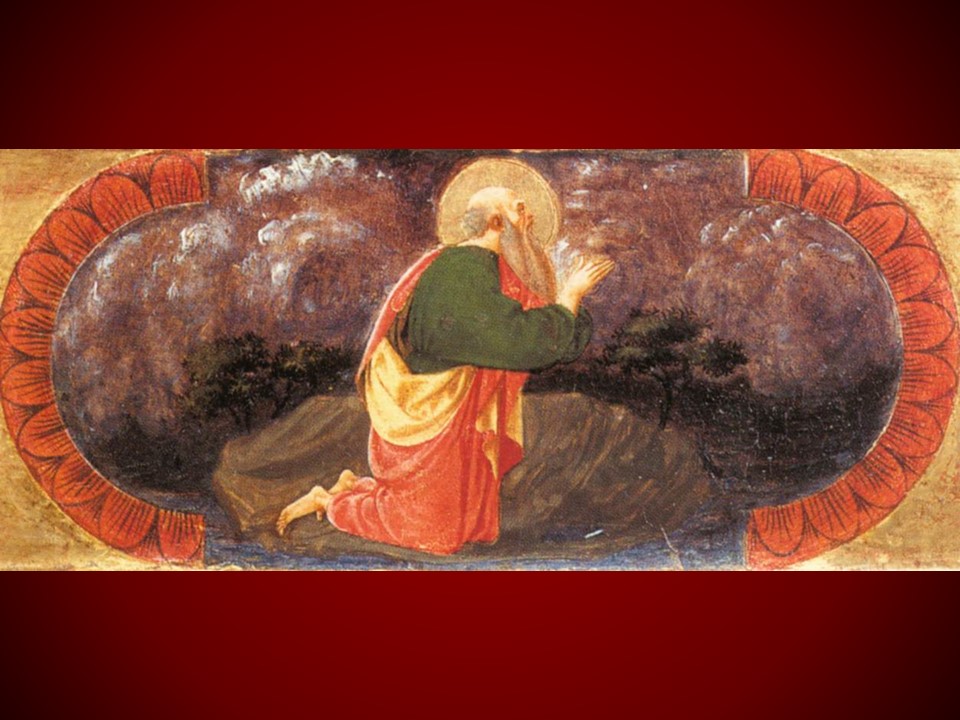 The Risen Christ
 ResponsiveReiding