• Home
  • About
  • Blog
  • Atonement
    • The Atonement: Read this first!
    • Confession of an ex-u0022Highperu0022 Calvinist
    • Revisiting the Substitutionary Atonement
    • Discussing the Atonement – a lot!
    • Lecture Notes on The Atonement
  • Sermons
  • ReviewsAll book and movie reviews
    • Books
    • Movies

ResponsiveReiding

  • Gavin Ortlund’s review of William Paul Young’s “Lies We Believe About God”

    June 1st, 2017

    I was planning to write a review of this book myself (and may still) but Gavin Ortlund’s review for the Gospel Coalition’s website is already here. Take advantage of it.

    GAVIN ORTLAND’S REVIEW

    In short, those of us who thought we saw the seeds of all kinds of heretical views in The Shack get our worst suspicions confirmed and witnessed in full bloom in Young’s “Lies.” Perhaps better titled “Lies I Believe and Tell about God.”

    For me, Young’s book boiled down to these main problems:

    1. An exercise in selective proof-texting. Taking one text as the whole on any view he holds without regard for the immediate context, nor that of the balance of the Bible.

    2. An exercise in mutilated word studies. Almost as bad (perhaps even worse) than concluding butterflies have something to do with butter and flies because of the name.

    3. An exercise in applied eisegesis. If you do not know, eisegesis is the opposite of exegesis. In exegesis, you do your best to dig out what is actually in the text. In eisegesis you pour into the text the meanings you want. Young does this over and over and over.

    4. An exercise in agenda driven theology. Young’s ideas about God inform his understanding of Biblical texts, instead of the text informing what he OUGHT to know about God. It is wholly upside down.

    5. It is an exercise in refusing to incorporate the greater storyline of the Bible. Like plucking 10 sentences at random out of a Shakespearian play, and then stringing them together to tell the story you want to tell.  The result is incoherence and utter confusion.

    Enough of my stuff – read Ortlund’s review for yourself.

  • My Annual Mother’s Day Poem for 2017

    May 14th, 2017

    Mother’s Day

    2017


    Mary, bending down to kiss

    The face of her sweet Son

    Pressed her lips upon the cheek

    Of God’s anointed One


    And every mother since that day

    Gives birth to those who may

    By faith in Christ’s redeeming blood

    Be sons of God one day


    As Mary raised her blessed child

    To serve the God of all

    May each dear Mother in her day

    Take up the same high call


    Young mothers now, or yet to be

    Think much of this your care

    To raise them in the fear of God

    His grace and good to share


    To make them know upon your breast

    How Christ loves, even more

    And waits to pour out love and grace

    From Heaven’s boundless store


    How born in sin and brokenness

    And helpless in our guilt

    Yet in the cross of Christ’s own death

    A cleansing flood was spilt


    To those with sons already grown

    And daughters adult too

    It’s not too late to pour in grace

    Your day is not yet through


    For every moment spent in prayer

    In pleading for their souls

    Will not be disregarded

    By The King who hears and knows


    Each tear you shed in soul’s distress

    To see them saved by grace

    Is noted yet in Christ’s own book

    And kept before His face


    Who knows the errant ones that yet

    Will come to saving faith?

    By means of answered mother’s prayers

    Will enter Heaven’s gate?


    And those who in God’s providence

    Will find no children here

    Do not in vain imagine

    That your God and Christ don’t hear


    What if those – miscarried, lost

    Or by abortion or neglect

    Become your sons and daughters

    When from death we stand erect?


    What if, in Heaven and Earth to come

    Those babes are yet to grow?

    And you bereft of children here

    Will have them there bestowed?


    The motherless and childless both

    In resurrection blessed

    And given to each other there

    As part of God’s great rest


    We rise and call you blessed all

    Who’ve nursed and taught and prayed

    We thank you for your sacrifice

    For all that you have paid


    For mothers now, and yet to be

    We give our thanks and praise

    Before the throne of Him who thought

    To give us mothers – by His grace


  • Revelation Part 3 – Sermon Notes

    May 14th, 2017

    Revelation Part 3

    Revelation 1:9-20


    The way I want to proceed this morning is quite simple:

    I hope to go back and make 3 Observations on the same text we looked at last time – then add a small number of uses for the information given.

    The 3 Observations are:

    1. Jesus’ Glorification and that of the Believer.
    2. Jesus as the Faithful and True Witness.
    3. Jesus Surveying His Church.

    Let’s look at them individually.

    1.0 Jesus’ Glorification and that of the Believer.

    We’ve already looked at the wonder – what we’ve called the soul-shattering vision of Jesus that John received in this portion. And I hope something of the sense of what one commentator called: “the overmastering awe” of seeing the glorified Christ – remains with us all.

    1.2 As we cited from A. W. Tozer last time: “The fear of God is … astonished reverence. I believe that the reverential fear of God mixed with love and fascination and astonishment and admiration and devotion is the most enjoyable state and the most satisfying emotion the human soul can know.”

    1.3 This vision of the glorified Jesus is also meant to give us some sense, some shadow of what we are to expect in our own resurrection and glorification.

    No, we won’t possess all of these mind-melting attributes of the glorified Jesus – but the Apostle Paul DOES note: 1 Corinthians 15:35–44 “But someone will ask, “How are the dead raised? With what kind of body do they come?” You foolish person! What you sow does not come to life unless it dies. And what you sow is not the body that is to be, but a bare kernel, perhaps of wheat or of some other grain. But God gives it a body as he has chosen, and to each kind of seed its own body. For not all flesh is the same, but there is one kind for humans, another for animals, another for birds, and another for fish. There are heavenly bodies and earthly bodies, but the glory of the heavenly is of one kind, and the glory of the earthly is of another. There is one glory of the sun, and another glory of the moon, and another glory of the stars; for star differs from star in glory. So is it with the resurrection of the dead. What is sown is perishable; what is raised is imperishable. It is sown in dishonor; it is raised in glory. It is sown in weakness; it is raised in power. It is sown a natural body; it is raised a spiritual body. If there is a natural body, there is also a spiritual body.”

    There is meant to be some sort of connection here for the Believer – that we will still be ourselves in the resurrection, nevertheless, we will also be magnificently, staggeringly different once Christ’s redemptive work has been fully wrought out. So staggering that a reasonable comparison is almost impossible to communicate.

    This is part of the underlying message of this entire book: Christian! Yes, now is now with all of its cares and worries and woes, but keep your eyes on the resurrection! Unimaginable glory is just ahead! Live consciously so as to possess it in all of its available fullness!

    Don’t get bogged down in TODAY. Live in light of what is to come.

    That said, there is much about TODAY, that still needs to be wrestled with – we’ll see this in the 7 churches, but wrestle with today’s issues in light of the coming fulfillment of Christ’s promises in the resurrection – and the New Heavens and the New Earth.

    Little is more destructive to the soul, and lends itself to sin and compromise on every plane than to live with only the present in view – failing to be striving after all that is to be ours in the resurrection.

    Sin thrives in its most virulent form in the hearts and minds of those who live only for the comforts of today, without regard for the coming judgment and glory of Christ’s return.

    We get a startling example of this in the Old Testament in the life of King Hezekiah.

    Hezekiah was one of the “good” kings of Judah – 700 years before Jesus. He was a godly man.

    We’re told in ch. 20 of 2 Kings that Hezekiah had become ill, and the prophet Isaiah was sent to tell him to get his house in order, because he was going to die.

    Hezekiah pleaded with God to spare his life. And Isaiah is sent back to tell him that God heard his prayers and would add 15 more years to his life.

    During those 15 years, Hezekiah was visited by some Babylonian dignitaries, who had come to see if Judah was worth conquering and plundering. Hezekiah, a bit puffed up with God’s goodness to him and the reprieve on his life decided to show off the kingdom and everything they had – not knowing this was the very recon they were after.

    Isaiah comes to the king and asks what the visitors wanted and what Hezekiah had shown them. He said “I showed them everything!” in his boasting: “I’m a blessed man!  God has miraculously delivered me several times before, and now supernaturally extended my life. I’m invincible!”

    Isaiah then tells him what a grave error that was. The text reads: 2 Kings 20:16–19 “Then Isaiah said to Hezekiah, “Hear the word of the LORD: Behold, the days are coming, when all that is in your house, and that which your fathers have stored up till this day, shall be carried to Babylon. Nothing shall be left, says the LORD. And some of your own sons, who will come from you, whom you will father, shall be taken away, and they shall be eunuchs in the palace of the king of Babylon.”

    The shocking response of Hezekiah to this gives us a window into what is often in our own hearts, even if we do not vocalize it: “Then Hezekiah said to Isaiah, “The word of the LORD that you have spoken is good.” For he thought, “Why not, if there will be peace and security in my days?”

    As long as it is well with me now. As long as I am safe, I am comfortable, I am prosperous, I get what I want now – so what about the future.

    It is this caving to the desires of, and regard for – the immediate – that will come back and play a role in the condition of the 7 churches we’ll examine in the weeks to come. It forms an important backdrop for the rest of the book.

    And it calls each one of us to think about our own situations today.

    How are we living?

    Are we living in light of the coming judgment of God and the eternity that comes after? Or are we allowing the pleasures, the desires or even the fears of today regulate what we choose to do or not to do.

    Are we living for eternity, or for now?

    So Jesus cautions in Matthew 6:19–21 “Do not lay up for yourselves treasures on earth, where moth and rust destroy and where thieves break in and steal, but lay up for yourselves treasures in heaven, where neither moth nor rust destroys and where thieves do not break in and steal. For where your treasure is, there your heart will be also.”

    One old writer I read tells the story of a godly young woman who was being relentlessly pursued by a wealthy man for sex. Once, when cornered she said “Alright, I’ll yield, on one condition.” “Name it!” her pursuer said. “Only hold your hand in the flame of this candle for 10 minutes.” “Preposterous!” he responded, “I could not endure it!” “You could not endure this small flame for a mere 10 minutes, when you would ask me to endure the flames of Hell for eternity for the sake of a few moments of physical pleasure? Preposterous indeed!”

    Go to the 11th chapter of Hebrews and read over and over and over the record of those who “lived by faith” – which the writer there equates with making present day decisions in the light of God’s Word regarding eternal realities. Living with revealed eternity in view is what the Bible means by living by faith. And as the scripture records, “whatever does not proceed from faith IS sin!” (Rom. 14:23c) Whatever discounts the reality revealed by God’s Word – is to live apart from faith. And it is by definition – sin.

    2.0 Jesus as the Faithful and True Witness.

    Not only is this the resurrected and glorified Christ – back in v. 5 He is denominated: Revelation 1:5a “Jesus Christ the faithful witness.”

    This tells us at least 2 very important things.

    2.1 He remained faithful, even though He became a martyr – a witness in the fullest sense.

    He lived out the purpose and plan of the Father, no matter what the opposition, or lure to do otherwise. Remember His temptations in the wilderness?

    There He was tempted to gain His inheritance by some other means than the cross: “Bow down to me” Satan said, and I’ll give you all the kingdoms of this world.

    And, He was tempted to act at the behest of Satan due to His immediate need after fasting 40 days: “Turn these stones into bread.”

    And again, to defend His estimation in the eyes of others by acting apart from God’s directions: “IF you be the Son of God – cast yourself down.”

    Variations of these will be seen in the 7 Churches as well as in every temptation you and I face.

    2.2 His witness was always faithful and true. He was always accurate, and always truthful. This has great import in the passages which follow. His assessment of each Church is accurate, and He is faithful to deliver it in His goodness. He will not pull punches with them. He will be forthright and truthful even where it hurts – but not in order TO hurt, but in order to bring healing and restoration.

    3.0 Jesus Surveying His Church.

    Which brings us to the 3rd observation we need to make from this passage today – as a sort of overview of what we’ll be examining in individual detail in regard to each of the 7 churches in the weeks ahead.

    Jesus tells John to send this revelation to the 7 churches He lists here: Revelation 1:11 “Write what you see in a book and send it to the seven churches, to Ephesus and to Smyrna and to Pergamum and to Thyatira and to Sardis and to Philadelphia and to Laodicea.”

    3.1 Note at the outset that all of the conditions of the various Churches are occurring simultaneously.

    Somewhere at all times, these various conditional prevail in some churches.

    To turn them into specific ages which characterize the whole church at the same time is to err.

    We must hear what the Spirit says to ALL the Churches.

    This, in the final analysis is where the Church’s ills always lay – and thus to call to each one: BACK TO THE WORD!

    Listen to the Word.

    Go back to what HAS has said, is saying, and will say. Forsake your Bibles and hope is all gone.

    3.2 Each Church had and HAS it’s unique temptations due to its context: culturally, geographically, historically, politically, economically, etc. We’ll see how these various features impacted the 7 churches and then how they may impact ours and others.

    Culture: China vs US vs Australia vs. France

    Geographically: Upstate NY – Mormonism, Jehovah’s Witnessism, Spiritualism, Intellectualism.

    Japan – Shintoism, Europe – Secularism,

    As we’ll see, to each Church there will be 4 elements:

    • A Declaration of insight
    • An Appeal to the revelation of Jesus in ch. 1
    • A Call to something
    • A Reminder to hear everything Jesus says, not just what He says to each particular church in its context.

    3.3 Ephesus: Orthodox and active, but loveless in some way. And near to being extinguished for all its solid foundation.

    3.4 Smyrna: Beat up, persecuted, hopeless in this life, but is sweetly encouraged.

    3.5 Pergamum: Urban, compromised by the culture, dependent upon structure.

    3.6 Thyatira: Socially active, but morally compromised by listening to un-Biblical authority.

    3.7 Sardis: Outwardly vibrant but inwardly dead to the Spirit of Christ.

    3.8 Philadelphia: Diminutive but alive and dependent and faithful.

    3.9 Laodicea: Impactless through the deception of prosperity and loss of intimacy with Christ.

    Well what do we do with all of this?

    4.0 Putting these 3 Observations to Use.

    4.1 Christ is in the midst of His Church, even in her weakest and most compromised state, just as He is when she is doing well and suffering persecution with patient endurance.

    4.2 Christ knows His churches intimately. Indeed, He knows us better than we know ourselves.

    4.3 The Church is not monolithic in its challenges, weaknesses, tendencies, victories or experiences. The Church – the true Church of Jesus Christ often looks very different when healthy or ill, pure or compromised, etc.

    4.4 Christ loves His Church even when she is sorely in need. As with Laodicea, He reaffirms His love even as He announces His discipline.

    4.5 His great and precious promises remain true for all who will hear and respond. He promises good things even in the face of our poorest showing.

    4.6 Christ still tends His own flock. He was in the midst of the candlesticks then, and so He is even today. This has not changed.

    4.7 Christ is the faithful and True Witness, who will be as brutally honest as He is immeasurably merciful and compassionate. And He will not fail to extinguish a flame if need be, while still unwilling to crush the bruised reed, or quench the smoking flax.

    He is faithful to give us all we need.

    Faithful to call us into account when needed.

    Faithful to attend His Church in all of her conditions – healthy or sick.

    Faithful to all of His promises.

    Faithful to judge sin.

    Faithful and JUST to forgive us our sins, when we confess and repent.

    And this is as true of the unbeliever today even as it is for the Believer – to whom this passage is primarily written.

    Jesus is just as faithful to call you into account for your sin and unbelief.

    He is just as faithful to forgive and cleanse and save you if you own your sin, confess it, and forsake it in running to Him as your Redeemer.

    And He will be faithful to execute final judgment upon all who reject Him and His Gospel.

    He never fails to discharge any of His offices in even the slightest degree.

    Won’t you come to Him today and be saved from the penalty and the power of your sin?


  • Revelation Part 2 – A Soul-shattering Vision of Jesus

    April 30th, 2017

    Revelation 1:9-20

    Daniel 7:9-14

    AUDIO FOR THIS SERMON CAN BE FOUND HERE

    Last time, in vv 1-8, John gave us a sort of prologue to the entire book. He set the stage for us.

    Now, in vv 9-20, John goes on to give his first readers and us, a personal introduction to the book. How it came about. His understanding of what he is doing in writing it and sending it to this particular audience etc., And it is powerful.

    It breaks down into 3 parts.

    I. (9-10) A Patiently Enduring, Tribulating Kingdom.

    II. (10-11 & 19) An Urgent Commission.

    III. (12-20) A Soul-shattering Vision of Jesus.


    I. (9-10) A Patiently Enduring, Tribulating Kingdom. “I, John, your brother and partner in the tribulation and the kingdom and the patient endurance that are in Jesus, was on the island called Patmos on account of the word of God and the testimony of Jesus. 10 “I was in the Spirit on the Lord’s day, and I heard behind me a loud voice like a trumpet”

    As John is about to send to each of these Churches Jesus’ concerns, rebukes, admonitions and encouragements – he wants his readers to know he is with them – he’s not a disinterested outsider.

    He is a brother to these believers – whatever their spiritual state, and he is their partner – he shares in three things with them:

    He shares in their tribulations. His and their sufferings are connected.

    He shares in the kingdom – as a fellow heir and one who also reigns with Christ.

    And he shares in the great need of the church in every age: Patient endurance.

    Tribulation for the Church & Christians is not foreign, but common.

    In John’s case here, he is experiencing tribulation in his exile to the island of Patmos “on account of the word of God” – because of preaching God’s Word.

    We, like John, are part of the coming Kingdom of Christ NOW;

    And so we, like John are waiting for the consummation of the Kingdom, which requires the same patient endurance.

    While Christians rule and reign with Christ in some measure even now (v 6), it is only in as much as we do so by patient endurance IN our tribulations. Christianity is not escapism.

    This is the counter-intuitive framework that John is writing from: “Reigning” in this life, is our continuing IN patient endurance THROUGH our tribulations.

    This is NOT the kind of “reigning” the Jews were anticipating with the coming of the Messiah, and it is not the kind many who would call themselves Christians today are willing to embrace either.

    Some will follow Jesus if it means they’ll get what they want.

    If their desires are met.

    If their happiness – as they perceive it – is fulfilled.

    If their dreams and goals and ambitions are realized.

    They have no idea that reigning with Christ means patiently enduring their tribulations as a cosmic testimony to being joined with the Suffering Servant of Isa. 53 – until He comes to put an end to all sin and its effects.

    Tribulation here does not refer to just religious persecution, but all the trials and woes which attend us while we are still in this fallen world, living among fallen people, in fallen bodies, and in a natural order which groans under the stress of the Fall as well.

    We all “tribulate”  – We endure hardness and disappointment and sadness, loss, physical pain and suffering, torn families, accidents, disease, etc., etc., ad infinitum ad nauseum.

    What a contrast John’s announcement is to the prosperity Gospel of our day, which promises those who follow Christ financial riches, physical health, familial bliss and situational pleasure. It is a false Gospel of the most seductive and destructive kind.

    Acts 14 reminds us that when Paul and Barnabas were on their missionary trip through Lystra, Iconium and Derbe, they were: 22 “strengthening the souls of the disciples, encouraging them to continue in the faith, and saying that through many tribulations we must enter the kingdom of God.”

    The question before us today will be: How do we enter into this reigning with Christ now in patiently enduring our tribulations?

    We’re about to find out in this preface to the 7 letters John will write in chapters 2-3.


    II. (10-11) An Urgent Commission. “I was in the Spirit on the Lord’s day, and I heard behind me a loud voice like a trumpet saying, “Write what you see in a book and send it to the seven churches, to Ephesus and to Smyrna and to Pergamum and to Thyatira and to Sardis and to Philadelphia and to Laodicea.”

    Revelation 1:19 “Write therefore the things that you have seen, those that are and those that are to take place after this.”

    Little needs to be said as this is a simple recounting of how John’s vision began.

    He was “in the Spirit” – whether that means in prayer or in some ecstatic state we aren’t sure and John doesn’t elaborate.

    And it was on “The Lord’s Day” – an early church reference to Sunday – since Sunday morning is when Christ rose from the dead. Early on, Believers, especially Gentiles Believers gathered on Sunday because of the connection with Jesus’ resurrection.


    III. (9-20) A Soul-shattering Vision of Jesus.

    Then, we come to the vision proper.

    The language here is largely picked up from Daniel’s vision in Chapter 7 of his book, as we just had read for us.

    We won’t go back to look at that now, you can do that on your own.

    The connection we need to make is that much of the language used to describe “The Ancient of Days” in Daniel. i.e. God – is now transferred without qualification to Jesus.

    It is to make the reader comprehend that Jesus is not some tame, milder lesser-god of the fearful God of the Old Testament – but that they are in fact co-extensive. Jesus IS God. The same God.

    So John says: 12 “Then I turned to see the voice that was speaking to me, and on turning I saw seven golden lampstands, and in the midst of the lampstands one like a son of man, clothed with a long robe and with a golden sash around his chest.”

    The various features John notes here are not incidental. They are massively informative – and that for a specific end.

    1. Long robes with sashes like this are indicative of 3 ideas:

    – Royalty wore long robes with sashes that showed their high standing.

    – Authority: In the Roman army, the longer the robe, the higher the rank.

    – The robe and sash combination is particularly reminiscent of the High Priest’s clothing in ancient Israel.

    In this last regard, we remember that it was the Priest’s responsibility in the Temple to tend the 7-branched lampstand, to be sure its light never went out. Here, it’s likely that Jesus is being pictured in that very role to His Church even now. He is seen in the midst of the lampstands.

    1. 14 “The hairs of his head were white, like white wool, like snow.”

    As in Daniel 7 – This is the Ancient of Days – This Jesus ALWAYS WAS. The Son of God is eternal, and existed before His incarnation.

    1. “His eyes were like a flame of fire,”

    He needs no outside source to see and perceive and know – He knows all from His own light. It is flaming, piercing and powerful.

    1. 15 “his feet were like burnished bronze, refined in a furnace,”

    A picture of moral purity. Historical sources tell us this substance – burnished bronze –  was of the most exceptional quality, and considered more valuable than gold.

    1. “and his voice was like the roar of many waters.”

    Massive – and all pervading. Inescapable.

    1. 16 “In his right hand he held seven stars,”

    We’ll see that in v 20 below

    1. “from his mouth came a sharp two-edged sword,”

    Judgment is rendered at His word. And it cuts both ways. Unsparing and sure. We’ll encounter this image again in Revelation 19:15 where its depiction as judgment is clearly defined for us: “From his mouth comes a sharp sword with which to strike down the nations, and he will rule them with a rod of iron. He will tread the winepress of the fury of the wrath of God the Almighty.”

    And one cannot help but think of Jesus’ words in John 12:48 “The one who rejects me and does not receive my words has a judge; the word that I have spoken will judge him on the last day.”

    1. “and his face was like the sun shining in full strength.”

    So glorious – so overwhelming, He cannot be directly looked upon. It would bring the one familiar with the OT back to Isaiah 6:1–3 “In the year that King Uzziah died I saw the Lord sitting upon a throne, high and lifted up; and the train of his robe filled the temple. Above him stood the seraphim. Each had six wings: with two he covered his face, and with two he covered his feet, and with two he flew. And one called to another and said: “Holy, holy, holy is the LORD of hosts; the whole earth is full of his glory!”

    19 “Write therefore the things that you have seen, those that are and those that are to take place after this.”

    “Therefore” – i.e. Based upon what you have just seen of the resurrected Jesus – WRITE!

    Because I am both the King and the High Priest of my people…

    Because I am the Ancient of Days…

    Because I am the One who sees all by my own light so nothing can be hidden…

    Because I am the thrice holy one in all moral purity…

    Because it is MY voice which is informing and filling all of creation…

    Because the whole of the Church is supernaturally superintended in MY hand…

    Because I am the One who will personally utter judgment on everyone in creation in due time…

    Because I am so glorious I cannot be fully beheld or comprehended – WRITE WHAT I SAY, TO WHOM I SAY IT! And omit NOTHING!

    And I’ll give you two more reasons to write:

    1. 20 “As for the mystery of the seven stars that you saw in my right hand, and the seven golden lampstands, the seven stars are the angels of the seven churches,”

    This is a controversial passage, but angels here most likely does not refer to the pastors of those churches, since there is nowhere else in the Bible that designation is ever given to pastors – whereas angels AS angels are prevalent throughout the rest of this book.

    This is more than likely a reference to how God uses angelic beings to attend His churches in the world.

    We’ll come back to this in more detail next time.

    1. “and the seven lampstands are the seven churches.”

    We do not have time to dig into this imagery deeper this morning, but it comes from Zechariah where in a series of visions there regarding God’s ultimate restoration of the Temple – Joshua as High Priest and Zerubbabel as the installed “king” by the Babylonians stand as two olive trees, supplying oil to the 7 branched lamp of Israel – and in THIS vision – both Priest and King are wrapped up in Christ who supplies the Spirit to the Churches Himself.

    What is the point of all this? So – John – Send them a vision of me that is so shattering, that it shakes them out of lethargy and compromise, and that the fear generated by the vision can only be alleviated by Me personally extending my grace to them – purchased at the cost of my own blood.

    John’s great, paralyzing fear at this moment isn’t because he doesn’t know Christ – it is because he DOES!

    He is seeing Jesus as He really is – in unveiled wonder.

    And it is not a sight easy to bear for fallen human beings – or as we have seen – even for the most exalted holy angels.

    So let me ask you – Believer or un-Believer today:

    Have you heard all this “Jesus stuff” before?

    Has He grown old-hat?

    Is there nothing surprising in Him anymore – nothing that can still astound you or capture your imagination?

    Have you grown so familiar with all this, that it almost makes you yawn, because you know it all?

    Then you too – Like John & the churches need a fresh revelation of Jesus Christ.

    One that takes a John, the “disciple Jesus loved” as he is styled in John 13 – and brings him to his knees in such overwhelming glory that even he – who leaned on Jesus’ chest, cannot stand, but trembles in fear.

    Lenski: “This was not fear in the sense of fright or terror but fear in the sense of overmastering awe.”

    We need to ask ourselves today – is there anything of such an overmastering awe of Jesus in any of us today?

    Have you anything of THAT sense of Jesus? Or is He now just a distant religious figure – even tho you would claim to be redeemed by Him?

    People love the Baby Jesus – soft, cuddly and cooing at Mary’s breast. No challenge, no intimidation or fear there.

    People love the gentle carpenter, blessing children on His knees and turning water into wine.

    People love the crucified Christ – hung on a cross – where He will not invade their lives but merely be gazed upon.

    But this sight of Jesus – this is disturbing, soul-shattering. He must be reckoned with in power and glory and judgment.

    This vision can’t be romanticized and doesn’t give rise to songs that sound more like we’re singing to a boyfriend or girlfriend.

    This is the vision of Jesus that stops us in our tracks and makes us really think twice about continuing in the sins He suffered and died to free us from – and will return to judge without mercy.

    If He no longer – or never has AWED you beloved – It is because you do not KNOW Him.

    This is key to what had happened to the 7 Churches John is writing to – and it so easily happens to you and me today.

    It is the reason we compromise with sin and the world so easily.

    When contemplation of the glory of Christ has either faded, or virtually disappeared from our present experience at all, compromise on every front is the inevitable result.

    Don’t worry about it – because the Baby/Carpenter/Crucified one just loves us and nothing else matters.

    The distressing truth is, there is a right and proper fear of God that can elude even the most sincere saint.

    As we’ll see, each of the 7 Churches written to needs to recover some aspect of awe at the glory of the risen Christ to meet their particular spiritual need.

    And so do you and I.

    To many of us, Jesus is the Lamb of God alright, but He is no longer the Lion of Judah.

    We imagine that if we were to see the risen Christ today, we wouldn’t collapse in fear like John did.

    But as I said before, John didn’t fall in fear because he didn’t know Jesus, or because he doubted his salvation or had no faith in the atoning work of Christ – he fell because Jesus is FEARSOME! Terrifying! So glorious and so powerful and so holy and so transcendent that no other response is appropriate.

    To put it in the most plain terms I can: The primary reason we find it so easy to sin, is that we have no proper fear of God.

    So David prays in Psalm 86:11 “Teach me your way, O LORD, that I may walk in your truth; unite my heart to fear your name.”

    And Paul picks up on that very same theme in 2 Corinthians 7:1b “let us cleanse ourselves from every defilement of body and spirit, bringing holiness to completion in the fear of God.”

    Did you catch that? Essential to cleansing ourselves AS CHRISTIANS from every defilement and bringing holiness to completion or maturity – is that it is done in the fear of God!

    For the Christian – this is not the fear of an enemy who seeks to harm them – but the overwhelming awe of a Jesus who too is “the Ancient of Days” with the God of the OT.

    Whose eyes as flames of fire search out and know every hidden thing.

    Whose feet are ablaze as the burnished bronze of moral purity tolerates NO moral compromise.

    Out of whose mouth comes perfect judgment cutting both ways: Judging our direct disobedience and our neglect of holiness.

    But for you today if you do not know Him savingly – this is the God who WILL judge you on your own merits – and you will not stand in that day.

    Given this astonishing vision of Christ Jesus then, on what possible basis then can John or WE or anyone else have any comfort at this point?

    Blessedly, the text shows us Jesus giving us that relief in vs. 17:

    17 “When I saw him, I fell at his feet as though dead. But he laid his right hand on me, saying,

    “Fear not”. Fear not? Why not? After all of this – fear is the only thing left!

    Fear not because:

    1 – “I am the first and the last,” Why would this phrase be of comfort to John in this moment? For John – it would be because his mind would run back to the 3 times in the OT that phrase appears.

    Isa. 41; 44; and 48. And in each instance, it is God announcing the twin realities of His absolute judgment on sinners – but also the unfailing nature of His promise of redemption, preservation and restoration for His people.

    The 1st one is especially poignant. God announces His intention to judge all of the nations – then says to His People: Isaiah 41:1–10 “Listen to me in silence, O coastlands; let the peoples renew their strength; let them approach, then let them speak; let us together draw near for judgment. 2 Who stirred up one from the east whom victory meets at every step? He gives up nations before him, so that he tramples kings underfoot; he makes them like dust with his sword, like driven stubble with his bow. 3 He pursues them and passes on safely, by paths his feet have not trod. 4 Who has performed and done this, calling the generations from the beginning? I, the Lord, the first, and with the last; I am he. 5 The coastlands have seen and are afraid; the ends of the earth tremble; they have drawn near and come. 6 Everyone helps his neighbor and says to his brother, “Be strong!” 7 The craftsman strengthens the goldsmith, and he who smooths with the hammer him who strikes the anvil, saying of the soldering, “It is good”; and they strengthen it with nails so that it cannot be moved. 8 But you, Israel, my servant, Jacob, whom I have chosen, the offspring of Abraham, my friend; 9 you whom I took from the ends of the earth, and called from its farthest corners, saying to you, “You are my servant, I have chosen you and not cast you off”; 10 fear not, for I am with you; be not dismayed, for I am your God; I will strengthen you, I will help you, I will uphold you with my righteous right hand.”

    In all of the terrible judgments John is about to reveal, and how the Church will see it and be terrified by it, perhaps in some measure go through it  – nevertheless, He will still keep His people.

    2 – “the living one. I died, and behold I am alive forevermore” – I am God, who came to earth and fulfilled all the righteousness of God; who died a substitutionary death in your place at Calvary – taking all of God’s righteous wrath against sin; and who rose from the dead to justify all those who put their faith in me alone.

    3 – “and I have the keys of Death and Hades.” It is an allusion back to Jesus’ words in Matthew 10:28 “And do not fear those who kill the body but cannot kill the soul. Rather fear him who can destroy both soul and body in hell.”

    – And I am the One – the ONLY one, who has the authority destroy both body and soul in Hell, or, to free all those who put their trust in me from the sentence of eternal death.

    A. W. Tozer: “The fear of God is … astonished reverence. I believe that the reverential fear of God mixed with love and fascination and astonishment and admiration and devotion is the most enjoyable state and the most satisfying emotion the human soul can know.”

    As John fell upon his face as a dead man at the sight of the resurrected Jesus in His soul-shattering glory – Jesus extends His hand and says “Fear not: I am the first and the last, and the living one. I died, and behold I am alive forevermore, and I have the keys of Death and Hades.”

    Jesus alone, is the only hope we have.

  • As I was reading Today – From John Newton

    April 25th, 2017

  • Revelation Part 1 – Sermon Notes

    April 23rd, 2017

    Book of Revelation

    Part I

    Introduction

    1:1-8


    AUDIO FOR THIS SERMON CAN BE FOUND HERE

    His name was Domitian. And he was as much of a moral reprobate and degenerate as one could imagine.

    – History tells us he was a serial philanderer; even seducing the wives of high ranking Roman officials.

    – When his own brother had become gravely ill, he ordered everyone to leave him for dead before he actually died.

    – When the chief vestal virgin in Rome was found to have been less than chaste, he had her buried alive and her lovers beaten to death.

    – He once had someone put to death just for making a joke about him.

    – He seduced his married niece, and caused her death in forcing her into an abortion.

    – He was physically unattractive. He apparently had a festering wart on his forehead which he was known to scratch at until it bled.

    – He was touchy about being bald, had what we would call a beer gut and spindly legs.

    – He insisted on being addressed as “Lord and God”.

    – And he was Emperor of the Roman Empire. The man in power over the 7 cities – the churches and the citizens – mentioned in vs. 4. Those Christians to whom the book is written.

    – He had a dislike of and willingness to, persecute Christians.

    What were Christians to do with such a leader in “The White House” of that day?

    – When John writes this book, it is 60 years or more since the death of Jesus.

    – John is the last living Apostle, and he is in exile, and a very old man.

    – Jesus hasn’t returned, though many – if not most – had expected Him to in their lifetimes.

    – Was the Church through?

    – As we’ll see in the weeks to come, even these Churches who are addressed directly by Jesus are for the most part in poor spiritual health.

    – Was there a future for Believers?

    – Had Christianity run its course?

    – What were they to think and do in light of these facts?

    This is why the Book of Revelation was written.

    It was written to Christians who were somewhat disillusioned, troubled, suffering, facing great uncertainty and wondering just where they fit into the scheme of things.

    It was written for you and me.

    The opening 8 verses we have before us today are meant to prepare John’s readers and all the following generations to see things not only as they are horizontally, but from God’s perspective.

    The book is meant to remind us that God is still on the Throne. The program has not changed. Jesus is still coming. And for Christians in every generation and under all circumstances to live with eyes wide open to what is really going on in the greater scheme of things.

    We’ll look at this opening portion in 4 bits.

    1-3 / Setting the Table

    4-5a / Grace and Peace in a Troubled Time

    5b-6 / A Cause for Worship

    7-8 / The Coming One

    But a few words more of preparation might be useful here.

    F.F. Bruce tells the story of a Christian at a university passing out free copies of a modern English New Testament to students. They were free on condition the recipient agreed to read it.

    As it happened, he later ran into one of those he had given a New Testament to, and stopped to ask if he had read it, and if so, how it went?

    The student replied, “Yes, I did, read it.” When the Evangelist asked him what he thought – he said “Well, it was all right. A bit repetitious at the front end where they sort of tell the same story four times, but I sure liked that bit of science fiction at the end.”[1]

    Lots of people come to the Book of Revelation with a similar thought in mind. It’s a bit more like science fiction than anything else in the Bible – except for a few parts in Ezekiel, and Daniel and a few others.

    It doesn’t take long to realize you’re reading something very different than the historical narratives, or the teaching parables of Jesus or the apostolic letters we’ve been going through.

    And while the form – know as “apocalyptic” literature may be quite foreign to us – to John’s 1st century readers, it was not all that odd at all. And a big part of getting at this book is reminding ourselves to try and see it the way those early readers would have read it.

    Above all, we need to keep 2 things in mind:

    1 – That it is the only book in the whole of the Bible that has a special blessing attached to it as an incentive: Revelation 1:3 “Blessed is the one who reads aloud the words of this prophecy, and blessed are those who hear, and who keep what is written in it, for the time is near.”

    2 – As D. A. Carson notes: It is not meant to be a puzzle book, to be decoded so that we can understand times and dates for the return of Christ – but it is rather a picture book, using imagery to communicate very practical, powerful and important ideas.

    Yes, it is full of symbols. This is the nature of Jewish apocalyptic literature. Some of them are consistent with and explained in other parts of Scripture, and so are fairly easy to figure out:

    There are Standard symbols – Horns = Kings or Kingdoms

    And a bird’s eye view of things is common. Often the scene changes so that we see things from overhead – from Heaven’s point of view rather than horizontally.

    Anyone who has spent any time at all with the book knows that there are a few different fundamental ways of looking at the book.

    Perhaps most common in American Evangelicalism today is what is called the “Furturistic” view.

    That Revelation is mostly describing events future to both John’s Day AND ours. Dispensational Premillennialism takes this view. From 4:1 – on everything is still future. However, this seems to ignore how the 1st readers would have understood some of the symbolism.

    A second view and virtually on the opposite end of the spectrum is the “Preterist” view; where virtually all of what Revelation depicts is already past. It was even when John wrote it. In this view, the events are considered mainly about the fall of Jerusalem in 70 A.D. & persecution of Nero.

    Third most common is the “Historicist” view. The idea that the book paints all of Church history from 1st century until the end. Our job is  find out where we are on that continuum. This was a trend during the Reformation.

    Lastly is what we might call the “Principial” view. Revelation is just painting a Christian philosophy of history – of the struggle between good and evil.

    In reality, I think there is reason for seeing all of these as having something of truth in them. We’ll see that more clearly as we progress. A problem arises however when we try to force everything in the book into one of these views exclusively.

    I take my cue from a repeated concept in the text itself that seems to require me as a reader to re-adjust my view at various times in the book.

    Revelation 1:1–2 “The revelation of Jesus Christ, which God gave him to show to his servants the things that must soon take place. He made it known by sending his angel to his servant John, who bore witness to the word of God and to the testimony of Jesus Christ, even to all that he saw.”

    We can note a couple of things here.

    1. It is a REVELATION, not something hidden and unknowable. Not mysterious.
    2. It was a revelation given to Jesus by God the Father – to show Jesus’ servants things that should soon take place. And then Jesus sent an angel to reveal it to John. So it is throughout we’ll encounter angels showing and explaining things to John.
    3. John wrote it down as the “testimony” of Jesus Christ. As Jesus’ sworn word.

     I. 1-2 / Setting the Table

    “The revelation of Jesus Christ.”

    Question? Is it a revelation ABOUT Jesus Christ? Or the revelation that BELONGS to Jesus Christ?

    There’s lots of debate over that point, but I will settle the argument by saying categorically – yes. It is both.

    God the Father directed that Jesus give this revelation concerning how Jesus’ person and work are central to all God’s eternal plans and purposes – in a special manner to the Church.

    “The things that must soon take place.”

    The original readers were to understand that at least a good portion of this book applied to them in their time and in their place.

    The term doesn’t refer to things that will quickly happen or begin to happen soon, as much as to things which are already underway and moving toward fullness are in motion.

    As we’ll see in the next 2 chapters, there are 7 letters written to 7 churches that were in existence then – and The risen Christ not only has something to say to each of them in their individual contexts, but He also says at the end of each letter: “Let he who has an ear hear what the Spirit says to the CHURCHES.” In others words, each is to listen to all of God’s counsel for everyone – and that would mean for you and me as well.

    Having been given this revelation by the Father to give to the Churches, Jesus then sent an angel to unpack it all for John.

    John then was directed to make it known to the Church by means of letters to the 7 Churches in Asia – 7 copies of the whole to be sent out.

    And with it comes this “blessing” to all who read it and “keep” it – treasure it up and guard it all.

    II. 4-5a / Grace and Peace in a Troubled Time

    Rev. 1:4–5a “John to the seven churches that are in Asia: Grace to you and peace from him who is and who was and who is to come, and from the seven spirits who are before his throne, and from Jesus Christ the faithful witness, the firstborn of the dead, and the ruler of kings on earth.”

    John – to you Believers. I want you to know that in these dark, confusing, difficult times; God wants you to be at peace, as you stand in the knowledge that you are the recipients of God’s overflowing, infinite, unspeakable and glorious FAVOR in Christ Jesus!

    See the “who is and who was and who is to come”?

    We see this again in 1:8 “I am the Alpha and the Omega,” says the Lord God, “who is and who was and who is to come, the Almighty.”

    And then again in 1:17–19 “When I saw him, I fell at his feet as though dead. But he laid his right hand on me, saying, “Fear not, I am the first and the last, and the living one. I died, and behold I am alive forevermore, and I have the keys of Death and Hades. Write therefore the things that you have seen, those that are and those that are to take place after this.”

    In other words, there will be things in the book that refer to what is happening right now in the world of the 1st readers, things that have already taken place AND things yet to come.

    No one view will take it all in – since God is the God who WAS and IS and IS TO COME.

    We get this idea repeated in 2:8; 17:8; 22:13 – even in regard to the devil. God knows all Satan has done, is doing and will do.

    So something of how everything will end up in human history, is tied to what is happening at the present and those are both tied to what has come before.

    We would expect the Book to give us a view that encompasses all 3 – and we are too narrow if we try and nail it all down and cram it into one perspective only.

    Don Carson advises similarly: I think there are all kinds of hints in the book of Revelation that show that although the thing must be interpreted in the first instance against what is going on in the first century, those things themselves become a kind of prefigurement, a kind of announcement, a kind of foretaste of stuff still to come.[2]

    [T]he book of Revelation in that regard prepares first-generation Christians for first-generation assaults, but in categories and terms that prepares later-generation Christians for other assaults and ultimately for the final assault. In that sense, I think that there are elements of a futurist view here, too.[3]

    “And from the seven spirits who are before His throne.”

    This way of referring to the Holy Spirit is most likely drawn from Isa. 11 where we read of the Messiah – Jesus will act under the fullness of the influence of God’s Spirit in all of His glory.

    “and from Jesus Christ the faithful witness, firstborn of the dead, and the ruler of kings on earth.”

    The Triune God – Father, Son and Holy Spirit – in a holy conspiracy to bless you with the knowledge of His favor – summed up in this Jesus:

    • The Faithful witness: Who remained faithful even in death.
    • Firstborn of the dead: Who is the first to rise to a glorified new existence.
    • Ruler of Kings on earth: Who is actively reigning over all governments on earth.

    III. 5b-6 / A Cause for Worship

    Knowing the full favor of the Triune God resting on Believers…

    Knowing the faithfulness of Christ in completing what was necessary for our justification – even unto His horrible and violent death…

    Knowing Jesus’ resurrection from the dead – conquering death on the 3rd day…

    Knowing it is THIS Jesus who is ultimately ruling over every authority structure, government and ruler on earth…

    And knowing it is this same Jesus who “loves us and has freed us from our sins by his blood and made us a kingdom, priests to his God and Father,”

    “To him be glory and dominion forever and ever. Amen.”

    John cannot contain himself when he puts this altogether – even though he is an old man, in exile, facing death, and writing to a church that is for all intents and purposes is in a very pitiful spiritual state facing a grave and uncertain future.

    Glory!

    IV. 7-8 / The Coming One

    Revelation 1:7 “Behold, he is coming with the clouds, and every eye will see him, even those who pierced him, and all tribes of the earth will wail on account of him. Even so. Amen.”

    Given the 6 verses above, John lets out with a powerful exhortation. One we do well to take up in our own day and time:

    No Church – don’t give up.

    Don’t cave in.

    Don’t lose heart.

    Don’t imagine the world and the flesh and the devil will win at last – NO MATTER HOW IT LOOKS!

    He is STILL COMING.

    Every eye will see Him – it will not be some secret spiritual thing.

    Even the very ones who pierced Him – of whom almost certainly all were dead in John’s day.

    And He will at last deal with ALL of humanity.

    DO NOT LOOK AT TODAY WITHOUT REMEMBERING WHAT CHRIST HAS DONE, AND WHAT HE HAS PROMISED FOR THE FUTURE.

    Church – Believer – take heart.

    He remains the Alpha & Omega – The Beginning of all of God’s plans and purposes in all eternity – and the END for which He has and is doing and WILL do all things.

    Nothing can thwart His plans.

    Nothing can negate His promises.

    No power in Heaven or on earth can alter what He has set into motion.

    He will accomplish all He has set out to do.

    Kingdoms and governments and world leaders will rise and fall.

    Trends will come and go.

    The Church and individual Believers will have times of strength and vitality and seasons of failure, persecution, trouble and weakness.

    But He is the Alpha and the Omega. All that ever was, is and will be is comprehended in Him.

    And it is this Jesus Christ who will return for His own – and finish the course of human history according to His eternal plan.

    The Lord God, who is and who was and who is to come – is the Almighty. IT WILL BE DONE!

    Hallelujah!

    This is the joy, confidence and security the book of Revelation is meant to give to Christians in every age, and under the most uncertain and oppressive circumstances.

    And it serves to keep us from putting any false hope in human institutions and governments.

    But if you are not a believer today – and you have never run to Christ for the forgiveness of sins, reconciliation to God the Father through the atoning blood of Christ and submission to His Lordship in repentance for your self-government – this book is meant to do 2 things.

    First – to shake your confidence in politics, governments or human goodness as an answer to the world’s needs. In time, every single human institution will fall prey to the deceitfulness of fallen human hearts governed by sin – and will always end in oppression and slavery of heart, soul and mind if not body.

    Secondly, to lead you to call upon the Christ for mercy now – before He comes to judge the world and this entire world system – and it is too late to be brought into the Kingdom of God and of His Son Jesus Christ.

    It is a call to you – to turn from your sin of self-reliance and self-government and the false hope in the goodness of humanity – to the one and only hope” Jesus Christ, the Son of the living God.


    [1] D. A. Carson, “Revelation—Part 1,” in D. A. Carson Sermon Library (Bellingham, WA: Faithlife, 2016).

    [2] D. A. Carson, “Revelation—Part 1,” in D. A. Carson Sermon Library (Bellingham, WA: Faithlife, 2016).

    [3] D. A. Carson, “Revelation—Part 1,” in D. A. Carson Sermon Library (Bellingham, WA: Faithlife, 2016).

  • An Important Interview with Benny Hinn’s Nephew

    April 19th, 2017

    http://www.piratechristian.com/messedupchurch/2017/3/interview-with-costi-hinn-leaving-uncle-benny-to-follow-jesus

    This interview is with Costi Hinn. If that last name sounds familiar, it is because Costi is the nephew of Benny Hinn – the faith-healer / prosperity preacher.

    Costi’s journey out of the hyper-charismatic movement is interesting to say the least, and important for many.

    This is NOT a hit-piece on Benny Hinn. He is very cautious there. This is about coming to grips with Biblical doctrine and how it changes your perspective and life.

    Give a listen.

  • Sermon notes for today’s Easter Sermon

    April 16th, 2017

    Three Crosses

    Three Resurrections

     AUDIO FOR THIS SERMON CAN BE FOUND HERE

    Matthew 27:37–44 (ESV)  And over his head they put the charge against him, which read, “This is Jesus, the King of the Jews.” Then two robbers were crucified with him, one on the right and one on the left. And those who passed by derided him, wagging their heads and saying, “You who would destroy the temple and rebuild it in three days, save yourself! If you are the Son of God, come down from the cross.” So also the chief priests, with the scribes and elders, mocked him, saying, “He saved others; he cannot save himself. He is the King of Israel; let him come down now from the cross, and we will believe in him. He trusts in God; let God deliver him now, if he desires him. For he said, ‘I am the Son of God.’ ” And the robbers who were crucified with him also reviled him in the same way.

    Luke 23:32–43 (ESV) Two others, who were criminals, were led away to be put to death with him. And when they came to the place that is called The Skull, there they crucified him, and the criminals, one on his right and one on his left. And Jesus said, “Father, forgive them, for they know not what they do.” And they cast lots to divide his garments. And the people stood by, watching, but the rulers scoffed at him, saying, “He saved others; let him save himself, if he is the Christ of God, his Chosen One!” The soldiers also mocked him, coming up and offering him sour wine and saying, “If you are the King of the Jews, save yourself!” There was also an inscription over him, “This is the King of the Jews.” One of the criminals who were hanged railed at him, saying, “Are you not the Christ? Save yourself and us!” But the other rebuked him, saying, “Do you not fear God, since you are under the same sentence of condemnation? And we indeed justly, for we are receiving the due reward of our deeds; but this man has done nothing wrong.” And he said, “Jesus, remember me when you come into your kingdom.” And he said to him, “Truly, I say to you, today you will be with me in paradise.”

    The Gospel accounts of Matt. 27 & Luke 23 are clear that Jesus was not the only one crucified by the Romans that day.

    2 others were also put to death. Both of them were thieves – common robbers.

    3 Men.

    All condemned to die.

    3 Crosses

    3 very different deaths.

    And in the end, 3 very different resurrections.

    Except in rare cases, crucifixion was reserved for those who were not Romans citizens, and most typically for slaves and thieves.

    Thus here is Jesus, between these 2.

    All disowned, abused, mocked and treated with the utmost contempt.

    But something happens which we might not have expected.

    It is the exchange between these 3.

    An odd exchange since we have no hint they knew each other at all before the tragic events that were their mutual deaths.

    But God’s providence rules the events of our lives – those who belong to Christ, and those who do not.

    And certainly the steps of the Son of God – seeing that He came to be God’s lamb of atonement for human sin – had been leading up to the Cross since the day He was miraculously conceived.

    Matt. 27:44 notes that both of the thieves began to hurl insults at Jesus, even as the crowd around them did.

    Maybe they thought joining in would buy them some relief by those who seemed so incensed at Jesus.

    These were just common thieves. No one was there to make a big deal out of their crucifixions.

    No one posted a charge above their heads like the one above Jesus’ head: “This is Jesus, the King of the Jews.”

    His humiliation was far greater than theirs.

    Priests and Pharisees and Scribes and Sadducees had gathered around to mock and shame this Jesus.

    It is often the case with those who are in dire straits, they lash out at others. And in this case, these 2 join in the jeering and mocking of the very Son of God.

    Then at some point, the jeering escalates.

    We aren’t told why, but one of the thieves takes up the same theme as the Rulers and the Soldiers: If you are the Christ – save yourself! And more – save us too!

    And then, again, unexplained, one of the 2 thieves suddenly reverses course and rebukes the one who is excoriating Jesus the worst.

    Three crosses.

    Three condemned men.

    But how infinitely different from one another.

    Let us note the cross of Jesus 1st – which we might call “The Cross of Redemption.”

    We come to Him first because He was the first to die out of the 3, and because the deaths of the other 2 need to be understood in light of His.

    This man Jesus, had no sin of His own

    He had no guilt of His own

    In fact, this man knew He could offer forgiveness to others

    And this man proffered that forgiveness

    At one point He gasps: “Father forgive them, for they do not know what they are doing.”

    Oh, they knew well enough they were murdering an innocent man in His case.

    The soldiers knew they were being unmercifully cruel.

    The Jewish leaders knew they had Him crucified out of envy – and that He was not guilty of what they had accused Him.

    Pilate knew he had condemned an innocent man in order to appease the Jewish leadership and keep from being pitted against Caesar.

    These things they all knew full well.

    What none of them knew – at least not yet, was that it was the sinless, spotless, holy Son of the Living God they were murdering that day.

    They did not know that at that very moment, the one who was giving and sustaining their lives was the One whose life they were taking.

    They did not know they were killing the very One they would one day stand before as their Judge and the Judge of all human kind – in the tribunal of perfect holiness.

    They did not know how this man looked to His loving Father – even while enduring the wrath of God for the sins of the others (Into your hands, I commend my spirit)

    They did not know, the Father’s plan, was to bruise Him for our iniquities

    To lay upon His shoulders, the chastisement of our peace

    They did not know He was making an atonement for sin, so that guilty sinners might be reconciled to the God who made them in His own image, and whose rule and righteousness they had spurned since birth.

    They did not know He was the Savior of the world.

    And that He alone could forgive their sins and cleanse them away in the very blood they were spilling.

    Jesus’ cross, was indeed, THE CROSS OF REDEMPTION

    On one side of the Cross of redemption tho, stood “The Cross of  Refusal” – The Cross of the Unrepentant Thief.

    This man didn’t care about his own sin – even when confronted with it by his fellow thief: “Do you not fear God, since you are under the same sentence of condemnation? And we indeed justly, for we are receiving the due reward of our deeds; but this man has done nothing wrong.”

    Like so many even today, this man didn’t worry about his own guilt

    This man didn’t worry about the need for forgiveness

    He focused upon another to keep his mind from going there

    This man, therefore, didn’t seek forgiveness

    This man berated Christ

    He remained blind to his desperate need for redemption as he neared his last breath

    More – he refused to believe what he heard and saw

    And the text would indicate there was no change in him – that he perished in that state

    This, was THE CROSS OF REFUSAL

    But then, on the other side of Jesus, there is the 3rd cross – we’ll call it – THE CROSS OF REPENTANCE

    The Cross of the Repentant Thief.

    This man started by berating Christ with the other thief – but turned, repented, and instead of condemning Jesus, now blessed, defended and turned to Him as his needed Savior.

    This man knew his sin

    This man knew his guilt

    This man knew he needed forgiveness

    This man sought forgiveness

    And he looked to Christ for it

    This man got the forgiveness and grace he sought, because of Christ.

    This man heard the eternal Son of God promise him: “Truly, I say to you, today, you will be with me in paradise.”

    And by God’s grace I can say today this is My cross.

    And for all who look to Christ that we might not be judged –

    I pray it is your cross too.

    But just as there were 3 crosses, and 3 different deaths, so too Scriptures notes there are 3 resurrections. And this being Easter Sunday – Resurrection Day, it is fitting we see the wonder of this spectacle as well as the other.

    And so in the same order, we look first at the resurrection of Jesus.

    It was only 3 days later.

    As we heard in the account read for us, women who had followed Jesus came early in the morning, the 1st day of the week to anoint His body with spices and to honor Him in His death.

    But He wasn’t there.

    Met by angels who told them He had risen from the dead, they were stunned, confused, amazed, and eventually overcome with the realization that it was true – and over time, what it meant.

    For as we read in Scripture – He was raised up to justify those He died to save.

    Raised as proof that His sacrifice was received by the Father as sufficient, and the basis upon which salvation and the forgiveness of sins can be preached to the world.

    Raised to ascend on high to take His place at the right hand of the Father, far above every power and principality and authority in this age and in the one to come.

    Raised to rule and reign over the kingdoms of this world

    Raised to one day stand as judge of all the earth

    Raised to give forgiveness of sins and new life to all who would put their trust in Him

    Raised to intercede for His own in the intervening years

    Raised to come again, and establish the fullness of His everlasting Kingdom.

    HE IS RISEN!

    But the Bible speaks of 2 more resurrections to come as well.

    Jesus Himself explained the two to those in His day: John 5:25–29 “Truly, truly, I say to you, an hour is coming, and is now here, when the dead will hear the voice of the Son of God, and those who hear will live. For as the Father has life in himself, so he has granted the Son also to have life in himself. And he has given him authority to execute judgment, because he is the Son of Man. Do not marvel at this, for an hour is coming when all who are in the tombs will hear his voice and come out, those who have done good to the resurrection of life, and those who have done evil to the resurrection of judgment.”

    This is the resurrection of the unrepentant thief.

    Revelation 20:12–15 “And I saw the dead, great and small, standing before the throne, and books were opened. Then another book was opened, which is the book of life. And the dead were judged by what was written in the books, according to what they had done. And the sea gave up the dead who were in it, Death and Hades gave up the dead who were in them, and they were judged, each one of them, according to what they had done. Then Death and Hades were thrown into the lake of fire. This is the second death, the lake of fire. And if anyone’s name was not found written in the book of life, he was thrown into the lake of fire.”

    Can you imagine the experience of the unrepentant thief as his soul too left his body, but descended into Hell.

    And there, amid the beginnings of his eternal torments, he witnesses the soul of his departed friend in Paradise, and then that of Jesus, the one he mocked, refused and repudiated, being received into glory at the right hand of God the Father?

    Imagine him in that moment knowing that this Jesus would one day return to judge him for his sin.

    Can you imagine what will go through his mind on that final judgment day, when he too is raised from the dead, only to be banished from the presence of the Lamb of God for ever and ever?

    How he too was on that hill that day, and could have owned his sin – could have taken in the reality of what was happing

    Could have cried out for mercy at that very moment that atonement for sin was being made –

    But in his pride, and bitterness and spiritual blindness, he mocked and jeered at the one means by which he could find forgiveness and new life, and reconciliation to his God – Jesus the Christ, crucified right there beside him.

    Then there is the resurrection of the justified thief.

    Revelation 20:6 “Blessed and holy is the one who shares in the first resurrection! Over such the second death has no power, but they will be priests of God and of Christ, and they will reign with him for a thousand years.”

    Can you imagine his experience of dying there, his soul departing to the paradise of those who die in Christ, only to watch from that gloried state as Christ rose from the dead, sealing his redemption and ascending up to His throne!

    And how one day then as the Apostle Paul tells us in 1 Cor. 15:51–57 “Behold! I tell you a mystery. We shall not all sleep, but we shall all be changed, in a moment, in the twinkling of an eye, at the last trumpet. For the trumpet will sound, and the dead will be raised imperishable, and we shall be changed. For this perishable body must put on the imperishable, and this mortal body must put on immortality. When the perishable puts on the imperishable, and the mortal puts on immortality, then shall come to pass the saying that is written: “Death is swallowed up in victory.” “O death, where is your victory? O death, where is your sting?” The sting of death is sin, and the power of sin is the law. But thanks be to God, who gives us the victory through our Lord Jesus Christ.”

    Because Christ is risen, all those that are in Him will be raised too! To everlasting life and glory!

    HE IS RISEN!

    There were 3 crosses that day

    The Cross of Redemption; The Cross of Rejection; the Cross of Repentance

    And there are 3 resurrections –

    Jesus has already been raised from the dead – and so there will be a resurrection for those in Him – to everlasting glory and one for those who reject Him, to everlasting condemnation.

    But you are here today to contemplate those realities not on crosses, but in the comfort of these pews.

    And it is the resurrected Jesus who stands with His arms open to receive you – will you come to Him today?               HE IS RISEN!

  • Sermon Notes for 4/9/2017

    April 9th, 2017

    God – the Author of Authority

    Part 2 – Authority over self

    AUDIO FOR THIS SERMON CAN BE FOUND HERE

    You will remember 2 weeks ago, that we began to look at how God as a God of order – ordered His universe, and set structures of authority in the social arrangement of mankind.

    Having seen how it is God is a God of order, and how in His absolute authority He sets up these spheres (or CIRCLES) of authority in the world, I want to come back to a most vital area. Where a problem with God’s direct authority over us and our abdication of an authority He delegated to us most often arises, and, look at the destruction those failures bring:

    The Sphere of self-authority or self-control.

    In truth, the one lacking self-authority or self-control, will always prove to be the one least qualified to exercise proper authority in the other circles, and most likely to abuse any other authority they might be given. We’ll see what that looks like in a few minutes.

    We get a startling insight into this dynamic in Numbers 12:1–3 where Moses’ authority is challenged by his own sister and brother.

    “Miriam and Aaron spoke against Moses because of the Cushite woman whom he had married, for he had married a Cushite woman.  And they said, “Has the LORD indeed spoken only through Moses? Has he not spoken through us also?” And the LORD heard it. Now the man Moses was very meek, more than all people who were on the face of the earth.”

    Now what was the quality God notes here in Moses in terms of his leadership?

    Not his eloquence.  Not his ability to bark orders.  Not his heavy handedness.  Not his organizational skills.

    Not even his spirituality – or religious scruples.

    NO – He was “very meek”, MORE MEEK THAN ALL THE PEOPLE WHO WERE ON THE FACE OF THE EARTH.

    i.e. He was a man who could easily submit to authority, and it was this which was central to his being able to act in a position of authority well.

    We get another insight into this dynamic in the life of Jesus: Matthew 8:5–9 “When he had entered Capernaum, a centurion came forward to him, appealing to him, “Lord, my servant is lying paralyzed at home, suffering terribly.” And he said to him, “I will come and heal him.” But the centurion replied, “Lord, I am not worthy to have you come under my roof, but only say the word, and my servant will be healed. For I too am a man under authority, with soldiers under me. And I say to one, ‘Go,’ and he goes, and to another, ‘Come,’ and he comes, and to my servant, ‘Do this,’ and he does it.”

    The Centurion recognized not just that Jesus HAD authority to perform what He was being asked to do – but that He had this authority because He too was UNDER authority.

    John 5:19–23 “So Jesus said to them, “Truly, truly, I say to you, the Son can do nothing of his own accord, but only what he sees the Father doing. For whatever the Father does, that the Son does likewise. For the Father loves the Son and shows him all that he himself is doing. And greater works than these will he show him, so that you may marvel. For as the Father raises the dead and gives them life, so also the Son gives life to whom he will. For the Father judges no one, but has given all judgment to the Son, that all may honor the Son, just as they honor the Father. Whoever does not honor the Son does not honor the Father who sent him.”

    In Matt. 28:18 Jesus could say: “All authority in heaven and on earth has been given to me.”

    ALL AUTHORITY! And yet – He did not act as a wholly independent agent, but came to do The Father’s will.

    So here we see order, even among the members of the Triune Godhead – among perfect equals.

    But I return to our current concern: – If we are not men and women who have some sound sense of authority over ourselves – then we are truly pitiful agents of carrying out God’s authority in the other areas of life we occupy – not least of all in the home!

    The word “godliness” is used quite often in the Bible (35 X’s?)- 2 Peter 3:11–12 asks “Since all these things are thus to be dissolved, what sort of people ought you to be in lives of holiness and godliness, waiting for and hastening the coming of the day of God, because of which the heavens will be set on fire and dissolved, and the heavenly bodies will melt as they burn!”

    What does a life lived in holiness and godliness look like?

    We get a hint from the word itself. The word godliness itself carries with it the idea of piety or reverence which is applied in being in a right and proper relationship with God and with parents – or others in authority.

    In our context today, when God created the physical universe, He did so as to bring everything into a certain order – an order which demonstrates proper relationship between things higher, things lower, and things equal.

    You will remember the account in Gen. 4 where Cain and Abel brought their respective sacrifices before God. The text says: “In the course of time Cain brought to the LORD an offering of the fruit of the ground, and Abel also brought of the firstborn of his flock and of their fat portions. And the LORD had regard for Abel and his offering, but for Cain and his offering he had no regard. So Cain was very angry, and his face fell. The LORD said to Cain, “Why are you angry, and why has your face fallen? If you do well, will you not be accepted? And if you do not do well, sin is crouching at the door. Its desire is contrary to you, but you must rule over it.”

    Sin – our inward fallen condition is ever at the door – but we are to “rule over it.”

    Authority over indwelling sin as it makes its claims on us – authority over self not to submit, but to rule.

    So what is this supposed to look like in our lives?

    1st – Let’s see it in the negative: Romans 1:18–32 “For the wrath of God is revealed from heaven against all ungodliness and unrighteousness of men, who by their unrighteousness suppress the truth. For what can be known about God is plain to them, because God has shown it to them. For his invisible attributes, namely, his eternal power and divine nature, have been clearly perceived, ever since the creation of the world, in the things that have been made. So they are without excuse. For although they knew God, they did not honor him as God or give thanks to him, but they became futile in their thinking, and their foolish hearts were darkened. Claiming to be wise, they became fools, and exchanged the glory of the immortal God for images resembling mortal man and birds and animals and creeping things. Therefore God gave them up in the lusts of their hearts to impurity, to the dishonoring of their bodies among themselves, because they exchanged the truth about God for a lie and worshiped and served the creature rather than the Creator, who is blessed forever! Amen. For this reason God gave them up to dishonorable passions. For their women exchanged natural relations for those that are contrary to nature; and the men likewise gave up natural relations with women and were consumed with passion for one another, men committing shameless acts with men and receiving in themselves the due penalty for their error. And since they did not see fit to acknowledge God, God gave them up to a debased mind to do what ought not to be done. They were filled with all manner of unrighteousness, evil, covetousness, malice. They are full of envy, murder, strife, deceit, maliciousness. They are gossips,  slanderers, haters of God, insolent, haughty, boastful, inventors of evil, disobedient to parents, foolish, faithless, heartless, ruthless.”

    Don’t miss the progression here – or more accurately the DI-gression.

    And then, the triple repetition of “God gave them up!”

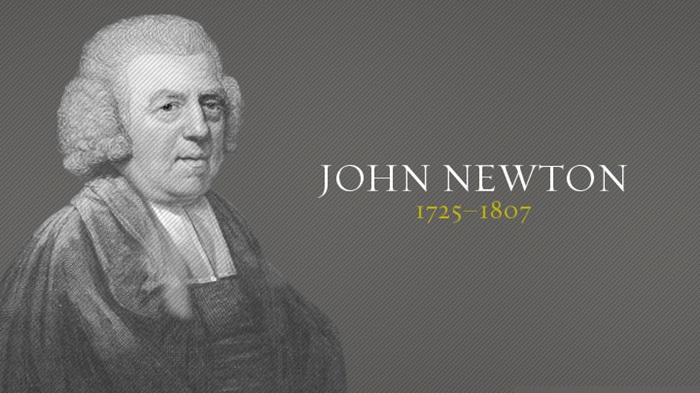
    John Newton: “Every additional guilt tends to increase the stupidity of the human soul; and every increase of this increases, in the same proportion, the natural indisposition for the practice or the love of virtue; makes the soul more blind to consequences, more base in its pursuits, and thus become a more willing and assiduous servant of iniquity”.

    The wrath of God against mankind refusing to live under God’s authority – results in the giving over of the individual to uncontrollable sexual desire – and then the loss of self-control in all manner of areas.

    It is in salvation that God works to bring us BACK to right relationship to His authority – and thus a restored self-control or proper authority over self and our sinful desires.

    In fact, loss of self-control in the area of sexuality is one of the most primary ways of indicating humankind’s lost condition.

    No wonder then a return to authority over our sexuality becomes central to understanding the restoring power of salvation.

    So much is this true Paul can write by the Spirit: Eph. 5:3-5: “But sexual immorality and all impurity or covetousness must not even be named among you, as is proper among saints. Let there be no filthiness nor foolish talk nor crude joking, which are out of place, but instead let there be thanksgiving. For you may be sure of this, that everyone who is sexually immoral or impure, or who is covetous (that is, an idolater), has no inheritance in the kingdom of Christ and God.”

    In our day of rampant sexual freedom, and the proliferation of pornography in our culture – and how that has impacted men in the Church – I can think of no indication more central to our recovering the authority over ourselves that salvation is meant to bring – than this one. Or perhaps as a close second, anger, then narcissism and materialism. No authority over our emotions.

    Self-authority is expressed 19x’s in the NT by “self-control.”

    2 words – which together round out the subject very well:

    1. “to keep one’s emotions, impulses, or desires under control”

    The ability to say no to yourself

    1. “soundness of mind, reasonableness, rationality”

    Together they indicate: The opposite of one who’s thoughts or emotions run away with them.

    In all of our spheres of authority, the great call is to control ourselves, not others.

    Titus 2:11-13 “For the grace of God has appeared, bringing salvation for all people, training us to renounce ungodliness and worldly passions, and to live self-controlled, upright, and godly lives in the present age, waiting for our blessed hope, the appearing of the glory of our great God and Savior Jesus Christ.”

    So the great question is: How do we recover what has gotten out of control? – Self.

    Steven Covey – 7 Habits of Highly Effective People

    Psalm 50 – The 4 Habits of Biblical Self-control. The restoration of self-authority

    Ps. 50 is especially pertinent here, since God is contending with His own people in it. People who profess faith and profess to serve God, who at the same time demonstrate lives incompatible with people living under God’s authority – and thus are out of control themselves.

    Vss. 17-20 Open up the indicators that they need help:

    Psalm 50:17–20 – For you hate discipline [No appetite to reign in self]

    and you cast my words behind you. [Disregard for God’s Word as authoritative]

    If you see a thief, you are pleased with him, [Skewed morality – making anti-heros heros]

    and you keep company with adulterers. [Loss of sexual judgment]

    “You give your mouth free rein for evil, and your tongue frames deceit. [Unguarded communication]

    You sit and speak against your brother; you slander your own mother’s son. [Verbal vitriol – can’t keep a civil tongue]

    In vss. 14-17, we see that self-control – authority over self comes from 4 things – which God calls His people back to.

    1. A full & rejoicing heart. Ps. 50:14a – “Offer to God a sacrifice of thanksgiving.”

    Temptation’s greatest tool is our dissatisfaction with God’s appointments.

    You cannot REJOICE in what you do not recognize you have.

    A heart unwilling to joyfully submit to God’s authority in providentially assigning us the circumstances of our lives – results in loss of control over what we OUGHT to have authority over.

    Look at the present situation in today’s society where people so reject God’s authority in assigning them a sexual orientation – how all sexual authority over self is completely missing.

    Temptation ALWAYS argues we are missing something of ultimate joy and satisfaction given our present circumstances and limitations.

    And it can only be fought when we dwell on the perfect wisdom of God in bringing us into the circumstances most perfectly suited to our growth in grace and into the image of Christ Jesus.

    Even to rejoice in the particular temptations we face – knowing God’s wise and loving design in allowing them.

    1. A life of rehearsed holy habits. Ps. 50:14b – “and perform your vows to the Most High,”

    No skill is acquired without practice, and it is as much true of taking rightful authority over sin and self as in anything else we may encounter.

    I have used the example of my experience with SuperMario Brothers before, but bear with me.

    The more we do it, the better we become.

    Over and over and over again. This is why there is so much repetition built into the Bible itself.

    Learning my own weaknesses and propensities. And learning new ways to cope with new attacks.

    If you are not practicing refusing sin and controlling your thoughts, then will not win over sin or control your thoughts or impulses.

    No one masters what they do not practice.

    You cannot skillfully DO what you do not REHEARSE – repentance is a study in repetition.

    But there is more here: The older theologians used to talk much about the Believer and using “the means of grace.” What they meant by that is not that doing certain things save us or brings us saving grace – but that grace is wrought out in our lives in taking advantage of the things God has provided for that end.

    In the context of Psalm 50 – Not keeping their vows has to do with failing to keep up the regular covenant responsibilities that belong to them under the Mosaic covenant.

    But such things have their own application under the New Covenant as well. As those who are betrothed to Christ to be His Bride – faithfulness to Him and to His purposes in the world is implicit.

    No, we are not under the Mosaic law like the ancient Israelites, but we are still to live within God’s order.

    Gathered worship – for the public glorifying of His name.

    Prayer – as betrothed to one who is pledged to be our provider instead of looking to others – especially the world. Fellowship, intimacy.

    The Word – Committed to hearing Him and believing Him above and to the exclusion of all others. No one else can occupy His place of authority nor replace His expressions of love and faithfulness.

    Ministry to others – As any spouse adopts the other’s families, so we take the members of His family as our own and we want to extend all we can to them.

    Communion – Remembering His substitutionary death on our behalf the way He has asked us to until He returns.

    1. A conscious reliance upon the indwelling Spirit of God. Ps. 50:15 – “and call upon me in the day of trouble; I will deliver you, and you shall glorify me.”

    If I am not looking to Him, how can I have His help?

    You cannot RELY on someone you have no RELATIONSHIP with.

    Cultivating the habit of calling upon Him and looking to Him to supply in our hours of temptation.

    1. Regular exposure AND SUBMISSION to God’s truth in His Word. Ps. 50:16-17 – “But to the wicked God says: “What right have you to recite my statutes or take my covenant on your lips? For you hate discipline, and you cast my words behind you.”

    You cannot RECALL what you do not KNOW – EVEN THE SPIRIT DOESN’T DO THAT FOR YOU.

    Notice effects of the Fall. We have minds that are literal sieves when it comes to storing up Biblical truth. The Holy Spirit cannot bring to mind what I have never learned. What I refuse to keep exposing myself to. No one gets a suntan by one exposure to the sun, though they may get burned! Tanning takes repeated, systematic exposure.

    Our souls cannot get a “Son-Tan” any other way either.

    1. A full & rejoicing heart.
    2. A life of rehearsed holy habits.
    3. A conscious reliance upon the indwelling Spirit of God.
    4. Regular exposure to God’s truth in His Word.


  • As I was reading today – In Numbers 21

    April 7th, 2017

    Numbers 21:5 “And the people spoke against God and against Moses, “Why have you brought us up out of Egypt to die in the wilderness? For there is no food and no water, and we loathe this worthless food.”

    What was the “worthless food” the Israelites were “loathing” here? Manna. God’s supernatural provision for their lives in the wilderness. Manna. The Old Testament shadow of the Bread of Life – the Word of God. But in flesh, and in breathed-out Scripture.

    So let me ask you – are there parts of God’s Word, where you would say with the Jews, “I loathe this worthless food?” Or indeed, do you find virtually none of the Bible truly relevant to what you want to do and who you are? Then you have adopted a worldview and life direction that has nothing to do with God’s plans and purposes, and thus you are right – for those ends, the Word of God is truly worthless.

    The Word is only beneficial to those seeking Christ. To those seeking to grow in the knowledge of Jesus. To those waging war against indwelling sin, and seeking to be freed from the bondage of this World’s values and seductions so that they might be conformed to the image of Christ.

    This word will sustain you in true faith, but not mystical inventions that mimic faith. It will sustain you as you fight materialism, selfishness, lust, greed, pride, arrogance, addiction, and self-serving self-centeredness.

    It will give you sight to see the lies of the World, the flesh and the Enemy. But it will not sustain you if you are looking to simply better your life; add the “spiritual dimension”; coddle you in your sin; justify you in self-rule or self-promotion. For those purposes, no matter how much you consume it – you will starve to death.

    But if you are hungry for holiness; desperate for intimacy with Christ and the maturity that prevents you from being tossed by the waves and blown about with every wind of doctrine – for coming to the goal of Christ’s likeness that God is after in your life – it contains the highest nutritional value available. And you can have as much of it as you want or need.

    The Word of God is worthless for human ends, and absolutely essential for spiritual ends.

    Why you partake of it – what you look for in it – will determine is efficacy.

←Previous Page
1 … 97 98 99 100 101 … 197
Next Page→

Blog at WordPress.com.


Loading Comments...
 

    • Subscribe Subscribed
      • ResponsiveReiding
      • Join 419 other subscribers
      • Already have a WordPress.com account? Log in now.
      • ResponsiveReiding
      • Subscribe Subscribed
      • Sign up
      • Log in
      • Report this content
      • View site in Reader
      • Manage subscriptions
      • Collapse this bar