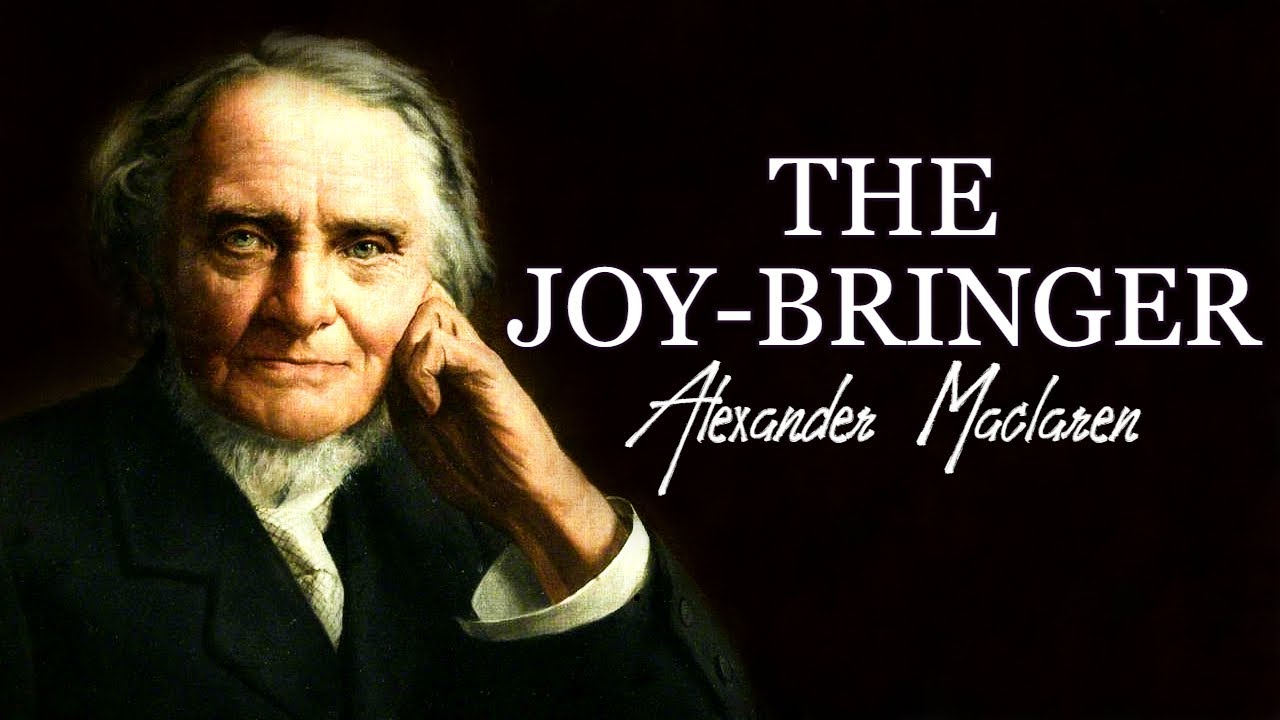
I am currently reading (along with some other things) the sermons of Alexander Maclaren on Ephesians. Maclaren was a powerful 19th Century expositor and close friend of Spurgeon. The two stood together in the “Downgrade Controversy.”
He tends to be more exegetically focused than Spurgeon and his expositions are exceedingly rich. There are 32 volumes of his expositions to be had – covering 64 of the 66 books of our Bibles. Oh for more time!
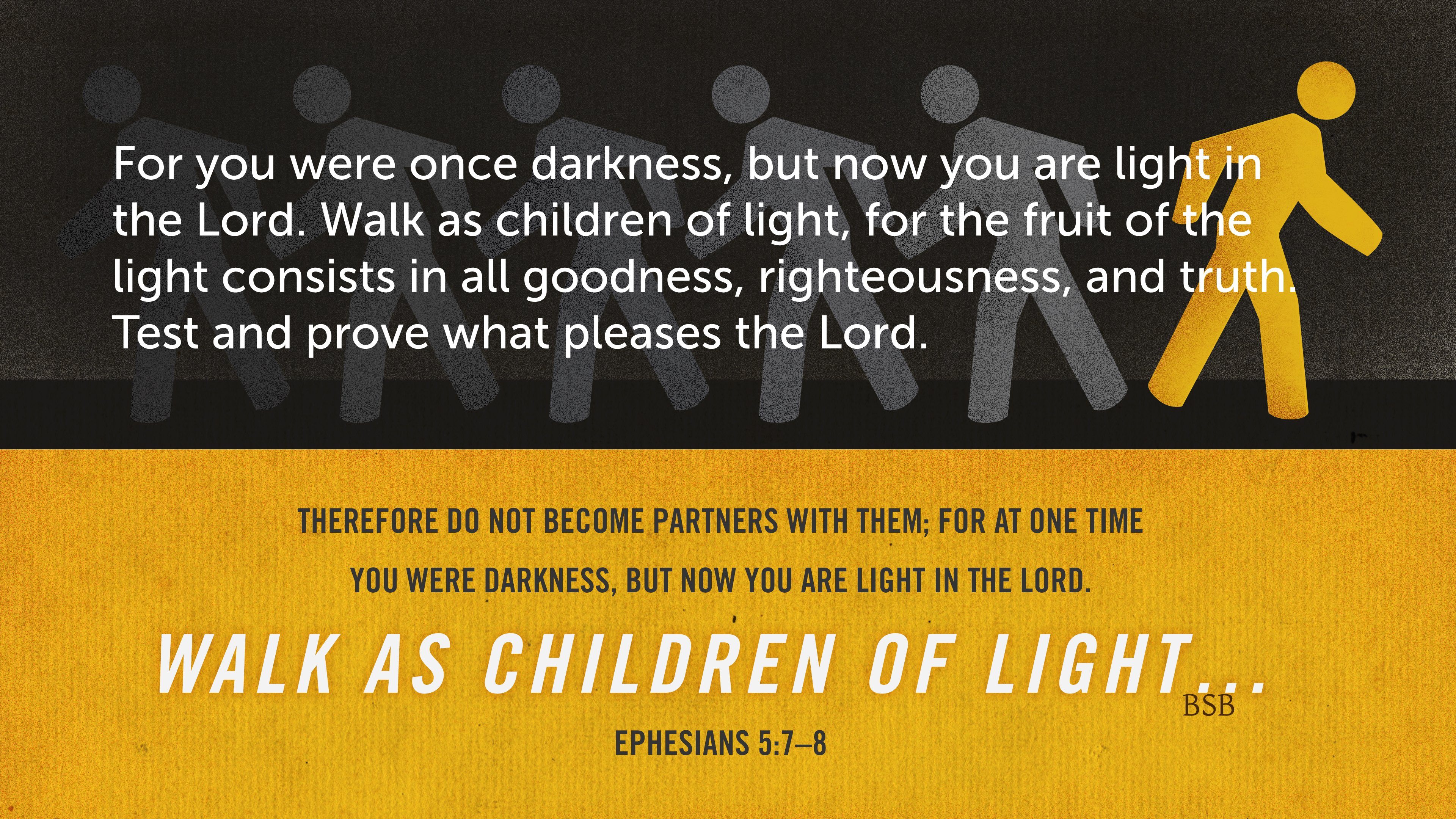
I would gladly post his entire sermon on this passage, but so that you get a taste for his balance and clarity – offer just this sweet excerpt. Listen to how he handles the interplay of goodness, righteousness and truth as the fruit of The Light (Jesus) in the life of the Believer.
Enjoy!
“Now, all these three types of excellence—kindliness, righteousness, truthfulness—are apt to be separated. For the first of them—amiability, kindliness, gentle-ness-is apt to become too soft, to lose its grip of righteousness, and it needs the tonic of the addition of those other graces, just as you need lime in water if it is to make bone. Righteousness, on the other hand, is apt to become stern, and needs the softening of goodness to make it human and attractive. The rock is grim when it is bare; it wants verdure to drape it if it is to be lovely. Truth needs kindliness and righteousness, and they need truth. For there are men who pride themselves on ‘speaking out,’ and take rudeness and want of regard for other people’s sensitive feelings to be sincerity. And, on the other hand, it is possible that amiability may be sweeter than truth is, and that righteousness may be hypocritical and insincere. So Paul says, ‘Let this white light be resolved in the prism of your characters into the threefold rays of kindliness, righteousness, truthfulness.’”
Alexander MacLaren, Expositions of Holy Scripture: Ephesians (Bellingham, WA: Logos Bible Software, 2009), 292–293.
Vol. 3 of The Works of John Newton(Newton, John, and Richard Cecil. The Works of John Newton. London: Hamilton, Adams & Co., 1824.) contains a work titled: “A REVIEW OF ECCLESIASTICAL HISTORY, SO FAR AS IT CONCERNS THE PROGRESS, DECLENSIONS, AND REVIVALS OF EVANGELICAL DOCTRINE AND PRACTICE: WITH A BRIEF ACCOUNT OF THE SPIRIT AND METHODS BY WHICH VITAL AND EXPERIMENTAL RELIGION HAVE BEEN OPPOSED, IN ALL AGES OF THE CHURCH.”
It sounds imposing but it really isn’t. It is comprised of 2 short “books.”
Book one consists of a very readable recounting of the Gospel narratives as though someone sat down to just tell you the whole story in their own words with some reflections here and there. Newton titles it: “Of the First Period of Christianity.”
Book two – “Of the Second Period of Christianity” recounts all of Acts in the same style. It contains 4 chapters.
Ch. 1 – Covers Acts to the close of the 1st Century.
Ch. 2 – “An Essay on the Character of St. Paul, considered as an Exemplar or Pattern of a Minister of Jesus Christ.” A must read for all who entertain being in ministry.
Ch. 3 – Examines how quickly aberrant doctrines and practices emerged in the early Church. So early, Peter, Paul, James and Jude need to address them in their letters. There is nothing new under the sun.
Ch. 4 – Deals with the heresies which arose even in Apostolic times. Heresies which emerge, sink and re-emerge in every generation.
It is in the 4th chapter that we find the following which I am calling a sketch of the true Christian. I found it so succinct and refreshing as to warrant this post. I pray it will be a blessing to you as well.
If you are Christ’s today, may this serve as a great reminder of just what that means. And if you are not – may this whet your appetite to possess what belongs to all of the heirs of salvation.
“A believer in Jesus, however obscure, unnoticed, or oppressed in the present life, is happy; he is a child of God, the charge of angels, an heir of glory;* he has meat to eat that the world knows not of; and from the knowledge of his union and relation to his Redeemer, he derives a peace which passes understanding,† and a power suited to every service and circumstance of life.‡ Though weak in himself, he is strong in the grace that is in Christ Jesus the Lord,§ upon whom he relies, as his wisdom, righteousness, sanctification; and expects from him, in due time, a complete redemption from every evil.|| His faith is not merely speculative, like the cold assent we give to a mathematical truth, nor is it the blind impulse of a warm imagination; but it is the effect of an apprehension of the wisdom, power, and love displayed in the redemption of sinners by Jesus Christ; it is a constraining principle, that works by love, purifies the heart, and overcomes the world; it gives the foretaste and evidence of things invisible to mortal eyes, and, transforming the soul into the resemblance of what it beholds, fills the heart with benevolence, gentleness, and patience, and directs every action to the sublimest ends, the glory of God, and the good of mankind.*
In volume 3 of the works of John Newton, there is a gem of a somewhat unknown work. He titled it “A Review of Ecclesiastical History.
Chapter 1 recounts the Gospel narratives and Acts like a simple recounting of the facts. It is brilliant.
Chapter 2 is “An Essay on the Character of St. Paul, considered as an Exemplar or Pattern of a Minister of Jesus Christ.” I am going to simply give you his key observations here as encouragement and motivation. On each of the points he expatiates – all of which is so very worth the reading. But here are the capstones to consider briefly as you head into the sacred desk today. May they inspire you to seek the love of God supremely.
I. The characteristic excellence of St. Paul, which was as the spring or source of every other grace, was the ardency of the supreme love he bore to his Lord and Saviour.
II. The inseparable effect, and one of the surest evidences of love to Christ, is a love to his people.
III. St. Paul’s inflexible attachment to the great doctrines of the Gospel is another part of his character which deserves our attention.
IV. But though St. Paul was so tenacious of the great foundation-truths of the Gospel, and would not admit or connive at any doctrine that interfered with them, he exercised, upon all occasions, a great tenderness to weak consciences, in matters that were not essential to the faith, and when the scruples were owing rather to a want of clear light than to obstinacy.
V. Every part of St. Paul’s history and writings demonstrates a disinterested spirit, and that his uncommon labours were directed to no other ends than the glory of God and the good of men.
(RAF – i.e. His focus was never about him or his ministry.)
VI. From the foregoing particulars we may collect the idea of true Christian zeal, as exemplified in our apostle.
VII. Having considered the subject-matter and the leading views of the apostle’s ministry, it may not be improper to take some notice of his manner as a preacher.
Newton expands here: “Instead of vain conjectures,* he spoke from certain experience; he could say, “I received of the Lord, that which I also delivered to you:” instead of accommodating his doctrine to the taste and judgement of his hearers, he spoke with authority, in the name of God whom he served: instead of losing time in measuring words and syllables, that he might obtain the character of a fine speaker, he spoke, from the feeling and fulness of his heart, the words of simplicity and truth.”
VIII. Another observable part of St. Paul’s character, is his unaffected humility.
Having said all this and so much more – he summarizes all these points this way as follows. May it be a sweet reminder for you today.
“Such was our apostle, and the same spirit (though in an inferior degree) will be found in all the faithful ministers of the Lord Jesus. They love his name; it is the pleasing theme of their ministry, and to render it glorious in the eyes of sinners is the great study of their lives. For his sake they love all who love him, and are their willing servants to promote the comfort and edification of their souls. They love his Gospel, faithfully proclaim it, without disguise or alteration, and shun not to declare the whole counsel of God, so far as they are themselves acquainted with it. They contend earnestly for the faith once delivered to the saints; and are desirous to preserve and maintain the truth, in its power and purity. The knowledge of their own weakness and fallibility makes them tender to the weaknesses of others; and though they dare not lay, or allow, any other foundation than that which God has laid in Zion, yet, knowing that the kingdom of God does not consist in meats and drinks, but in righteousness, peace, and joy in the Holy Ghost, they guard against the influence of a party spirit: and, if their labours are confined to Christians of one denomination, their love and prayers are not limited within such narrow bounds, but extend to all who love and serve their Master. They have entered upon the ministry, not for low and sordid ends, for popular applause, or filthy lucre, but from a constraining sense of the love of Jesus, and a just regard to the worth and danger of immortal souls. Their zeal is conducted and modelled by the example and precepts of their Lord; their desire is not to destroy, but to save; and they wish their greatest enemies a participation in their choicest blessings. In the subject-matter and the manner of their preaching, they show that they seek not to be men-pleasers, but to commend the truth to every man’s conscience in the sight of God; and when they have done their utmost, and when God has blessed their labours, and given them acceptance and success beyond their hopes, they are conscious of the defects and evils attending their best endeavours, of the weak influence the truths they preach to others have upon their own hearts; that their sufficiency of every kind is of God, and not of themselves; and therefore they sit down, ashamed, as unprofitable servants, and can rejoice or glory in nothing but in him who came into the world to save the chief of sinners.”
John Newton and Richard Cecil, The Works of John Newton (London: Hamilton, Adams & Co., 1824), 247–248.
Luke 5:36-39 (BSB) “He also told them a parable: “No one tears a piece of cloth from a new garment and sews it on an old one. If he does, he will tear the new garment as well, and the patch from the new will not match the old. And no one pours new wine into old wineskins. If he does, the new wine will burst the skins, the wine will spill, and the wineskins will be ruined. Instead, new wine is poured into new wineskins. And no one after drinking old wine wants new, for he says, ‘The old is better.’ ”
Jesus did not come to repair or prop up up the old Mosaic system. Its time was over. It had run its course and served it purpose. A new day had come. This was not time to sew a patch on an old rend, nor even to breathe all new life into it. It could not contain what was to be poured out. Only new creatures would do. New wineskins to receive the new wine. New men as well as new life. A new covenant, as well as a new Mediator.
So it is today. All attempts to merge, marry or unite the Old and the New Covenants is out of order. Yes, there is connection. The Old portends the New in astounding and countless ways. But just as a baby is conceived in the womb of its mother, yet the two are just that – two, so for a season they may share one systemic life – and yet they are not somehow merged into one entity. From the moment of conception – they are two.
We might say that the Church was always in utero (in Israel – there was always a believing remnant) until Pentecost. Israel bore her, and they share so much. And yet each is its own when all is said and done. Going back to Old Covenant rites and rituals, days, observances and customs fails to recognize the transition which has occurred. It is the failure to recognize this which causes so much confusion about the Believer’s relationship to the Law. The Law hasn’t changed, we have. And in the change, the entire relationship is also changed.
Christians are not “newized” Old Testament Believers. Out of the two (Believing Jews and Gentiles) He has made one new man (Eph. 2:15). We do not go back to pick this here and that there from the Old Covenant system. We have a new garment of the righteousness of Christ to wear, not the old garment of its picture. We are new wineskins, born again as new creatures, not Old Covenant believers jazzed up. Our covenant has been explicated (Jer. 31; Heb. 8), inaugurated (Luke 22:20), ratified (Heb. 9:16) and is being probated by The Spirit (Eph. 1:14). We no longer live under the old arrangement of signs, pictures, tokens and allegories. Ours is the fulfillment in Christ.
We drink the new wine poured into new wineskins. Some will always go back and say the “old is better.” They want no change. But Christ has come. The new day has dawned. The Kingdom has drawn near. The Spirit has been poured out. Look up – for your redemption draws nigh. Soon, ALL things will be made new. And He will live and reign in His manifest glory before the cosmos.
Mattew 9, Luke 5 and Mark 2 all give us the account of 4 men bringing a paralytic to Jesus.
The BSB relays Mark’s account this way: “A few days later Jesus went back to Capernaum. And when the people heard that He was home, they gathered in such large numbers that there was no more room, not even outside the door, as Jesus spoke the word to them. Then a paralytic was brought to Him, carried by four men. Since they were unable to get to Jesus through the crowd, they uncovered the roof above Him, made an opening, and lowered the paralytic on his mat. When Jesus saw their faith, He said to the paralytic, “Son, your sins are forgiven.” But some of the scribes were sitting there and thinking in their hearts, “Why does this man speak like this? He is blaspheming! Who can forgive sins but God alone?” At once Jesus knew in His spirit that they were thinking this way within themselves. “Why are you thinking these things in your hearts?” He asked. “Which is easier: to say to a paralytic, ‘Your sins are forgiven,’ or to say, ‘Get up, pick up your mat, and walk’? But so that you may know that the Son of Man has authority on earth to forgive sins…” He said to the paralytic, “I tell you, get up, pick up your mat, and go home.” And immediately the man got up, picked up his mat, and walked out in front of them all. As a result, they were all astounded and glorified God, saying, “We have never seen anything like this!” (Mark 2:1-12)
I have but one simple thought here – but what I hope will be a word of encouragment.
Our faith greatly effects others, when by virtue of it, we bring men to Him – either in the sense of giving them the Gospel, or bringing them to sit under the preaching of the Word, or even in prayer – that they might be touched by Him. Pray beloved. It is not a fruitless exercise. When we believe enough to bring men before Him, He is willing enough to respond.
Especially, I want to emphasize what an encouragement this is to pray for others.
We have no indication in this account that the paralytic had any faith or hope of restoration of his own. But these men, they were faithful to bring the man before the King of Kings. And this is what we do when we pray for those yet bound in their trespasses and sins.
In prayer, we take the roof off. We bring them into His presence. We make their need known to Him. And as the good God He is – He responds to our faith in bringing them to Him.
Bring them all. Do not hesitate.
Many cannot nor will not bring themselves. But that makes no difference. In prayer, we bring them directly into the presence of the God of Glory. And He responds.
He has providentially placed them in your circle, that you might intervene on their behalf. He invites you to participate in His wondrous work.
Pray for your lost loved ones beloved. Pray in faith. Pray expectantly. You have every reason to believe He will hear you.
It has become common in American Evangelicalism to conceive of the notion of repentance, as a mere change of mind. But to be true to the Biblical pictures of repentance, there is much more involved – especially more than simply saying one is sorry, or feeling bad about this or that sin. Repentance does indeed involve a change of mind – but it is more than that.
Repentance necessarily includes – a change of direction. It is coming to the place where I see my sin for what it is, confess it, yes, even mourn over it – but then take the necessary steps to walk differently. And the closing section of the book of Hosea provides one of the best pictures of genuine repentance to be found in Scripture.
The character Hosea was a prophet to the northern kingdom of Israel as opposed to the southern kingdom of Judah. Israel had gone down the route of idolatry almost from its inception. And now, in the mid-700’s B.C., they are nearing their end. Refusing God’s repeated calls to repentance for 100’s of years through his prophets, they are about to be swept away by the Assyrians in judgment. It is a turbulent time. But right up to the end – God sends his men to call them back to fidelity to him alone. They will not listen.
In the 14th chapter of Hosea, God addresses his people over and over and over, exposing their sin. Then, at the very end of the book, he tells them exactly what is needed to avoid their prophesied fate. What true repentance to stay God’s judgment looks like. And it serves as a most wonderful model for all who may have fallen into sin and need to be recovered.
We read in Hosea 14:1-3 – “Return, O Israel, to the LORD your God, for you have stumbled by your iniquity. Bring your confessions and return to the LORD. Say to Him: “Take away all our iniquity and receive us graciously, that we may present the fruit of our lips. Assyria will not save us, nor will we ride on horses. We will never again say, ‘Our gods!’ to the work of our own hands. For in You the fatherless find compassion.”
Let’s break that down quickly. What a sweet model of repentance this is.
a. We can come with nothing but words. There are no gifts to bring. No goods to bestow. No sacrifices. No imagined penance. We come only with our humble pleas.
b. We come asking to have our iniquity taken away – the perverseness of our own hearts removed. We come in recognition that we ARE sinners, not simply those who sin. Surely, when we are in right relationship with Him that is not our primary designation – but when in rebellion, it is once again as though before we were His.
c. We ask Him to receive our gifts and offerings once again – to make our worship acceptable. We stop pretending that worship when we are in rebellion against him can somehow offset our sins.
d. We promise to make good on our previous vows – to fulfill the covenant we already had with Him. To be a faithful spouse.
e. We denounce finding our joy or safety in anything place else but Him. That we will look to Him alone and trust Him in these matters. After all, it is the sin of spiritual adultery which is the foundation of all other sins – seeking from the world, the flesh or the devil, what we ought to seek in him along. For in him alone is true peace, holiness, satisfaction, safety, contentment and the everlasting promises.
f. We utterly forsake every instrument of reducing God to tangible form, and every thing other than Him that claimed our affections and pursuit.
g. We walk in the glory of a God who is mercy and grace itself.
It is then we read the most wonderful promise in verse 4-7:
“I will heal their apostasy; I will freely love them, for My anger has turned away from them. I will be like the dew to Israel; he will blossom like the lily and take root like the cedars of Lebanon. His shoots will sprout, and his splendor will be like the olive tree, his fragrance like the cedars of Lebanon. They will return and dwell in his shade; they will grow grain and blossom like the vine. His renown will be like the wine of Lebanon.”
My fallen brother or sister in Christ – hear me. Your God has not left you without remedy due to your sin. He calls you home. And home, with a promise not just of forgiveness, but restoration and blessing.
Don’t wait. Don’t hesitate. No matter how long it has been or how far you have gone in your sin – he calls afresh to you today. He makes the path home – clear. And he promises to receive you with open arms.
Praying the Psalms is not a new concept. There have been books written on the idea and great examples given by many. But it was only recently that I personally began doing so as part of my devotional time. It has been a great blessing.
I love praying the Psalms since we cannot properly sing them, as we have no sacred melodies nor a sense of how to structure them accordingly. Attempts have been made – as have been attempts to render them all in rhyme for such use. I applaud any and all efforts to weave the blessed portions into our hearts and minds more thoroughly. But rhyme and music simply haven’t worked well for me.
But to give you a sense of how I approach this wonderful means of prayer, I hope the following may serve as a catalyst for some to enter into the Psalms themselves more deeply, and as a means to enrich your prayer life.
Prayer being the most un-natural – in the sense of most contrary to our fallen nature – activity, we often need help in growing deeper in it. For the entry way to the Father was provided in the torn flesh of the Son Himself. How we can best enter into this highest of sacred privileges should be something worth exercising ourselves in all we can.
Here is the text of Ps. 36 in the BSB, followed by my prayer. I hope it is useful to you today.
Psalm 36:1–12 (BSB) — 1 An oracle is in my heart regarding the transgression of the wicked man: There is no fear of God before his eyes. 2 For his eyes are too full of conceit to detect or hate his own sin. 3 The words of his mouth are wicked and deceitful; he has ceased to be wise and well-doing. 4 Even on his bed he plots wickedness; he sets himself on a path that is not good; he fails to reject evil. 5 Your loving devotion, O LORD, reaches to the heavens, Your faithfulness to the clouds. 6 Your righteousness is like the highest mountains; Your judgments are like the deepest sea. O LORD, You preserve man and beast. 7 How precious is Your loving devotion, O God, that the children of men take refuge in the shadow of Your wings! 8 They feast on the abundance of Your house, and You give them drink from Your river of delights. 9 For with You is the fountain of life; in Your light we see light. 10 Extend Your loving devotion to those who know You, and Your righteousness to the upright in heart. 11 Let not the foot of the proud come against me, nor the hand of the wicked drive me away. 12 There the evildoers lie fallen, thrown down and unable to rise.
Heavenly Father – I’ve been considering, and help me to consider well the transgressions of the wicked; and let it not be true of me. Keep the right fear of you before my eyes. I am too easily deceived to recognize and hate my own sin as I should. I can fall and cease to be wise in well-doing. Even on my bed I can plot wickedness and set myself on a path that is not good, failing to reject evil. But you Father, your loving devotion reaches to the heavens, your faithfulness to the clouds. Your righteousness is majestic and unmovable like the highest mountains; your judgments unfathomable like the deepest sea. Father, you preserve men, and even the animals of the earth. How precious – make me to know truly – how precious is your loving devotion. Because this is true I, and all those who know you with me take refuge in the shadow of your wings. We feast on the abundance of your house, and you let us drink from your own river of delights. With you and you alone is the fountain of life; and in you and you alone do we see light. Multiply the knowledge and experience of your loving devotion to your children, and grant righteousness to the upright in heart. Let not the foot of my own sinful pride rise up against me, nor the hand of any remaining wickedness in me drive me away from your presence. Let me not go where the evildoers lie fallen and are thrown down, unable to rise. In Christ’s name I plead.
Simplism as Webster defines it, is “the act or an instance of oversimplifying especially: the reduction of a problem to a false simplicity by ignoring complicating factors.”
And in an age of soundbite news, the problem of simplism is compounded horrifically. Geo-politics get reduced to quippy (or not so quippy) one liners from politicians, pundits and private opinionaters left and right – no pun intended.
People chime in with “the” answer to the economy, social upheaval, disease, racism, poverty, etc. Often, such comments are prefaced by something like “all we need to do is…”, and bingo! We have a one-line, easy-peasy solution to issues impacting millions of people across the globe.
Yeah. Right.
But what’s worse is when this kind of simplism manifests itself in theology and Biblical concerns. When theological concepts and doctrines are so utterly reduced as to ignore broad, deep and thorough examination. I get that we like things in nice, tidy, intellectually portable packages. I like it too. And labels for instance can be a handy form of shorthand at times. But then it backfires. We take a tiny one strand brush and try to cover a vast canvass with it.
I know I might get shot for this one, but take the beloved T.U.L.I.P. If you are of a Calvinistic bent (like me), it forms a handy-dandy summary of some very important Biblical concepts. But. But! When it becomes a substitute for the Gospel – as simplistic – it becomes horrifically problematic. How so? Simple (how’s that for irony) – the T.U.L.I.P. doesn’t contain the Gospel of justification by faith. It articulates some things well, and some things not so well – but gets glommed onto like it is the end-all in theological thought even though there is nothing in the T.U.L.I.P. about the triune nature of God, the deity of Jesus, regeneration or a host of other crucial doctrines. It is great for what it does, but it has its very, very severe limitations. But o, how we love our simplicity, our reductionistic tendency. Michael Horton’s YouTube video is a worthy view in this regard in a piece titled: “The TULIP is not enough.”
Now all of that is but introductory to what I really want to get at in recommending the above-named book: Controversy of The Ages. For if nothing else, what Cabal and Rasor do in this excellent volume, is disabuse the reader of overly simplified approaches to the debate regarding positions on Young Earth vs Old Earth vs some form of Evolution – among Bible believing Christians.
The truth is, its complicated. The science is complicated and the hermeneutical issues are complicated. And to ignore those complexities in favor of quippy one-offs in either direction, is to grossly misstate the facts and leads to unfair and often very incorrect characterizations. Mischaracterizations of other sincere Christians trying to make full sense of the two books of revelation given to us by God: The Written Word of the Bible, and the Book of Nature (Ps. 19). Two testimonies which can never contradict one another – but each of which can be and are often – misinterpreted.
The authors take the time to work through their case by contrasting 3 views using representative ministries. They examine the claims and approaches of the proponents of Young Earth Creationists (YEC) as represented by Ken Ham and Answers in Genesis (also touching on Henry Morris’ Institute for Creation Research); Old Earth Creationists (OEC) as found in Reasons to Believe and headed by Hugh Ross; and lastly, the Evolutionary Creationists (EC) of Biologos.
I will warn you now, there will be a lot of time taken to unpack the historic record of how the debate over heliocentrism was dealt with both theologically and scientifically, and then the rise of evolutionary thought following the publication of Darwin’s The Origin of the Species. But it is well worth the labor. Why? Because, to be overly simplistic – it’s complicated!
Neither pop science nor pop theology are sufficient to work through the issues. Theologians from at least Augustine (see his commentaries on Genesis) through today have had deep and probing questions and discussions on how we are to rightly interpret the opening chapters of Genesis. And it is not a question of “does Science have more authority than Scripture?” Of course not. But it IS a question of how we interpret the way “the heavens declare the glory of God” in light of the Scripture, and the Scripture in light of the revelation in nature. Both come infallibly from the hand of God. And both must be read and interpreted in light of each other. When rightly interpreted, they will never contradict one another. Never. If they do, we are interpreting either one or both wrongly. And sorting out which of those options takes hard, prayerful, thoughtful work.
While all of this is treated in as complete terms as can be given the limitations of a mere 225 page monograph, the aim and outcome of it all is a clarion call to be careful to listen well to one another in the Evangelical Church; to dialog in charity with each other; and to be seriously careful not to make issues which are not inherently Gospel issues, into Gospel issues, and thereby anathematizing genuine brothers and sisters in Christ when we disagree.
I so appreciated the tenor of the work which emerges on every page. There is no stone throwing, even when there is genuine and very serious disagreement. It is a call to value true unity in Christ and the God of Scripture above personal convictions, even in regard to very important topics – especially among those who place a high and unwavering value on the inerrancy and authority of Scripture.
And, to go back to where we started, it is a fine example of refusing to cave to simplism. To recognize that people often come to conclusions different from my own, not because they haven’t thought much about their positions – but because we have thought differently about the very same data. And that that, is a place to sit and dialog in the Spirit of Christ.
I highly recommend this most interesting, informative and useful book. Buy it and read it before you engage someone from one of the other positions again. It will be worth it.
Authors:
Theodore J. Cabal – Senior Professor of Philosophy of Religion at Southwestern Baptist Theological Seminary
Peter J. Rasor II – Assistant professor of Philosophy at Grand Canyon University
One of the things we commonly do with passages like this one, is take them as though they are the entire concept in the one sentence. We can easily forget that there is a context to be considered. And not just the immediate context of James 1, but the subject of wisdom (in this case) in the broader teaching of the whole Scripture. As a result, we can slide into thinking to use this verse as a sort of one-off prayer for specific decision making. I need to decide between A and B, so Lord, please give me wisdom.
Now there is nothing wrong in seeking the Lord’s mind on specific occasions for specific considerations. The Lord loves to be sought in all we do. But most often when I consider how this verse is used – it is more along the lines of asking for specific insight (maybe even secret knowledge?) in the moment. As legitimate as that desire to make right choices is – that is not James’ point here, nor is it the core framework in which Biblical wisdom works.
So take this passage as a whole for a moment. The wisdom referred to here isn’t generic wisdom, but specifically related to facing trials profitably, by trusting in God’s providential care over His children. It is wisdom to take advantage of them in confidence that God will use them to help us mature and become complete. If we do not have faith in His care and providential appointments in our trials, then we will have no real faith at all, and will be unstable in everything we encounter in life. We will always be knocked off kilter by difficulties. We must trust our God, His care, power and good will toward us in Christ.
So we’re encouraged to be sure we ask for this wisdom “in faith.” In other words: 1- Trusting God’s character. 2- Trusting God’s love. 3- Trusting His wisdom in bringing us to and through our trials. 4- Trusting His sovereign appointments and care. 5- Trusting The promises in His Word.
Faith is rooted in His trustworthiness.
If I have no faith in that, I will never be stable, never gain endurance, and never grow in spiritual maturity.
This then, is living in wisdom.
So consider the numerous references to wisdom in the Proverbs, as in Proverbs 4:5-8 “Get wisdom, get understanding; do not forget my words or turn from them. Do not forsake wisdom, and she will preserve you; love her, and she will guard you. Wisdom is supreme; so acquire wisdom. And whatever you may acquire, gain understanding. Prize her, and she will exalt you; if you embrace her, she will honor you.”
Note how in this text, we are not just given the charge to get wisdom and understanding – but we are told where to get these: by not forgetting or swerving from God’s words.
What becomes increasingly plain in this book is that insight and wisdom have to do with understanding how things are, and how they work – from God’s point of view. It is insight into the divine economy. It is like having sight in a world of blind men. It isn’t that we see things that aren’t there, but see them as they really are. Values are assigned by eternal standards, not temporal. Eternal justice must always be held in tension. God’s sovereignty as well as man’s responsibility have to be kept together. Man’s relationship to God must define his relationship to all others, and to the the universe itself. Heavenly Father, how we need this wisdom. How we plead to you for this insight.
This isn’t all about getting specific wisdom on a specific issue – what car to buy, gal to marry etc. It is about approaching life knowing who God is and what he is about. Living in the larger paradigm of life as one of God’s children, made for his purposes, purchased with the blood of the Lamb, seeking to know and serve him supremely, being about his business.
THIS, is wisdom. And to frame all of life accordingly. It is seeking first the kingdom of God and his righteousness. And knowing then that the other things will be set in order as we walk in faith.
All of this requires that Christ be contemplated as the sum and center of God’s plans and purposes. Clearing the fog off of life by redirecting oneself to think about how my life and its various facets fit into the purposes and plans Of God in Christ.
Christ IS God’s wisdom. Here is where God’s genius is brought before our view in the very deepest parts. To be caught up in the plan to bless an undeserving people through untold mercy and grace, and then to bring us right into His family. This is unfathomably wonderful. And if we are failing to be amazed at it, we need to look harder, and ask for more and more insight.
We need to ask ourselves over and over – what is it that is so wonderful in this salvation, in Christ, that the Father holds it up as supremely worthy of our everlasting and infinite inquiry and attention. So if I “just don’t get it”, I need to seek Him until I do.
“Now if any of you lacks wisdom, he should ask God, who gives generously to all without finding fault, and it will be given to him.”
Last evening, Sky and I watched Max Mclean’s 2021 film adaptation of his one-man stage production on the conversion of C. S. Lewis to Christianity.
Co-written by McLean (also the lead actor) and Director Norman Stone – the film does the near impossible – it is a Christian film that is neither cheesy, maudlin nor Pollyanna. It is a real treat and enjoyable as a first rate film even apart from its subject matter.
Done in a narrative style, the cinematography and locations (I hear there were about 20) are superb. The writing – drawn from Lewis’ own – sticks to the facts. The acting is spot on. All around the production values are as high as any could hope for in a good movie. Thank you Fellowship of Performing Arts and 1A Productions for being committed to producing something of quality and excellence in the telling of Lewis’ conversion.
If you are not familiar with Lewis’ personal life, the brief primer in this movie is worth the watching alone, since it adds depth and context to his other writings.
Clive Staples Lewis was no ivory-tower elitist. At least not in the usual sense. Yes, he held on to his early rejection of Christianity, foray into occultism and philosophical materialism. But he was a also a man of real life. Losing his mother when he was a very young man. The strained relationship with his father (throughout his life) – especially in his father’s personality shift after the death of his wife. The pained distance between his father and both of the boys. Then on the front lines in WWI – wounded, sent back and wounded yet again. He grappled with the horrors and hardships of living in this fallen world. So for instance, when we pens his Mere Christianity lectures, they come from a place of having lived real life – not from behind the alabaster walls of isolated academia.
The film is available now on Amazon – free if you are a Prime member. And well worth the viewing. As you see him cave first to mere deism and then to embracing Christ full on – it will remind you of the power of God to scale the seemingly unassailable intellectual fortresses of those unsaved loved ones of yours. Our God knows how to conquer souls, and make them trophies of his grace – no matter where they are.