In Acts 1:22, for the first time in Scripture, we encounter a word which has generated no small amount of debate and controversy for the whole of the Church age. Debate which is not likely to subside until Christ returns. The word? PREDESTINATION.
To understand the Bible doctrine of predestination, the first thing we need to do is see that it is a word, and a concept that the Bible itself uses. It’s not an invented idea by man, though, some have taken the doctrine far beyond what the Scripture teaches. So here, it seems best if we confine ourselves to the places it is used in Scripture alone, so that we can see what exactly the Bible means when it uses the word.
First then, we need to look at the word itself. The word which we have translated “predestined” in our English Bibles is the Greek word proorizw (pronounced – pro-or-id’-zo). It is used six times in the New Testament, and in each of those places it plays a vital role in helping our understanding of how God works within His universe, both spiritually and naturally.
According to Vine’s dictionary of New Testament Words, we see that the Greek word (and thus the English equivalent) means: 1) to predetermine, decide beforehand; 2) in the NT of God decreeing from eternity; 3) to foreordain, appoint beforehand
Easton’s Bible Dictionary gives us this entry: “PREDESTINATION This word is properly used only with reference to God’s plan or purpose of salvation. The Greek word rendered “predestinate” is found only in these six passages, Acts 4:28; Romans 8:29, 30; 1 Corinthians 2:7; Ephesians 1:5, 11; and in all of them it has the same meaning. They teach that the eternal, sovereign, immutable, and unconditional decree or “determinate purpose” of God governs all events.”
Vincent’s New Testament Word Studies gives us this: “Predestinated (προώρισεν). Revised Version = foreordained. From προ before, and the word for – to define, the latter word being from a boundary. Hence, “to define or determine beforehand.”
Kittle’s Theological Dictionary of the New Testament says: “This comparatively rare and late word is used in the Greek Bible only 6 times in the NT sense to “foreordain,” “to predestinate”. Since God is eternal and has ordained everything before time, προορίζειν is a stronger form of ὁρίζειν [to set a boundary]…
The simple meaning of the word is then, that to predestinate is, to ordain things beforehand.
With that basic and uncontroverted definition in hand, we need to go to the six texts where it is found so that we can understand just how the Holy Spirit used it in communicating to us what He wanted us to know.
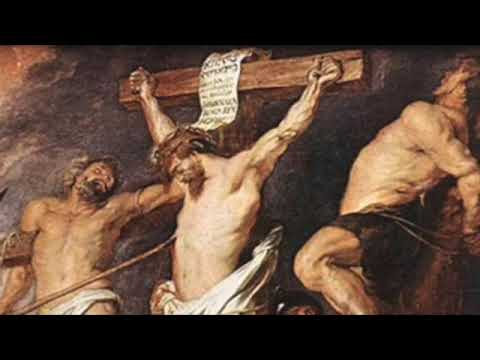
1 – Acts 4:27, 28 / The first time the word is used is in Acts 4. It is used in connection with the crucifixion of Jesus. The scene is a familiar one. Peter and John had been arrested for healing the paralytic on the steps of the Temple. After their release, they return to the rest of the Believers, and then enter into prayer. It is in this prayer that they make the following statement in verses 27 & 28: “For truly in this city there were gathered together against Thy holy servant Jesus, whom Thou didst anoint, both Herod and Pontius Pilate, along with the Gentiles and the peoples of Israel, to do whatever Thy hand and Thy purpose predestined to occur.”
This is an important passage not only because we see the word used here first, but because in its use we find that there was nothing accidental or unplanned concerning the events surrounding Christ’s death. It demonstrates first, that even the lost are used in the unfolding of God’s plans. This is a powerful revelation of God’s sovereignty. We tend to think of the unsaved as such loose canons that we might be their victims at any time. But Jesus was certainly no victim (in the sense of helplessness) in His death. This confirms what we read in John 10 where Jesus speaks of His impending death with these words: “17 For this reason the Father loves Me, because I lay down My life that I may take it again. 18 No one has taken it away from Me, but I lay it down on My own initiative. I have authority to lay it down, and I have authority to take it up again. This commandment I received from My Father.”
10 Things to observe about this passage:
1 – “this city” / An appointed city
2 – “were gathered together” / An appointed gathering
3 – “against Thy holy servant Jesus” / An appointed target
4 – “Herod” / An appointed King
5 – “Pontius Pilate” / An appointed governor
6 – “the gentiles) / An appointed geo-political structure
7 – “the peoples of Israel” / An appointed race
8 – “to whatever Thy hand and Thy purpose” / An appointed task
9 – “Thy hand” / By God’s power exerted
10 – “Thy purpose” / According to God’s plan
Second, we see the divine mystery that His plan is executed by men even when they are acting out of their fallen and depraved wills. This is an amazing truth. No man took Jesus’ life from Him, He laid it down. They didn’t know that. They thought they were doing what they wanted to do – never imagining that they were working out God’s pre-ordained plan. But this is the nature of predestination. What God had predetermined to take place, did. He was taking no chances concerning the work upon which salvation depended. Just as there was no chance that Christ would not come and die for our sins, so, there was no chance that His eternal plan would not be worked out – because He predestined it.
Now we have little problem when it comes to something like the central event of all human history, Jesus’ death. It seems fitting that such should be the case with this. But the question arises as to whether or not this same predestination has anything to do with the life of the Believer above and beyond the guaranteeing of redemption through the crucifixion. The remaining passages give us much light on that very thing.
2 – 1 Corinthians 2:7 / “but we speak God’s wisdom in a mystery, the hidden wisdom, which God predestined before the ages to our glory;”
In this passage, Paul remarks that the wisdom which is not of this world – the wisdom he had preached among the Corinthians, was a wisdom which God had all along determined would be a source of the glory of the Church. That God had predestined the Church to find a measure of its glory in that the truth it preaches does not come from men, but from above. This, God has predestined to be the case.
Here, the predestination is of something quite general in nature and widespread. It is not so much applicable to the individual, nor even so much to salvation itself, as much as the fact that this is the means that God predestined to be used in evangelization. It says nothing of what response(s) (if any) would be expected. Only that this “wisdom” would be preached, and that God designed the Church to receive glory as the voice of this preaching. The glory of the Church is wrapped up in the proclamation of the Gospel she preaches.
3 & 4 – Romans 8:29 & 30 / “For whom He foreknew, He also predestined to become conformed to the image of His Son, that He might be the first-born among many brethren; and whom He predestined, these He also called; and whom He called, these He also justified; and whom He justified, these He also glorified.”
Now we move into a use of the word which is far more restrictive and directly related to the salvation of individuals. Here we have a chain of logic which the Apostle Paul is unfolding, and which relates the salvation of individuals directly to the concept of predestination.
Note first in verse 29, that those whom God “foreknew”, these He also predestined (determined before hand) that they would eventually be “conformed to the image of His Son.” Predestination in this verse speaks to this one aspect of salvation – the end of those who are redeemed. In fact, this speaks more to the concept of the preservation of the saints, than to how the saints actually become saints. The saints have a sure destiny, and that destiny is to be finally made like Christ.
If Paul had stopped there, we might still have an argument over what it means to “foreknow.” Does it mean simply to have some concept of beforehand, or something else? This gives rise to a question which is sometimes couched in terms of saying “God saw beforehand who would believe, and elected them.” Which of course is no form of predestination at all – but is merely God reacting to something.
If such is the case, then He neither caused nor foreordained, but simply observed. But the following verse makes that question moot by asserting what is often called the ordo salutis, or the “order of salvation.” Here then is the scheme of things as Paul presents it: Those whom God predestined, are the ones whom He called; and those whom He called, are the ones He justified; and the ones He justified, are the ones who are glorified – or conformed to the image of Christ. God predetermines, and then the chain of events required to fulfil what He purposes is set in motion.
Note too, that each step inevitably leads to the other.
This then brings us to the fifth mention of predestination.
5 – Ephesians 1:5 / “He predestined us to adoption as sons through Jesus Christ to Himself, according to the kind intention of His will.”
Now we are looking at a verse that directly links the notion of how it is that saints become saints, with predestination. Here, the predestination is to adoption itself, or the reality of becoming a child of God. Who are those who being regenerated by the Spirit of God, then cry out “abba father?” It is those whom God predestined, or chose before hand. In His divine wisdom, He makes this determination. No one else participates in it, nor affects it. If we use the language of John 1, we see the whole thing laid out before us in startling clarity: John 1:11 “He came to His own, and those who were His own did not receive Him. 12 But as many as received Him, to them He gave the right to become children of God, even to those who believe in His name, 13 who were born, not of blood nor of the will of the flesh nor of the will of man, but of God.” The first part we take in easily, that Jesus came to His own people, the Jews, and for the most part, they utterly rejected Him. “But” says John, to those who did receive Him, Jesus gave authority to become “sons of God” – adopted in the family, with all of its rights and privileges. And how does that occur? They are born into it – not by blood (a physical birth), nor because of some physical desire, not even because they had the will in themselves unto that end – but “of God.” God having willed it, accomplished it. He predestined us (the sons) to our adoption through Jesus Christ – not according to OUR will, but according to the kind intention of HIS will. This is a most amazing reality for certain. Men become sons of God by the God who makes them to be sons, having decided beforehand who He would so adopt in Christ. That is the plain and simple language of the passages before us. We can only refuse those words if we have some theological point of view to defend. This is what the words plainly communicate.
6 – Ephesians 1:11 / “also we have obtained an inheritance, having been predestined according to His purpose who works all things after the counsel of His will.”
Lastly, we come to this sweetly comforting verse in Ephesians 1, which follows close on the heels of the previous one. Here, the subject is not the Believer’s salvation per se, but the whole of what his salvation holds in promise for him, i.e. his inheritance.
Quite simply: God Himself is the One who determined beforehand to make us His sons through Jesus Christ, adopting us ONLY according to the kind intention of His own will. But in doing so, He also foreordained that as sons, we should share in the Son’s inheritance. This is not a mere external relationship, but a familial one which makes us rightful heirs. Heirs of an inheritance of which the Holy Spirit Himself is the down payment (Eph. 1:14). And which, according to 1st Peter 1:4, is “reserved in heaven for you”, which is “imperishable and undefiled and will not fade away.”
To wrap it all up in terms of the Believer we can rightly put it this way:
As sure as it was that Jesus would die when He did, how He did, where He did, and why He did – just so – the glory of the Church He died to redeem is wrapped up in the gospel she preaches to the world; and is comprised of those God intends to fully conform to the image of His only begotten Son by calling us, justifying us, glorifying us and preserving us unto the eternal inheritance He has laid up for us in Heaven.
And what then does the Believer receive by means of this all? Incredible comfort and confidence.
“But I trust in you, O Lord; I say, “You are my God.” My times are in your hand” Psalm 31:14-15a







 ResponsiveReiding