• Home
  • About
  • Blog
  • Atonement
    • The Atonement: Read this first!
    • Confession of an ex-u0022Highperu0022 Calvinist
    • Revisiting the Substitutionary Atonement
    • Discussing the Atonement – a lot!
    • Lecture Notes on The Atonement
  • Sermons
  • ReviewsAll book and movie reviews
    • Books
    • Movies

ResponsiveReiding

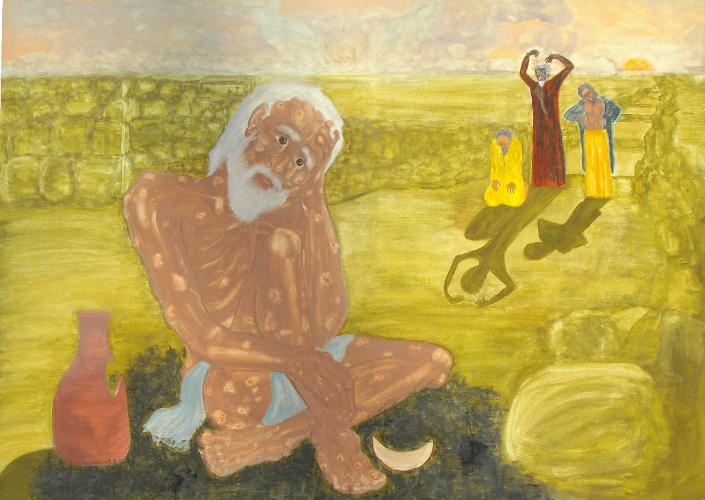
  • Groaning with Job – 4

    March 10th, 2014

    job

    Eliphaz was the first of Job’s comforters to speak, and his line of reasoning is simple. Over the course of the following discourses, it will be repeated again and again by all three of Job’s friends: Nobody just “suffers” – for no reason; If you do good, you’ll prosper; If you don’t you’ll suffer; You’re suffering; Bottom line – you must have brought this on yourself through your sin.

    Their collective theology is not uncommon today either. We all want to be able to answer the question “why?” when we suffer. But what makes it so difficult to work through is that there is a germ of truth in their thinking. It is true that sometimes we DO suffer because we’ve brought it directly upon ourselves. Bad choices, sinful attitudes, thoughts and actions each have their natural consequences. And yes, God does use certain events in the lives of people as a specific means of chastisement at times. But this is not always the case by any means. And in our rush to answer the “why?” question, we can create such a flattened out theology that we leave no room for plans, purposes and actions of God that might not be as easily discernable as the formula: Sin and you’ll suffer, do good and you’ll prosper.

    It just isn’t that simple.

    Job’s response to Eliphaz is contained in chapters 6 and 7. And if there is something for us to learn when trying to comfort anyone else in their suffering, it is that the first rule of “comforting” is to remember that the person is in pain – be it emotionally, physically, spiritually or all of the above. A short summary of Job’s response could well be: “If you had any idea of how much pain I am in right now, how weak I am, you would see how inappropriate your counsel is. Give me some room and just let me cry out in my pain.”

    But we are often unwilling to do that. Whether it is out of our own uncomfortability with their pain or fear that maybe we could suffer without a discernable cause too, or whatever else – let us be like doctors who are not interested in increasing the pain of a patient with a broken leg because they broke it doing something stupid – and rather seek first to ease the pain and THEN treat the other attending issues.

    In present day dialog, Job’s answers here would take on this kind of tone:

    6:2-7 / Listen, Eliphaz, talk is cheap. You have no idea how deeply I’m suffering right now. And you give me glib answers? I’m in pain here!

    6:8-13 / I’m already at the point where I wish God would just kill me and get it over with.

    6:14-23 / Don’t you fear God – to give me vapid and cheap advice when I’m grieved beyond all measure and wrestling with the largest issues of life and death? Your words are useless to me right now.

    6:24-27 / If you’ve got something substantive to say – I’ll listen. But don’t treat this like a game.

    6:28-30 / Man to man, tell me exactly what sin you think I’ve committed to bring this on. Show me!

    7:1-6 / Have a little sympathy man! Life is hard anyway. Right now, it is interminably painful.

    7:7-10 / There’s no recovery from what I’m going through.

    7:11-21 / Since this is so dire – I’ll just spill my guts completely. I’ve got nothing to lose. You’re treatment of me right now is inhuman. Do you really think I’ve done something to warrant this, and that I can just repent and it will all be OK? Is that what you see in your “visions”? Spare me.

    What a contrast to our Jesus who stood by Lazarus’ tomb and wept. Never saying something like “well what did you expect Ladies? This is the natural consequence of sin! You’re all going to die like this.”

  • Groaning With Job – 3

    March 5th, 2014

    jobc10

    Job’s opening discourse was a simple lament. And an understandable one – “I wish I had never been born”. I’ve uttered those words in dark moments, and no doubt many if not all who are reading this have as well – at one time or another. Sometimes the pain, and especially the meaninglessness of pain coupled with no prospect of relief drives us to despair of life and simply to want the suffering to end more than anything else.

    Suffering can eclipse all other reality. A telling event in the book of Exodus give us some insight into this truth. In Exodus 6, after Moses had approached Pharaoh for the first time asking to let God’s people go, Pharaoh wanted to teach the Jews a lesson. So Pharaoh made their labors all the worse by commanding the Jews to gather their own straw, while keeping up the same quota of making bricks. It was harsh and oppressive and the people felt it keenly on top of their existing slave conditions. So Moses went back to tell the people it would be OK, God WOULD deliver them if they trusted Him. There the text notes: Exodus 6:9 “Moses spoke thus to the people of Israel, but they did not listen to Moses, because of their broken spirit and harsh slavery.” Many a good man and woman grows deaf to genuinely good news when the suffering is severe. So with Job.

    It is in response to Job’s initial lament that Eliphaz the Temanite makes his first attempt to address Job – and in substance he will say: “You wouldn’t be suffering like this if you weren’t guilty of SOME sin. He will open the door to what will be the main line of reasoning from all three of Job’s friends.

    Eliphaz’s discourse is contained in chapters 5 and 6, and the run of his argument goes like this:

    4:1-6 / Job, you’ve counseled others to be patient in hardship, now you be patient while I counsel you.

    4:7-11 / Here’s the basic reality you need to grasp Job – no one suffers without cause; without a connection to sin.

    4:12-21 / And while we both know this Job, I want to tell you that the Lord has even spoken to me about this – I’ve received a vision. In the vision a spirit passed in front of me (and it was frightening) and said: ‘Can mortal man be in the right before God? Can a man be pure before his Maker?’ (vs. 17) from which I gather this Job – there’s no one without guilt, so this circumstance must fit into that category too.

    5:1-7 / Look, you know I’m right. Affliction doesn’t just spring up out of the soil.

    5:8-16 / My advice? Go to God Job. If you repent, all will be well.

    5:17 / Make your confession, take your licks, and you’ll be restored.

    5:27 / I and the others have thought this through Job. We’ve done the study – and this is the way it is. Take your medicine.

    And so ends the first “comfort” Job is to receive from his friends. And I wonder how many of us have thought such things if not said them, when someone near us has suffered unusually and inexplicably? How quick we are to put it all in a neat box – and leave precious little room for the grace of God in Christ to our ailing brothers and sisters. Lord, preserve me from being such a “comforter”. THE Comforter knows infinitely better, by turning other’s eyes to Christ, rather than to their performance, or lack thereof.

  • Groaning With Job 2

    March 4th, 2014

    job

    Job chapter 1 set the stage for this amazing account. The righteous and prosperous Job has lost everything. His flocks, his 10 children, and upon further interaction between Satan and God (Ch. 2) – now his health is severely attacked. One cannot read those passages with feeling the enormity of his grief.

    But the grief of his losses themselves, are nothing compared to what they generate internally. Without answers, Job (like us) is left with no “ease”. He remains uneasy if you will. He cannot rest. Nor can he be quiet. The heart and mind are in constant upheaval. He cannot give himself a moments rest but that all this trouble rushes in upon him over and over like unpredictable waves. Grief is a heavy load. That it is even recorded for us here in this way, is proof that our God knows what it is we suffer. He is so good.

    And then Job’s three friends arrive. Make no mistake, these men really were his friends. They were not enemies in disguise. This is what makes the painful discussions which follow all the more difficult for Job. He knows these men. They fellowshipped together and served God together. They are not coming to hurt him, they love him and want to help him. But in their failure to understand the real situation, and in their very narrowly constructed theology – they end up pummeling him with their words like a thousand sledgehammers. It is unbearable to read in places. How much more it must have been unbearable to Job in the process.

    One’s mind reflects back on the circumstances of Horatio Spafford – the author of “It Is Well With My Soul”. The fuller story in Spafford’s case carries much of Job’s sorrow with it.

    Born Troy NY in October of 1828, Horatio became a very successful lawyer in Chicago. He married Anna, and their only son died at the age of 4 in 1870. Next, he lost most of his investments in the Chicago fire of 1871. Close friends of D. L. Moody and needing a break – he decides on a family vacation in Europe and to meet up with Moody while he was preaching there. Delayed by business, he sent his wife and 4 daughters on ahead of him:  eleven-year-old Anna “Annie”, nine-year-old Margaret Lee, five-year-old Elizabeth “Bessie”, and two-year-old Tanetta. As most of us know, the ship was struck by another and sunk in Nov. 1873. 226 died including Spafford’s 4 daughters. His wife Anna sent a simple, devastating wire: “Saved alone”. Later, sailing over the spot of their shipwreck Spafford pens the now famous lyrics to “It Is Well.”

    But it didn’t end there. The Spaffords went on to have 3 more children. Of those 3, their 2nd son dies at age four of scarlet fever. And it is then, as though this much grief is too much to be borne, their church, just like Job’s 3 friends, declares to them they must be suffering under some sort of divine judgment – and they are asked to leave lest this infect the whole church. They do leave, moving to Jerusalem to set up humanitarian works. And only a few years later, Horatio dies at 60 of malaria.

    It is any wonder then that Job’s opening lament in chapter 3 can be summarized in very few words? Read the chapter, and you will no doubt come away with this brief, anguished cry:

    “I wish I had never been born. Life is pain.”

    Job was not the first to have been there, and certainly not the last. And if this where were the account ended, we would be at a total loss. But it is not. God will still be seen in His glory. And our dear friend Job will come to live life again – because of the faithful love of our Living God.

  • Groaning With Job – 1

    March 3rd, 2014

    Blake_1793_Job's_Tormentors

    The Book of Job is a powerful and insightful look into the providences of God and the mysteries which attend our living within those providences – sometimes with little means to understand what is going on. This is especially true when those providences lead us into un-explained suffering. This is Job’s dilemma.

    Job asks throughout this chronicle – WHY? Why am I suffering so? This question, the perennial one we all ask in trial, is in fact never answered.

    What Job does come to accept as enough of an answer is – WHO. He finds who is behind it all – His God. And in a final vision of His God in all of His glory, Job finds this God is worthy to be trusted.  Knowing who this Who is…all is well – even though Satan and his machinations are at work too.

    Now the purpose of giving us the background regarding Job that he was “blameless and upright, one who feared God and turned away from evil” seems precisely aimed at preventing our assuming his trials are related to personal sin. Job’s sinfulness is the base assumption of His comforters. It is a vile assumption which must be crushed. When we live in a tit-for-tat universe, soon, every man is beyond mercy, and our prayers for them are nothing but foolishness.

    What I would like to do here is attempt to paraphrase both Job’s words, and those of his comforters – Eliphaz, Bildad and Zophar in a more modernized way so as to bring this amazing piece of sacred and Divinely inspired poetry into the frame of our own lives more accessibly.

    The narration begins by telling us of Job’s uprightness, and of his considerable fortune and pleasant situation. Married with 10 children. Devout. Wealthy. Well respected – Job loses everything in a day. And who can rightly begin to understand the crushing weight of the loss of his 10 children in one day – let alone the rest of his suffering? It boggles the mind.

    Such is our hero in this study. And each day I will give you a key to the portions I am paraphrasing – which might serve you much better if you read the Biblical text in full for that day. It is usually 2 chapters or at the most 3 – and can be read in a few minutes.

    But let us note at the outset several framing thoughts.

    1. 1:1 & 1:8 – God Himself announces that this is a good man. Perfect? No. But upright, blameless, one who fears God and turns away from evil. He is NOT a scoundrel bringing down just condemnation upon his own head.

    2. 1:6 – Even Satan must give an account of his actions to God – he is not permitted to run unfettered in God’s universe. And in 1:8 – even Satan’s thoughts are known to God as much as our own.

    3. 1:20 – In times of great distress, it is imperative that we guard our hearts by justifying God in it. The Enemy of our souls is after the turning of our hearts against God. That was evident in Satan’s words. To suspect God of capricious acts. To assign to Him dark or sinful motives. To think of Him as detached, hard, uncaring or even cruel. Not only will Satan tempt us toward this, our own hearts often feel the need to blame someone for every ill. God is often the first we blame – especially when tragedy strikes and it is of the kind that obviously is out of the ordinary – catastrophic. “Acts of God” we call them. Things we put in His domain and that He could have prevented. The battle is to preserve right thoughts of Him, for who else is it that is our strength and shield? Who is our help? Who alone loves us so that we can truly trust Him even in the unfathomable. Only God. If we allow ill thoughts of Him, we remove ourselves beyond all hope.

    4. 1:22 – It is not sin in Job in looking to the ultimate hand of God above all. This is not to deny the Devil’s role – it is simply not to make the Devil the sole factor – and to be sure that He looks to His God, rather than trying to deal with the Devil himself.

    In chapter 2 Job will call this “evil” – he does not pronounce calamity good. He sees the “badness” in it – yet he also recognizes God in His goodness overruling all.

    Read Chapter 1 with these 4 thoughts as a backdrop – and we will begin to groan with Job in the following chapters.

  • Digging Deeper in Proverbs 16(b)

    February 26th, 2014

    sweet-words

    Proverbs 16:21 The wise of heart is called discerning, and sweetness of speech increases persuasiveness.

    Sweetness of speech is not flattery, lying or failing to deal in complete truthfulness. It is rather the attitude in which our communication is carried out. Would we persuade, or simply hammer our view home? Would we win or keep a friend, or are we simply after stating the case? Jesus never shrunk back from delivering the whole truth – but He was no man’s enemy, even though they were His.

    In one of Jesus’ most protracted rebukes (Matt. 23) Jesus’ utters 7 “woes” to the Pharisees and “hypocrites” followed immediately by His weeping and lamenting over Jerusalem.

    “Woes” are warning, not last-word judgments. He shows them their sin, but weeps over it at the same time. This is not raw denouncement, but urgent pleading without soft-selling the realities.

    What a glorious demonstration of genuine discipline coupled with compassion and loving constraint.

    Father, teach me this holy skill. How I would rather thunder out my way, than persuade by a heart set on blessing the other. How I want to be right, more than righteous. Deliver me.

    Proverbs 16:24 Gracious words are like a honeycomb, sweetness to the soul and health to the body.

    If your Gospel has no grace, no sweetness, do not be surprised if it gains no souls. If the Gospel contains no “good news” and only exposure of sin – it isn’t Gospel, it is law. And we are called to preach Christ and Him crucified, not Moses – and him thundering. Mount Calvary, not Mount Sinai.

    Proverbs 16:31 Gray hair is a crown of glory; it is gained in a righteous life.

    Experience is valuable. This is why church leadership is supposed to be comprised of “elders”, and not “youngsters.” Those who have walked with the Lord through trials, temptations and the ups and downs of life’s varied circumstances are of great value to us. Never forsake them for trends, fashions, and the newest thing to come along. For there is no other way to Heaven, than to walk the road that all who love Christ have travelled before us. Read of their lives and their struggles AND their triumphs. And walk too.

    Proverbs 16:33 The lot is cast into the lap, but its every decision is from the Lord.

    There is a form of randomness on our level, but not on His.

    2 Chronicles 18 contains the account of Ahab’s death in battle. Ahab had asked Jehoshaphat, king of Judah to join him in fighting the Aramaeans at Ramoth-Gilead. When all Ahab’s false prophets had finished telling the 2 kings they would have a victorious battle, the lone prophet of the Lord in Israel, Micaiah, told them they would not prevail, and that Ahab would not return from the battle.

    Vs. 33 records: “But a certain man drew his bow at random and struck the king of Israel between the scale armor and the breastplate.” “At random” for the archer, but not so from the Lord’s perspective. It was just as He had foretold through Micaiah.

    Nor is their randomness in your life or mine from our Heavenly Father’s vantage point. And so we rest in His providences, though from the human point of view – they remain inscrutable.

    What a glorious God we serve!

  • Digging Deeper in Proverbs 16(a)

    February 25th, 2014

    my-redeemer-lives

    Proverbs 16:2 All the ways of a man are pure in his own eyes, but the Lord weighs the spirit.

    Such is our sinful self-deception, that our own motives are often hidden from us. Especially when we contemplate sin. Our capacity to justify it seems endlessly creative.

    But we must not imagine our ignorance is God’s – He DOES know our motivations. And our ignorance will not excuse us in the end – for our true motivations are known – and they are, our own.

    This is both jarring – in that our wickedness cannot be hidden, and comforting, in that even the slightest hint of righteous desires are known and noted by a gracious God.

    Proverbs 16:4 The Lord has made everything for its purpose, even the wicked for the day of trouble.

    Bad eyes? Constant struggle with weight? Abandoned? Hurt? Poor? Wealthy? Too short? Bald? Too attractive to be taken seriously? No pedigree? Wrong ethnicity? Birth defect? Challenged? Poor hearing? Diabetic? Lack ambition? Lonely? Only liked for your money or

    influence? Dumped at the altar? Bullied? Abused? Betrayed? Uneducated? Handicapped?

    God has graciously & wisely given us each and every circumstance – from our physical strengths and weaknesses, to our positive and negative circumstantial environments – that we might be brought face to face with the conditions best suited to maximize the exposure of the sin within us that needs dealt with, as it hinders Christ’s likeness within us.

    Does this mean we simply look at everything and declare it good? No! May it never be! Some of these things considered in and of themselves are in fact bad. Very bad. But their being bad is no hindrance to God’s gracious purposes toward His own through them. Evil exists. But God’s goodness redeems even the most heinous of all things that touch us on behalf of His loved ones – so that we need not live as perpetual victims, but rather as prized trophies of grace.

    On one side, it takes very penetrating hurts to go deep enough to uncover and expose the most buried and protected sins. On the other side, it takes very great privileges and pleasures to expose other of the deepest sins buried in our hearts. These are means He uses in sanctification – no matter how the Enemy may have designed it, or the evil in any other perpetrator’s heart may have meant it.

    How then, will we respond? Will we use His “gifts” to grow? Or will they serve as our chief excuses to remain as we are? Praise God for His great redeeming grace!

    His redemptive glory transcends anything we’ve begun to uncover yet. Oh how eternity alone will be able to declare it to us! Though we cannot see it now, the day will come when we will. His righteousness will be fully vindicated; evil and sin will be fully revealed and judged – and we will stand in awe of how He blessed us through the worst machinations the Enemy of our souls was able to concoct and execute through the agency of his fallen minions and fallen men. What a great God we serve.

  • Digging Deeper in Proverbs 15(b) – Living on Purpose

    February 19th, 2014

    intentional

    Proverbs 15:24 The path of life leads upward for the prudent, that he may turn away from Sheol beneath.

    A concept revisited over and over in Proverbs is that of seeing life as going somewhere, not just being lived. The Bible never sees mere existence as legitimate for human beings. We are meant to be people of purpose.

    The naturalistic worldview posits that all of human life – indeed all of life period is nothing more than a cosmic accident. That there is no rhyme or reason to anything existing, let alone human life as distinct not only from other organic life – but any other substance. We are simply an animated substance and that, by chance.

    It was Henry David Thoreau (Civil Disobedience and Other Essays – 1849) who wrote: “Most men lead lives of quiet desperation and go to the grave with the song still in them.” And if the naturalistic worldview is correct, there is no other way to live life. It began without purpose, prattles along without purpose, and ends without purpose. Even Thoreau’s “song” has no purpose, other than meaningless self-expression. Little more than the belch from a well fed stomach.

    How far from this is the Biblical worldview. The “prudent” live a life that is leading “upward.” It is the picture of one on a journey with a deliberate termination point – and that, beyond “Sheol” or the grave. The one who has had their eyes opened to the reality of the living God and our relationship to Him first in creation and then redemption in Jesus Christ – has set their sights on arriving in His presence as their goal. Nothing ought to be quietly desperate about us – but every moment infused with hope and the knowledge that having been created in God’s image, and for those in Christ, in the process of being re-created in that image – this is but one stage of the journey. Determinative certainly, but final – never.

    There was an old poem later put into song which carried the refrain:

    There’s a Heaven to gain, and a Hell to shun;
    The way is still straight, there’s a race to be run.
    You can live as you please, but you must pay the cost;
    And the highway to Heaven still goes by the cross.

    That’s true. And the Prudent live their lives knowing it.

    Let me ask you, are you deliberately going to Heaven? Living your life on purpose, or just existing?

  • Digging Deeper in Proverbs 15(a) – Our Seeing God

    February 18th, 2014

    eye

    Proverbs 15:3 The eyes of the Lord are in every place, keeping watch on the evil and the good.

    Christian, never forget that your Heavenly Father knows where you are and what is happening to you and around you. He knows! Let no one ever imagine God is unaware of their plight. He sees. He knows. He cares. What a loving, faithful God we serve.

    Unbeliever, never forget that your Creator knows where you are and is happening to you and around you. He knows! Let no one ever imagine God is unaware of their plight – nor of their sin and rebellion against Him. Would you gain a sense of how patient and kind He is toward you? He knows all this, and yet He calls to you with the Gospel of grace, to come and be reconciled to Him. To have your sins forgiven. To obtain the gift of eternal life in Jesus. To become His child. What a loving and faithful God He is. How long will you wait?

    Proverbs 15:4 A gentle tongue is a tree of life, but perverseness in it breaks the spirit.

    It takes gentleness to minister to weak, weary and bruised souls – but sometimes in trying to be gentle, we can massage the truth so as to communicate falsehood. When this happens, when truth suffers in our attempt to be gentle, we end up not only failing to truly minster, we do positive harm – we break the spirit of the one we are trying to encourage. Eventually, the truth WILL come to them, and they will be disheartened and resentful at how we failed to be courageously loving in dealing truthfully and straightforwardly. They will see why our counsel failed to give them real aid. We will be seen to have put mere band-aids on their cancer and led them to believe all will be well. We must speak the truth in love. And neither aspect, the truth nor the love can be safely neglected. It is never a question of “would you rather have the truth, or the love?” That is a false dichotomy. Scripture demands both.

    Proverbs 15:19 The way of a sluggard is like a hedge of thorns, but the path of the upright is a level highway.

    To a lazy person, every step forward is painful and full of trial and danger. Not that it is really so – but this is how they imagine it, so as to keep themselves from having to move forward. They have convinced themselves of every possible objection. The road is too steep, or plunges too quickly. The smiles of others make me suspicious, the frowns of others discourage me. If I do this – that will happen, and if I do that, this will happen – every path is a no-win. Everything is too hard, too dangerous, too painful. So it only makes sense to do nothing, and lament then about not making any progress.

    And how this slips over in the Christian life in terms of spiritual progress. Many a Believer seems to make precious little progress because they have erected all kinds of real, exaggerated and even imaginary barriers to how difficult it is. We need to see this as sluggardliness at its root and repent of it. It was the Victorian preacher J. C. Ryle who coined the phrase “no pain, no gain.” And he did so in the context of growing in sanctification, of maturing in Christ. Eternal glories have been freely won for us by Christ – but we must go into the fields He has planted them in, and gather them up for ourselves. Manna falls each morning, but it must be sought out and harvested. Grace is dropping all around us, but we must put our hands out to cup the sweet elixir, and bring it to our own mouths to drink.

  • Digging Deeper in Proverbs 14(c) – Talk is Cheap

    February 13th, 2014

    talk_is_cheap_copy

    Proverbs 14:8 The wisdom of the prudent is to discern his way, but the folly of fools is deceiving.

    The wise man is forever asking the question: Where will this take me? The fool doesn’t ask, because he doesn’t want to know. He wants to deceive himself into justifying falling into sin. But this is also the very place where the Christian finds great rejoicing. The Puritan Richard Baxter once said: “Once you have a God, a Christ, a heaven to rejoice in, you may rationally indulge a constant joy.” The wisdom of the prudent is to discern his way, and if that way is following Christ; if that way is the road to Heaven through the Gospel; if that way will result in being in the unveiled presence of our glorious Christ and Savior – our Savior and Lord, for ever – it is time to begin to rejoice with joy unspeakable and full of glory! The only right word is – hallelujah!

    Proverbs 14:9 Fools mock at the guilt offering, but the upright enjoy acceptance.

    Every young person knows the sting of being thought of as silly, for paying attention to spiritual truths. So be it. Better to be accepted by God, than by millions of adoring fans. Let others mock at the “guilt offering”. They will mock us for feeling guilt at all, or for thinking that the sacrifice of Christ can remove that guilt. Either way – the Scripture says they are the fools. Let fools say what they will about your dependence upon Christ’s blood to meet your need in satisfying God for your guilt, you have The Father’s full acceptance. Their rejection is worth it. Better to have His acceptance than theirs. And if you are accepted in the Beloved – you are accepted indeed.

    Proverbs 14:14 (ESV) — 14 The backslider in heart will be filled with the fruit of his ways, and a good man will be filled with the fruit of his ways.

    Throw off God’s yoke, and you will be full all right – full of filth and grime and all manner of sin and its effects.

    Yield to His yoke, and in due time, an entire harvest of good things will be yours in the Spirit. Sin always begins with the neglect of what is ours in Christ, shrinking back (backsliding) from those holy habits that bring us repeatedly into His presence and into contact with the Gospel truths that transform our lives by the power of the Spirit. The heart desires to be filled. This is as we were designed. But what we pursue to fill it, makes the difference between Heaven and Hell.

    Proverbs 14:15 The simple believes everything, but the prudent gives thought to his steps.

    What do you believe, and why? These are questions that the Foolish never seem to put together. Many a man knows his “opinions.” He is acquainted with at least some of what he believes. But does he examine the reasons behind why he believes them to be true? The Wise are always about this business. They know that ideas have consequences. They examine and re-examine their own thoughts and views and take them back to the Word of God over and over for refinement and scrutiny. Even the Christian who never questions what he believes and why proves to be “simple.” And that is not a complimentary term. It comes from a word which implies someone who will believe anything – in other words – gullible. Christians are not to be gullible but discerning. Contrary to the World’s definition of faith – we don’t just “believe” as though believing anything makes it true or useful. Faith is the reasoned response of the one whose eyes have been opened to know that God has spoken to us in His Word and in His Son, and believing what God has said is true, orders their life accordingly. Be a thinking man or woman of God.

    Proverbs 14:23 In all toil there is profit, but mere talk tends only to poverty.

    Here is the bankruptcy of mere “talk therapy”. One needs to act, not talk only. One needs even less to endlessly rehearse their woes in the ears of others. If you are not doing something about your problems, but merely discussing them with your friends and complaining – do not expect any progress. DO something if you can. Otherwise, you do nothing else but aggravate your own soul, and drag others into it. You will foster doubt, unbelief and bitterness in your own heart, and run the risk of infecting others with the same. Even prayer by itself is only talk, where action is called for. We must never do less than pray, but often must do much more. One needs not to just pray for a job, they need to go look for work. Don’t just pray that your marriage improve, learn to love and bless your spouse. Don’t get together and talk with others or even just pray about your Church, dig in and help build up others in Christ.

    In every conquest of Canaan in the Old Testament, though God had promised the land to His people and told them He would fight for them and drive out the inhabitants, they STILL needed to raise the sword and actually go into battle.

    So it is with our sins too. We cannot just pray them away – we must take all Scripture informed means to prosecute a war against them and prevent them from holding sway over us. This, by the power of the Spirit, believing that He will give us the victory if we will pursue in obedience to His Word, will see us bring them one by one under His hand. Fight on Christ. Do not do less than pray – pray always. But don’t stop there – fight! God has promised victory to those who cross over and pursue.

  • Digging Deeper in Proverbs 14(b) – Leaving the presence of a Fool

    February 12th, 2014

    5283511-young-man-running-away-isolated-on-white-background

    Proverbs 14:2 Whoever walks in uprightness fears the Lord, but he who is devious in his ways despises him.

    Here is another excellent contrast that deepens our understanding of the “fear of the Lord.” The language is most insightful. The contrast in this place is easy to see – to fear the Lord is to take Him seriously – and to despise Him or treat Him lightly is the opposite course. No one “fears the Lord” by simply carrying out religious rituals and practices. They fear the Lord when they acknowledge that what God says carries weight with them – it influences decisively how they feel and how they understand truth. To call oneself a Christian, and yet to consider God’s Word little more than good advice is in fact to despise Him. And for those who DO fear Him, it will show itself in uprightness of life.

    Proverbs 14:5 A faithful witness does not lie, but a false witness breathes out lies.

    We must bear honest witness about Christ. Have we been saved by Him? Is He our redeemer? Have we truly been bought by Him and have become partakers of His salvation? To claim to be a Christian and yet to be unregenerate – to have never been born again – is to bear false witness. It is to say “Christ has saved me” – when He has done nothing of the sort. Do you believe Him? Have you trusted Him as your substitute on the Cross, owning that God’s wrath is what YOU were due, and that He bore it in your place?

    A second aspect of this is that must bear honest witness about what Christ has done in other things beyond salvation. He does not need us to make up things about Him. To exaggerate about His goodness or to claim works for Him He has not done – nor to fail to make known His goodness to us. Many think they need to puff Him up in the eyes of others; and then some fail to make Him known at all. Both must repent and bear honest and true witness about Him.

    And thirdly, we must bear honest witness about ourselves. We are so unwilling to be seen and thought of as sinners, failures, etc. Christ came to save the lost, not the righteous. If we will not own the truth about ourselves TO ourselves first, and then to others – we seek to be saved by some other means, and we have no true salvation. To need to look a certain way in the eyes of others (irrespective of how we truly are before God) is the height of hypocrisy.

    Proverbs 14:6 A scoffer seeks wisdom in vain, but knowledge is easy for a man of understanding.

    The “scoffer” is one who is scornful of others, and never attains to the insight he or she believes they have into the souls of others. Scornfulness is an attempt to elevate self at the expense of the de-elevation of others. So it is the scoffer’s perspective must always be skewed, for their measure of self is all rooted in comparison to others – and others are not the standard – Christ is! As a result, they feel better about themselves as they look down on others, and all the while lose more and more of reality by not looking intently at Christ. Holy Spirit – keep our eyes fixed upon Christ that we might walk in the truth.

    Proverbs 14:7 Leave the presence of a fool, for there you do not meet words of knowledge.

    Do not spend time taking up the thinking of people who speak, live and perpetuate nonsense. Fools are practical atheists. They may claim to be deists or even Christians, but in their thinking and attitudes – for all intents and purposes, they reason and live as though there is no God. Leave them. They cannot impart knowledge of a Christ they do not know or worship. Fools say in their hearts (even though they may profess the contrary) that there really is no God. At least not the God of the Bible. Not a God who created all things by the Word of His power; or who rules His creation actively; or who is holy and must judge sin; or who gave His Son as a ransom for human sin, so that all who put their trust in Him might be forgiven and have everlasting life; or who will at last vanquish all of His enemies and consign them to an eternal Hell. For to deny such truths, is to deny God. And fools, deny God.

    But as the old Puritan John Flavel once noted: “the most eagle-eyed philosophers [are] but children in knowledge, compared with the most illiterate Christians.” Why? Because to know the truth about who we are in the universe, and the salvation of our eternal souls in Christ – is knowledge that will give us all the glories of God in Christ Jesus for eternity. What a glorious God we serve, who saves the weak, the broken, the deficient – all by His wonderful grace. And bestows His lavish riches upon the meanest of all – simply by grace through faith. Else, none of us would be saved.

←Previous Page
1 … 119 120 121 122 123 … 197
Next Page→

Blog at WordPress.com.


Loading Comments...
 

    • Subscribe Subscribed
      • ResponsiveReiding
      • Join 419 other subscribers
      • Already have a WordPress.com account? Log in now.
      • ResponsiveReiding
      • Subscribe Subscribed
      • Sign up
      • Log in
      • Report this content
      • View site in Reader
      • Manage subscriptions
      • Collapse this bar