Skip to content
  • Home
  • About
  • Blog
  • Atonement
    • The Atonement: Read this first!
    • Confession of an ex-u0022Highperu0022 Calvinist
    • Revisiting the Substitutionary Atonement
    • Discussing the Atonement – a lot!
    • Lecture Notes on The Atonement
  • Sermons
  • ReviewsAll book and movie reviews
    • Books
    • Movies

ResponsiveReiding

  • Sweet thoughts from Bishop Ussher

    November 14th, 2014

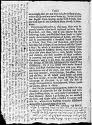
    From page 120 of Richard Snoddy’s “The Soteriology of James Ussher”.

    “God is so pleased with the obedience of His Son that those who are united to Christ are deemed righteous, ‘as if we had fulfilled all His laws, and never broken them at any time, and as if we owed Him not a farthing.’ Ussher goes further still. Christ’s vicarious obedience in fulfilling the law obtains for believers a righteousness exceeding that of Adam’s pre-lapsarian state: ‘Christ did it for us: and the Father is better pleased with the thirty-three years’ hearty obedience of His Son, than if Adam, and all his posterity had been obedient throughout the whole course of the world: so acceptable was this obedience to God.’ ”

    To which I will add: HALLELUJAH! What a Savior!

    IMG_0077.JPG

  • Moving from WHAT we believe, to WHY we believe.

    November 11th, 2014

    Generic Concrete Reference

    Al Mohler’s “Briefing” podcast today – I believe – is one of critical importance for the Church, and especially to Christian parents. You can listen to it HERE. 

    Responding to a recent declaration by Cosmologist (not to be confused with cosmetician) Lawrence Krauss that religion could be largely eradicated in a generation, Dr. Mohler reminds us of some very important realities.

    Krauss’s assertion is based upon the idea of being sure that he and fellow atheists reach young people around the age of 13, when their critical thinking skills are really kicking in; to show them how silly religion and its effects are. Note that age, 13. The age at which many parents begin to deal with their children pushing back on some ideas. All too often this is seen only as rebellion. And while some rebellion may in fact be present, the larger picture is that this is when they are in fact making a very necessary shift from simply believing what their parents have taught them, to what they believe as their own convictions.

    So the question becomes, are parents (and churches) equipped to give them the intellectual ammunition needed to deal with this new state of affairs? Can we as parents, can we as the Church formulate sound, time tested and well-reasoned responses to the challenges they face in terms of the validity of the Christian faith? Or do we simply drop propositional truth in their laps, and never meet their intellect where it needs to be met? Can we say why WE believe what we believe in a coherent fashion – in a way that can help them make the leap from what we taught them, to why we taught them what we taught them? If we do not make that effort, we make them prey to vicious and competing ideas.

    Am I saying we can convince anyone into the Kingdom? No. I am saying that the first role of apologetics is not to convince unbelievers, but to address the attacks of an unbelieving world upon those whose hearts and minds are most vulnerable after having been raised within the Biblical belief system  and worldview. To give them the wherewithal to stand, and not be swept away by the tide.

    While Mohler’s podcast goes on to mention the incredible growth of Christianity in China, he also mentions the warning (tho not by chapter and verse) that the letters to the 7 seven Churches in the opening chapters of the book of Revelation do. Can the Christian religion be erased from the face of the earth? No. Christ’s promise to grow and keep His Church is absolute. But does that mean the candle or lamp of Christianity cannot be put out in some places? No. And at times, in judgment – He Himself may extinguish it. (Rev. 2:5)

    If we raise our children in the Church and in the home on a Christianity based merely upon personal feeling or emotional attractiveness, we prepare them to be conquered. We must give them the stuff of sound minds, and solid, Biblical reasoning. We must draw from those who have gone before us and fought these same battles before us and “kept the faith” for us in our generation. We must help them “Therefore, [in] preparing [their] MINDS for action, [to be] sober-minded, [and] set[ing] [their] hope fully on the grace that will be brought to [us] at the revelation of Jesus Christ.” 1 Peter 1:13 (ESV)


  • The Voting is Over – So what?

    November 5th, 2014

    image
    So the voting is over, and most of the results are in.

    And what will be the outcome?

    If we are looking for salvation by politics, it is a humanistic pipe-dream. For any government, any governmental system, from monarchial tyranny to the most democratic, can only be as good as the moral constitution of the PEOPLE in it, not its documents.

    Israel originally had no king, and fell apart because the individuals would not serve God as their individual responsibility. God gave them a king as they wished. And Israel declined, because the kings were as corrupt as the people they ruled over. Time and change brought a constitutional republic to our shores. But once again, such a republic is only as good as those who govern within it, and as they represent the hearts and minds of those who voted them into office. And if their hearts and minds are not influenced above all by the Word of God, energized by the Spirit of God, then as good as that republic looks on paper, it too will fall; whether sooner through decay, or as EVERY human government must and will eventually – to the scepter of Christ.

    I pray the results of last night’s votes will have placed more truly godly men and women into power, than mere political ideologs.

    Time will tell.

    But the Church’s mandate remains the same no matter what party holds power – to proclaim the saving Gospel of Jesus Christ, and to salvage souls from sin, not cultures from change.

    I hope you voted.

    But if you did not pray for your government at least for the amount of time it took you to drive to the poll, cast your vote and arrive back home – what great hope can you put in it? For kings and governments serve only at the pleasure of our God.

    And who yet knows if yesterday’s outcome will prove to be a reprieve and blessing, or another just curse? For those do not depend upon party – but upon service to Christ.

  • Digging Deeper into Proverbs 20(d)

    July 31st, 2014

    riches

    “There is gold and abundance of costly stones, but the lips of knowledge are a precious jewel.” (Proverbs 20:15, ESV)

    When I was in my 20’s and still living with my parents, our house was robbed in the middle of the night as we slept. By God’s grace, no one was harmed. We woke to find the kitchen ransacked, my Mother’s purse missing, frozen food from the refrigerator gone, and my overcoat. What other rooms they may have visited as we remained unaware in slumber only the thieves and the Lord know. Fingerprints revealed two intruders. In fact, those same two would rob us again and take far more – including much of my clothing. The way this impacts you emotionally is quite difficult to explain in full.

    One thing in my own response to it surprised me quite a bit. In realizing my coat was gone – a nice coat at that, I really began to pine when I realized that what was in my coat pocket was missing with it – and that was a small, beautifully bound pocket Bible which our Church had given me upon my High School graduation.

    I will freely admit that much of my sadness was sentimental. I was so grateful to have received this fine gift several years earlier. As a bit of a bibliophile, I was also sad that I had lost a very finely crafted Bible. The leather was supple, the paper fine and the entire construction elegant. And there was finally the fact that this was my daily Bible. I carried it almost everywhere and certainly every day to work. I had read it through a number of times. It was my friend. I used it more than my study Bible for it was my everyday reading Bible. It was more than a friend, it was an intimate companion. And it was gone.

    The surprise to me was how much more emotional I was over having lost the Bible than my coat, the fact we had been so criminally violated or even what danger we might have been in. That Bible was what I wanted to recover if at all possible. And by God’s good grace, it was recovered along with my Mother’s emptied purse in a dumpster across town. The Bible had suffered tragically in the ordeal and was not fit to be used anymore, but I remember the relief I experienced when it was returned.

    I learned a great lesson through that experience about how to value things which has been with me ever since. I do not know that I would have listed that Bible as so valuable without experiencing the way in which it was removed from me. And the issue of what I value and why has been one which visits my thoughts often to this very day.

    And so I might ask you reader – what are the things you value, and why? And more importantly, have you set store by the wonder of the incalculable riches of the saving knowledge of Jesus Christ? There is enough silver. There is enough gold, but there can never be enough knowledge of the One “in whom are hidden all the treasures of wisdom and knowledge.” (Colossians 2:3, ESV)

    This is wealth. This is riches of the rarest and most inestimable worth. Do not let the business of life, the distractions of the Word and the misdirections of the Enemy rob you of weighing them rightly. Of marveling at them regularly. Of musing over them, delighting in them and satisfying your soul that you are wealthier than if all the richest men of all the ages with their collective treasures laid them at your feet. For they will all perish. And only Christ in all of His glory will remain.

    “Oh, the depth of the riches and wisdom and knowledge of God! How unsearchable are his judgments and how inscrutable his ways!” (Romans 11:33, ESV)

    The lips of knowledge brought you the Gospel by which you received the forgiveness of sins eternal life, and the promise of ruling and reigning with Christ for ever and ever. You are obscenely rich in Him. Glory in it.

  • Digging Deeper into Proverbs 20(c)

    July 30th, 2014

    eyes

    “Unequal weights and unequal measures are both alike an abomination to the Lord.” (Proverbs 20:10, ESV)

    Dishonesty comes many different ways. Placing more weight upon our own works and words and character than is right, or measuring others with a less than objective eye. Either one is an abomination. How precious is our Savior who never deals with us in this fashion.


    “Even a child makes himself known by his acts, by whether his conduct is pure and upright.” (Proverbs 20:11, ESV)

    One of the joys of being a grandparent, is getting reacquainted with what being young is like. My wife has been quick to remind me of how transparent little ones are with their feelings. You see it on their faces instantly with no filtering. If they like it – joy is unmistakable. If they don’t, disappointment or dislike are equally immediately visible. They act on it in a moment – not trying to mask the way we adults have learned so well. Christ never hides either His pleasure or displeasure. He is open and transparent with us in His Word at all times. He is Truth.

    Secondly, people can SAY anything: It is what we DO which is the measure of who we are. Professions of love, loyalty, willingness to serve etc., are only as weighty as the air needed to express them. Loving, remaining loyal, serving – these are the things signified by the words. Without them, the words are worthless. Worse – they promise what they do not deliver – they lie.

    How grateful I am that “God so loved the world”, culminated in “that He gave His only Son”. The mere sentiment of love, as real as it may be, saves no one – even when it is God who loves. It is love acting that sends Jesus to the Cross. And love responding that does not merely assent to the facts – but believes, and is saved.

    So too with repentance. To repent is more than mere remorse, though it is certainly no less. One repents when the desire is changed. When the opinion that the sin indulged in can no longer be justified on any basis. When the sinful thing we desire is seen as what we want freedom from, instead of wishing we were free to do it. When every fall is identified as leaving the path toward Heaven, rather than trying to take a path other than holiness, and still imagining we can get there.

    Do not tell me you love me – love me.

    Do not say “I repent” – walk the other way.

    Do not say “I believe” – trust Him, and cast yourself fully on His promises in Christ.

    Anything else – is faithless, powerless, human religion.


    “The hearing ear and the seeing eye, the Lord has made them both.” (Proverbs 20:12, ESV)

    So use them both! One Wag said that God gave us two ears and only one mouth because we ought to listen twice as much as we speak.” I don’t know that that is EXACTLY what God had in mind when He designed us that way, but He DID give us ears with which to hear, and eyes with which to see.

    If it is true (and it is) as Scripture records that “out of the abundance of the heart the mouth speaks” (Luke 6:45) then a connection here is unavoidable. Isn’t is obvious that the reason why our mouths are so filled with vitriol, complaint, bitterness, backbiting, dishonesty, doubt and woe – is because we have our eyes and ears feeding our hearts and minds more of self and the world than the beauties and wonders of God? So as our technologically oriented friends would tell us, it is a case of “garbage in, garbage out.”

    Now it seems all too evident, that the Writer of our Proverb here is after us to consider something most wonderful. That we have been given faculties uniquely designed by God, to fill us with wonder, joy, admiration, awe, beauty, truth and transcendence. In other words dear Saint, your eyes have been set in your head so that you may bear witness to the wonders of God. What a glorious gift!

    To each of us, has been given the capacity to behold God in the most amazing display of His creativity and wonder. Have you looked up at the sky lately and had your breath taken away by the blue expanse? Have you glanced at some mountains, a garden of flowers, stand of trees, the ocean or some other great body of water and marveled at what He has wrought? Step outside this very evening and drink in the limitless universe spread out before you in that velvet, star-studded canopy we call “space” and see the hand of God placing each one in their place. What power! What majesty! What genius! God has made your eyes – are you seeing Him?

    Then again, this Lord’s Day, as you enter the holy duty and privilege of worship, do your ears hear the lofty descriptions of His attributes and goodness and grace as the Body of Christ lifts His praises on high in song and prayer and the Word read and preached and taught? Listen to that little baby squeal with delight when tossed by her father. The chorus of praise that makes you hear of Christ’s atoning death again. The staid, calm assurance of saints whispering their needs into the ears of their Heavenly Father. God has made your ears – are you hearing Him?

    I pray it is so.


  • Digging Deeper into Proverbs 20(b)

    July 29th, 2014

    OLYMPUS DIGITAL CAMERA

    “The sluggard does not plow in the autumn; he will seek at harvest and have nothing.” (Proverbs 20:4, ESV)

    Many are those who put little or no effort into their own spiritual progress, who nevertheless assume somehow they should still make progress. Little or no Bible study, little or no prayer, neglect of public worship and the Lord’s Supper, and then shock and grief over being weak and bound under their sins. I blush to think of the times that has been me.

    Spiritual life is like natural life in this way: One can get older without maturing. If merely fed, but never taught to walk, talk, feed or dress themselves, nothing less than something truly horrible results. Something so far less than the human being is meant to be. And since the grand glory that Christ has saved us for is to bear His image, we need to be thoughtful in that regard.

    This is not law, it is privilege. High privilege. For what greater gift can the Heavenly Father bestow upon any but that we might be most like His Son of any creatures in all His universe? It is astounding! It is beyond blessed, it is startlingly glorious beyond our dreams. Is it much then to take up thoughtful participation in this glory?

    Beloved, Christ does not seek slaves to rules and regulations but slaves to love. Slaves to high and wonderful blessings and bestowals. Slaves to joy and hope and wonder. Slaves to being so filled with the wonder of what He has planned for us, that we give ourselves to it every moment of every day in the ever increasing experience of it even now.

    It has often been said that those who aim at nothing, hit it. Let us not be those who aim at nothing in growing in Christ – but study to take on the privileges of the high office to which He has called us and for which He has redeemed us from our sins.

    Having been plucked from the very pit of Hell, will we now balk to rejoice at learning the ways of the household of the King as His own beloved children?

    Father!  Seize my heart in full! Till I long for nothing more than all you have promised.


    “The purpose in a man’s heart is like deep water, but a man of understanding will draw it out.” (Proverbs 20:5, ESV)

    Wise people seek to understand more clearly their own motives and desires. They do not become blind servants of their inward inclinations, but seek to see what’s really there – why they think and do as they do – that they might serve God in the inward man as well as in the outward actions.

    It is incumbent upon us to seek out the knowledge of our own motivations. To live without examining our own hearts and minds is to fail to grow in true sanctification. A man of understanding seeks to know why he does what he does – so as to serve God with truth in the inward parts.

    But know this as well child of God, as you go about this business, while by the illumination of the Spirit and the lens of the Word – great defilements will be uncovered – so will this wonder of reality: Every good thing you are prompted to do, is evidence that the Spirit of God is at work in you – perfecting His own. “for it is God who works in you, both to will and to work for his good pleasure.” (Philippians 2:13, ESV)

    Oh what a great Savior He is who has bought us for Himself!


  • Digging Deeper in Proverbs 20(a)

    July 28th, 2014

    drunkProverbs 21 is especially devoted to making subtle or fine distinctions. Establishing balance.

    This is the passage I gave to my grandson Sam on his dedication in Dec. of 2K10. It was my prayer and intent then as now, that in studying it for himself I time, it may guide him in insight to his own disposition, and keep his eyes ever fixed in his Redeemer.

    In the whole of it, we come away with the needed warning to not be fooled. Even those things made for us by our God can be misused and abused. We must beware the tendency of ANYTHING made, to be harmful when not kept within its proper bounds. We must not be led astray into letting such things run without being governed by wisdom.


    “Wine is a mocker, strong drink a brawler, and whoever is led astray by it is not wise.” (Proverbs 20:1, ESV)

    Even those things which God in His infinite goodness has appointed for our enjoyment like wine (See: Psalm 104:15) – can be turned to ill and great sin. It is our part in wisdom to see such possibilities, and use what God has granted carefully and in accordance with His purpose in giving them.

    This can happen with substances like wine or the poppy plant or the marijuana plant. But it can also happen with virtually anything in life. Families can become idols, as can career or any other ambition. Church life can become an escape from conflict at home and an unwillingness to deal properly with the relationships there. Seeking out and articulating sound doctrine can become a bludgeon and a weapon of aggression against those who know Christ but may not hold identical views in all areas of theology. Grace can be turned into licentiousness and church attendance and other spiritual exercises turned into attempts to bribe or bind the arm of the Lord to do our bidding.

    But in this example in particular, what a contrast it is to Ephesians 5:18-21. Wine is a mocker, the Holy Spirit inspires praise. Strong drink brings brawling, while the Spirit incites peace. Drunkenness dulls the senses, being filled with the Spirit heightens and sharpens them especially as they focus upon Christ and Biblical truth. Wine distorts the vision, the Spirit gives true insight and understanding into Christ and His glory. Inebriation lowers inhibitions and promotes foolishness and proper decorum – the Spirit binds the heart with love and leads us take up Christ’s sweet and blessed course on a clear path toward Heaven and being conformed to His likeness.

    “As for the rich in this present age, charge them not to be haughty, nor to set their hopes on the uncertainty of riches, but on God, who richly provides us with everything to enjoy.” (1 Timothy 6:17, ESV)

    What we have been given to enjoy, let us guard lest they bind us and make us slaves to them, rather than servants to us.


    “It is an honor for a man to keep aloof from strife, but every fool will be quarreling.” (Proverbs 20:3, ESV)

    It takes no skill to get into arguments. Any idiot can bicker, fight argue and quarrel. This is the domain of fools. To avoid these or end them once they’ve begun, this takes wisdom, courage, self-control and uprightness. It is sad to see how many who bear the name of Christian are noted almost exclusively for their ability to enter into one conflict after another. They seem to be on endless crusades against others. Oh that we would expend the same energy fighting our own sinfulness. Would we follow the Prince of Peace who sought always to avoid extended argument and instead to make known the Heavenly Father to all who would hear Him. Heavenly Father, make it so in my life.

  • A sweet and timely prayer

    July 11th, 2014

    20140711-170700-61620519.jpg

    The more our nation struggles, as it seems to labor so sorely under God’s hand of judgment as it does today – the more we need to be praying for our leaders, our churches, our brothers and sisters in Christ and ourselves in such transparent and understanding ways.

    From the personal devotions of Lancelot Andrewes.

    O Heavenly King,
    confirm our faithful kings,
    stablish the faith,
    soften the nations,
    pacify the world,
    guard well this holy retreat,
    and receive us in orthodox faith and repentance,
    as a kind and loving Lord.
    The power of the Father guide me,
    the wisdom of the Son enlighten me,
    the working of the Spirit quicken me.
    Guard Thou my soul,
    stablish my body,
    elevate my senses,
    direct my converse,
    form my habits,
    bless my actions,
    fulfil my prayers,
    inspire holy thoughts,
    pardon the past,
    correct the present,
    prevent the future.

  • Groaning With Job 12

    July 9th, 2014

    JobSldier

    What seems evident in chapter 19 (Job’s 5th response to his friends) is that something has broken. The brevity of this response compared to those that came before signals something new.  He doesn’t fill this response with arguments, but instead turns almost entirely to lament.

    It seems good to note then that there are times when trying to think through suffering must give way to simple grief. Perhaps we wait too long to get there at times. Maybe we try too hard to muster our strength and our self-respect instead of allowing ourselves to truly be crushed. It is counter-intuitive I know. We want to put on the brave face, to act as though it is all OK even though it is so overwhelming. We want to do it for our own sake – so that we do not fall off the precipice of utter despair.

    But giving up trying to completely understand our suffering is not the same as giving up on God. Job sees this. He will weep over his state, and say again that he does not understand it, but here he stops working so hard at keeping it all together, and just folds in tears.

    He reduces his reply to two basic concepts.

    1 – 19:1-22/ Can’t you see what distress I am in? Don’t you see all that I have lost and how this has alienated me from every close relationship, and that I’m a physical wreck on top of it? Can’t you show me a little mercy in all of this? Why aren’t you as my friends pitying me instead of prosecuting me?

    2 – 19:23-29 / Even though I have no way to describe what I’m going through except to liken it to God’s anger with me – the truth is – I am looking forward to the resurrection and standing before God. I don’t fear it. Things are right between us. No matter what, I will not utterly lose my trust in the ultimate goodness of God – no matter how unjust it all seems right now.

    What a wail! What a plea! Begging from mercy from his closest friends and peers. We should think we would ever have to beg for mercy from those close to us – but such is the nature of some trials in life.

    Richard Baxter, that saint of an earlier age spoke much to this part of suffering: “by the desertion and dissipation of his disciples, Christ would teach us whenever we are called to follow him in suffering, what to expect from the best of men: even to know that of themselves they are untrusty, and may fail us: and therefore not to look for too much assistance or encouragement from them. Paul lived in a time when Christians were more self-denying and steadfast than they are now. And Paul was one that might better expect to be faithfully accompanied in his sufferings for Christ, than any of us: and yet he saith, “At my first answer no one stood with me, but all men forsook me:” (2 Tim. 4:16:) and prayeth, that it be not laid to their charge. Thus you have seen some reasons why Christ consented to be left of all, and permitted his disciples to desert him in his sufferings.

    Christians expect to be conformed to our Lord in this part of his humiliation also. Are your friends yet fast and friendly to you? For all that expect that many of them, at least, should prove less friendly: and promise not yourselves an unchanged constancy in them. Are they yet useful to you? Expect the time when they cannot help you. Are they your comforters and delight, and is their company much of your solace upon earth? Be ready for the time when they may become your sharpest scourges, and most heart-piercing griefs, or at least when you shall say, “We have no pleasure in them.” Have any of them, or all, already failed you? What wonder? Are they not men, and sinners? To whom were they ever so constant as not to fail them? Rebuke yourselves for your unwarrantable expectations from them: and learn hereafter to know what man is, and expect that friends should use you as followeth.

    Some of them that you thought sincere, shall prove perhaps unfaithful and dissemblers, and upon fallings out, or matters of self-interest, may seek your ruin…Some will forsake God: what wonder then if they forsake you? “Because iniquity shall abound, the love of many shall wax cold.” (Matt. 24:12.) Where pride and vain-glory, and sensuality and worldliness are unmortified at the heart, there is no trustiness in such persons: for their wealth, or honour, or fleshly interest, they will part with God and their salvation; much more with their best deserving friends. Why may not you, as well as Job, have occasion to complain, “He hath put my brethren far from me, and my acquaintance are verily estranged from me. My kinsfolk have failed, and my familiar friends have forgotten me. They that dwell in my house, and my maidens, count me for a stranger: I am an alien in their sight. I called my servant, and he gave me no answer: I entreated him with my mouth: my breath is strange to my wife; though I entreated for the childrens’ sake of my own body: yea, young children despised me: I arose, and they spake against me: all my inward friends abhorred me; and they whom I loved are turned against me.” (Job 19:13–19.)

    Many a faithful minister of Christ hath studied, and preached, and prayed, and wept for their people’s souls, and after all have been taken for their enemies, and used as such; yea even because they have done so much for them. Like the patient, that being cured of a mortal sickness, sued his physician at law for making him sick with the physic…

    Thus may ingratitude afflict you, and kindness, be requited with unkindness, and the greatest benefits be forgotten, and requited with the greatest wrongs. Your old familiars may be your foes; and you may be put to say as Jeremy, “For I heard the defaming of many: fear on every side. Report, say they, and we will report it. All my familiars watched for my halting, saying, Peradventure he will be enticed, and we shall prevail against him, and we shall take our revenge on him.” (Jer. 20:10.) Thus must the servants of Christ be used, in conformity to their suffer[1]”

    And what wonder it is for us to cling to, that our Christ is one who sticks closer than any friend, than any brother or spouse or parent or child that ever was. Job can know of a certainty that in it all – he will one day still stand with his true “Friend”, his Savior – as all who are His will – regardless of this life’s sorrows. What a Savior!


    [1] Richard Baxter, William Orme, The Practical Works of the Rev. Richard Baxter (vol. 13; London: James Duncan, 1830), 287–290.

  • Groaning with Job 11

    July 8th, 2014

    book_of_Job-570x377

    Seeing that Eliphaz’s last rebuke seemed to have no impact on moving Job toward owning the sin his 3 friends are convinced is at the root of his woes – Bildad steps up to the plate once more in chapter 18. There is a discernable shift in his language in this latest rejoinder. The first 4 verses are spoken directly to Job with appropriate personal pronouns: ‘How long will YOU hunt for words?’; ‘Why are we stupid in YOUR sight?’; ‘YOU who tear YOURSELF in anger, shall the earth be forsaken for YOU?’ But for the rest of Bildad’s discourse, he speaks as though Job isn’t there and he is only addressing his other friends. It is a cold and callous tactic, treating Job as though he isn’t even in the room with them, and discussing his case with the others like he is off in some other place. It is dismissive and belittling. It adds yet more woes to these already overburdened shoulders. And so Bildad charges in.

    Bildad’s basic theme is not far different than anything already said. In short he argues: ‘Your own words condemn you Job. The order of the world – that the wicked suffer – will not change just because its you suffering this time. You brought this on yourself. Every aspect of your suffering is the result of your own wickedness. Just own it, you don’t know God.’

    One wonders how Job goes on – why he goes on in the face of all these false accusations. But Job is, as he is proverbially known – the most patient of men. He can argue with his friends and just walk away. He wants to see it through. Deep down He knows there is an answer, and he hopes that he will be vindicated yet.

    The rest of Bildad’s words continue to jab our dear sufferer.

    18:1-4 / Come on! Is the entire world order supposed to be changed because you now have a situation which seems to not fit? Get over yourself.

    18:5-7 / His sin has blinded Job. He can’t see these matters clearly because his own wickedness has clouded his vision – he is in darkness. And such darkness brings on weakness as well. He will not be able to endure much longer.

    18:8-10 / Job has brought this entire affair upon himself and he can’t even see it. He’s been trapped by God due to his own self-deception.

    18:11-13 / This is why you is frightened and why he has no strength to endure.

    18:14-16 / He had pie in the sky hopes that he could continue in sin and prosper, and this is coming down all around his ears. The whole thing smells of God’s judgment. And judgment will continue on all sides.

    18:17-19 / What’s more – whatever reputation Job used to have – or thought he had – will vanish. God is in the process wiping out his name. That is why he has no children left. His very memory is to be erased in disgrace.

    And so, as though these accusations have not been cruel enough, Bildad takes the roughest, rustiest sword of all – and lays the death of his children at his feet as well. One cannot read Bildad’s words without weeping for Job. What could tear his grieving soul more?

    And how we are warned here about how we bring our conclusions to events that are not over yet. Our God sees the beginning from the end – but we do not. We are so prone to look for absolute conclusions when matters are still very much at play. How often we do this with the woes of friends, or even ourselves. So heavy is the mystery of ‘why’ that we feel we MUST conclude SOMETHING, or we cannot go on.

    How much then we need to know our Savior better. To rest in His character and His love for us rather than trying to divine those things from external circumstances. What says His Word? What says the incarnation? What says the cross? If we are His – His love never wavers, not in the slightest. And as His, we can trust His hand even in the darkest providences. He never has less than the eternal best of His children at His heart. Never. Never.

←Previous Page
1 … 118 119 120 121 122 … 199
Next Page→

Blog at WordPress.com.


Loading Comments...
 

    • Subscribe Subscribed
      • ResponsiveReiding
      • Join 408 other subscribers
      • Already have a WordPress.com account? Log in now.
      • ResponsiveReiding
      • Subscribe Subscribed
      • Sign up
      • Log in
      • Report this content
      • View site in Reader
      • Manage subscriptions
      • Collapse this bar