-

Sola Scriptura
Thy Word, our great authority
All claims by it we weigh
None else can bind our hearts and minds
No matter what they say
No Popes, no creeds, nor councils great
Dare stand above Thy Word
What Thou hast written there for us
Must first and last be heard
Sola Gratia
No merit can be found in man
Commending us to God
And all pretentious goodness claims
At root are sinful fraud
Since Adam’s fall and ours in him
Sin barred us from God’s face
And naught can bring us back again
But solely God’s free grace
Sola Fide
Nor can our striving labors plied
However noble thought
Though infinitely multiplied
Sincere and tireless wrought
Can bring us one mite closer to
Salvation from God’s wrath
But faith alone in Christ alone
There is no other path
Solus Christus
T’was Christ alone was crucified
On Him our sin was laid
And by His blood alone we’re cleansed
No other means was made
In Him alone we’re made complete
No sacerdotal means
Can add to Jesus’ cross-work done
None other intervenes
Soli Deo Gloria
All glory, praise and honor be
To God the three in one
Salvation by His arm was wrought
By Him alone was done
No man can claim the least of praise
Our guilt was all we brought
But to His just and endless praise
We by His blood were bought
-

Lamb of God,
For sinners slain
Healing Balm,
For all sin’s pain
Crucified,
But ris’n again
We lift our hands to You.
Christ The Lord
The cosmos’ King
Sovereign God
O’er everything
Savior, Friend
To You we sing
We lift our hands to You.
Come breathe afresh
Still make us new
Change every grain
Save through and through
Break, and shape and mold anew
Till all – is gloried You.
Son of God
And son of man
Sum of all
The Triune plan
Finish all
Thy hand began
Come make us more like You
Purge all sin
And cleanse each stain
By Thy blood
Let nought remain
Spirit work
Christ, all our gain
Come make us more like You.
Come breathe afresh
Still make us new
Change every grain
Save through and through
Break, and shape and mold anew
Till all – is gloried You.
Fill with love
Of holiness
All our frame
In pow’r possess
Christ’s own form
In all fullness
Come make us all like You.
-

I am struck that Jesus used barley bread when feeding the 5,000. As commentators note, this was the bread of the poor. It was not the best quality. Jesus gave them only plain bread – not a lobster and steak dinner. And He certainly could have. It was already a miracle. But miracles are not usually the stuff of gold dust and flash.
But in His hands it is sufficient.
It was not plentiful, but in His hands, it is sufficient.
It was even borrowed, but in His hands, it is sufficient.
What an encouragement to preachers:
We do not have to possess the eloquence of Chrysostom or Spurgeon.
We need not the voluminous mental capacities of Luther and Calvin.
We may not have an original thought in our heads – the simple Word will do.
In the Master’s hands, the plain Word will do.
And it will be more than sufficient for those who hear, and beyond.
And now a word for congregants:
Your preacher may not be an orator or one who possesses great style, if, by the Spirit, he is breaking the Bread of Life to you.
He may not have a towering intellect that delves into and unpacks all the mysteries of life and how to respond to and deal with all the complexities of all the issues which face us in the world today – if he is faithfully giving you God’s Word.
He may not be inventive, creative, entertaining, provocative, edgy, hip, woke or anything else – if he simply teaches you God’s will as plainly expressed in His Word.
If he preaches Christ and Him crucified – and you will have it – you too will go away satisfied.
-
The truth is that there is no “norm” in God’s work. He calls some to white harvests and notable “success.” He calls others to faithful labor with little or no visible reward. Still others live in a day of cold, hard hearts, in which the lack of faithfulness of God’s people can only result in disaster for the church, unless God graciously sends revival. Sometimes he chooses not to send revival, and a church dies. In the short term, even if not in the long term, the possibility is real that church history may indeed be a record of tragedy—of missed opportunities, of fatal choices, of conclusive and irrevocable defeats. We may need to learn how to lament and weep before the Lord and recognize our sins and those of our fellow Christians that have caused God to depart from our midst. In the midst of the pain of our lamentation, however, our confidence may yet be placed in God’s faithfulness. As Lamentations 3:22–24 puts it:
Because of the Lord’s great love we are not consumed,
for his compassions never fail.
They are new every morning;
great is your faithfulness.
I say to myself, “The Lord is my portion;
therefore I will wait for him.”[1]
[1] Iain M. Duguid, Ezekiel, The NIV Application Commentary (Grand Rapids, MI: Zondervan Publishing House, 1999), 251–252.
You may be written down and registered among God’s people; you may be reckoned in the number of the saints; you may sit for years under the sound of the Gospel; you may use holy forms, and even come to the Lord’s table at regular seasons;—and still, with all this, unless sin be hateful, and Christ precious, and your heart a temple of the Holy Ghost, you will prove in the end no better than a lost soul. A holy calling will never save an unholy man.[1]
[1] J. C. Ryle, Living or Dead? A Series of Home Truths (New York: Robert Carter & Brothers, 1851), 61.
The saddest road to hell is that which runs under the pulpit, past the Bible, and through the midst of warnings and invitations.[1]
[1] J. C. Ryle, Living or Dead? A Series of Home Truths (New York: Robert Carter & Brothers, 1851), 66.
Many of you are so like true Christians, that the difference can hardly be seen. You are no opposers of true religion. You have no objection to the preaching of the Gospel, and often take pains to hear it. You can enjoy the company of believers, and appear to take pleasure in their conversation and experience. You can even talk of the things of God as if you valued them. All this you can do.
And yet there is nothing real about your religion,—no real witnessing against sin,—no real separation from the world,—no peculiarity,—no warfare. You can wear Christ’s uniform in the time of peace, but, like the tribe of Reuben, you are wanting in the day of battle. Times of trouble prove that you were never really on the Rock. Times of sickness and danger bring out the rottenness of your foundations. Times of temptation and persecution discover the emptiness of your professions. There is no dependence to be placed upon you.—Christians in the company of Christians, you are worldly in the company of the worldly. One week I shall find you reading spiritual books, as if you were all for eternity,—another I shall hear of your mixing in some earthly folly, as if you only thought of time. And so you go on, beating about in sight land, but never seeming to make up your mind to come into harbor; showing plainly that you have an idea of the way of life, but not decided enough to act upon your knowledge.[1]
[1] J. C. Ryle, Living or Dead? A Series of Home Truths (New York: Robert Carter & Brothers, 1851), 69–70.
No man ever came back from the narrow way, and reported that he was sorry for his choice.[1]
[1] J. C. Ryle, Living or Dead? A Series of Home Truths (New York: Robert Carter & Brothers, 1851), 78.
I believe there never were so many lukewarm saints as there are now;—there never was a time in which a low and carnal standard of Christian behavior so much prevailed;—there never were so many babes in grace in the family of God,—so many who seem to sit still, and live on old experience,—so many who appear to have need of nothing, and to be neither hungering nor thirsting after righteousness, as at the present time. I write this with all sorrow. It may be too painful to please some. But I ask you, as in God’s sight, is it not true?[1]
[1] J. C. Ryle, Living or Dead? A Series of Home Truths (New York: Robert Carter & Brothers, 1851), 82.
Let us reckon it a painful thing to go to heaven alone,—let us endeavor, as far as we can, to take companions with us. Let us no longer be silent witnesses and muffled bells. Let us warn, and beseech, and invite, and rebuke, and advise, and testify of Christ, on the right hand and on the left, according as we have opportunity,—saying to men, “Come with us, and we will do you good,—the light is sweet, come and walk in the light of the Lord.”[1]
[1] J. C. Ryle, Living or Dead? A Series of Home Truths (New York: Robert Carter & Brothers, 1851), 98–99.
John Corrie identifies the following trends as typical of postmodern culture:
It is a culture characterized by freedom of choice in which we are invited to “pick’n’mix” our own philosophy of life. Furthermore … it is hedonistic and materialistic; it generates a breakdown of respect for authority, confusion on moral absolutes and a fierce individualism which destroys community values. It is a culture in search of meaning, significance and purpose, since it breaks down any unified sense of reality, creating anonymity and atomization.
Ezekiel has some hard words for such a generation that has institutionalized and glorified rebellion under the banner of “choice.” It summons a people who think that the world revolves around themselves to a Copernican change in their thought: We are called to accept the truth that the world rather revolves around God.[1]
[1] Iain M. Duguid, Ezekiel, The NIV Application Commentary (Grand Rapids, MI: Zondervan Publishing House, 1999), 266–267.
We are surrounded by a generation of seekers, who assume that God can be found whenever and wherever they choose to seek him. For them, “seeking” is another word for “shopping.”[1]
[1] Iain M. Duguid, Ezekiel, The NIV Application Commentary (Grand Rapids, MI: Zondervan Publishing House, 1999), 268.
Two simple presuppositions govern [Richard] Baxter’s view of the ministry: (1) every flock should have their own pastor (one or more), and every pastor his own flock; and (2) flocks must be no greater regularly and ordinarily than we are capable of overseeing or taking heed of. “God will not lay upon us natural impossibilities. He will not bind men to leap up to the moon, to touch the stars, to number the sands of the sea.… Will God require one bishop to take charge of a whole county, or of so many parishes or thousands of souls, as he is not able to know or to oversee? Then woe to poor prelates! This were to impose on them a natural or unavoidable necessity of being damned.… O happy Church of Christ, were the labourers but able and faithful, and proportioned in number to the number of souls!”[1]
[1] J. A. Caiger, “Richard Baxter’s Reformed Pastor,” in Puritan Papers: 1965–1967, ed. J. I. Packer, vol. 4 (Phillipsburg, NJ: P&R Publishing, 2004), 250–251.
The pastor must be addicted to pleasing God, and making Him the center of all his actions, living to Him as his God and happiness.[1]
[1] J. A. Caiger, “Richard Baxter’s Reformed Pastor,” in Puritan Papers: 1965–1967, ed. J. I. Packer, vol. 4 (Phillipsburg, NJ: P&R Publishing, 2004), 251.
“He that delighteth not in holiness, hateth not iniquity, loveth not the unity and purity of the Church, abhorreth not discord and divisions, and taketh not pleasure in the communion of saints and the public worship of God with His people, is not fit to be a pastor of a church.”[1]
[1] J. A. Caiger, “Richard Baxter’s Reformed Pastor,” in Puritan Papers: 1965–1967, ed. J. I. Packer, vol. 4 (Phillipsburg, NJ: P&R Publishing, 2004), 251.
If we did but study half as much to affect and amend our hearts, as we do our hearers, it would not be with many of us as it is! We do little for their humiliation, but I fear it is much less that some of us do for our own. Too many do somewhat for other men’s souls, while they seem to forget that they have any of their own to regard.…[1]
[1] J. A. Caiger, “Richard Baxter’s Reformed Pastor,” in Puritan Papers: 1965–1967, ed. J. I. Packer, vol. 4 (Phillipsburg, NJ: P&R Publishing, 2004), 253–254.
[Richard Baxter on Church unity] He labors to convince his brethren of the sinfulness of schism—in themselves, and in their congregations. They must demonstrate their hatred of division by joining together with their true brethren whenever this is possible, doing as much of God’s work as they can in unanimity and concord: and when they become conscious of schismatic influences at work in their congregations they must seize every opportunity of a moderate, gentle opposing of the errors, remembering that it is easier to chide a sectary in the pulpit, and to subscribe a testimony against him, than to play the skillful physician for his cure.[1]
[1] J. A. Caiger, “Richard Baxter’s Reformed Pastor,” in Puritan Papers: 1965–1967, ed. J. I. Packer, vol. 4 (Phillipsburg, NJ: P&R Publishing, 2004), 265.
We must learn to difference well between certainties and uncertainties, necessaries and unnecessaries, catholic verities and private opinions; and to lay the stress of the Church’s peace upon the former and not upon the latter.[1]
[1] J. A. Caiger, “Richard Baxter’s Reformed Pastor,” in Puritan Papers: 1965–1967, ed. J. I. Packer, vol. 4 (Phillipsburg, NJ: P&R Publishing, 2004), 266.
-

I originally did this as an exercise in helping me memorize Scripture. I pray it might be useful for you too.
From Jude, a slave of Jesus Christ
Of James, a brother son
To those Beloved in Father God
And kept for Christ The Son
May mercy multiply to you
May peace be greater still
And love o’er flow your hearts as well
‘Tis this my prayerful will
In eagerness I longed to write
Of our salvation shared
But bound by need appeal to you
To let your arm be bared
To fight and strive, contending for
The faith we have believed
The once-for-all delivered faith
That we by faith received
For some have crept in secretly
Whose end has been foretold
A condemnation fitting such
Who dare to be so bold
Ungodly, they pervert God’s grace
As license still to sin
Denying Jesus Christ as Lord
In serving self, not Him
Christ always leads us out from sin
From bondage sets us free
Just as He did with Israel
From Egypt’s slavery
But those who proved they disbelieved
In judgment He condemned
They perished in the Wilderness
And met their bitter end
And even angels who rebelled
And left their proper place
Remain e’en now in dark and chains
Awaiting judgment day
Or think of all in Sodom’s plane
Whose immorality
Brought fire upon their wicked heads
Then and eternally
And yet like those are some with you
Relying on their dreams
Defile, reject authority,
And glorious ones blaspheme
Imagining exaltedness
They haughtily defame
And mock the fallen angels now
Beyond their right domain
Ignoring even Michael sent
For Moses lying dead
Refrained from using judging words
“The Lord rebuke you” said
But these, who do not understand
Serve instincts of their flesh
And are destroyed accordingly
By lusts left unaddressed
No word but “woe” belongs to them
They’ve walked the way of Cain
And given themselves over to
The vile pursuit of gain
Abandoned up to Balaam’s ways
And Korah’s lust for pow’r
Each perished in their wicked ways
Condemned in judgment’s hour
Like hidden reefs just out of sight
Their danger sight unseen
They fearlessly join fellowship
Not knowing what it means
They pose as shepherds to Christ’s flock
But feed themselves alone
As useless and as weightless, they
As rainless clouds are blown
Fruitless, like out of season trees
Twice dead, uprooted, bare
Like agitated, foaming waves
With only shame to wear
Like wand’ring stars without a course
With no God given path
The gloom of utter darkness waits
Their doom in Heaven’s wrath
Were we not warned? Indeed we were
The ancient Enoch wrote
Their words and deeds ungodly done
Our holy God did note
And when He comes to judge at last
With all His angels there
Each grumbling, restless, boasting one
Will find their shame laid bare
So you beloved, don’t forget
The Lord’s apostles told
Ungodly scoffers would arise
Divisive, fleshly, bold
Devoid the Spirit of our Christ
And married to the world
The wrath of God umixed in time
At them will sure be hurled
Be busy building yourselves up
In The most holy faith
By praying in the Holy Ghost
While for His mercy wait
Keep all yourself in heart and mind
Immersed in God’s great love
In mercy tend to those who doubt
Keep pointing them above
And those enkindled by false truths
Pluck burning from the fire
Whilst fearing lest you too be singed
And sooted by the Liar
All praise to Him whose pow’r to keep
From stumbling as to fall
That blameless we might be in Him
According to His call
Presenting each with greatest joy
Before God’s gloried face
To God, our Savior, Jesus Christ
Be endless, highest praise
For majesty, dominion’s reign
Supreme authority
From all time and forever more
Let all praise rise to Thee.
-
Better than “Woke” – Biblical.
No one can deny that race relations is a key issue in our day. Not that this is new. We’ve had such seasons before. But they seem to cycle back around. And this one especially does. Often, in such discussions, movements and trends, the pendulum swings wildly, and seldom finds a permanent resting place.
In my generation, the idea of a Black President was quite remote until Barak Obama came on the scene. And when he was elected – as much as I cared little or nothing for his social and political stances – I was glad to see a day in the United States when a man of color could win the highest office in the land. Who can actually measure the leap from Antebellum America to that event? And yet, as some (many) racial disparities still exist and persist (some real, some imagined, some realized, some invented, some unrecognized – none of these in equal proportions) we see those on various sides of the question seek relief from the pain of the disorder.
There are clear voices pointing us back to the Gospel as the ultimate answer – rightly so, even as there are other voices saying that for all that, the Church still has a long way to go while society struggles to find answers which not only seem ineffective but actually destructive. How to proceed sanely, effectively and above all Biblically seems to elude us. Especially in a society (and dare I say it, even in a Church) which seems to reject Biblical authority while giving lip service to it.
It is into these turbulent and muddy waters that J. Daniel Hays wades in seeking to help the Church think through it all in his insightful and profitable: From Every People and Nation: A Biblical Theology of Race. Don Carson in his preface writes: “Dr J. Daniel Hays is able simultaneously to make us long for the new heaven and the new earth, when men and women from every tongue and tribe and people and nation will gather around the One who sits on the throne and around the Lamb, and to cause us to blush with shame when we recognize afresh that the church of Jesus Christ is to be already an outpost of that consummated kingdom in this fallen world. This book deserves the widest circulation and the most thoughtful reading, for it corrects erroneous scholarship while calling Christians to reform sinful attitudes. If the book is sometimes intense, it is because the problems it addresses are not trivial.”
Yes!
If you want to think through the race issues we face today in a thoroughly Biblical and NOT simplistic approach, I cannot recommend it more heartily. I was informed, challenged and even surprisingly revealed in parts. I am grateful for Hays’ treatment. For his thoughtfulness, refusal to capitulate either to caricatures; trite, simplistic monotone platitudes; or the reactionary mischaracterizations which often infest various camps. It made me long to be more consciously engaged in Pentecost’s reversal of Babel. Especially in terms of White/Black relations in the Church today.
Working from an analysis of Old Testament passages on ethnicities and people groups, he explodes one preconception after another. Refreshingly. And then spending considerable time demonstrating how African Blacks play such an integral place in Israel’s history as the People of God, working through into the New Testament. It is not a book on being woke, or current. It is a book seeking to develop a truly Biblical concept of race, especially in light of the Gospel. Therein lies its power.
Weighing in at just a touch over 200 pages, it is not a ponderous tome, but it will give you much to ponder.
Let me give you just a couple of through provoking quotes to prime your pump. While exploring the numerous references to Cush and the Cushites in Scripture – referring to Black Africans – Hays notes: “In fact, there is a tendency among older commentators to assume that all Blacks (Negroes) that appear in Scripture must be slaves…However, when people of other nationalities are mentioned in the Bible, no one declares that they were slaves just because their nationality is given.”
Then after citing several eye-opening examples he goes on: “The quick jump, without evidence, from the term ‘Cush’ to the notion of slavery probably reflects an unintentional subconscious connection between Blacks and slaves in the minds of some White scholars. They assume—without doing adequate research—that if a character in the story is a Black African then he must be a slave.10 Such an assumption in the context of 2 Samuel is totally without historical or textual support. It reflects the kind of subtle prejudicial thinking among Whites that is so frustrating to the Black Christian community because White scholarship is so reluctant to admit it, or even acknowledge it.
Then in his “conclusions” to Ch. 7 he writes: “Several important conclusions relating to race emerge from our study of the prophets. First of all, the prophets emphasize that God cannot be tied to any ethnic community. Thus it is critical for the Church today to grasp the significance of the fact that God is not a Caucasian or a God only for Caucasians. Neither is he an American or a God primarily for Americans. Quite to the contrary, Yahweh is the God of all the peoples of the world. Likewise, the people of God are clearly portrayed as a wide-ranging ethnic mix. The biblical picture of this blended mix includes Black Cushites as one of the critical components. In fact, the Black Cushites generally function in the prophetic picture as representatives of the rest of the nations of the world.”
From Moses’ Cushite wife, to Phinehas, Ebed-Melech and others down to the Ethiopian Eunuch of Acts 8, the reality that all in Christ are of equal standing before God which becomes the necessary common identity is driven home.
In his closing portion he notes: “Also, it is important that White Christians guard against projecting a ‘White’ world back into the Bible. There is a tendency in many White Churches to assume that the Bible basically tells a story about White people and that the other races are simply added on as part of our gracious missionary enterprise. Pastors and teachers (and film directors) across North America need to correct this misconception and inform their people that neither Abraham, David, nor Paul had blond hair and blue eyes…One of the tragic legacies of Western civilization is the idea of White racial superiority. Consciously and subconsciously, both by individuals and by social structures, both in obvious and in subtle forms, this thinking continues in the West, not only in the secular world but in the Church as well. It is critical that the Church proclaim loudly and clearly that such thinking is explicitly contradicted by Scripture, which teaches that all peoples are equal. This truth is applicable for Christians around the world in situations where one ethnic group believes that it is superior to another…My hope lies in the next generation of Christians, aptly called ‘Generation X’. If parents, teachers, and pastors can proclaim this truth to the rising generation in a clear manner, I am optimistic that they can sever the ties with the ‘old man’ from our culture and make some real progress toward the vision of Christian unity that the Scriptures present…The White Church in the West does not define Christianity; indeed, the centre of Christianity is rapidly shifting away from the Western world.”
I will close with this comment from page 183: “all manifestations of racial and ethnic divisiveness are betrayals of ‘the truth of the gospel.’ ”
Amen.
-

Pain may indeed be the megaphone through which God speaks in order to get our attention. Or it may be expressed in the apparently trivial disappointments we experience, which cumulatively encourage us to turn our eyes from seeking satisfaction in this fallen world onward to seek our true satisfaction in God’s new creation. Without God’s redemptive application of the rod of suffering to our lives, we would have no cause to desire something better than this world and thus to turn to God.[1]
[1] Iain M. Duguid, Ezekiel, The NIV Application Commentary (Grand Rapids, MI: Zondervan Publishing House, 1999), 203.
(Quoting Abraham Kuyper) “It is not God who exists for the sake of His creation; the creation exists for the sake of God. For, as the Scripture says, He has created all things for Himself…The starting-point of every motive in religion is God and not man. Man is the instrument and means, God alone is here the goal, the point of departure and the point of arrival, the fountain, from which the waters flow, and at the same time, the ocean into which they finally return. To be irreligious is to forsake the highest aim of our existence, and on the other hand to covet no other existence than for the sake of God, to long for nothing but for the will of God, and to be wholly absorbed in the glory of the name of the Lord, such is the pith and kernel of all true religion.”[1]
[1] Rex Ambler, “The Christian Mind of Abraham Kuyper,” in Puritan Papers: 1965–1967, ed. J. I. Packer, vol. 4 (Phillipsburg, NJ: P&R Publishing, 2004), 206.
Here then was a reaffirmation of the Sovereignty of God as the first principle of Christian theology, and in this affirmation a denial of those types of theology which begin with the needs and powers of man.[1]
[1] Rex Ambler, “The Christian Mind of Abraham Kuyper,” in Puritan Papers: 1965–1967, ed. J. I. Packer, vol. 4 (Phillipsburg, NJ: P&R Publishing, 2004), 206.
At his [Kuyper’s] farewell sermon at the Reformed Church in Utrecht he spoke of True and False Conservatism from the text in Revelation, “Hold fast that which thou hast.” He left them with the injunction: “Do not bury our glorious orthodoxy in the treacherous pit of a spurious conservatism.” Our fathers have laid the foundations. We must try to build on them.[1]
[1] Rex Ambler, “The Christian Mind of Abraham Kuyper,” in Puritan Papers: 1965–1967, ed. J. I. Packer, vol. 4 (Phillipsburg, NJ: P&R Publishing, 2004), 208.
To think and act Christianly is to think about everything and to do everything in the light of God’s sovereign rule. And since nothing in the whole creation lies outside the scope of God’s rule, there is nothing we can think or do which is not either in obedience to God or in disobedience.[1]
[1] Rex Ambler, “The Christian Mind of Abraham Kuyper,” in Puritan Papers: 1965–1967, ed. J. I. Packer, vol. 4 (Phillipsburg, NJ: P&R Publishing, 2004), 213.
Only an “R” rating portrayal does justice to the evils of Auschwitz and Belsen; similarly, sometimes only an “R” rated sermon does justice to the outrage of sin.
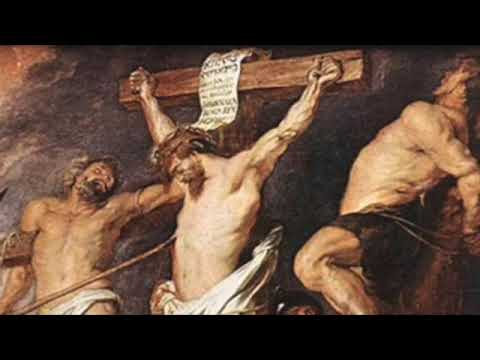
The ugliness in the cross. How else do you explain the obscenity of the cross? An innocent man—the only truly innocent man who ever lived—is convicted in a rigged trial, abused by his guards until he can scarcely walk, yet forced to carry his own cross on a back that has been flayed raw. Nails are forced through the living flesh of his hands and feet, and he is jerked upright to hang until, too tired to lift himself one more time, he suffocates. What good God could permit such a death? What loving God could permit his own beloved Son to undergo such agony? What awful thing could be so bad that only such an atonement could pay for it?
The answer is sin. In the cross, we see sin revealed in its starkest, most abominable ugliness. There, if we sweep away for a second the prettification with which we sentimentalize that terrible moment, we see God’s “R” rated answer to my sin. There is the “atonement” that God made (Ezek. 16:63), the ransom that he paid for his people (cf. Mark 10:45). The cost of our salvation was not silver and gold but the precious blood of the Lord Jesus Christ (1 Peter 1:18–19). This is something that we all too easily forget.[1]
[1] Iain M. Duguid, Ezekiel, The NIV Application Commentary (Grand Rapids, MI: Zondervan Publishing House, 1999), 218.
As Calvin put it: “If we desire, therefore, our sins to be blotted out before God, and to be buried in the depths of the sea … we must recall them often and constantly to our remembrance: for when they are kept before our eyes we then flee seriously to God for mercy, and are properly prepared by humility and fear.”[1]
[1] Iain M. Duguid, Ezekiel, The NIV Application Commentary (Grand Rapids, MI: Zondervan Publishing House, 1999), 219.
The same reasoning led John Newton to instruct that his epitaph should simply read: “John Newton, Clerk; once an infidel and libertine, a servant of slaves in Africa, was, by the rich mercy of our Lord and Savior, Jesus Christ, preserved, restored, pardoned and appointed to preach the faith he had long labored to destroy.”[1]
[1] Iain M. Duguid, Ezekiel, The NIV Application Commentary (Grand Rapids, MI: Zondervan Publishing House, 1999), 219.
The prophets would never have begun their arguments with the words: “We hold these truths to be self-evident … .” To be righteous was to be in right relationship with the Lord, to accept him as your overlord, and therefore to accede to his demands on your life.[1]
[1] Iain M. Duguid, Ezekiel, The NIV Application Commentary (Grand Rapids, MI: Zondervan Publishing House, 1999), 240.
[MY NOTE – The following is from a paper from J.I. Packer regarding John Owen’s method of testing the validity of someone claiming to have something like the gift of tongues. I find the willing tentative position, very useful.]
1. Since the presumption against any such renewal is strong, and liability to “enthusiasm” is part of the infirmity of every regenerate man, any extra-rational manifestation like glossolalia needs to be watched and tested most narrowly, over a considerable period of time, before one can, even provisionally, venture to ascribe it to God.
2. Since the use of a man’s gifts is intended by God to further the work of grace in his own soul (we shall see Owen arguing this later), the possibility that (for instance) a man’s glossolalia is from God can only be entertained at all as long as it is accompanied by a discernible ripening of the fruit of the Spirit in his life.
3. To be more interested in extraordinary gifts of lesser worth than in ordinary ones of greater value; to be more absorbed in seeking one’s own spiritual enrichment than in seeking the edifying of the Church; and to have one’s attention centered on the Holy Spirit, whereas the Spirit Himself is concerned to center our attention on Jesus Christ—these traits are sure signs of “enthusiasm” wherever they are found, even in those who seem most saintly.
4. Since one can never conclusively prove that any charismatic manifestation is identical with what is claimed as its New Testament counterpart, one can never in any particular case have more than a tentative and provisional opinion, open to constant reconsideration as time and life go on.[1]
[1] J. I. Packer, “The Puritans and Spiritual Gifts,” in Puritan Papers: 1965–1967, ed. J. I. Packer, vol. 4 (Phillipsburg, NJ: P&R Publishing, 2004), 217.
A one-sentence definition of a [spiritual] gift, in line with Owen’s analysis, would be this: a spiritual gift is an ability, divinely bestowed and sustained, to grasp and express the realities of the spiritual world, and the knowledge of God in Christ, for the edifying both of others and of oneself.[1]
[1] J. I. Packer, “The Puritans and Spiritual Gifts,” in Puritan Papers: 1965–1967, ed. J. I. Packer, vol. 4 (Phillipsburg, NJ: P&R Publishing, 2004), 222–223.
But all [spirit given] gifts alike are increased by use of the means of grace—prayer, meditation, constant self-abasement, and active service in God’s cause.[1]
[1] J. I. Packer, “The Puritans and Spiritual Gifts,” in Puritan Papers: 1965–1967, ed. J. I. Packer, vol. 4 (Phillipsburg, NJ: P&R Publishing, 2004), 224.
[MY NOTE: Owen’s observation that we increase the usefulness of our giftedness is increased by “prayer, meditation, CONSTANT SELF-ABASEMENT (emphasis mine) and active service” is powerfully informative. The inclusion of self-abasement is all but absent in what most profess as spiritual gifts today. And then the need to reflect on these before the throne too seems to me to be lost element.]
Do we seek to grow in grace through the exercise of our gifts? When we speak to others of the things of God, do we seek to feed our own souls on the same truths? Equally, do we seek to increase our gifts through stirring up our hearts to seek God? When we speak of divine things to others, and lead them in prayer, do we seek to feel the reality of the things we speak of?[1]
[1] J. I. Packer, “The Puritans and Spiritual Gifts,” in Puritan Papers: 1965–1967, ed. J. I. Packer, vol. 4 (Phillipsburg, NJ: P&R Publishing, 2004), 229–230.
-

As human beings, one of our persistent traits is the marginalization of evil. We find it hard to believe in the existence of evil inside ourselves and the ones we love; instead, we reserve that sobriquet for the perpetrators of genocide and mass murder. We are ready to recognize that Hitler may have been evil, and perhaps Charles Manson and others of his ilk, but we are reluctant to admit that all of us are tainted with the same brush. We start from the premise that we are all basically good. And if we are basically good, how can a good God permit “bad things” to happen to us?
The Bible has a radically different perspective. All of us are basically bad, as Paul makes clear in Romans 3:23: “All have sinned and fall short of the glory of God.” Until we grasp the accuracy of this statement as a description not merely of the worst of people but the very best, we will never understand the nature of the world in which we live. Our hearts will be filled with resentment at the impossible demands that God makes on us and his inexplicable anger at our inevitable failures.
But when we (all too rarely) experience genuine guilt over our actions, then our eyes are finally opened to the truth about our standing in God’s sight. We realize that a God who is not moved to anger by what we have done cannot be a good being. If that is so, and we are in fact much worse than we ever thought, then the astonishing aspect of the world is not the bad things that happen to good people but the good things that happen to bad people. Why should God send his rain on good and evil alike? God’s patience with sinners is the really mysterious side of providence.[1]
[1] Iain M. Duguid, Ezekiel, The NIV Application Commentary (Grand Rapids, MI: Zondervan Publishing House, 1999), 197–198.
Was Jerusalem really worse in its idolatry and social sins than New York or San Francisco or any of our modern cities? Are our small towns and villages really more God-fearing than the ancient Israelites were? The astonishing fact is not that God judged Jerusalem, but that God allows our contemporary society, with all its sins, flagrant and secret, to continue to exist. We should not regard that patience as inability to act, however. God’s “slowness” is patience in order to allow time for all of his chosen people to repent. But once that harvest is complete, the Day of Judgment will come with speed and finality (2 Peter 3:9–10). The sheep will be separated out from the goats, the children of the kingdom from the children of wrath, and there will be no room for quibbling at the justice of God.[1]
[1] Iain M. Duguid, Ezekiel, The NIV Application Commentary (Grand Rapids, MI: Zondervan Publishing House, 1999), 198.
“He only lives who lives to God,
And all are dead beside.”
This is the true explanation of sin not felt,—and sermons not believed,—and good advice not followed,—and the Gospel not embraced,—and the world not forsaken,—and the cross not taken up,—and self-will not mortified,—and evil habits not laid aside,—and the Bible seldom read—and the knee never bent in prayer. Why is all this on every side? The answer is simple. Men are dead.[1]
[1] J. C. Ryle, Living or Dead? A Series of Home Truths (New York: Robert Carter & Brothers, 1851), 11.
To hew a block of marble from the quarry, and carve it into a noble statue,—to break up a waste wilderness, and turn it into a garden of flowers,—to melt a lump of iron-stone, and forge it into watch-springs;—all these are mighty changes. Yet they all come short of the change which every child of Adam requires, for they are merely the same thing in a new form, the same substance in a new shape. But man requires the grafting in of that which he had not before. He needs a change as great as a resurrection from the dead. He must become a new creature. Old things must pass away, and all things must become new. He must be born again, born from above, born of God. The natural birth is not a whit more necessary to the life of the body, than is the spiritual birth to the life of the soul.[1]
[1] J. C. Ryle, Living or Dead? A Series of Home Truths (New York: Robert Carter & Brothers, 1851), 15–16.
Whitefield’s desire, “I want to go where I shall neither sin myself, nor see others sin any more.”[1]
[1] J. C. Ryle, Living or Dead? A Series of Home Truths (New York: Robert Carter & Brothers, 1851), 23.
The words which good old Berridge had graven on his tomb-stone are faithful and true, “Reader, art thou born again? Remember! no salvation without a new birth.”[1]
[1] J. C. Ryle, Living or Dead? A Series of Home Truths (New York: Robert Carter & Brothers, 1851), 26.
The most splendid marble statue in Greece or Italy is nothing by the side of the poor sickly child that crawls over the cottage floor; for with all its beauty it is dead. And the weakest member of the family of Christ is far higher and more precious in God’s eyes, than the most gifted man of the world. The one lives unto God, and shall live forever;—the other, with all his intellect, is still dead in sins.[1]
[1] J. C. Ryle, Living or Dead? A Series of Home Truths (New York: Robert Carter & Brothers, 1851), 27.
One thing is very clear;—we cannot work this mighty change ourselves. It is not in us. We have no strength or power to do it. We may change our sins, but we cannot change our hearts. We may take up a new way, but not a new nature. We may make considerable reforms and alterations. We may lay aside many outward bad habits, and begin many outward duties. But we cannot create a new principle within us. We cannot bring something out of nothing.[1]
[1] J. C. Ryle, Living or Dead? A Series of Home Truths (New York: Robert Carter & Brothers, 1851), 28–29.
Never, never will the Spirit turn away from a soul because of its corruption. He never has done so;—He never will. It is His glory that He has purified the minds of the most impure, and made them temples for His own abode. He may yet take the worst man who reads this paper, and make him a vessel of grace.[1]
[1] J. C. Ryle, Living or Dead? A Series of Home Truths (New York: Robert Carter & Brothers, 1851), 34.
Believe me, if you have no other proof of spiritual life but your baptism, you are yet a dead soul.[1]
[1] J. C. Ryle, Living or Dead? A Series of Home Truths (New York: Robert Carter & Brothers, 1851), 41.
Are you alive? Then see that you prove it by your growth. Let the great change within become every year more evident. Let your light be an increasing light,—not like Joshua’s sun in the valley of Ajalon, standing still,—nor Hezekiah’s sun, going back,—but ever shining more and more to the very end of your days. Let the image of your Lord, wherein you are renewed, grow clearer and sharper every month. Let it not be like the image and superscription on a coin, more indistinct and defaced the longer it is used. Let it rather become more plain, the older it is, and the likeness of your King stand out more fully. I have no confidence in a standing-still religion. I do not think a Christian was meant to be like an animal, to grow to a certain age, and then stop growing. I believe rather he was meant to be like a tree, and to increase more and more in strength and vigor all his days.[1]
[1] J. C. Ryle, Living or Dead? A Series of Home Truths (New York: Robert Carter & Brothers, 1851), 49–50.
-

Those who feel abandoned by God find that the pull of seeking out other gods increases, other gods whom they think can deliver the sense of security and significance they seek. If the Lord cannot deliver, why not try Marduk or one of the other Babylonian gods? Their hearts are torn between two loyalties, and they are attracted by the blessings that the idols seem to promise, the greener grass they offer, the more powerful magic they seem to contain.[1]
[1] Iain M. Duguid, Ezekiel, The NIV Application Commentary (Grand Rapids, MI: Zondervan Publishing House, 1999), 183–184.
Much of the counseling within the church of our day fails to recognize the key significance of the idolatries that remain within our hearts. On the one hand, there is a moralizing approach that focuses purely on the level of behavior. This approach says, “Your problem is that your anger (or lust, or worry, or whatever) is sin. Repent and change your behavior! If you would just do what is right, then good feelings will follow.” The problem with this approach is that in focusing on behavior it doesn’t go deep enough. It doesn’t recognize the reason for the behavior: the idols and false beliefs that are driving it. The reason why this particular person sins in this particular way is because there are idols and false beliefs in his or her life that say, “By doing this, you will gain what is really important and meaningful in life.”
On the other hand, there is a psychologizing approach to counseling that says, “Your basic problem is that you don’t see that God loves you and accepts you just as you are. If you could just feel good about yourself, right actions will follow.” This approach focuses on the feelings rather than the behavior, but still doesn’t go deep enough. It doesn’t recognize that behind the bad feelings lies an idolatry, a belief that “even if God loves me, yet while I don’t have this, I’m not a worthwhile person.” Both approaches fail to see the sin behind the sin, the fundamental issue of idolatry.
A better approach is to recognize that driving both our behaviors and our feelings are deep-seated heart idolatries. Our fundamental problem lies in looking to something besides God for our happiness. This is not a new observation. The church father Tertullian put it this way:
The principle crime of the human race, the highest guilt charged upon the world, the whole procuring cause of judgment, is idolatry. For, although each single fault retains its own proper feature, although it is destined to judgment under its own proper name also, yet it is marked off under the general account of idolatry … . Thus it comes to pass, that in idolatry all crimes are detected and in all crimes idolatry.[1]
[1] Iain M. Duguid, Ezekiel, The NIV Application Commentary (Grand Rapids, MI: Zondervan Publishing House, 1999), 188–189.
The difference between Christians and religiously minded idolaters is that Christians repent not only of their sins but also of their very best deeds, their best righteousness, in order to receive in its place the righteousness of Christ, to which they cling single-heartedly.[1]
[1] Iain M. Duguid, Ezekiel, The NIV Application Commentary (Grand Rapids, MI: Zondervan Publishing House, 1999), 190.
Let us mark this well. It is high time to dismiss from our minds those loose ideas about idolatry, which are common in this day. We must not think, as many do, that there are only two sorts of idolatry,—the spiritual idolatry of the man who loves his wife, or child, or money more than God; and the open, gross idolatry of the man who bows down to an image of wood, or metal, or stone, because he knows no better. We may rest assured that idolatry is a sin which occupies a far wider field than this. It is not merely a thing in Hindostan, that we may hear of and pity at missionary meetings; nor yet is it a thing confined to our own hearts, that we may confess before the Mercy-seat upon our knees. It is a pestilence that walks in the Church of Christ to a much greater extent than many suppose. It is an evil that, like the man of sin, “sits in the very temple of God.” (2 Thess. 2:4.)[1]
[1] J. C. Ryle, Knots Untied: Being Plain Statements on Disputed Points in Religion (London: William Hunt and Company, 1885), 402.
[MY NOTE] Ryle edges upon something which is important to ponder re: Is it possible, since the Believers in toto are now the Temple of God – may what is said here apply to professing Christians setting up self as supreme? Many in the Church even today make Christianity all about God serving them, meeting their desires and accomplishing their personal goals. The preaching and teaching of the Church today in terms of self-actualization and realization is nothing less than we, worshiping self. This may well be the great rebellion. We, may well be the “man of lawlessness” – serving self and our self-interests above everything else. We bow to no law but self. We own no truth but what we define it to be. We make the determination of what is right and what is wrong according to our own thoughts and preferences. And this is an abomination which is in truth, utter desolation of the soul.]
There is a natural proneness and tendency in us all to give God a sensual, carnal worship, and not that which is commanded in His Word. We are ever ready, by reason of our sloth and unbelief, to devise visible helps and stepping-stones in our approaches to Him, and ultimately to give these inventions of our own the honour due to Him. In fact, idolatry is all natural, down-hill, easy, like the broad way. Spiritual worship is all of grace, all uphill, and all against the grain. Any worship whatsoever is more pleasing to the natural heart, than worshipping God in the way which our Lord Christ describes, “in spirit and in truth.” (John 4:23.)[1]
[1] J. C. Ryle, Knots Untied: Being Plain Statements on Disputed Points in Religion (London: William Hunt and Company, 1885), 405.
Unity in the abstract is no doubt an excellent thing: but unity without truth is useless. Peace and uniformity are beautiful and valuable: but peace without the Gospel,—peace based on a common Episcopacy, and not on a common faith,—is a worthless peace, not deserving of the name. When Rome has repealed the decrees of Trent, and her additions to the Creed,—when Rome has recanted her false and unscriptural doctrines,—when Rome has formally renounced image-worship, Mary-worship, and transubstantiation,—then, and not till then, it will be time to talk of re-union with her. Till then there is a gulf between us which cannot be honestly bridged.[1]
[1] J. C. Ryle, Knots Untied: Being Plain Statements on Disputed Points in Religion (London: William Hunt and Company, 1885), 418.