
Tag: As I was reading today…
-

The second stanza of the poem below is one I’ve had inscribed on the flyleaf of my Bible for nearly 20 years. It wasn’t until today that I happened upon the entire text as recorded in Vol 3 of Newtons works containing the “Olney Hymns”. Newton prefaced this collection of his poems to be sung in worship with the following words: “If the Lord, whom I serve, has been pleased to favour me with that mediocrity of talent, which may qualify me for usefulness to the weak and the poor of his flock, without quite disgusting persons of superior discernment, I have reason to be satisfied.”
I will own being one of the weak and poor of Christ’s flock, who have found this useful. May you as well.
LXII. The good Physician
1 HOW lost was my condition,
Till Jesus made me whole!
There is but one Physician
Can cure a sin-sick soul!
Next door to death he found me,
And snatch’d me from the grave,
To tell to all around me,
His wond’rous pow’r to save.2 The worst of all diseases
Is light, compar’d with sin;
On ev’ry part it seizes,
But rages most within:
’Tis palsy, plague, and fever,
And madness, all combin’d;
And none but a believer
The least relief can find.3 From men great skill professing
I thought a cure to gain;
But this prov’d more distressing,
And added to my pain:
Some said that nothing ail’d me,
Some gave me up for lost;
Thus ev’ry refuge fail’d me,
And all my hopes were cross’d.4 At length this great Physician,
How matchless is his grace!
Accepted my petition,
And undertook my case:
First gave me sight to view him,
For sin my eyes had seal’d;
Then bid me look unto him;
I look’d, and I was heal’d.5 A dying, risen Jesus,
Seen by the eye of faith,
At once from danger frees us,
And saves the soul from death:
Come then to this Physician,
His help he’ll freely give,
He makes no hard condition,
’Tis only—look and live.
Newton, John & Richard Cecil. 1824. The Works of John Newton. . Vol. 3. London: Hamilton, Adams & Co. -
 The subject of spiritual maturity
ought to beIS one in which every Christian has a vital interest. If God’s stated purpose for us in our redemption, is conformity to the image of Christ (Rom. 8:29). And if Eph. 4:15 exhorts us to “grow up every way into Him who is the head, into Christ.” And if 1 Peter 2:2 reminds us “Like newborn infants, long for the pure spiritual milk, that by it you may grow up into salvation” – there is no question that attention must be paid to this crucial aspect of our salvation.But what does that look like?Once again, John Newton in his sweet and masterful way, notes 3 key concepts for leading the heart and mind of the Believer in a mature stability in the ways of Christ.Enjoy this short letter to his friend.“WEAK, unskilful, and unfaithful, as I am in practice, the Lord has been pleased to give me some idea of what a Christian ought to be, and of what is actually attainable in the present life, by those whom he enables earnestly to aspire towards the prize of their high calling. They who are versed in mechanics can, from a knowledge of the combined powers of a complicated machine, make an exact calculation of what it is able to perform, and what resistance it can counteract; but who can compute the possible effects of that combination of principles and motives revealed in the Gospel, upon a heart duly impressed with a sense of their importance and glory? When I was lately at Mr. Cox’s Museum, while I was fixing my attention upon some curious movements, imagining that I saw the whole of the artist’s design, the person who showed it touched a little spring, and suddenly a thousand new and unexpected motions took place, and the whole piece seemed animated from the top to the bottom. I should have formed but a very imperfect judgment of it, had I seen no more than what I saw at first. I thought it might in some measure illustrate the vast difference that is observable amongst professors, even amongst those who are, it is to be hoped, sincere. There are persons who appear to have a true knowledge (in part) of the nature of the Gospel religion, but seem not to be apprised of its properties in their comprehension and extent. If they have attained to some hope of their acceptance, if they find at seasons some communion with God in the means of grace, if they are in measure delivered from the prevailing and corrupt customs of the world, they seem to be satisfied, as if they were possessed of all. These are indeed great things; sed meliora latent. The profession of too many, whose sincerity charity would be unwilling to impeach, is greatly blemished, notwithstanding their hopes and their occasional comforts, by the breakings forth of unsanctified tempers, and the indulgence of vain hopes, anxious cares, and selfish pursuits. Far, very far, am I from that unscriptural sentiment of sinless perfection in fallen man. To those who have a due sense of the spirituality and ground of the Divine precepts, and of what passes in their own hearts, there will never be wanting causes of humiliation and self-abasement on the account of sin; yet still there is a liberty and privilege attainable by the Gospel, beyond what is ordinarily thought of. Permit me to mention two or three particulars, in which those who have a holy ambition of aspiring to them shall not be altogether disappointed.1. A delight in the Lord’s all-sufficiency, to be satisfied in him as our present and eternal portion. This, in the sense in which I understand it, is not the effect of a present warm frame, but of a deeply rooted and abiding principle; the habitual exercise of which is to be estimated by the comparative indifference with which other things are regarded. The soul thus principled is not at leisure to take or to seek satisfaction in anything but what has a known subserviency to this leading taste. Either the Lord is present, and then he is to be rejoiced in; or else he is absent, and then he is to be sought and waited for. They are to be pitied, who, if they are at sometimes happy in the Lord, can at other times be happy without him, and rejoice in broken cisterns, when their spirits are at a distance from the Fountain of living waters. I do not plead for an absolute indifference to temporal blessings: he gives us all things richly to enjoy; and a capacity of relishing them is his gift likewise; but then the consideration of his love in bestowing should exceedingly enhance the value, and a regard to his will should regulate their use. Nor can they all supply the want of that which we can only receive immediately from himself. This principle likewise moderates that inordinate fear and sorrow to which we are liable upon the prospect or the occurrence of great trials, for which there is a sure support and resource provided in the all-sufficiency of infinite goodness and grace. What a privilege is this, to possess God in all things while we have them, and all things in God when they are taken from us.2. An acquiescence in the Lord’s will, founded in a persuasion of his wisdom, holiness, sovereignty, and goodness.—This is one of the greatest privileges and brightest ornaments of our profession. So far as we attain to this, we are secure from disappointment. Our own limited views and short-sighted purposes and desires, may be, and will be, often over-ruled; but then our main and leading desire, that the will of the Lord may be done, must be accomplished. How highly does it become us, both as creatures and as sinners, to submit to the appointments of our Maker! and how necessary is it to our peace! This great attainment is too often unthought of, and overlooked: we are prone to fix our attention upon the second causes and immediate instruments of events; forgetting that whatever befalls us is according to his purpose, and therefore must be right and seasonable in itself, and shall in the issue be productive of good. From hence arise impatience, resentment, and secret repinings, which are not only sinful, but tormenting: whereas, if all things are in his hand; if the very hairs of our head are numbered; if every event, great and small, is under the direction of his providence and purpose; and if he has a wise, holy, and gracious end in view, to which everything that happens is subordinate and subservient; then we have nothing to do, but with patience and humility to follow as he leads, and cheerfully to expect a happy issue. The path of present duty is marked out; and the concerns of the next and every succeeding hour are in his hands. How happy are they who can resign all to him, see his hand in every dispensation, and believe that he chooses better for them than they possibly could for themselves.3. A single eye to his glory, as the ultimate scope of all our undertakings.—The Lord can design nothing short of his own glory, nor should we. The constraining love of Christ has a direct and marvellous tendency, in proportion to the measure of faith, to mortify the corrupt principle Self, which for a season is the grand spring of our conduct, and by which we are too much biased after we know the Lord. But as grace prevails, self is renounced. We feel that we are not our own, that we are bought with a price; and that it is our duty, our honour, and our happiness, to be the servants of God and of the Lord Jesus Christ. To devote soul and body, every talent, power, and faculty, to the service of his cause and will; to let our light shine (in our several situations) to the praise of his grace; to place our highest joy in the contemplation of his adorable perfections; to rejoice even in tribulations and distresses, in reproaches and infirmities, if thereby the power of Christ may rest upon us, and be magnified in us; to be content, yea glad, to be nothing, that he may be all in all; to obey him, in opposition to the threats or solicitations of men; to trust him, though all outward appearances seem against us; to rejoice in him, though we should (as will sooner or later be the case) have nothing else to rejoice in; to live above the world, and to have our conversation in heaven; to be like the angels, finding our own pleasure in performing his:—This, my lord, is the prize, the mark of our high calling, to which we are encouraged with a holy ambition continually to aspire. It is true, we shall still fall short; we shall find that, when we would do good, evil will be present with us. But the attempt is glorious, and shall not be wholly in vain. He that gives us thus to will, will enable us to perform with growing success, and teach us to profit even by our mistakes and imperfections.O blessed man! that thus fears the Lord; that delights in his word, and derives his principles, motives, maxims, and consolations, from that unfailing source of light and strength. He shall be like a tree planted by the rivers of water, whose leaf is always green, and fruit abundant. The wisdom that is above shall direct his plans, inspire his counsels; and the power of God shall guard him on every side, and prepare his way through every difficulty: he shall see mountains sink into plains, and streams spring up in the dry wilderness. The Lord’s enemies will be his; and they may be permitted to fight against him, but they shall not prevail, for the Lord is with him to deliver him. The conduct of such a one, though in a narrow and retired sphere of life, is of more real excellence and importance, than the most splendid actions of kings and conquerors, which fill the annals of history, Prov. 16:32. And if the God whom he serves is pleased to place him in a more public light, his labours and cares will be amply compensated, by the superior opportunities afforded him of manifesting the power and reality of true religion, and promoting the good of mankind.I hope I may say, that I desire to be thus entirely given up to the Lord; I am sure I must say, that what I have written is far from being my actual experience. Alas! I might be condemned out of my own mouth, were the Lord strict to mark what is amiss. But, O the comfort! we are not under the law, but under grace. The Gospel is a dispensation for sinners, and we have an Advocate with the Father. There is the unshaken ground of hope. A reconciled Father, a prevailing Advocate, a powerful Shepherd, a compassionate Friend, a Saviour who is able and willing to save to the uttermost. He knows our frame; he remembers that we are but dust; and has opened for us a new and blood-besprinkled way of access to the throne of grace, that we may obtain mercy, and find grace to help in every time of need.Newton, John, Richard Cecil. 1824. The works of the John Newton. . Vol. 1. London: Hamilton, Adams & Co. -

2 Samuel 21:1–6 (ESV) 1 Now there was a famine in the days of David for three years, year after year. And David sought the face of the LORD. And the LORD said, “There is bloodguilt on Saul and on his house, because he put the Gibeonites to death.” 2 So the king called the Gibeonites and spoke to them. Now the Gibeonites were not of the people of Israel but of the remnant of the Amorites. Although the people of Israel had sworn to spare them, Saul had sought to strike them down in his zeal for the people of Israel and Judah. 3 And David said to the Gibeonites, “What shall I do for you? And how shall I make atonement, that you may bless the heritage of the LORD?” 4 The Gibeonites said to him, “It is not a matter of silver or gold between us and Saul or his house; neither is it for us to put any man to death in Israel.” And he said, “What do you say that I shall do for you?” 5 They said to the king, “The man who consumed us and planned to destroy us, so that we should have no place in all the territory of Israel, 6 let seven of his sons be given to us, so that we may hang them before the LORD at Gibeah of Saul, the chosen of the LORD.” And the king said, “I will give them.”
This largely ignored passage of Scripture coupled with another like: Proverbs 28:2 (ESV) “When a land transgresses, it has many rulers, but with a man of understanding and knowledge, its stability will long continue.” – ought to give us great pause.
Recently, MSNBC ran a video op-ed by Lawrence O’Donnell regarding the current Native American protests over the oil pipeline proposed to traverse the Dakota territory. YOU CAN VIEW IT HERE – it is only a tad over 4 minutes.
What O’Donnell reminds us of in this piece, is the abominable way in which much of American history is stained with Native American blood, as settlers and pioneers invaded lands that were not their own.
As I watched, and contemplated things like the way in which our forefathers (in many cases) thought nothing of dispossessing and sometimes slaughtering whole people groups to take the land they wanted, I grieved. This too, is part of our American heritage. One of which we ought to be nationally ashamed and repentant. As the piece goes on however, we are reminded of how those wrongs have never been dealt with in any satisfactory way.
Then I considered the way America was plunged into the darkness of antebellum slavery. And I rejoiced that that institution was broken apart. But I also trembled at how in the aftermath, we’ve enslaved a vast part of the African American people group through government sponsored programs that rob so many of them of the dignity of work. Producing a deliberately handicapped segment of society, caught in a cycle of poverty, ignorance and moral decay.
And, I thought of abortion. Over 50 million children slaughtered in their mother’s wombs, with hearty government approval and assistance. Of unjust wars, where we did not come to the aide of those victims of genocide and ethnic cleansing, except where it impacted our financial bottom line.
And yet I rejoiced at how we entered the fray against the rise of Nazism and other fascist movements.
All said, I do fear the reality of how our national sins, unrepented of, are not somehow outweighed by the good we’ve done. Though there has been much and unprecedented good.
God does not ignore unrepentant sin, because one does good too.
And America, is in the larger case, unrepentant for her sins.
The beginning signs of judgment abound. Unbridled sexual immorality, rampant secularism, personal autonomy to the exclusion of all other authority, and bloated government of such proportion as to be unsustainable.
We do not need a new leader in the Whitehouse.
We need mass conversion to Jesus Christ as Lord; praying and pleading Christians and; a Spirit informed grief that leads to national repentance.
Apart from these, make no mistake – America WILL fall.
Sooner, rather than later.
Even so, come quickly Lord Jesus.
-

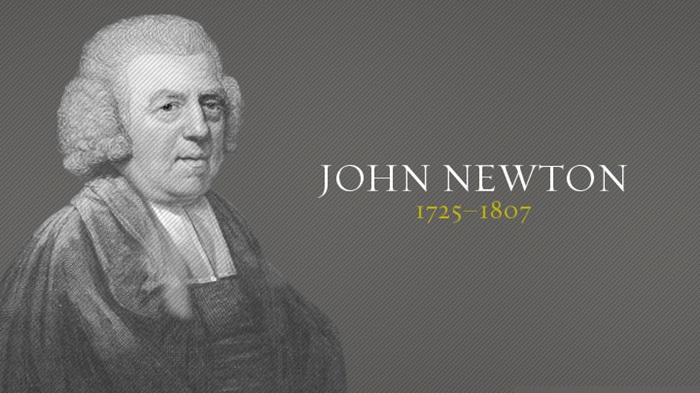
Image processed by CodeCarvings Piczard ### FREE Community Edition ### on 2016-02-10 10:47:04Z | http://piczard.com | http://codecarvings.com Among John Newton’s letters is the following one to an unnamed recipient. In it, Newton addresses what few of us admit to in public: That even as Christians, our prayer lives, our attention to Scripture, our love for Christ and our trust of Him in our trials – are things we treasure and know we derive the greatest benefit from – and yet fail at so miserably.
Once again, this spiritual giant of 18th century in clarity, sweetness, gentleness, and love for the souls of others – gives comfort for the unspoken maladies that afflict most, if not all of us.
Enjoy! It is very tasty.
Gal. 5:17, “Ye cannot do the things that ye would.”
This is an humbling but a just account of a Christian’s attainments in the present life, and is equally applicable to the strongest and to the weakest. The weakest need not say less, the strongest will hardly venture to say more. The Lord has given his people a desire and will aiming at great things; without this they would be unworthy the name of Christians; but they cannot do as they would: their best desires are weak and ineffectual; not absolutely so (for he who works in them to will, enables them in a measure to do likewise), but in comparison with the mark at which they aim. So that, while they have great cause to be thankful for the desire he has given them, and for the degree in which it is answered, they have equal reason to be ashamed and abased under a sense of their continual defects, and the evil mixtures which taint and debase their best endeavours. It would be easy to make out a long list of particulars which a believer would do if he could, but in which, from first to last, he finds a mortifying inability. Permit me to mention a few, which I need not transcribe from books, for they are always present to my mind.
PRAYER: He would willingly enjoy God in prayer. He knows that prayer is his duty; but, in his judgment, he considers it likewise as his greatest honour and privilege. In this light he can recommend it to others, and can tell them of the wonderful condescension of the great God, who humbles himself to behold the things that are in heaven, that he should stoop so much lower, to afford his gracious ear to the supplications of sinful worms upon earth. He can bid them expect a pleasure in waiting upon the Lord, different in kind and greater in degree than all that the world can afford. By prayer, he can say, You have liberty to cast all your cares upon him that careth for you. By one hour’s intimate access to the throne of grace, where the Lord causes his glory to pass before the soul that seeks him, you may acquire more true spiritual knowledge and comfort, than by a day or a week’s converse with the best of men, or the most studious perusal of many folios: and in this light he would consider it and improve it for himself. But, alas! how seldom can he do as he would! How often does he find this privilege a mere task, which he would be glad of a just excuse to omit? and the chief pleasure he derives from the performance, is to think that his task is finished: he has been drawing near to God with his lips, while his heart was far from him. Surely this is not doing as he would, when (to borrow the expression of an old woman here) he is dragged before God like a slave, and comes away like a thief.
READING SCRIPTURE: The like may be said of reading the Scripture. He believes it to be the word of God: he admires the wisdom and grace of the doctrines, the beauty of the precepts, the richness and suitableness of the promises; and therefore, with David, he accounts it preferable to thousands of gold and silver, and sweeter than honey or the honeycomb. Yet, while he thus thinks of it, and desires that it may dwell in him richly, and be his meditation night and day, he cannot do as he would. It will require some resolution to persist in reading a portion of it every day; and even then his heart is often less engaged than when reading a pamphlet. Here again his privilege frequently dwindles into a task. His appetite is vitiated, so that he has but little relish for the food of his soul.
LOVE OF CHRIST: He would willingly have abiding, admiring thoughts of the person and love of the Lord Jesus Christ. Glad he is, indeed, of those occasions which recall the Saviour to his mind; and with this view, notwithstanding all discouragements, he perseveres in attempting to pray and read, and waits upon the ordinances. Yet he cannot do as he would. Whatever claims he may have to the exercise of gratitude and sensibility towards his fellow-creatures, he must confess himself mournfully ungrateful and insensible towards his best Friend and Benefactor. Ah! what trifles are capable of shutting him out of our thoughts, of whom we say, He is the Beloved of our souls, who loved us, and gave himself for us, and whom we have deliberately chosen as our chief good and portion. What can make us amends for the loss we suffer here? Yet surely if we could, we would set him always before us; his love should be the delightful theme of our hearts
But though we aim at this good, evil is present with us; we find we are renewed but in part, and have still cause to plead the Lord’s promise, To take away the heart of stone, and give us a heart of flesh.
TRUSTING GOD IN TRIALS: He would willingly acquiesce in all the dispensations of Divine Providence. He believes that all events are under the direction of infinite wisdom and goodness, and shall surely issue in the glory of God and the good of those who fear him. He doubts not but the hairs of his head are all numbered; that the blessings of every kind which he possesses, were bestowed upon him, and are preserved to him, by the bounty and special favour of the Lord whom he serves;—that afflictions spring not out of the ground, but are fruits and tokens of Divine love, no less than his comforts; that there is a need-be, whenever for a season he is in heaviness. Of these principles he can no more doubt, than of what he sees with his eyes; and there are seasons when he thinks they will prove sufficient to reconcile him to the sharpest trials. But often, when he aims to apply them in an hour of present distress, he cannot do what he would. He feels a law in his members warring against the law in his mind; so that, in defiance of the clearest convictions, seeing as though he perceived not, he is ready to complain, murmur, and despond. Alas! how vain is man in his best estate! how much weakness and inconsistency even in those whose hearts are right with the Lord! and what reason have we to confess that we are unworthy, unprofitable servants!
It were easy to enlarge in this way, would paper and time permit. But, blessed be God, we are not under the law, but under grace. And even these distressing effects of the remnants of indwelling sin are over-ruled for good. By these experiences the believer is weaned more from self, and taught more highly to prize and more absolutely to rely on him, who is appointed unto us of God, Wisdom, Righteousness, Sanctification, and Redemption. The more vile we are in our own eyes, the more precious he will be to us; and a deep repeated sense of the evil of our hearts is necessary to preclude all boasting, and to make us willing to give the whole glory of our salvation where it is due. Again, a sense of these evils will (when hardly any thing else can do it) reconcile us to the thoughts of death; yea, make us desirous to depart, that we may sin no more, since we find depravity so deep-rooted in our nature, that (like the leprous house) the whole fabric must be taken down before we can be freed from its defilement. Then, and not till then, we shall be able to do the thing that we would: when we see Jesus, we shall be transformed into his image, and have done with sin and sorrow for ever.[1]
[1] Newton, John, Richard Cecil. 1824. The works of the John Newton. . Vol. 1. London: Hamilton, Adams & Co.
-

One of perennial issues in the Christian life, is that of understanding the Lord’s leading in life. All of Christ’s own (ostensibly) want to do His will in every aspect of living.
Often, this discussion devolves into 2 polar opposites: A mystically bent focus upon impressions, dreams, impulses or Scriptural illuminations where a passage “speaks” and seems relevant to one’s immediate circumstance – irrespective of its Biblical context. Or, a rejection of virtually all spiritual experience whatever. Certainly, there is a spectrum to be seen all the way between these two poles.
In the following letter from John Newton on the subject, some sound, wise and Scriptural advice is held out to an inquirer on the topic. And given the current state of American Evangelicalism, it is a timely and useful guide to a sometimes contentious yet necessary discussion.
I will try to offer emphases and section headings as I hope will make the original author’s mind more accessible.
Letter XXVIII
Answer to the Question, In what Manner are we to expect the Lord’s promised Guidance to influence our Judgments, and direct our Steps in the Path of Duty?
Section I – God DOES supply guidance by His grace. Foremost in His Word.
Dear Sir,
It is well for those who are duly sensible of their own weakness and fallibility, and of the difficulties with which they are surrounded in life, that the Lord has promised to guide his people with his eye, and to cause them to hear a word behind them, saying, “This is the way, walk ye in it,” when they are in danger of turning aside either to the right hand or to the left. For this purpose, he has given us the written word to be a lamp to our feet, and encouraged us to pray for the teaching of his Holy Spirit, that we may rightly understand and apply it. It is, however, too often seen, that many widely deviate from the path of duty, and commit gross and perplexing mistakes, while they profess a sincere desire to know the will of God, and think they have his warrant and authority. This must certainly be owing to misapplication of the rule by which they judge, since the rule itself is infallible, and the promise sure. The Scripture cannot deceive us, if rightly understood; but it may, if perverted, prove the occasion of confirming us in a mistake. The Holy Spirit cannot mislead those who are under his influence; but we may suppose that we are so, when we are not. It may not be unseasonable to offer a few thoughts upon a subject of great importance to the peace of our minds, and to the honour of our holy profession.
Section II. Common Errors.
Many have been deceived as to what they ought to do, or in forming a judgment beforehand of events in which they are nearly concerned, by expecting direction in ways which the Lord has not warranted. I shall mention some of the principal of these, for it is not easy to enumerate them all.
Common Error #1 – Casting Lots. Using lots or some other method of God giving a tangible “sign” of His will.
Some persons, when two or more things have been in view, and they could not immediately determine which to prefer, have committed their case to the Lord by prayer, and have then proceeded to cast lots: taking it for granted, that, after such a solemn appeal, the turning up of the lot might be safely rested in as an answer from God. It is true, the Scripture, and indeed right reason, assures us, that the Lord disposes the lot; and there are several cases recorded in the Old Testament, in which lots were used by Divine appointment; but I think neither these, nor the choosing Matthias by lot to the apostleship, are proper precedents for our conduct. In the division of the lands of Canaan, in the affair of Achan, and in the nomination of Saul to the kingdom, recourse was had to lots by God’s express command. The instance of Matthias likewise was singular, such as can never happen again; namely, the choice of an apostle; who would not have been upon a par with the rest, who were chosen immediately by the Lord, unless He had been pleased to interpose in some extraordinary way; and all these were before the canon of Scripture was completed, and before the full descent and communication of the Holy Spirit, who was promised to dwell with the church to the end of time. Under the New Testament dispensation, we are invited to come boldly to the Throne of Grace, to make our requests known to the Lord, and to cast our cares upon him: but we have neither precept nor promise respecting the use of lots; and to have recourse to them without his appointment, seems to be tempting him rather than honouring him, and to savour more of presumption than dependence. The effects likewise of this expedient have often been unhappy and hurtful: a sufficient proof how little it is to be trusted to as a guide of our conduct.
Common Error #2 – “Dipping” in the Scripture. Taking a verse or passage at random, and applying it to one’s immediate context, without regard for the actual Biblical context, and what the Scripture means in that place and to who it was written.
Others, when in doubt, have opened the Bible at a venture, and expected to find something to direct them in the first verse they should cast their eye upon. It is no small discredit to this practice, that the Heathens, who knew not the Bible, used some of their favourite books in the same way; and grounded their persuasions of what they ought to do, or of what should befall them, according to the passage they happened to open upon. Among the Romans, the writings of Virgil were frequently consulted upon these occasions; which gave rise to the well-known expression of the Sortes Virgilianæ. And indeed Virgil is as well adapted to satisfy inquirers in this way as the Bible itself; for if people will be governed by the occurrence of a single text of Scripture, without regarding the context, or duly comparing it with the general tenor of the word of God, and with their own circumstances, they may commit the greatest extravagances, expect the greatest impossibilities, and contradict the plainest dictates of common sense, while they think they have the word of God on their side. Can the opening upon 2 Sam. 7:3, when Nathan said unto David, “Do all that is in thine heart, for the Lord is with thee,” be sufficient to determine the lawfulness or expediency of actions? Or can a glance of the eye upon our Lord’s words to the woman of Canaan, Matth. 15:28, “Be it unto thee even as thou wilt,” amount to a proof, that the present earnest desire of the mind (whatever it may be) shall be surely accomplished? Yet it is certain that matters big with important consequences have been engaged in, and the most sanguine expectations formed, upon no better warrant than dipping (as it is called) upon a text of Scripture.
Common Error #3 – Strong impressions or feelings about a particular text.
A sudden strong impression of a text, that seems to have some resemblance to the concern upon the mind, has been accepted by many as an infallible token that they were right, and that things would go just as they would have them: or, on the other hand, if the passage bore a threatening aspect, it has filled them with fears and disquietudes, which they have afterwards found were groundless and unnecessary. These impressions, being more out of their power than the former method, have been more generally regarded and trusted to, but have frequently proved no less delusive. It is allowed, that such impressions of a precept or a promise as humble, animate, or comfort the soul, by giving it a lively sense of the truth contained in the words, are both profitable and pleasant; and many of the Lord’s people have been instructed and supported (especially in a time of trouble) by some seasonable word of grace applied and sealed by his Spirit with power to their hearts. But if impressions or impulses are received as a voice from heaven, directing to such particular actions as could not be proved to be duties without them, a person may be unwarily misled into great evils and gross delusions; and many have been so. There is no doubt but the enemy of our souls, if permitted, can furnish us with Scriptures in abundance in this way, and for these purposes.
Common Error #4 – Taking their experience of being much moved in prayer about something or someone, as an indication of God’s assurance that He will act as they desire in it.
Some persons judge of the nature and event of their designs, by the freedom which they find in prayer. They say they commit their ways to God, seek his direction, and are favoured with much enlargement of spirit; and therefore they cannot doubt but what they have in view is acceptable in the Lord’s sight. I would not absolutely reject every plea of this kind, yet, without other corroborating evidence, I could not admit it in proof of what it is brought for. It is not always easy to determine when we have spiritual freedom in prayer. Self is deceitful; and when our hearts are much fixed and bent upon a thing, this may put words and earnestness into our mouths. Too often we first secretly determine for ourselves, and then come to ask counsel of God; in such a disposition we are ready to catch at every thing that may seem to favour our darling scheme; and the Lord, for the detection and chastisement of our hypocrisy (for hypocrisy it is, though perhaps hardly perceptible to ourselves), may answer us according to our idols; see Ezek. 14:3, 4. Besides, the grace of prayer may be in exercise, when the subject-matter of the prayer may be founded upon a mistake, from the intervention of circumstances which we are unacquainted with. Thus, I may have a friend in a distant country; I hope he is alive; I pray for him, and it is my duty so to do. The Lord, by his Spirit, assists his people in what is their present duty. If I am enabled to pray with much liberty for my distant friend, it may be a proof that the Spirit of the Lord is pleased to assist my infirmities, but it is no proof that my friend is certainly alive at the time I am praying for him: and if the next time I pray for him I should find my spirit straitened, I am not to conclude that my friend is dead, and therefore the Lord will not assist me in praying for him any longer.
Common Error #5 – Relying upon remarkable dreams as solid evidence of God’s will.
Once more: A remarkable dream has sometimes been thought as decisive as any of the foregoing methods of knowing the will of God. That many wholesome and seasonable admonitions have been received in dreams, I willingly allow; but, though they may be occasionally noticed, to pay a great attention to dreams, especially to be guided by them, to form our sentiments, conduct, or expectations upon them, is superstitious and dangerous. The promises are not made to those who dream, but to those who watch.
Common Error #6 – Taking unusual coincidences or events as a sure sign of God’s will.
Upon the whole, though the Lord may give to some persons, upon some occasions, a hint or encouragement out of the common way; yet expressly to look for and seek his direction in such things as I have mentioned, is unscriptural and ensnaring. I could fill many sheets with a detail of the inconveniences and evils which have followed such a dependence, within the course of my own observation. I have seen some presuming they were doing God service, while acting in contradiction to his express commands. I have known others infatuated to believe a lie, declaring themselves assured, beyond the shadow of a doubt, of things which, after all, never came to pass; and when at length disappointed, Satan has improved the occasion to make them doubt of the plainest and most important truths, and to account their whole former experience a delusion. By these things weak believers have been stumbled, cavils and offences against the Gospel multiplied, and the ways of truth evil spoken of.
Section III – How CAN we expect to be guided?
- A Scripture-truth informed “spiritual gut” that tests everything by The Word rightly understood.
But how then may the Lord’s guidance be expected? After what has been premised negatively, the question may be answered in a few words. In general, he guides and directs his people, by affording them, in answer to prayer, the light of his Holy Spirit, which enables them to understand and to love the Scriptures. The word of God is not to be used as a lottery; nor is it designed to instruct us by shreds and scraps, which, detached from their proper places, have no determinate import; but it is to furnish us with just principles, right apprehensions, to regulate our judgments and affections, and thereby to influence and direct our conduct. They who study the Scriptures, in an humble dependence upon Divine teaching, are convinced of their own weakness, are taught to make a true estimate of every thing around them, are gradually formed into a spirit of submission to the will of God, discover the nature and duties of their several situations and relations in life, and the snares and temptations to which they are exposed. The word of God dwells richly in them, is a preservative from error, a light to their feet, and a spring of strength and consolation. By treasuring up the doctrines, precepts, promises, examples, and exhortations of Scripture, in their minds, and daily comparing themselves with the rule by which they walk, they grow into an habitual frame of spiritual wisdom, and acquire a gracious taste, which enables them to judge of right and wrong with a degree of readiness and certainty, as a musical ear judges of sounds. And they are seldom mistaken, because they are influenced by the love of Christ, which rules in their hearts, and a regard to the glory of God, which is the great object they have in view.
- By trust in and submission to God’s providential arrangement of circumstances and events, responded to Biblically.
In particular cases, the Lord opens and shuts for them, breaks down walls of difficulty which obstruct their path, or hedges up their way with thorns, when they are in danger of going wrong, by the dispensations of his providence. They know that their concernments are in his hands; they are willing to follow whither and when he leads; but are afraid of going before him. Therefore they are not impatient: because they believe, they will not make haste, but wait daily upon him in prayer; especially when they find their hearts most engaged in any purpose or pursuit, they are most jealous of being deceived by appearances, and dare not move farther or faster than they can perceive his light shining upon their paths. I express at least their desire, if not their attainment: thus they would be. And though there are seasons when faith languishes, and self too much prevails, this is their general disposition; and the Lord, whom they serve, does not disappoint their expectations. He leads them by a right way, preserves them from a thousand snares, and satisfies them that he is and will be their guide even unto death.[1]
[1] Newton, John, Richard Cecil. 1824. The works of the John Newton. . Vol. 1. London: Hamilton, Adams & Co.
-

There is a tendency in the human mind to deviate from Divine truth. Had it not been for the illuminating influence of the Spirit of God, we should never have understood it; not because of its abstruseness, but on account of the uncongeniality of our minds; and when we do understand and believe it, there is a continual tendency in us to get wrong. It might seem that when a person has once obtained a just view of the gospel, there is no danger of his losing it; but it is not so. There is a partiality in all our views, and while we guard against error in one direction, we are in equal danger from a contrary extreme. Many, in shunning the snare of self-righteous pride, have fallen into the pit of Antinomian presumption; and many, in guarding what they consider as the interests of practical religion, have ceased to teach and preach those principles from which alone it can proceed. Besides this, there are many ways by which a minister may get beside the gospel without falling into any palpable errors. There may be nothing crooked, yet much wanting. We may deliver an ingenious discourse, containing nothing inconsistent with truth, and yet not preach that truth “in which believers stand, and by which they are saved.”
Fuller, Andrew Gunton. 1988. The Complete Works of Andrew Fuller: Memoirs, Sermons, Etc. (Ed.) Joseph Belcher. . Vol. 1. Harrisonburg, VA: Sprinkle Publications.
-

Sometimes you unearth comments about one subject, whilst perusing another. In this case, this comes from Seiss’s 2nd lecture on the book of The revelation. And the text he was expatiating upon was this: Revelation 1:4–5 (ESV) “4 John to the seven churches that are in Asia: Grace to you and peace from him who is and who was and who is to come, and from the seven spirits who are before his throne, 5 and from Jesus Christ the faithful witness, the firstborn of the dead, and the ruler of kings on earth. To him who loves us and has freed us from our sins by his blood.”
His concluding paragraph on the portion show how his mind was provoked by his contemplation of the Trinity. It is rich.
“Conceive of these three, then, as one Almighty and ineffable Godhead,—the Father in the absoluteness of his unchanging nature and universal presence, the Spirit in all the completeness of his manifold energies and diversified operations, and the Son in the virtues of his blood-sealed testimony, of the new begotten power of his resurrection, and of the super-royal administrations of his eternal kinghood, each in his place, and all as one, laid under contribution, and unreservedly and irrevocably pledged, for the blessedness of them that believe;—sound the depths of such a fountain of good; test the firmness of such a basis of confidence; survey the strength and majesty of such a refuge for the soul; weigh the treasures of bliss which are opened up in such a presentation; and you may begin to form some conception of the resources of the saints, and of the real breadth and joyousness of this apostolic Salutation to the Churches. Is it any wonder that John’s heart took fire at the contemplation, or that he should abruptly pass from affectionate greeting to jubilant doxology? Surely “the name of the Lord is a strong tower: the righteous runneth into it, and is set on high.”
Seiss, J. A. 1901. The Apocalypse: A Series of Special Lectures on the Revelation of Jesus Christ with Revised Text. Eighth Edition. Vol. 1. New York: Charles C. Cook.
-
The following is a very short sermon by Andrew Fuller on how it is God seems to send days of mercy to balance off days of affliction. He notes how days of difficulty and dark trials are to be an impetus for prayer for days of refreshing, and why we ought to look for them with expectancy. Whether our trials are personal, ecclesiastical, national or whatever. God is good to follow our dark days with refreshing, hope and restoration.
PAST TRIALS A PLEA FOR FUTURE MERCIES
“Make us glad according to the days wherein thou hast afflicted us, and the years wherein we have seen evil.”—Psal. 90:15.
THIS “prayer of Moses the man of God,” as it is entitled, is thought to have been occasioned by the sentence denounced against that generation of Israelites which came out of Egypt, viz. that they should perish in the wilderness. In it we see much of the plaintive, and yet much of the man of God, cleaving to God under his judgments, and hoping in his covenant mercy and truth. Forbidden to enter their promised dwelling-place, they are directed to make up their loss in God, ver. 1, 2. Cut short as to the number of their days, to apply their hearts to wisdom, ver. 12. And though they, and himself with them, were doomed to die, they are taught to pray that the cause of God may live, ver. 16, 17.
The language of the text implies that it is usual for God, in dealing with his people in this world, to balance evil with good, and good with evil. He neither exempts them from chastisement, nor contends with them for ever. If he had dealt with us on the mere footing of justice, we had had a cup of wrath only; but through his dear Son it is mixed with mercy. The alternate changes of night and day, winter and summer, are not more fixed in the course of nature, than the mixture of judgment and mercy in the present state.
The children of Israel were long afflicted in Egypt, and when delivered from that grievous yoke, their numerous sins against God brought on them numerous evils in the wilderness, till at length it issued in the dismal sentence which is supposed to have occasioned this plaintive song. Yet this dark night was preparatory to a morning of hope and joy. The people that were left of the sword found grace in the wilderness. The judgments upon the first generation proved a source of wholesome discipline to the second, who appear to have been the best of all the generations of Israel. It was of them that God spoke in such high terms by Jeremiah:—“I remember thee, the kindness of thy youth, the love of thine espousals, when thou wentest after me in the wilderness, in a land not sown. Israel was holiness unto the Lord, and the first-fruits of his increase.” All that God had done for them till then was but ploughing up the fallow ground; but now he began to reap the fruits of his work. Now Balaam, instead of being able to curse them, is compelled to bless and envy them. And now the prayer of the man of God is answered. They are made glad according to the days in which they were afflicted, and the years in which they had seen evil. God’s work appeared to his servants, and his glory unto their children. His beauty was upon them, and he prospered the work of their hands.
We might refer to numerous instances in the Scriptures in which the same truth is exemplified. In the first hundred and thirty years of Adam’s life, he drank deeply of the bitter effects of his fall. He had a son; but after high hopes had been entertained of him, he proved wicked. He had another son, but him his brother murdered; and as the murderer was spared and his family increased, it would seem as if the world was to be peopled by a race of wicked men. But it did not end thus: God gave Adam another seed, instead of Abel whom Cain slew; and soon after this men began to call upon the name of the Lord. It must have been very afflictive for Noah to have been “a preacher of righteousness” century after century, and at last, instead of seeing his hearers converted to God, to see them all swept away by the deluge. But as the waters were assuaged when they had risen to their height, so the wrath of Heaven issued in mercy. God accepted the sacrifice of his servant, and made a covenant of peace with him and his posterity.
Similar remarks might be made from the histories of Jacob, and Joseph, and David, and many others: these were made glad according to the days wherein they had been afflicted, and the years wherein they had seen evil. Nor is it confined to individuals. When idolatrous Israel drew down the Divine displeasure in Hazael’s wars, Jehu’s revolution, and Elisha’s prophecies, it was very afflictive. Yet when Jehoahaz besought the Lord, the Lord hearkened unto him, and was gracious to his people, in respect of the covenant which he had made with their fathers, 2 Kings 13:3–5, 23. Thus the wind, the earthquake, and the fire were succeeded by the still small voice, 1 Kings 19:11, 12. Finally, the great afflictions of the church during the successive overturnings of the monarchies issued, according to Ezekiel’s prophecy, (chap. 21:27,) in Christ’s coming and kingdom.
It is not difficult to perceive the wisdom and goodness of God in thus causing evil to precede good, and good to follow evil. If the whole of our days were covered with darkness, there would be but little of the exercise of love, and joy, and praise; our spirits would contract a habit of gloominess and despondency; and religion itself would be reproached, as rendering us miserable. If, on the other hand, we had uninterrupted prosperity, we should not enjoy it. What is rest to him that is never weary, or peace to one that is a stranger to trouble? Heaven itself would not be that to us which it will be, if we came not out of great tribulation to the possession of it.
Evil and good being thus connected together, the one furnishes a plea for the other. Moses pleaded it, and so may we. We may have seen days of affliction, and years of evil, both as individuals and families. Borne down, it may be, with poverty and disappointment, our spirits are broken. Or if circumstances have been favourable, yet some deep-rooted disease preys upon our constitution, and passes a sentence of death within us long before it comes. Or if neither of these has befallen us, yet relative troubles may eat up all the enjoyment of life. A cruel and faithless husband, a peevish and unamiable wife, or a disobedient child, may cause us to say with Rebecca, What good does my life do me? Or if none of these evils afflict us, yet if the peace of God rule not in our hearts, all the blessings of life will be bestowed upon us in vain. It may be owing to the want of just views of the gospel, or to some iniquity regarded in our heart, that we spend days and years with but little communion with God.
Finally, If, as in some cases, a number of these evils should be combined, this will make the load still heavier. But, whatever be our afflictions, and however complicated, we may carry them to the Lord, and then turn them into a plea for mercy. Though the thorn should not be immediately extracted, yet if God cause his grace to be sufficient for us, we shall have reason to be glad.
We have also seen days of affliction and years of evil as a nation. It is true we have less cause to apply this language to ourselves than most other nations at the present time; yet to a feeling heart there is matter for grief. What numbers of widows and fatherless children have been left even among us, within the last sixteen years! Let the faithful of the land turn it into a prayer, not only in behalf of our country, but of a bleeding world.
Many of our churches, too, have experienced days and years of evil. The loss of faithful and useful pastors, disorders, scandals, strifes, divisions, the consequent withdrawment of the Holy Spirit, are evils which many have to bewail. Let the faithful remnant in every place carry these things to the throne of grace, and there plead with the God of mercy and truth, by whom alone Jacob can arise; and though weeping may continue for a night, joy will come in the morning.
The whole church of God has seen much evil hitherto. Its numbers have been few and despised. It has often been under persecution. Compared with what might have been expected, in almost six thousand years, “we have wrought no deliverance in the earth, neither have the inhabitants of the world fallen.” But all these things furnish a plea for better times. Even the wickedness of the wicked may enable us to plead with the psalmist, “It is time for thee, O Lord, to work, for they have made void thy law.” We may urge the prayer of faith too on this subject, since glorious things are spoken of the city of God. Both the world and the church have their best days to come.
It is necessary, however, to recollect that the happy issue of all our troubles depends upon our union with Christ. If unbelievers, our troubles are but the beginning of sorrows. It is a fatal error in many, that great afflictions in this life indicate that we have had our evil things here. Few men have been more miserable than Saul was in his latter days. But if, renouncing every other ground of hope, we believe in Jesus the crucified, whatever our sorrows may be in this life, they will be turned into joy.
Fuller, Andrew Gunton. 1988. The Complete Works of Andrew Fuller: Memoirs, Sermons, Etc. (Ed.) Joseph Belcher. . Vol. 1. Harrisonburg, VA: Sprinkle Publications.







 ResponsiveReiding