Academy Award winning actor Jim Broadbent, best known for his portrayal of Harold Zidler in Moulin Rouge.


D. A. Carson – noted theologian and author. Research Professor of New Testament at Trinity Evangelical Divinity School.
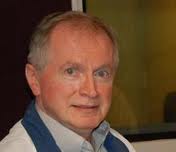
Academy Award winning actor Jim Broadbent, best known for his portrayal of Harold Zidler in Moulin Rouge.
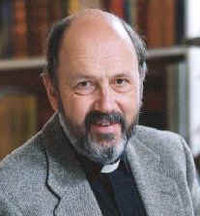
D. A. Carson – noted theologian and author. Research Professor of New Testament at Trinity Evangelical Divinity School.
Retired Bishop of Durham, N. T. Wright of “the new perspective on Paul” fame.
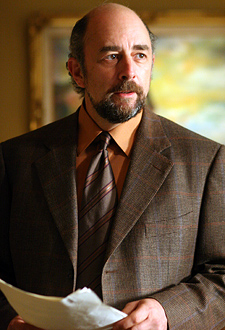
Richard Schiff – American actor best known for his role as Toby Ziegler on The West Wing.

Its not what I expected. And it is not what I want. But it appears that I have my limits after all.
Bummer.
After months of escalating and debilitating fatigue – after tests upon tests upon tests from my Dr. – the diagnosis is in: Seriously pooped.
No doubt you’ve noticed (or perhaps you haven’t) the drastic drop off in my being able to post. Two of my great loves, preaching and writing, at this juncture are beyond my ability to indulge in without severe consequences afterward – requiring days just to be able to function at a low level again.
Sounds like the problem of a weenie. It’s not me. I don’t like it and I don’t want it. Give me a serious disease, something I can sink my teeth into: Leprosy of the lung or the creeping ephizutti. SOMETHING!
Not “pooped”.
Wimp!
But as I mentioned above, after running all the tests, (heart, blood, lungs, endoscopies, colonoscopies, yada, yada, yada) the results of Celiac, Barrett’s disease and who knows what else with just having the bow bent too far for too long – his expert medical opinion is I’m seriously pooped. Enough that if there is no break, something’s gonna give. Guess I have to turn in my S, the red cape and the blue tights. I never looked good in the tights anyway. NO COMMENTS!

And in an overwhelming show of love and compassion, the congregation at ECF has made it possible. I do not how to be grateful enough for their willingness and that of the Corporate Board and the Elders to arrange it all.
So I’ll be on this break – against my will but wanting to do what it takes to get fully well so I can labor freely once again – until Aug. 15.
And it is making me seriously uncomfortable. Antsy. Thus it appears that while I can formulate a sound theology of “rest’ – I cannot yet abide by it emotionally. As issue of personal sanctification to be worked out in the process.
But as I rest, and study, and nourish my own soul, I’ll be posting along the way. Some. No promises. Missing the joy of it. But indulging as much as I can without jeopardizing getting back on both feet.
Keep tuning in.
 Hebrews 11:1 (ESV) Now faith is the assurance of things hoped for, the conviction of things not seen.
There are two parts to this very familiar verse. The first part having more to do with the one having faith – it is internal if you will. The other, has to do with the witness of faith – its external component. Let’s look at the first.
Faith is the “assurance” of things hoped for: This is for the Believer. When I am believing God, trusting in His person and promises, I have true assurance.
The “evidence” of things not seen: This is for the Unbeliever. That Believers DO have faith, is the evidence of the unseen work of God in their hearts, and of the reality of the the things they testify to, and to the reality of God’s being.
Faith is – in the Believer – that ground or assurance we have that the things which God has promised, are true and actual. The word assurance comes from a root which has a picture of something underneath, holding something else up or being its foundation. As those who are in Christ, faith in us gives us an assurance.
But note that our assurance is not a naked or abstract assurance. It isn’t that Christians are just confident people, as
though being born again makes us cocky or self-confident. It is not an attitude as much as it is a persuasion. An inward grip on truths that others do not and cannot use to understand reality. When some scientists began to think in terms of germs, microscopic organisms which were behind the spread of diseases and such – others, who could not conceive of such things, could not function within a paradigm of medical treatment that worked as though these little critters actually existed and had to be dealt with.
This is how the unregenerate feel when we talk about spiritual realities. To us, they have been discovered to our souls. We see them. So the the way we think and the things we do reflect this understanding. To them, our actions, opinions and reactions can be undecipherable. It is as though we are a cluster of seeing people in a world of blind men. Our descriptions of what we see can only be grasped in the most rudimentary way by those still unable to actually see color and shapes. Even though they can trade on the language and catch some of the concepts.
It is this dynamic which is alluded to by the Apostle Paul when he says that: “The spiritual person judges all things, but is himself to be judged by no one.” (1 Cor. 2.15) Those who have not been born again, simply cannot conceive (in terms of grasping as real fact) precisely who and what we are and how or why it is we think and are the way we are. At the same time, because we can see these things, we can and do make judgments and assessments about things that make perfect sense to us. The sun has risen on our horizon in a way which sheds light on everything.
I say all this by way of reminder in terms of how it is we interact with unbelievers in the communication of the Gospel. Bear in mind the natural limits imposed upon the fallen heart and mind. Once, these things made little sense to you too. Think of the task then of translating for them. Of speaking to them in ways which seeks to bridge the gap not expand it.
Christ Himself is the bridge between us, and His own transcendence. He stoops to us. Condescends to our level. He takes upon Himself the form of sinful flesh. No, He does not become sinful, but comes to us neither like Adam in his pre-fallen glory, nor in His own unveiled and intrinsic glory. He comes looking, talking, and functioning like any other son of Adam’s race. So that He might take the self-revelation of the Father – and bring it to us. (John 17.8) So must we. In patience He explains His words to those who ask. He labors the central truths over and over – awaiting the Spirit’s work of illumination. Teaching, opening, explicating, announcing, warning and repeating.
This is a Biblical paradigm for Gospel evangelism.
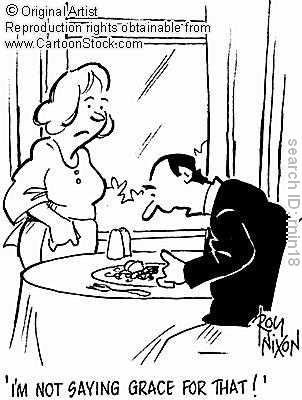 Colossians 2:6-7 “Therefore, as you received Christ Jesus the Lord, so walk in him, rooted and built up in him and established in the faith, just as you were taught, abounding in thanksgiving.”
Maybe its only me, but have you ever found yourself just so ungrateful that no matter what God has done for you, some negative speck seems to cloud the entire horizon? It is one of the ongoing effects of sin on the human psyche – still evident even in the Redeemed.
Maybe the following will help put a few small things back into perspective.
Maybe, as we contemplate Thanksgiving Day here in the US, for 2011, we can step back and drink in the goodness of God, unsoiled for just a minute. I need to do this more.
Heavenly Father –
You give me life
But it really is hard
You give me mercy
But you don’t stop me from sinning
You give me grace
But it robs me of my sense of pride and accomplishment
You give me family
But there are others whose friendship I would prefer more
You give me those who love me
But they do not love me enough, or the way I want them to
You give me work
But its not what I’m best suited for
You give me an opportunity to earn a living
But its never quite enough
You give me children
But they are troublesome at times, and embarrass me
You give me parents
But they failed me and sinned against me
You give me laws
But they hamper my freedom
You give me freedom
But then make me responsible for what I do
You give me your Word
But its work to study it
You give me prayer
But its boring and awkward
You give me your People
But they are broken and hurt me
You give me your Church
But it takes up most of one day a week, has bad music and needs to be supported
You give me promises of Heaven
But its so far off
You give me extended life
But I get old, weak and sick
You give me vacations
But they are too short
You give me Christian friends
But they sin and I have to forgive them
You give me grace for trials
But that means I’ll have to endure them
You give me limitless love
But then you give it to others too
You give me the honor of being conformed to Christ’s image
But then I have to die to sin
You give me salvation
But only through the Cross
Now, may I ask you for one more thing?
Please grant me a grateful heart, so that I can freely and rightly rejoice in all you have already given – without these sin-stained glasses of mine.
 Acts 6:1-4 / Now in these days when the disciples were increasing in number, a complaint by the Hellenists arose against the Hebrews because their widows were being neglected in the daily distribution. And the twelve summoned the full number of the disciples and said, “It is not right that we should give up preaching the word of God to serve tables. Therefore, brothers, pick out from among you seven men of good repute, full of the Spirit and of wisdom, whom we will appoint to this duty. But we will devote ourselves to prayer and to the ministry of the word.”
The ministry of the Word, and prayer. These are the two central responsibilities of those called to the pastoral role. Be they vocational, or bi-vocational, or completely volunteer, there are those in every assembly (usually a mixture of these 3) who take up these two burdens, even as there are those who take up other burdens so that these can keep prayer and the ministry of the Word their main focus. They both do it, and/or see that it is done. It is a simple but profound arrangement. It should go without saying that neither group is comprised of super-saints. Yet those in each group should be known for their striving after Christ-likeness.
Now it isn’t a stretch to imagine what is involved with the ministry of the Word. This (it seems pretty evident) falls into two primary things: a. Preparation and, b. Proclamation. Some give themselves to the study of God’s Word (and its attendant disciplines) so that they can effectively and soundly teach God’s Word – and keep the local Church Biblically based. It is in the preaching of the Word that sinners are called to faith and repentance, and the Saints are instructed, fed, rebuked, exhorted and encouraged.
But when it comes to prayer, just what does that look like? I’d like to give you a look into ONE of the ways I (not to mention how the other Elders) pray for this Church – for us here at ECF. Maybe it will be instructive for you to understand how the Word presses upon my own heart, for myself, my wife and daughter and grand-kids and son-in-law. For all my family and yours. For this Church family. I hope you will take comfort and direction in putting in front of you ONE of the key areas I am in constant prayer for you all – beyond the needs that arise out of individual circumstances. This is my ongoing burden in prayer for us.
You should know, that each and every day, often several times a day – I am seeking God for us, for what Paul prayed for the Ephesian church in Eph. 3:14-19. What I am believing God to manifest among us more and more as the years progress. I am bowing my knees before the King of Heaven and Earth, who created and owns all things – and has made them for His glory, that I, that WE, might be granted supernatural strength – on par with the unfathomable riches of His glory. To the end that by this work of the Spirit within each of us, Christ may have the place of being our supreme treasure, perpetually informing everything we think, feel, say and do. And that by finding our deepest roots in the Divine soil of His infinite and perfect love for us, each of us may grow together to fully realize and experience the height, depth, length and breadth of His humanly unsearchable love of Christ – so that we might be absolutely filled with the fullness of His own infinite fullness. So that we are God saturated in every part of our being – lacking nothing in even the smallest sense.
Beloved, this is what I want for you all – for US all – above anything else. And I plead with Him for it. With Him who is able not only to do this – but to do it in a way that far outstrips our most vivid conceptions of it.
We Elders give ourselves to seek this for ECF. For you. Each and every one of you. And we do it, anticipating the working of His Spirit to move us into more and more of it as we go.
I just thought you’d like to know how you’ve been, and will be prayed for today. Till Christ returns or I am called home.
I love you all.
Abr /> Proverbs 14:10 – The heart knows its own bitterness, and no stranger shares it’s joy.
The words above are true enough. To know someone’s bitterness or joy, we must have more than a cursory acquaintance with them – we must KNOW them.
But the truth is, there are parts of us no other human being will ever truly know the way we might wish. No one can really know us, the way we desire to be known. Human knowledge will always lack in this way.
As a result of not understanding this, many end up running from person to person, partner to partner, relationship to relationship hoping to find someone who will know them truly and deeply.
“My wife doesn’t understand me”, “My husband never really knew me” are the plaintiff cries of those falling headlong into extra-marital affairs. Such are the spoken and often unspoken sentiments of those who have used this reality as an excuse for emotionally distancing themselves from those they’ve vowed before God to “love until death do us part.” All the while, what is being ignored is that we are desperately seeking what no one can give us – by design.
This place, this holy of holies in the human soul is a place God reserves for Himself. The truth is, we cannot have this experience at the depth we desire except in communion with Him. If we put this burden on others, we will either crush them, or frustrate them. And, we will drive ourselves to despair. Worst of all, we commit sacrilege. We are found wanting to substitute the presence of a human soul behind the veil – instead of the Spirit of God. And it cannot be done.
Beloved, do wish to be known? Then begin knowing the One who created you TO be known fully only by Himself, and who desires you to know Him too. What you seek can only be found in Christ, for this is how He made you. You cannot fill your soul with another human being any more than you can fill your gas tank with sand. Don’t blame your spouse for what they were never meant to give. Come to the Fountain, and drink your fill of The Water of Life.
 Ephesians 5:11–14 “Take no part in the unfruitful works of darkness, but instead expose them. 12For it is shameful even to speak of the things that they do in secret. 13But when anything is exposed by the light, it becomes visible, 14for anything that becomes visible is light. Therefore it says, “Awake, O sleeper, and arise from the dead, and Christ will shine on you.”
Bonhoeffer was right. In times of temptation, the Believer is not as much plagued with an urge to blaspheme God, as with forgetfulness of Him. His immediacy, His presence with us is obscured. In those moments, we sort of shift into automatic, not really thinking as much as acting upon impulse and reflex. Even when we’ve resisted for some time prior to actually caving in; our faculties are in gear, and then – tunnel vision and full speed ahead – the thinking has ended.
But it is precisely when in the moment, in the very throes of temptation that thinking is what we need to do most. To slow down, and get a hold of ourselves, and ask 3 questions that Temptation desperately wants (read our FLESH desperately wants) to keep shoved out of the front of our consciousness. The three questions address three elements which are present in every temptation. This is true whether we are tempted to give in to anger, greed, lust, pride, envy, despair or anything else, you name it.
Here’s what we must stop to ask ourselves:
a. What is the LIE behind this temptation? What does it promise, that once scrutinized, it is clear it cannot deliver? And what is the true end result that it hides.
b. What is the LUST it is promising to satisfy? What is the “hunger” it purports to fulfill? What is it within me this particular temptation resonates with? What precisely is the nature of my own sinful desire here?
c. What is the LOVE which must be violated in order to do this? Love toward the God who saved me? Love toward my neighbor? (read: husband, wife, child, sibling, co-worker, stranger, etc.) Who is it I will have to stop the act of loving in order to take this action or attitude up?
And if we take the time to stop and ask ourselves these 3 simple questions, we will soon find that the temptation looses both its attractiveness and its power. It becomes ugly and sordid. The vileness underneath its mask gets exposed to us. With this exposure, Temptation’s insistent knocking at the door of our desire soon slows, fades and stops. For then. Oh, it will return another day. But before you jump up to answer the door – stop to ask the questions one more time. You’ll be surprised.
 Proverbs 4:23–27 (ESV)
23 Keep your heart with all vigilance,
for from it flow the springs of life.
24 Put away from you crooked speech,
and put devious talk far from you.
25 Let your eyes look directly forward,
and your gaze be straight before you.
26 Ponder the path of your feet;
then all your ways will be sure.
27 Do not swerve to the right or to the left;
turn your foot away from evil.
Keeping the heart is a call of dire need. The heart of the human being – is the core of life. Of course the organ that pumps blood is not being referred to here – but the organ of the soul that communicates life and purpose and passion to the whole being is intended. It is what the old theologians used to refer to as inward “inclination” – what each of us is inclined toward as the governing direction of our life’s pursuit – the gravitational pull of our inward man. What, when all else is stripped away, drives and motivates us.
The truth is, many of us never even take the time to find out what exactly DOES motivate us above all else. We often flit from thing to thing still looking for an all consuming passion. But in reality, we already have one. It is at the bottom of all the choices we make in life. We simply haven’t identified it yet. For some it is safety. For others, pleasure. Still others seek meaning above all else, or a sense of accomplishment, approval, validation or simply to consume what seems most desirable at the moment.
So how does one then “keep” or guard the heart, so that we are walking in wisdom and in fellowship with God and His eternal plans and purposes? What am I to be “vigilant” over for that to happen – so that the “springs of life” – the fountain of true joy and refreshment and sustenance remain unpolluted by the poisons of the Fall?
Our Teacher points out four things.
1. (24) One must cultivate honesty with themselves, and with others. If we are willing to entertain duplicity – to have secret lives, to live dishonestly with others, we will inevitably be habitual hypocrites. We must be brutally honest with ourselves about our own sinfulness and unwilling to seem better than we are to others – even if that invites rebuke. Passing ourselves off as Mr. or Ms. Altogether-Christian for the public consumption of others will lead us to hide, and at the same time to live in constant judgment of others. If you are constantly avoiding letting people see who you really are, or pointing the finger at other’s sins – this is probably your area of need.
2. (25) We must be actually aimed at the goal of Heaven and Christ’s likeness. If that is not our goal and aim in life – if that is not where we are traveling to in life – then we are headed somewhere else. No one stumbles into Heaven – we go there intentionally or not at all. There will be no accidental tourists there. Those who have no clear destination will wander – emotionally, spiritually and in every other area of life. Are you on your way to meet the King? Are you actually plotting a course there? If not, you will not arrive.
3. (26) We must examine and re-examine our decisions to see if they are commensurate with our stated goal and direction. The heart is distracted and polluted when our decision making practice does not at least include (at SOME point) the question as to how this decision fits with where I am going and who I am becoming in Christ. Countless woes would be avoided if we would ask this of ourselves before we entered into things. How does X fit with my journey to see Jesus? Does it help? Does it hinder? Is it compatible?
4. (27) We cannot move off of the path that the Scripture has given us, and still get there. Isaiah calls it a “highway of holiness.” There is only one way to follow Christ – I must walk the same way He does, I must go WITH Him. And He is not going certain places. He is not heading into sexual immorality. He is not moving toward theft, or lust, or dishonesty, or coveting this world’s goods, or fame or pleasure. He is headed home to His Father. And there but one road there – Him. He Himself IS the truth, the life and the way.
So my friend – where are you off to today? And how will you be getting there?
 Mark 14:32–36 (ESV) And they went to a place called Gethsemane. And he said to his disciples, “Sit here while I pray.” 33And he took with him Peter and James and John, and began to be greatly distressed and troubled. 34And he said to them, “My soul is very sorrowful, even to death. Remain here and watch.” 35And going a little farther, he fell on the ground and prayed that, if it were possible, the hour might pass from him. 36And he said, “Abba, Father, all things are possible for you. Remove this cup from me. Yet not what I will, but what you will.”
There is a common saying which reads – “the Devil is in the details.” The idea being, that often, when struggling with something difficult to understand fully, there is some “catch”, some mysterious element which is escaping our notice. In actuality, the original phrase (as best as I can tell) was coined by the French novelist Gustave Flaubert and read: “the good God is in the detail”. His thought was, we are often overlooking the goodness of God in things – missing the small connection that brings it all together.
Likewise, there are some exceedingly sweet and precious things to be had in the “details” of certain passages of Scripture sometimes – like ours today. And I note especially vs. 36 and its first few words: “And He said, Abba, Father.”
Mark, carefully notes Jesus’ wording here with unusual precision – so as to call something out to our minds. He transliterates the Aramaic word “Abba” – and then gives its signification – “Father.” Why? Why not just use the Greek word “pater” (Father) and leave it at that? Why bother pointing to Jesus’ use of “Abba” in Aramic while writing everything else down in Greek?
It would seem that he is especially wanting us to understand the true nature of Jesus’ prayer here, and the import it will have for us later.
In Aramaic (the language which Jesus would have most often conversed in), there are two very similar words with overlapping meanings. First there is the word for father Jesus used here “Abba”. And, there is the word “Abbi”. “Abbi” also means father. The difference? Abbi is a very broad term – it can mean a natural father, but also a civil father – as in George Washington being the “father” of our nation. It can also refer to an Elder – a tribal father, or the father of a school of thought, etc. This is how the Jews thought of God as “Father” – as the Creator or progenitor of all things. So what’s the big deal? The deal is in the detail, that “Abba” is never used in the broad sense, but only in reference to one’s own natural father. Jesus was not using a broad term, but the most intimate, familial term there was. He was speaking to His “Dad”, His own, personal – Father. How this must have hit the three disciples who heard Him. The impact must have been profound.
But it doesn’t end there. For the fascinating thing is, this word is found only 3 times in the New Testament, the first being here. The shock, is the two other times it is used – in Romans 8:14 and Galatians 4:6. And what is the context in those two places? That by virtue of becoming partakers of the Holy Spirit in salvation, the Believer gets to address God the Father as intimately as Jesus Himself: “And because you are sons, God has sent the Spirit of his Son into our hearts, crying, “Abba! Father!” (Gal. 4:6)
Do you see what Paul does in both of these cases? He carries over this remarkable transliteration so that we get the full power of it driven home to us. It is the soul flooding reality that we get to live with the Father as intimately and truly and God the Incarnate Son. We share the same Spirit. We too – because of the cross, can cry “Abba, Father” – with no less reality and intimacy than Christ our Lord did in His most critical moments.
You beloved – are truly that – beloved. Beloved of God as though natural sons and daughters. As truly His, as Christ Himself.
Now THAT’S, a detail!
 ResponsiveReiding
