• Home
  • About
  • Blog
  • Atonement
    • The Atonement: Read this first!
    • Confession of an ex-u0022Highperu0022 Calvinist
    • Revisiting the Substitutionary Atonement
    • Discussing the Atonement – a lot!
    • Lecture Notes on The Atonement
  • Sermons
  • ReviewsAll book and movie reviews
    • Books
    • Movies

ResponsiveReiding

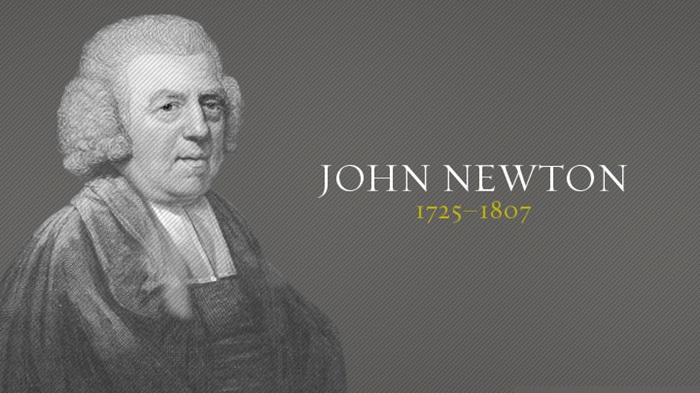
  • John Newton on how the Lord guides His People.

    July 8th, 2016

    ball

    One of perennial issues in the Christian life, is that of understanding the Lord’s leading in life. All of Christ’s own (ostensibly) want to do His will in every aspect of living.

    Often, this discussion devolves into 2 polar opposites: A mystically bent focus upon impressions, dreams, impulses or Scriptural illuminations where a passage “speaks” and seems relevant to one’s immediate circumstance – irrespective of its Biblical context. Or, a rejection of virtually all spiritual experience whatever. Certainly, there is a spectrum to be seen all the way between these two poles.

    In the following letter from John Newton on the subject, some sound, wise and Scriptural advice is held out to an inquirer on the topic. And given the current state of American Evangelicalism, it is a timely and useful guide to a sometimes contentious yet necessary discussion.

    I will try to offer emphases and section headings as I hope will make the original author’s mind more accessible.

    Letter XXVIII

    Answer to the Question, In what Manner are we to expect the Lord’s promised Guidance to influence our Judgments, and direct our Steps in the Path of Duty?

    Section I – God DOES supply guidance by His grace. Foremost in His Word.

    Dear Sir,

    It is well for those who are duly sensible of their own weakness and fallibility, and of the difficulties with which they are surrounded in life, that the Lord has promised to guide his people with his eye, and to cause them to hear a word behind them, saying, “This is the way, walk ye in it,” when they are in danger of turning aside either to the right hand or to the left. For this purpose, he has given us the written word to be a lamp to our feet, and encouraged us to pray for the teaching of his Holy Spirit, that we may rightly understand and apply it. It is, however, too often seen, that many widely deviate from the path of duty, and commit gross and perplexing mistakes, while they profess a sincere desire to know the will of God, and think they have his warrant and authority. This must certainly be owing to misapplication of the rule by which they judge, since the rule itself is infallible, and the promise sure. The Scripture cannot deceive us, if rightly understood; but it may, if perverted, prove the occasion of confirming us in a mistake. The Holy Spirit cannot mislead those who are under his influence; but we may suppose that we are so, when we are not. It may not be unseasonable to offer a few thoughts upon a subject of great importance to the peace of our minds, and to the honour of our holy profession.


    Section II. Common Errors.

    Many have been deceived as to what they ought to do, or in forming a judgment beforehand of events in which they are nearly concerned, by expecting direction in ways which the Lord has not warranted. I shall mention some of the principal of these, for it is not easy to enumerate them all.


    Common Error #1 – Casting Lots. Using lots or some other method of God giving a tangible “sign” of His will.

    Some persons, when two or more things have been in view, and they could not immediately determine which to prefer, have committed their case to the Lord by prayer, and have then proceeded to cast lots: taking it for granted, that, after such a solemn appeal, the turning up of the lot might be safely rested in as an answer from God. It is true, the Scripture, and indeed right reason, assures us, that the Lord disposes the lot; and there are several cases recorded in the Old Testament, in which lots were used by Divine appointment; but I think neither these, nor the choosing Matthias by lot to the apostleship, are proper precedents for our conduct. In the division of the lands of Canaan, in the affair of Achan, and in the nomination of Saul to the kingdom, recourse was had to lots by God’s express command. The instance of Matthias likewise was singular, such as can never happen again; namely, the choice of an apostle; who would not have been upon a par with the rest, who were chosen immediately by the Lord, unless He had been pleased to interpose in some extraordinary way; and all these were before the canon of Scripture was completed, and before the full descent and communication of the Holy Spirit, who was promised to dwell with the church to the end of time. Under the New Testament dispensation, we are invited to come boldly to the Throne of Grace, to make our requests known to the Lord, and to cast our cares upon him: but we have neither precept nor promise respecting the use of lots; and to have recourse to them without his appointment, seems to be tempting him rather than honouring him, and to savour more of presumption than dependence. The effects likewise of this expedient have often been unhappy and hurtful: a sufficient proof how little it is to be trusted to as a guide of our conduct.


    Common Error #2 – “Dipping” in the Scripture. Taking a verse or passage at random, and applying it to one’s immediate context, without regard for the actual Biblical context, and what the Scripture means in that place and to who it was written.

    Others, when in doubt, have opened the Bible at a venture, and expected to find something to direct them in the first verse they should cast their eye upon. It is no small discredit to this practice, that the Heathens, who knew not the Bible, used some of their favourite books in the same way; and grounded their persuasions of what they ought to do, or of what should befall them, according to the passage they happened to open upon. Among the Romans, the writings of Virgil were frequently consulted upon these occasions; which gave rise to the well-known expression of the Sortes Virgilianæ. And indeed Virgil is as well adapted to satisfy inquirers in this way as the Bible itself; for if people will be governed by the occurrence of a single text of Scripture, without regarding the context, or duly comparing it with the general tenor of the word of God, and with their own circumstances, they may commit the greatest extravagances, expect the greatest impossibilities, and contradict the plainest dictates of common sense, while they think they have the word of God on their side. Can the opening upon 2 Sam. 7:3, when Nathan said unto David, “Do all that is in thine heart, for the Lord is with thee,” be sufficient to determine the lawfulness or expediency of actions? Or can a glance of the eye upon our Lord’s words to the woman of Canaan, Matth. 15:28, “Be it unto thee even as thou wilt,” amount to a proof, that the present earnest desire of the mind (whatever it may be) shall be surely accomplished? Yet it is certain that matters big with important consequences have been engaged in, and the most sanguine expectations formed, upon no better warrant than dipping (as it is called) upon a text of Scripture.


    Common Error #3 – Strong impressions or feelings about a particular text.

    A sudden strong impression of a text, that seems to have some resemblance to the concern upon the mind, has been accepted by many as an infallible token that they were right, and that things would go just as they would have them: or, on the other hand, if the passage bore a threatening aspect, it has filled them with fears and disquietudes, which they have afterwards found were groundless and unnecessary. These impressions, being more out of their power than the former method, have been more generally regarded and trusted to, but have frequently proved no less delusive. It is allowed, that such impressions of a precept or a promise as humble, animate, or comfort the soul, by giving it a lively sense of the truth contained in the words, are both profitable and pleasant; and many of the Lord’s people have been instructed and supported (especially in a time of trouble) by some seasonable word of grace applied and sealed by his Spirit with power to their hearts. But if impressions or impulses are received as a voice from heaven, directing to such particular actions as could not be proved to be duties without them, a person may be unwarily misled into great evils and gross delusions; and many have been so. There is no doubt but the enemy of our souls, if permitted, can furnish us with Scriptures in abundance in this way, and for these purposes.


    Common Error #4 – Taking their experience of being much moved in prayer about something or someone, as an indication of God’s assurance that He will act as they desire in it.

    Some persons judge of the nature and event of their designs, by the freedom which they find in prayer. They say they commit their ways to God, seek his direction, and are favoured with much enlargement of spirit; and therefore they cannot doubt but what they have in view is acceptable in the Lord’s sight. I would not absolutely reject every plea of this kind, yet, without other corroborating evidence, I could not admit it in proof of what it is brought for. It is not always easy to determine when we have spiritual freedom in prayer. Self is deceitful; and when our hearts are much fixed and bent upon a thing, this may put words and earnestness into our mouths. Too often we first secretly determine for ourselves, and then come to ask counsel of God; in such a disposition we are ready to catch at every thing that may seem to favour our darling scheme; and the Lord, for the detection and chastisement of our hypocrisy (for hypocrisy it is, though perhaps hardly perceptible to ourselves), may answer us according to our idols; see Ezek. 14:3, 4. Besides, the grace of prayer may be in exercise, when the subject-matter of the prayer may be founded upon a mistake, from the intervention of circumstances which we are unacquainted with. Thus, I may have a friend in a distant country; I hope he is alive; I pray for him, and it is my duty so to do. The Lord, by his Spirit, assists his people in what is their present duty. If I am enabled to pray with much liberty for my distant friend, it may be a proof that the Spirit of the Lord is pleased to assist my infirmities, but it is no proof that my friend is certainly alive at the time I am praying for him: and if the next time I pray for him I should find my spirit straitened, I am not to conclude that my friend is dead, and therefore the Lord will not assist me in praying for him any longer.


    Common Error #5 – Relying upon remarkable dreams as solid evidence of God’s will.

    Once more: A remarkable dream has sometimes been thought as decisive as any of the foregoing methods of knowing the will of God. That many wholesome and seasonable admonitions have been received in dreams, I willingly allow; but, though they may be occasionally noticed, to pay a great attention to dreams, especially to be guided by them, to form our sentiments, conduct, or expectations upon them, is superstitious and dangerous. The promises are not made to those who dream, but to those who watch.


    Common Error #6 – Taking unusual coincidences or events as a sure sign of God’s will.

    Upon the whole, though the Lord may give to some persons, upon some occasions, a hint or encouragement out of the common way; yet expressly to look for and seek his direction in such things as I have mentioned, is unscriptural and ensnaring. I could fill many sheets with a detail of the inconveniences and evils which have followed such a dependence, within the course of my own observation. I have seen some presuming they were doing God service, while acting in contradiction to his express commands. I have known others infatuated to believe a lie, declaring themselves assured, beyond the shadow of a doubt, of things which, after all, never came to pass; and when at length disappointed, Satan has improved the occasion to make them doubt of the plainest and most important truths, and to account their whole former experience a delusion. By these things weak believers have been stumbled, cavils and offences against the Gospel multiplied, and the ways of truth evil spoken of.


    Section III – How CAN we expect to be guided?

    1. A Scripture-truth informed “spiritual gut” that tests everything by The Word rightly understood.

    But how then may the Lord’s guidance be expected? After what has been premised negatively, the question may be answered in a few words. In general, he guides and directs his people, by affording them, in answer to prayer, the light of his Holy Spirit, which enables them to understand and to love the Scriptures. The word of God is not to be used as a lottery; nor is it designed to instruct us by shreds and scraps, which, detached from their proper places, have no determinate import; but it is to furnish us with just principles, right apprehensions, to regulate our judgments and affections, and thereby to influence and direct our conduct. They who study the Scriptures, in an humble dependence upon Divine teaching, are convinced of their own weakness, are taught to make a true estimate of every thing around them, are gradually formed into a spirit of submission to the will of God, discover the nature and duties of their several situations and relations in life, and the snares and temptations to which they are exposed. The word of God dwells richly in them, is a preservative from error, a light to their feet, and a spring of strength and consolation. By treasuring up the doctrines, precepts, promises, examples, and exhortations of Scripture, in their minds, and daily comparing themselves with the rule by which they walk, they grow into an habitual frame of spiritual wisdom, and acquire a gracious taste, which enables them to judge of right and wrong with a degree of readiness and certainty, as a musical ear judges of sounds. And they are seldom mistaken, because they are influenced by the love of Christ, which rules in their hearts, and a regard to the glory of God, which is the great object they have in view.

    1. By trust in and submission to God’s providential arrangement of circumstances and events, responded to Biblically.

    In particular cases, the Lord opens and shuts for them, breaks down walls of difficulty which obstruct their path, or hedges up their way with thorns, when they are in danger of going wrong, by the dispensations of his providence. They know that their concernments are in his hands; they are willing to follow whither and when he leads; but are afraid of going before him. Therefore they are not impatient: because they believe, they will not make haste, but wait daily upon him in prayer; especially when they find their hearts most engaged in any purpose or pursuit, they are most jealous of being deceived by appearances, and dare not move farther or faster than they can perceive his light shining upon their paths. I express at least their desire, if not their attainment: thus they would be. And though there are seasons when faith languishes, and self too much prevails, this is their general disposition; and the Lord, whom they serve, does not disappoint their expectations. He leads them by a right way, preserves them from a thousand snares, and satisfies them that he is and will be their guide even unto death.[1]


    [1] Newton, John, Richard Cecil. 1824. The works of the John Newton. . Vol. 1. London: Hamilton, Adams & Co.

  • As I was Reading Today – Insight from Andrew Fuller

    July 6th, 2016

    read-books

    There is a tendency in the human mind to deviate from Divine truth. Had it not been for the illuminating influence of the Spirit of God, we should never have understood it; not because of its abstruseness, but on account of the uncongeniality of our minds; and when we do understand and believe it, there is a continual tendency in us to get wrong. It might seem that when a person has once obtained a just view of the gospel, there is no danger of his losing it; but it is not so. There is a partiality in all our views, and while we guard against error in one direction, we are in equal danger from a contrary extreme. Many, in shunning the snare of self-righteous pride, have fallen into the pit of Antinomian presumption; and many, in guarding what they consider as the interests of practical religion, have ceased to teach and preach those principles from which alone it can proceed. Besides this, there are many ways by which a minister may get beside the gospel without falling into any palpable errors. There may be nothing crooked, yet much wanting. We may deliver an ingenious discourse, containing nothing inconsistent with truth, and yet not preach that truth “in which believers stand, and by which they are saved.”

    Fuller, Andrew Gunton. 1988. The Complete Works of Andrew Fuller: Memoirs, Sermons, Etc. (Ed.) Joseph Belcher. . Vol. 1. Harrisonburg, VA: Sprinkle Publications.

  • A Saturday’s Prayer

    July 2nd, 2016

    crown-of-thorns

    Can be sung to the tune of O Sacred Head, Now Wounded.

    Lord Jesus, God incarnate
    True God, and truest man
    The two in one united
    To be Atonement’s Lamb
    What praises can we offer
    To sing Thy worthiness?
    Eternity’s songs will falter
    To match Thy blessedness

    Dear Saving Son, Redeemer
    Forgive my faithless heart
    That fails in times of trial
    To trust in Whom thou art
    Thou sum of Love’s perfections
    God’s Word and Wisdom full
    Enlarge my soul’s affection
    And sever deception’s pull

    High Priest and Intercessor
    In all my weakness, plead
    Thy Spirit’s keeping power
    According to all my need
    Christ’s light amid the darkness
    Christ’s strength when I am weak
    Christ’s holiness in temptation
    Christ’s words when e’re I speak

    Let praise and adoration
    O’er flow my heart and mind
    Till naught but all Thy beauty
    Remains for Thee to find
    Transform and full conform me
    Purge all that’s base and mean
    And bring me to Thy glory
    Till Christ alone is seen

  • As I was Reading Today – Seiss’s Lectures on the Apocalypse

    July 2nd, 2016

    books-coffee-table-reading-glasses

    Sometimes you unearth comments about one subject, whilst perusing another. In this case, this comes from Seiss’s 2nd lecture on the book of The revelation. And the text he was expatiating upon was this: Revelation 1:4–5 (ESV) “4 John to the seven churches that are in Asia: Grace to you and peace from him who is and who was and who is to come, and from the seven spirits who are before his throne, 5 and from Jesus Christ the faithful witness, the firstborn of the dead, and the ruler of kings on earth. To him who loves us and has freed us from our sins by his blood.”

    His concluding paragraph on the portion show how his mind was provoked by his contemplation of the Trinity. It is rich.

    “Conceive of these three, then, as one Almighty and ineffable Godhead,—the Father in the absoluteness of his unchanging nature and universal presence, the Spirit in all the completeness of his manifold energies and diversified operations, and the Son in the virtues of his blood-sealed testimony, of the new begotten power of his resurrection, and of the super-royal administrations of his eternal kinghood, each in his place, and all as one, laid under contribution, and unreservedly and irrevocably pledged, for the blessedness of them that believe;—sound the depths of such a fountain of good; test the firmness of such a basis of confidence; survey the strength and majesty of such a refuge for the soul; weigh the treasures of bliss which are opened up in such a presentation; and you may begin to form some conception of the resources of the saints, and of the real breadth and joyousness of this apostolic Salutation to the Churches. Is it any wonder that John’s heart took fire at the contemplation, or that he should abruptly pass from affectionate greeting to jubilant doxology? Surely “the name of the Lord is a strong tower: the righteous runneth into it, and is set on high.”

    Seiss, J. A. 1901. The Apocalypse: A Series of Special Lectures on the Revelation of Jesus Christ with Revised Text. Eighth Edition. Vol. 1. New York: Charles C. Cook.

  • As I was Reading Today – in Andrew Fuller

    June 30th, 2016

    books-coffee-table-reading-glasses

    The following is a very short sermon by Andrew Fuller on how it is God seems to send days of mercy to balance off days of affliction. He notes how days of difficulty and dark trials are to be an impetus for prayer for days of refreshing, and why we ought to look for them with expectancy. Whether our trials are personal, ecclesiastical, national or whatever. God is good to follow our dark days with refreshing, hope and restoration.

    PAST TRIALS A PLEA FOR FUTURE MERCIES

    “Make us glad according to the days wherein thou hast afflicted us, and the years wherein we have seen evil.”—Psal. 90:15.
    THIS “prayer of Moses the man of God,” as it is entitled, is thought to have been occasioned by the sentence denounced against that generation of Israelites which came out of Egypt, viz. that they should perish in the wilderness. In it we see much of the plaintive, and yet much of the man of God, cleaving to God under his judgments, and hoping in his covenant mercy and truth. Forbidden to enter their promised dwelling-place, they are directed to make up their loss in God, ver. 1, 2. Cut short as to the number of their days, to apply their hearts to wisdom, ver. 12. And though they, and himself with them, were doomed to die, they are taught to pray that the cause of God may live, ver. 16, 17.
    The language of the text implies that it is usual for God, in dealing with his people in this world, to balance evil with good, and good with evil. He neither exempts them from chastisement, nor contends with them for ever. If he had dealt with us on the mere footing of justice, we had had a cup of wrath only; but through his dear Son it is mixed with mercy. The alternate changes of night and day, winter and summer, are not more fixed in the course of nature, than the mixture of judgment and mercy in the present state.
    The children of Israel were long afflicted in Egypt, and when delivered from that grievous yoke, their numerous sins against God brought on them numerous evils in the wilderness, till at length it issued in the dismal sentence which is supposed to have occasioned this plaintive song. Yet this dark night was preparatory to a morning of hope and joy. The people that were left of the sword found grace in the wilderness. The judgments upon the first generation proved a source of wholesome discipline to the second, who appear to have been the best of all the generations of Israel. It was of them that God spoke in such high terms by Jeremiah:—“I remember thee, the kindness of thy youth, the love of thine espousals, when thou wentest after me in the wilderness, in a land not sown. Israel was holiness unto the Lord, and the first-fruits of his increase.” All that God had done for them till then was but ploughing up the fallow ground; but now he began to reap the fruits of his work. Now Balaam, instead of being able to curse them, is compelled to bless and envy them. And now the prayer of the man of God is answered. They are made glad according to the days in which they were afflicted, and the years in which they had seen evil. God’s work appeared to his servants, and his glory unto their children. His beauty was upon them, and he prospered the work of their hands.
    We might refer to numerous instances in the Scriptures in which the same truth is exemplified. In the first hundred and thirty years of Adam’s life, he drank deeply of the bitter effects of his fall. He had a son; but after high hopes had been entertained of him, he proved wicked. He had another son, but him his brother murdered; and as the murderer was spared and his family increased, it would seem as if the world was to be peopled by a race of wicked men. But it did not end thus: God gave Adam another seed, instead of Abel whom Cain slew; and soon after this men began to call upon the name of the Lord. It must have been very afflictive for Noah to have been “a preacher of righteousness” century after century, and at last, instead of seeing his hearers converted to God, to see them all swept away by the deluge. But as the waters were assuaged when they had risen to their height, so the wrath of Heaven issued in mercy. God accepted the sacrifice of his servant, and made a covenant of peace with him and his posterity.
    Similar remarks might be made from the histories of Jacob, and Joseph, and David, and many others: these were made glad according to the days wherein they had been afflicted, and the years wherein they had seen evil. Nor is it confined to individuals. When idolatrous Israel drew down the Divine displeasure in Hazael’s wars, Jehu’s revolution, and Elisha’s prophecies, it was very afflictive. Yet when Jehoahaz besought the Lord, the Lord hearkened unto him, and was gracious to his people, in respect of the covenant which he had made with their fathers, 2 Kings 13:3–5, 23. Thus the wind, the earthquake, and the fire were succeeded by the still small voice, 1 Kings 19:11, 12. Finally, the great afflictions of the church during the successive overturnings of the monarchies issued, according to Ezekiel’s prophecy, (chap. 21:27,) in Christ’s coming and kingdom.
    It is not difficult to perceive the wisdom and goodness of God in thus causing evil to precede good, and good to follow evil. If the whole of our days were covered with darkness, there would be but little of the exercise of love, and joy, and praise; our spirits would contract a habit of gloominess and despondency; and religion itself would be reproached, as rendering us miserable. If, on the other hand, we had uninterrupted prosperity, we should not enjoy it. What is rest to him that is never weary, or peace to one that is a stranger to trouble? Heaven itself would not be that to us which it will be, if we came not out of great tribulation to the possession of it.
    Evil and good being thus connected together, the one furnishes a plea for the other. Moses pleaded it, and so may we. We may have seen days of affliction, and years of evil, both as individuals and families. Borne down, it may be, with poverty and disappointment, our spirits are broken. Or if circumstances have been favourable, yet some deep-rooted disease preys upon our constitution, and passes a sentence of death within us long before it comes. Or if neither of these has befallen us, yet relative troubles may eat up all the enjoyment of life. A cruel and faithless husband, a peevish and unamiable wife, or a disobedient child, may cause us to say with Rebecca, What good does my life do me? Or if none of these evils afflict us, yet if the peace of God rule not in our hearts, all the blessings of life will be bestowed upon us in vain. It may be owing to the want of just views of the gospel, or to some iniquity regarded in our heart, that we spend days and years with but little communion with God.
    Finally, If, as in some cases, a number of these evils should be combined, this will make the load still heavier. But, whatever be our afflictions, and however complicated, we may carry them to the Lord, and then turn them into a plea for mercy. Though the thorn should not be immediately extracted, yet if God cause his grace to be sufficient for us, we shall have reason to be glad.
    We have also seen days of affliction and years of evil as a nation. It is true we have less cause to apply this language to ourselves than most other nations at the present time; yet to a feeling heart there is matter for grief. What numbers of widows and fatherless children have been left even among us, within the last sixteen years! Let the faithful of the land turn it into a prayer, not only in behalf of our country, but of a bleeding world.
    Many of our churches, too, have experienced days and years of evil. The loss of faithful and useful pastors, disorders, scandals, strifes, divisions, the consequent withdrawment of the Holy Spirit, are evils which many have to bewail. Let the faithful remnant in every place carry these things to the throne of grace, and there plead with the God of mercy and truth, by whom alone Jacob can arise; and though weeping may continue for a night, joy will come in the morning.
    The whole church of God has seen much evil hitherto. Its numbers have been few and despised. It has often been under persecution. Compared with what might have been expected, in almost six thousand years, “we have wrought no deliverance in the earth, neither have the inhabitants of the world fallen.” But all these things furnish a plea for better times. Even the wickedness of the wicked may enable us to plead with the psalmist, “It is time for thee, O Lord, to work, for they have made void thy law.” We may urge the prayer of faith too on this subject, since glorious things are spoken of the city of God. Both the world and the church have their best days to come.
    It is necessary, however, to recollect that the happy issue of all our troubles depends upon our union with Christ. If unbelievers, our troubles are but the beginning of sorrows. It is a fatal error in many, that great afflictions in this life indicate that we have had our evil things here. Few men have been more miserable than Saul was in his latter days. But if, renouncing every other ground of hope, we believe in Jesus the crucified, whatever our sorrows may be in this life, they will be turned into joy.
    Fuller, Andrew Gunton. 1988. The Complete Works of Andrew Fuller: Memoirs, Sermons, Etc. (Ed.) Joseph Belcher. . Vol. 1. Harrisonburg, VA: Sprinkle Publications.

  • A little bite of Newton with your coffee.

    June 29th, 2016

    One of Newton’s letters is to a young pastor who is struggling with being very poor. Newton’s letter is full of comfort, and helping the individual to recognize the goodness of God in His sometimes inscrutable providences in this regard. He closes his letter with this bit of verse:

    Bright Flames Reference

    Oh may this always be my own heart!

  • As I was Reading today – In Andrew Fuller

    June 28th, 2016

    Quote Marks Quote

  • Funeral Sermon for Giana Bartolucci

    June 27th, 2016

    tony-lois-and-giana-2014-924x345

    As I mentioned in my last post, the Memorial Service for Giana was held at Clarkson Community Church on Saturday, where my dear friend Tony Bartolucci pastors. Giana is his 14 year old daughter. That service was just for the immediate family, both blood relatives, and the Church.

    Yesterday, on Sunday afternoon, we held the public funeral service for Giana. And the text below is the sermon I preached there. Because of the very public nature of both their accident on Christmas Eve, and Giana’s rehab, this was a community wide service.

    The text is below.

    But if you would like to see the entire service, the video can be found HERE

    Jesus Prayed for Giana

    John 17:1-24

    I want to center our attention today on vs. 24 – Father, I desire that they also, whom you have given me, may be with me where I am, to see my glory that you have given me because you loved me before the foundation of the world.

    The whole of John 17 has often been referred to as the place where “Jesus prays for His own.” The REAL Lord’s Prayer.

    There have been countless prayers for Tony, Lois and Giana since the tragic crash on Christmas eve by so many of us.

    But there is a reality that the child of God in Jesus Christ knows, that is of more comfort and benefit than can possibly be measured – it is the fact that Jesus prays for us.

    Jesus prays for all of His saints in their trials.

    That may sound somewhat strange to some of you.

    If Jesus is God, and that He is, then why does He pray? Can’t He just act.

    And let me give you just 2 reasons why that isn’t contradictory or odd.

    1st., When Jesus was incarnate on the earth, He willingly set aside His reliance upon His own divinity, and depended upon God the Father’s providential care, and the ministry of the Holy Spirit. He lived just as He calls Believers to do today.

    He modeled that life for us in His own humiliation in coming in the likeness of fallen mankind.

    And so – He prayed.

    In the 2nd place – we know He STILL prays for us even as Romans 8:34 tells us: “Who is to condemn? Christ Jesus is the one who died—more than that, who was raised—who is at the right hand of God, who indeed is interceding for us.”

    Now, Jesus’ present prayers on our behalf is something mysterious to contemplate.

    In reality this is nothing other than a reference to the internal dialog of the Triune Godhead over the cares, concerns and needs of God’s people.

    It is an amazing thing to imagine isn’t it?  That the God who spoke the universe into existence gives so much attention to we lowly and often rebellious creatures – but it is true. And if the Bible didn’t affirm it, it would be almost unthinkable.

    This is the extraordinary comfort and joy of the true Believer in Jesus Christ.

    On a side note just here – If you are not Christ’s today in saving faith – what might the dialog in the Trinity about YOU look like?

    What do think God’s disposition is if you are not in right relationship with Him through the atoning sacrifice of Jesus Christ?

    If you are still in rebellion against His absolute claim on your life, by living it only for your own plans and purposes instead of His?

    In very real ways – it is a question of the very highest and eternal importance. THE Question.

    We’ll come back to that before we end – but right now, I want us to consider Christ’s prayers for His own.

    In the passage before us, Jesus prays 4 specific things for those who are His own.

    1. John 17:11 And I am no longer in the world, but they are in the world, and I am coming to you. Holy Father, keep them in your name, which you have given me,
    1. In that very same verse: That they may be one, even as we are one.
    1. John 17:16–17 They are not of the world, just as I am not of the world. 17 Sanctify them in the truth; your word is truth.
    1. John 17:24 Father, I desire that they also, whom you have given me, may be with me where I am, to see my glory that you have given me because you loved me before the foundation of the world.

    To PROTECT His own in faith, those whom He purchased with His own blood on the Cross – until they can come to final oneness with each other and Him.

    That all who trust in Him alone for their salvation from God’s just and holy wrath against human sin, might come to “Oneness” with Jesus and the Father. A oneness that parallels the oneness of the Trinity itself.

    To be set apart from all DAMNING deception, Sanctified – set apart by the truth – marked out as God’s own through the experiential knowledge of Gospel of saving grace by faith alone, in the substitutionary death of Christ alone on Calvary – apart from any worthiness, good works or merit of our own.

    Lastly, That all who are His by faith, might be WITH Him – for all eternity, to see His glory.

    It is this last petition that I want to focus on today; Jesus’ prayer, born out of His perfect, holy and intense desire – that those whom the Father has given Him, might be with Him to behold His glory. A glory that was His because of the supreme and infinite love of the Father for Him – and that is the highest blessing conceivable in the Divine mind to give us.

    I. And here is a very great lesson in prayer and faith.

    Jesus makes His request known – but note how He leaves the timing and means of it to the Father.

    He prays for what He desires, but He does not demand it be done in a certain way, or at a certain time.

    So it is this last petition – that we might be where He is to behold His glory – this wonder gets accomplished in two ways, at two separate times.

    1st. This prayer will be finally accomplished through Jesus’ 2nd coming and the resurrection.

    1 Thessalonians 4:16–18 For the Lord himself will descend from heaven with a cry of command, with the voice of an archangel, and with the sound of the trumpet of God. And the dead in Christ will rise first. 17 Then we who are alive, who are left, will be caught up together with them in the clouds to meet the Lord in the air, and so we will always be with the Lord. 18 Therefore encourage one another with these words.

    The 2nd: For some, this comes to pass through the individual deaths of His saints throughout the ages.

    As the Apostle Paul tells us in no uncertain terms: 2 Corinthians 5:6–8 So we are always of good courage. We know that while we are at home in the body we are away from the Lord, 7 for we walk by faith, not by sight. 8 Yes, we are of good courage, and we would rather be away from the body and at home with the Lord.

    In this way – as only Christians can know, the reality of our future hope breaks in upon the present – in His calling some of His own home now.

    As He prays this for all who are His, yet not all go immediately into His presence as Giana has done already.

    Jesus knew well how to submit to the Father’s disposing in His prayers.

    How and when they were to be answered didn’t distress Him – He was in perfect peace to leave it up to the Father’s perfect love and wisdom.

    And in this case, Jesus’ prayer in terms of His desire for Giana to be with Him, the Father thought best in His infinite and perfect wisdom and love – not only toward Giana, but toward Tony and Lois and all who loved her as well – to answer through her death.

    Though in truth, we see that only through a glass darkly today.

    II. NOTE: Jesus’ desire for Giana to be with Him, is not selfish in disregard for everyone else.

    His desire is that she might obtain the highest blessing possible for anyone created in His image – to behold His glory – face to face – in which is manifested the sum of the infinite love of God the Father for Christ the Son.

    And what must such a sight be? It is truly beyond description.

    The Old Puritan Richard BAXTER wrote – “Doubtless, there is not such a thing as grief and sorrow known there: nor is there such a thing as a pale face, a languid body, feeble joints, unable infancy, decrepit age, peccant humours, dolorous sickness, griping fears, consuming cares, nor whatsoever deserves the name of evil. Indeed, a gale of groans and sighs, a stream of tears, accompanied us to the very gates, and there bid us farewell for ever. We did weep and lament, when the world did rejoice; but our sorrow is turned into joy, and our joy shall no man take from us.[1]

    [So Jesus prayed] Father, I will, that those whom thou hast given me, be with me where I am, that they may behold my glory which thou hast given me. ”Every word [of this prayer] is full of life and joy. If the Queen of Sheba had cause to say of Solomon’s glory, “Happy are [your] men, happy are these [your] servants that stand continually before [you], and that hear [your wisdom],” then, sure, they that stand continually before God, and see his glory, and the glory of the Lamb, are somewhat more than happy: to them will Christ “give to eat of the tree of life, which is in the midst of the paradise of God;” and “to eat of the hidden manna.” (Rev. 2:7, 17.) Ye[s], “He will make them pillars in the temple of God, and they shall go no more out: and he will write upon them the name of his God, and the name of the city of his God, New Jerusalem, which come[s] down out of heaven from God, and his own new name.” (Rev. 3:12.) Ye[s], more, if more may be, “He will grant them to sit with him in his throne.” (Rev. 3:21.) “These are they who come out of great tribulation, and have washed their robes, and made them white in the blood of the Lamb; therefore are they before the throne of God, and serve him day and night in his temple: and he that sit[s] on the throne shall dwell among them: and the Lamb which is in the midst of the throne shall feed them, and lead them unto living fountains of water; and God shall wipe away all tears from their eyes. (Rev. 7:14, 15, 17.) And may we not now boast…“This is my beloved, O daughters of Jerusalem!” And this is the glory of the saints! O blind, deceived world, can you show us such a glory? “This is the city of our God, where the tabernacle of God is with men, and he will dwell with them, and they shall be his people, and God himself shall be with them, and be their God.” “The glory of God shall enlighten it, and the Lamb is the light thereof.” (Rev. 21:3, 24.) “And there shall be no more curse, but the throne of God and the Lamb shall be in it, and his servants shall serve him, and they shall see his face, and his name shall be in their foreheads. These sayings are faithful and true, and these are the things that must shortly be done.” (Rev. 22:3, 4, 6.) And now we say, as Mephibosheth, ‘Let the world take all besides, if we may but see the face of our Lord in peace.’ If the Lord lift up the light of his countenance on us here, it puts more gladness in our hearts than the world’s increase can do. (Psal. 4:6, 7.)[2]

    So it is, Giana is gone from us – now.

    No, she is not an angel – Christians dying and becoming angels is a myth – she is instead higher than the highest angel, joined with her beloved Jesus who gave His life to purge her sins, and who her heart was designed to find its highest love and fulfillment in.

    No, she isn’t playing soccer in some celestial field – she is in the court of her God and King – so transfixed by the wonder of His splendor and glory so as to be everlastingly filled with endless delight and joy.

    But she IS gone from us – and so it is for us that we grieve, not for her.

    And this I know about the Christ who prayed that she might be there with Him to behold His glory – He has done us no wrong, in wanting to give Giana the greatest gift of love of which He is capable.

    And will we not by faith glory in it, though in this time and place, we grieve her absence from among us?

    What parent would withhold what they know would be the ultimate joy and happiness and blessedness from their child if it were in their power to give it?

    It was not in Tony & Lois’ power, but it was in Christ’s – and so He has done.

    Now we can question the methods and means of how it is the Father fulfilled this prayer of Jesus in Giana’s case. But it is a fruitless inquiry.

    The Scripture makes it clear that God’s thoughts are not ours, and that they are higher than we can search out.

    But that doesn’t leave us just swimming in a sea of doubt and confusion either.

    While we cannot fathom the details of His working in Giana’s injuries, her intermediate time of surgeries and rehab, and then her passing – we CAN know this. We are left with these 3 things:

    a. That in His holiness, He cannot sin against us; He can do us no wrong.

    b. That in His wisdom, He cannot err. If there were a wiser or better way – He would have done it.

    c. That in His love, no matter whatever forces may be at work in this fallen world, He has done all things with perfect regard to the greatest benefit for Giana’s soul as well as ours.

    His love admits of no flaws whatsoever.

    So while she is not an angel,

    While she’s not playing soccer,

    While she is not in her resurrected body yet –

    Giana IS with Her Savior – beholding, and perhaps even holding His nail-scarred hands.

    She has entered into an eternal bliss with Him that will never fade, or diminish or grow tired – the inheritance of those who have been born again by the Spirit of God.

    This is the assured joy and comfort that allow Lois and Tony and the rest who know Christ to grieve with such incredible hope.


    III. Before we close – I want to come back briefly to one other petition of Christ’s in John 17.

    It is for those of you who do not yet know Christ Jesus as your Savior and Lord.

    He has prayed for you too. But not yet as He could for Giana and those who are already His by faith.

    John 17:20–21 “I do not ask for these only, but also for those who will believe in me through their word, 21 that they may all be one, just as you, Father, are in me, and I in you, that they also may be in us, so that the world may believe that you have sent me.”

    Here is a very great divine mystery, but nevertheless it is in the text.

    If you are not a Christian today – if you have never been born again by the Spirit of Christ –

    Made alive to your sinful and lost condition – of your state of being at war with God as to who has the right of supremacy over your life, soul and body – If you have never run to Christ to be forgiven of your sin upon the basis of Christ’s atoning death for sin, and been reconciled to God the Father through Him –

    Based upon this petition, I bid you come to Him today!

    He has expressed His desire to the Father that all those who will believe the testimony of His saints, like that of Giana, will not be turned away when they come for mercy and grace, but will be united with the rest of those who love and serve Him.

    He WILL receive you if you come. He has prayed for you if you will believe the testimony about Him that the saints in every age have given.

    And as surely as His prayer for Giana was answered in calling her home – He will answer this one, for all who believe and submit to His Lordship.

    Let’s pray.


    [1] Baxter, Richard & William Orme. 1830. The Practical Works of the Rev. Richard Baxter. . Vol. 22. London: James Duncan.

    [2] Baxter, Richard & William Orme. 1830. The Practical Works of the Rev. Richard Baxter. . Vol. 22. London: James Duncan.

  • Memorial Service for Giana Marie Bartolucci

    June 26th, 2016

    Giana

    Yesterday, I had the privilege of preaching at the memorial service for Giana Bartolucci. This service was mainly for immediate family, and the Church Family at Clarkson who have all endured this tragedy together. Though the grief of her loss weighs heavy upon so many, its sits especially on her Mom & Dad – my dear, dear friends, Tony & Lois. Tony pastors the Clarkson Community Church in Clarkson NY.

    Giana was only 14 when she passed. She succumbed to complications after surgery while still convalescing from the head-on collision Giana and Tony were in on Christmas Eve 2015. Months of being in the pediatric intensive care burn unit at Strong Memorial Hospital. Then off to neurological rehab to deal with her severe brain injury. And then this.

    The testimony of the faithfulness and hope they have in Christ, by Tony and Lois through this all has been very public and profound.

    Later today, we will have the public funeral service. Because so many in the community watched all of this unfold in the news and through associations of one kind or another – it will be a tremendous opportunity once again for the Gospel.

    Below is the text of my sermon for yesterday’s memorial. Along with the remembrances of so many, it was a powerful day.

    I’ll post the text of today’s funeral service later. And then on Monday, we will have the graveside committal.

    Do pray for the Holy Spirit’s comforting for Tony, Lois, the families and their church. And for the Gospel to find purchase in the hearts of the lost who may be with us.

    Jesus Wept.

    John 11:1-35

    Read: 1-5; 17-24; 32-37.


    As you might have guessed, my focus this afternoon, on this occasion of such grief in the loss of Giana, is v. 35 – Jesus wept.

    The entire passage is filled with circumstances and statements that are difficult to unpack.

    And I do not want to give an exposition today, as much as to simply make a series of observations about things in this familiar and precious passage.

    There are high and divine glimpses here that are not to be trifled with.

    I. One such is found in v-33 “When Jesus saw her [Mary] weeping, and the Jews who had come with her also weeping, he was deeply moved in his spirit and greatly troubled.” (Repeated in 38)

    The words that He was deeply moved and greatly troubled indicate far more than mere sympathy.

    The words indicate anger and agitation.

    Don Carson writes: [Jesus’] inward reaction was anger or outrage or indignation…It is lexically inexcusable to reduce this emotional upset to the effects of empathy, grief, pain or the like.[1]

    While the text does not expand upon that, we can be certain that at the very least, He experienced anger and rage and grief over the effects – especially the final effect – of sin’s curse.

    Every drop of pain, grief, suffering and woe in this life is directly traceable back to the Fall in Eden, and what that Fall has done to those made in His image, and most especially those redeemed by His blood.

    And Jesus’ is not complacent in our pain – but as we see here in the most sweet and graphic terms, is that He is both outraged, and broken on our behalf.

    Jesus WEPT.

    God, Jesus, is never detached or indifferent to our suffering.

    Jesus was not detached from the pain and confusion we experienced contemplating the accident itself which so severely injured Tony and Giana.

    So tied is Christ to His people, that when the resurrected Jesus confronted Saul – soon to be Paul on the road to Damascus, He did not say “Saul, Saul, why are you persecuting my Church?”

    Or – Why are you persecuting my People?

    Why are you persecuting my loved ones or even “MY Children”.

    No – it was “Saul, Saul, why are you persecuting ME?!”


    II. There is a natural question which we cannot help but ask inwardly, even if we do not verbalize it. But it was expressed by some there at Lazarus’ tomb.

    John 11:37 But some of them said, “Could not he who opened the eyes of the blind man also have kept this man from dying?”

    And we might well ask: If God loved us so, could He not, have prevented the Fall?

    Or in our case today: If Christ loved Giana and Tony & Lois so, could, could He not have prevented this?

    Yes.

    But there is a love which is so high, which transcends our wishes, desires and conceptions of love to such a degree, that it overrides what we would expect as the normal expressions of love.

    Who would ever have dreamed of a love so extraordinary, that God Himself would give His own Son to save the wretches we are?

    Or of a love so divine and excelling that as the eternal Son of God, Jesus would leave His divine excellencies, joys and privileges, to come in the likeness of fallen man, to suffer and die in our stead, that we might be His?

    Who would have fathomed such things if the Word of God hadn’t disclosed them?

    Because of His great love, His divine love – that we might know the Father in grace and mercy beyond measure, He planned to raise us up from the dead instead or merely preserving us from the Fall.

    This is so we might see the glory of God – glory that only God could know about Himself.

    Do I understand that?

    I confess, I do not.

    But I haven’t the slightest doubt that Giana understands it right now. That all the saints who have preceded us to Jesus’ throne do.

    And I am cast back upon the unbreakable and reliable Word of God and thus required to think it so, and to let my thoughts and my heart rest there.


    III. We need to note here that Jesus wept even tho He knew the immediate joy which would be right around the corner.

    And, He wept even though He knew the eternal joy which would be Lazarus’ eventually.

    The immediacy of Lazarus’ death and the impact of that on Lazarus’ dear sisters, was not tossed off as frivolous.

    He wept with them.

    He hurt with them.

    And even in the face of the fact that He would only moments later raise Lazarus from the dead!

    It was not just a friend who wept here, JESUS wept.

    How much more fitting then that we grieve sorely over the loss of Giana – though in light of the coming resurrection.

    The hope and promise of that great day of reunion with Giana and all the saints in no wise diminishes the proper grieving we do now.

    And Jesus taught us that so starkly and personally in this event.


    IV. I’ve touched on this briefly already but let me say just a few more words on it: Jesus wept because of the effects of the Fall on humanity made in His image.

    He wept because of the effects of the Fall on His own beloved friend.

    He wept because of the sorrow this brought upon Lazarus’ sisters whom He also loved personally.

    There is not the slightest doubt in my minds that Jesus weeps with us today.


    V. And because all these things are so, it is thus we see the profound delight He has in being able one day to wipe every tear away from the eyes of those He has purchased with His blood.

    And we should note that the text of Rev. 21:4 says “He” – He personally shall attend to our tears in the New Heavens and the New Earth.

    This is something He reserves for Himself.

    He does not relegate it to us to do for one another.

    He does not pass it off to the highest archangel in Heaven.

    No, this – He reserves for Himself.

    He wants to come to each one, and be the one who touches our every grief and sorrow, and draws every atom of pain and suffering from it – by the touch of His own nail scarred hand.


    VI. No one can argue that there is something difficult to comprehend in John 11:1–6 Now a certain man was ill, Lazarus of Bethany, the village of Mary and her sister Martha. 2 It was Mary who anointed the Lord with ointment and wiped his feet with her hair, whose brother Lazarus was ill. 3 So the sisters sent to him, saying, “Lord, he whom you love is ill.” 4 But when Jesus heard it he said, “This illness does not lead to death. It is for the glory of God, so that the Son of God may be glorified through it.”

    But note how 5 & 6 are to be fitted together: 5 Now Jesus LOVED Martha and her sister and Lazarus. 6 SO, when he heard that Lazarus was ill, he stayed two days longer in the place where he was.”

    SO when He heard, He stayed 2 days longer.

    And here is a very high and difficult lesson to learn – We need to see here too that Christ’s love for us isn’t one iota less when His providences are painful and confusing, than when they are pleasant and clear.

    The text says BECAUSE He loved Lazarus, He waited.

    And we may equally say BECAUSE Christ loved Giana, and Lois, and Tony, He did not raise her up at this time – but took her home.

    And in all of that: Jesus wept.

    Jesus wept.

    So we weep.

    And that, not alone – but in chorus with the very Son of God.

    The One who gave His life for her.

    The One who will one day raise her up in a new and glorified body like His own.

    The one who has ushered her into His eternal glory with unspeakable joy and sweetness unimaginable.


    I want to close with something which has been such a blessing to my own soul in contemplating it over and over, and I trust will be so for you.

    I steal it verbatim, with absolutely no apologies from a sermon given by Sam Storms on Jonathan Edwards’ view of Heaven.

    I want us to taste and savor something of Giana’s present bliss. And just what it is Tony and Lois gave Giana up to when they committed her into the care of Christ when she departed this earth.

    Negative: “Nothing which shall offend the most delicate eye”

    Abrasive, irritating, agitating or hurtful

    Harmful, hateful, upsetting or unkind

    Sad, bad or mad, harsh, impatient, ungrateful or unworthy

    Weak or sick or broken or foolish

    Deformed, degenerate, depraved, or disgusting

    Polluted, pathetic, poor or putrid

    Dark, dismal, dismaying or degrading

    Blameworthy, blemished, blasphemous or blighted

    Faulty, faithless, frail or fading

    Grotesque or grievous – Hideous or insidious

    Illicit, illegal, lascivious or lustful

    Marred or mutilated, misaligned or misinformed

    Nasty or naughty, offensive or odious

    Rancid or rude, soiled or spoiled – Tawdry or tainted, tasteless or tempting

    Vile or vicious, wasteful or wanton –  None of it!


    What WILL we see there? What IS Giana seeing there right now?

    Everywhere she turns her eyes, there is nothing but…

    Glory and grandeur and beauty and brightness

    Purity and perfection and splendor and satisfaction

    Sweetness and salvation and majesty

    Only and all that is adorable and affectionate

    and beautiful and bright

    Brilliant and bountiful and delightful and delicious, delectable and dazzling

    Elegant and exciting and fascinating and fruitful

    Glorious and grand and gracious and good

    Happy and holy and healthy and whole

    Joyful and jubilant and lovely and luscious

    Majestic and marvelous, opulent and overwhelming

    Radiant and resplendent, splendid and sublime

    Sweet and savory, tender and tasteful

    Euphoric and unified –

    And all of this for Hell deserving sinners like you and me.

    And why? Because she’s looking at the face of the Lord Jesus Christ.

    Let’s Pray.

    [1] Carson, D. A. 1991. The Gospel according to John. (The Pillar New Testament Commentary). Leicester, England; Grand Rapids, MI: Inter-Varsity Press; W.B. Eerdmans.


  • A Bite of Newton with your coffee – On dealing with others in controversy

    June 23rd, 2016

    fig-newtons

    In this letter of Newton’s, a small portion of which I share below – he is giving advice to a friend who is going to attempt to go to print in correcting someone else’s doctrinal errors. I found this solid, informative, and grace filled. Enjoy!

    As to your opponent, I wish, that, before you set pen to paper against him, and during the whole time you are preparing your answer, you may commend him by earnest prayer to the Lord’s teaching and blessing. This practice will have a direct tendency to conciliate your heart to love and pity him; and such a disposition will have a good influence upon every page you write. If you account him a believer, though greatly mistaken in the subject of debate between you, the words of David to Joab, concerning Absalom, are very applicable: “Deal gently with him for my sake.” The Lord loves him and bears with him; therefore you must not despise him, or treat him harshly. The Lord bears with you likewise, and expects that you should shew tenderness to others, from a sense of the much forgiveness you need yourself. In a little while you will meet in heaven; he will then be dearer to you than the nearest friend you have upon earth is to you now. Anticipate that period in your thoughts; and though you may find it necessary to oppose his errors, view him personally as a kindred soul, with whom you are to be happy in Christ for ever. But if you look upon him as an unconverted person, in a state of enmity against God and his grace, (a supposition which, without good evidence, you should be very unwilling to admit,) he is a more proper object of your compassion than of your anger. Alas! “he knows not what he does.” But you know who has made you to differ. If God, in his sovereign pleasure, had so appointed, you might have been as he is now; and he, instead of you, might have been set for the defence of the Gospel. You were both equally blind by nature. If you attend to this, you will not reproach or hate him, because the Lord has been pleased to open your eyes, and not his. Of all people who engage in controversy, we, who are called Calvinists, are most expressly bound by our own principles to the exercise of gentleness and moderation. If, indeed, they who differ from us have a power of changing themselves, if they can open their own eyes, and soften their own hearts, then we might with less inconsistence be offended at their obstinacy; but if we believe the very contrary to this, our part is, not to strive, but in meekness to instruct those who oppose, “if peradventure God will give them repentance to the acknowledgment of the truth.” If you write with a desire of being an instrument of correcting mistakes, you will of course be cautious of laying stumbling-blocks in the way of the blind, or of using any expressions that may exasperate their passions, confirm them in their prejudices, and thereby make their conviction, humanly speaking, more impracticable.

    Newton, John, Richard Cecil. 1824. The works of the John Newton. . Vol. 1. London: Hamilton, Adams & Co.

←Previous Page
1 … 103 104 105 106 107 … 197
Next Page→

Blog at WordPress.com.


Loading Comments...
 

    • Subscribe Subscribed
      • ResponsiveReiding
      • Join 419 other subscribers
      • Already have a WordPress.com account? Log in now.
      • ResponsiveReiding
      • Subscribe Subscribed
      • Sign up
      • Log in
      • Report this content
      • View site in Reader
      • Manage subscriptions
      • Collapse this bar